
Introduction
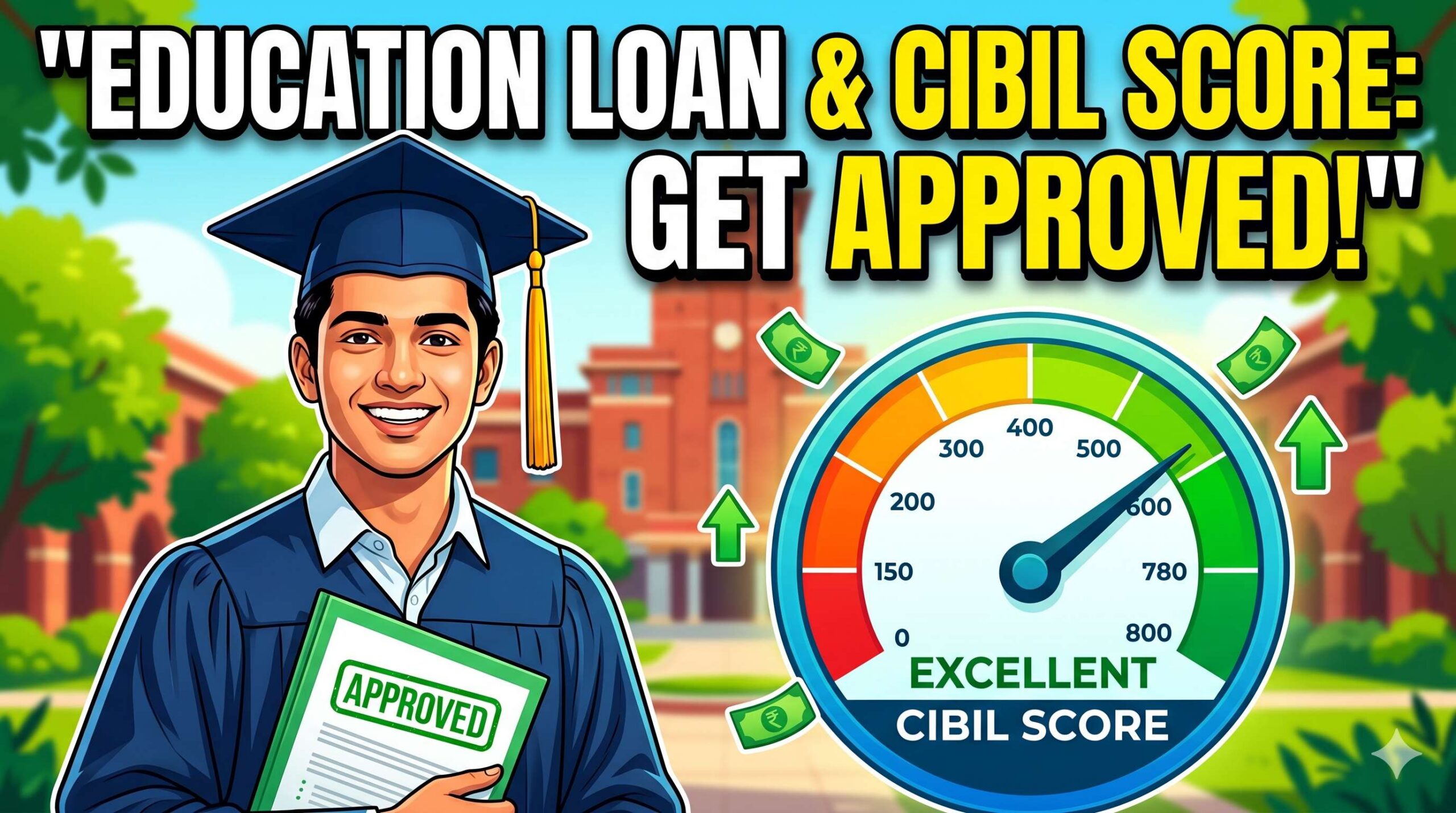
Every year, thousands of Indian middle-class families and students dream of higher education, but financing this dream requires understanding one critical factor: the CIBIL score for education loan approval. In simple terms, a CIBIL score is a three-digit number (ranging from 300 to 900) that tells banks how responsibly you manage borrowed money. For an education loan in India, most banks require the co-applicant (usually a parent or guardian) to have a good CIBIL score of 700 or above. If a student has never taken a loan or credit card, their score will show as -1 or NH (No History), which is perfectly acceptable to banks.

However, ignoring this requirement until the last minute can lead to unexpected loan rejections. Worse, desperate families with low scores often fall into the trap of fraudulent agents or fake loan apps promising “guaranteed approvals,” which severely compromises their financial safety and personal data. Let’s explore how this score works, the risks involved, and how to protect your family’s money while securing your child’s future.
Table of Contents
Keyword Explanation: How Does the CIBIL Score for Education Loan Work?
When applying for an education loan, banks look at the credit history to determine the risk of lending. Because students typically do not have a steady income or credit history, the bank relies heavily on the financial credibility of the co-applicant.

Here is how the CIBIL score for education loan applications is generally evaluated:
- For the Student (Primary Applicant): If you are a student fresh out of school or college, it is completely normal not to have a CIBIL score. Banks will pull your report, and a score of “NH” (No History) or “-1” is generated. This will not cause a rejection. However, if you previously took a small “buy-now-pay-later” loan for a mobile phone and missed payments, a low score (e.g., 550) will almost certainly lead to your education loan being denied.
- For the Parent (Co-applicant): This is where the true test lies. The co-applicant must ideally have a score of 700 or higher. A high score proves to the bank that the family has a strong track record of paying their EMIs, credit card bills, and other debts on time.
- Secured vs. Unsecured Loans: If you are applying for an unsecured loan (without collateral like property), the co-applicant’s CIBIL score must be exceptionally strong (often 750+). For secured loans (backed by a house or fixed deposit), banks might be slightly more forgiving, but a score below 650 will still create major hurdles.
The Risk: Desperation, Fraud, and Data Theft
When an education loan is rejected due to a poor credit score, families often panic. Admission deadlines approach, and this desperation makes them highly vulnerable to financial scams. Understanding the CIBIL score for education loan requirements helps you avoid these dangerous traps:
1. The “No CIBIL Check” Loan App Scam
Many students and parents search online for “education loan without CIBIL” and download unverified mobile applications. These fake apps are designed solely to harvest your sensitive data. When you install them, they ask for permissions to access your contacts, photo gallery, and messages. Once they have your PAN card and Aadhaar details, they can misuse your identity to take out illegal loans, or worse, blackmail the student.
2. Fraudulent Processing Fee Agents
Fake educational consultants often prey on families with low credit scores. They claim they have “inside contacts” at major banks and can bypass the CIBIL check for a large, upfront cash payment (often disguised as a processing fee or document verification charge). Once the cash is handed over, the agent disappears, leaving the family poorer and without a loan.
The Financial Impact of a Poor Credit Score
Failing to maintain a healthy CIBIL score for education loan approval has a cascading, negative impact on a middle-class family’s overall budget and financial stability.
- Higher Interest Rates: Even if an Non-Banking Financial Company (NBFC) agrees to fund the education despite a low score, they will charge a “risk premium.” While a student with a parent scoring 750+ might get a loan at 9% to 10% interest from a public sector bank, a family with a score of 650 might be charged 13% to 15%. Over a 10-year repayment period, this difference can cost the family lakhs of rupees in extra interest.
- Depleting Generational Savings: When a loan is rejected, families are often forced to break their fixed deposits (FDs), sell ancestral gold, or take extremely expensive personal loans to pay college fees. This wipes out the family’s emergency funds and retirement savings, leaving them highly vulnerable to future medical or financial crises.
- Reduced Loan Amounts: A lower score might result in the bank only approving 50% of the required amount, leaving the student struggling to cover living expenses or hostel fees in a new city.
Prevention Habits: Protecting Your Data and Credit Health
To ensure a smooth loan process and protect your family from financial loss, you must build strong preventive habits long before the college admission letter arrives.
- Check Your Score Safely and Early: Parents should check their CIBIL score at least six to eight months before applying for an education loan. Always use the official website of the Credit Information Bureau (India) Limited or your trusted bank’s secure internet banking portal. Never use random third-party apps that ask for your OTPs or passwords to “check your score for free.”
- Avoid the “Hard Inquiry” Trap: Do not apply for an education loan at five different banks simultaneously just to see who approves it first. Every time a bank checks your credit profile, it is recorded as a “hard inquiry,” which temporarily lowers your score. Instead, compare interest rates online, choose one or two suitable banks, and apply carefully.
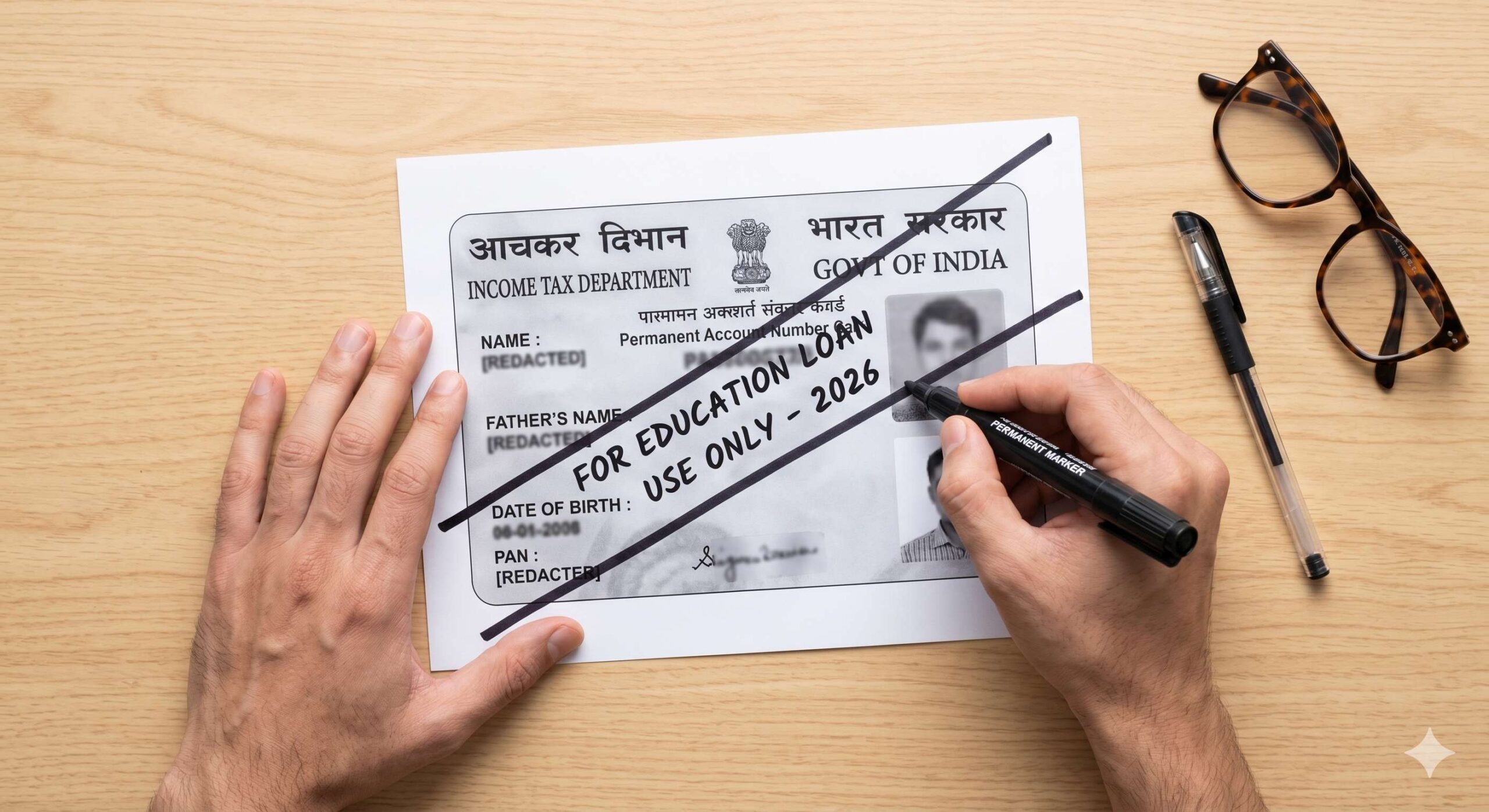
- Guard Your KYC Documents: Whether dealing with a bank manager or an educational counselor, never hand over your original Aadhaar card or PAN card. When submitting photocopies, always draw a line across the document and write “Submitted only for Education Loan at [Bank Name]” along with the date. This prevents identity thieves from misusing your documents to open fake accounts.
Loan Settlement Kaise Kare: A Complete Guide to Settling Your Debts Wisely
Smart Money Behavior for Students and Parents

A good CIBIL score for education loan purposes is the result of long-term smart money management. Here are the behaviors Indian families should adopt to secure their financial future:
1. Clean Up Existing Debt (Parents)
If you are planning to apply for an education loan next year, focus on clearing any outstanding credit card dues or personal loan defaults immediately. Ensure your credit utilization ratio (how much credit you use compared to your limit) is below 30%. Never skip an EMI, as a single missed payment can drop your score significantly.
2. Pay Simple Interest During the Moratorium (Students & Parents)
Most education loans offer a “moratorium period” (the course duration plus six months to one year) where the student does not have to pay the EMI. However, banks still calculate simple interest during this time. A highly recommended smart money habit is for the parents or the student (via part-time jobs) to pay off just this simple interest every month. Not only does this reduce the total debt burden, but it also establishes an excellent repayment track record, immediately boosting the student’s fresh CIBIL score.
3. Financial Awareness as a Family
Sit down as a family and discuss the loan amount, the expected EMI, and the repayment timeline. The student must understand that this loan will eventually be their responsibility. Defaulting on an education loan will ruin the student’s credit score for the first decade of their career, making it impossible to get a home loan or car loan later in life.
By understanding the exact requirements, avoiding scam artists, and practicing disciplined financial habits, middle-class families can safely fund their educational dreams without jeopardizing their financial security.
Frequently Asked Questions (FAQs)
1. Can a student get an education loan if they have no CIBIL score? Yes, absolutely. Most students fresh out of school have never taken a loan or credit card, so their CIBIL score will show as “-1” or “NH” (No History). Banks completely expect this and will not reject the student. Instead, the loan approval will depend entirely on the good credit score of the parent or guardian acting as the co-applicant.
2. What is the minimum CIBIL score required for the parent (co-applicant)? While policies vary slightly between banks, public sector banks generally look for a minimum score of 700. If you are applying for a large, unsecured loan (without providing collateral like property), a stronger score of 750 or above is highly recommended to secure the best interest rates.
3. Are “No CIBIL Check” education loan apps safe to use? No, they are extremely dangerous. Legitimate banks and RBI-registered NBFCs must always check credit history. Mobile apps advertising “No CIBIL education loans” are often illegal data-harvesting scams designed to steal your PAN card, Aadhaar details, and phone contacts for future blackmail or identity theft. Always stick to recognized banks.
4. Will checking my own CIBIL score before applying lower my score? No. When you (the consumer) check your own credit report through official bureaus like CIBIL, Experian, or your bank’s secure portal, it is recorded as a “soft inquiry.” Soft inquiries have absolutely zero impact on your score. You should check your score safely at least 6 months before applying for the loan.
5. How can a student build a good CIBIL score while still studying? The safest and smartest way is to pay off the “simple interest” that accumulates during the loan’s moratorium period (the time you are studying when full EMIs haven’t started). By making these small, regular interest payments, the student establishes a highly positive repayment track record, instantly building a strong CIBIL score before they even graduate.
Conclusion
Your child’s higher education is one of the most important investments your family will ever make. By taking the time to thoroughly understand the CIBIL score for education loan requirements well in advance, you do more than just secure college funding—you protect your family’s generational savings from being wiped out.
Financial safety is about preparation. Never wait until the college deadline to check your credit health. Pay your existing EMIs on time, stay far away from “guaranteed approval” agents or fake mobile apps, and always deal directly with official bank representatives. By practicing these disciplined money habits today, you can ensure a smooth, safe loan process tomorrow, allowing your child to focus entirely on their studies rather than financial stress.
Disclaimer: This article is for educational purposes only and is intended to promote financial awareness. It is not professional financial, legal, or investment advice. Always consult with a registered bank official or certified financial planner before applying for loans or making significant financial decisions.