
Introduction
Are you a small business owner, freelancer, or entrepreneur in India who registered your business under the old system? If so, understanding the transition from Udyog Aadhaar to Udyam is absolutely critical for your financial stability.
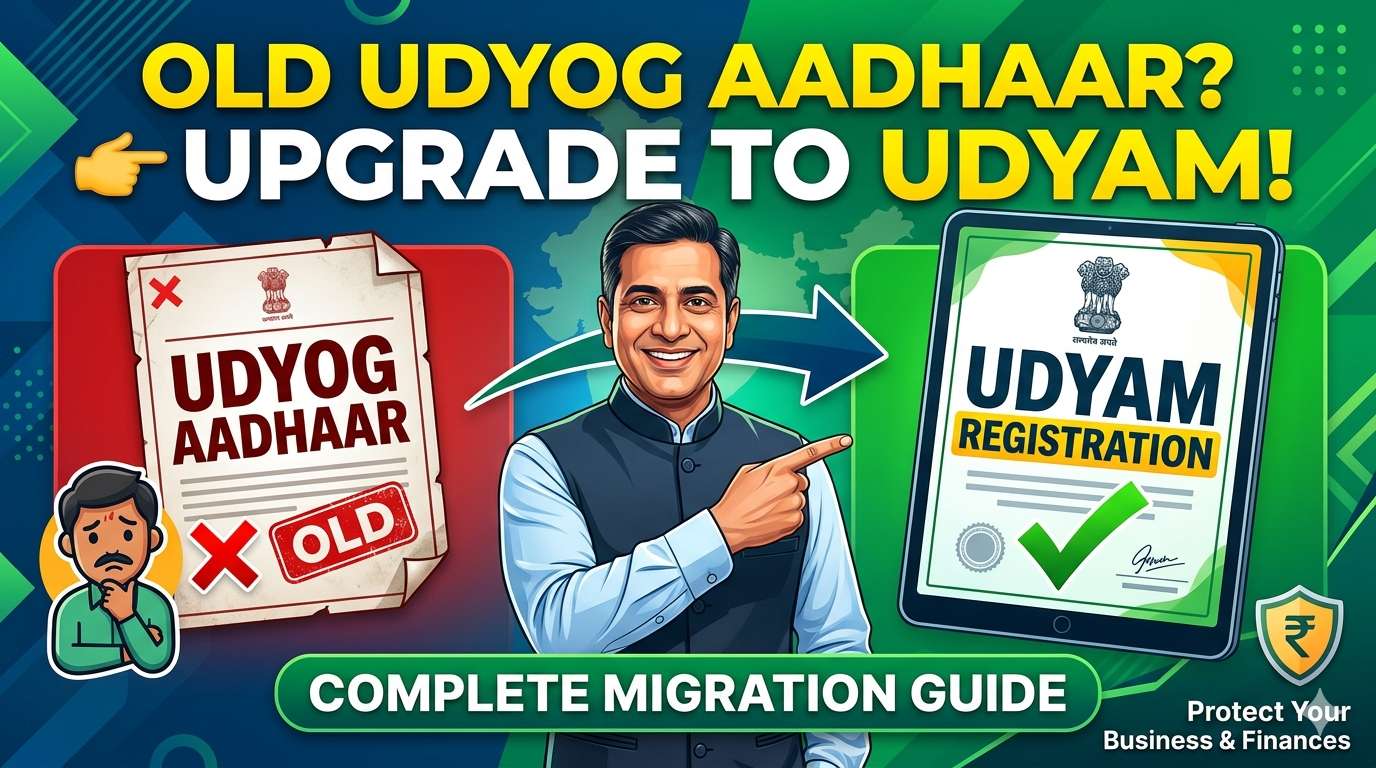
Simply put, the Government of India has replaced the old Udyog Aadhaar Memorandum (UAM) with a new, fully digital, and paperless system called Udyam Registration. If you hold the older Udyog Aadhaar certificate, it is no longer valid. You must migrate your Udyog Aadhaar to Udyam on the official government portal to continue enjoying vital MSME benefits. This migration process is 100% free of cost.
In this comprehensive guide on Bachatbook.in, we will explain exactly why this mandatory shift happened, how failing to migrate can severely impact your savings, and how you can protect your hard-earned money from fraudulent websites trying to scam you during the registration process.
Table of Contents
Why Did the Government Shift from Udyog Aadhaar to Udyam?
To understand why you need to act, it helps to know why the system changed. The older Udyog Aadhaar system relied heavily on self-declaration. This meant business owners manually entered their investment and turnover details, which occasionally led to discrepancies and made verification difficult for financial institutions.
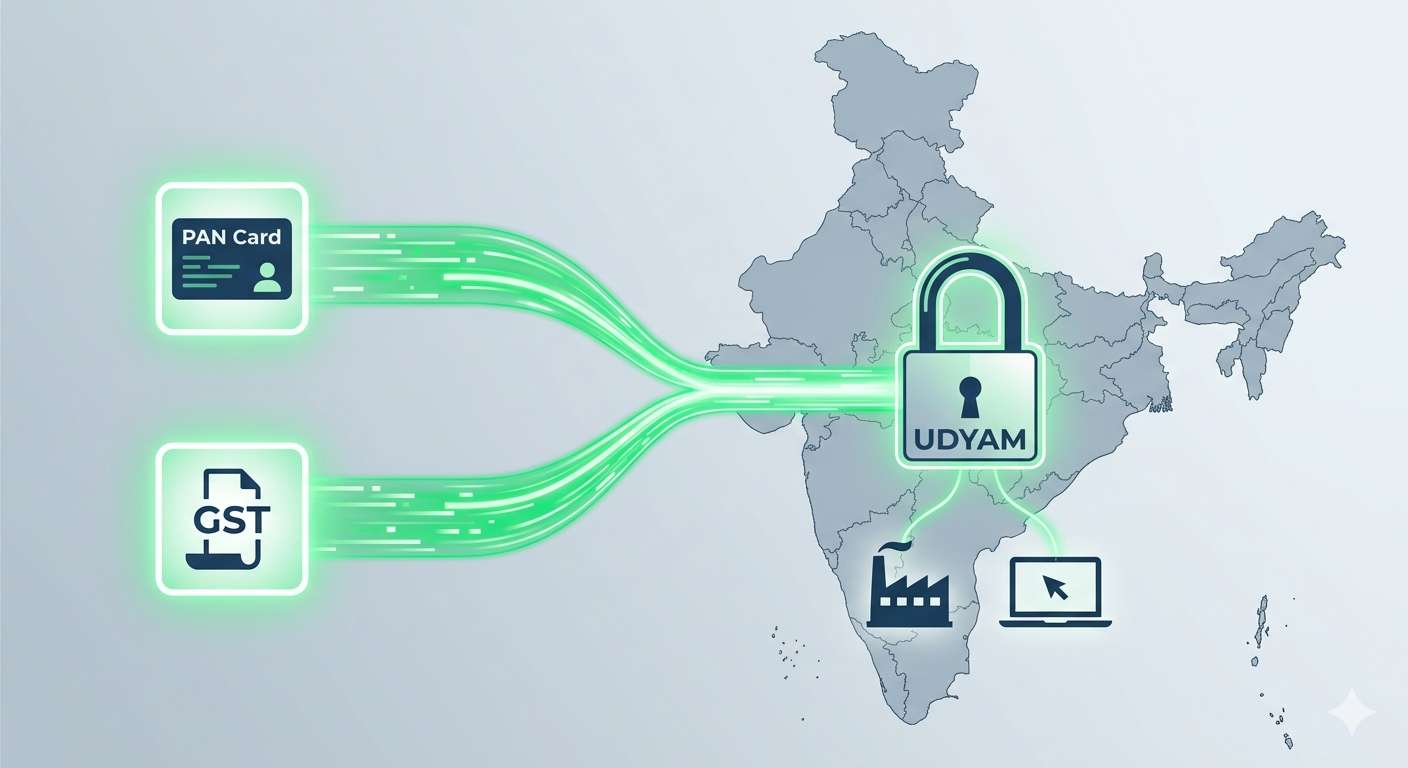
The new Udyam Registration portal is directly integrated with the Income Tax and GST systems. When you convert your Udyog Aadhaar to Udyam, the portal automatically fetches your investment and turnover details from your PAN and GST numbers. This creates a transparent, fraud-proof ecosystem that makes it easier for genuine middle-class entrepreneurs and small business owners to prove their business credentials to banks and the government.
The Direct Financial Impact: What Happens If You Do Not Migrate?
At Bachatbook.in, our primary focus is helping you save money and maintain financial awareness. Ignoring the Udyog Aadhaar to Udyam migration is not just a paperwork delay—it is a direct threat to your business’s financial health. Here is what you stand to lose:
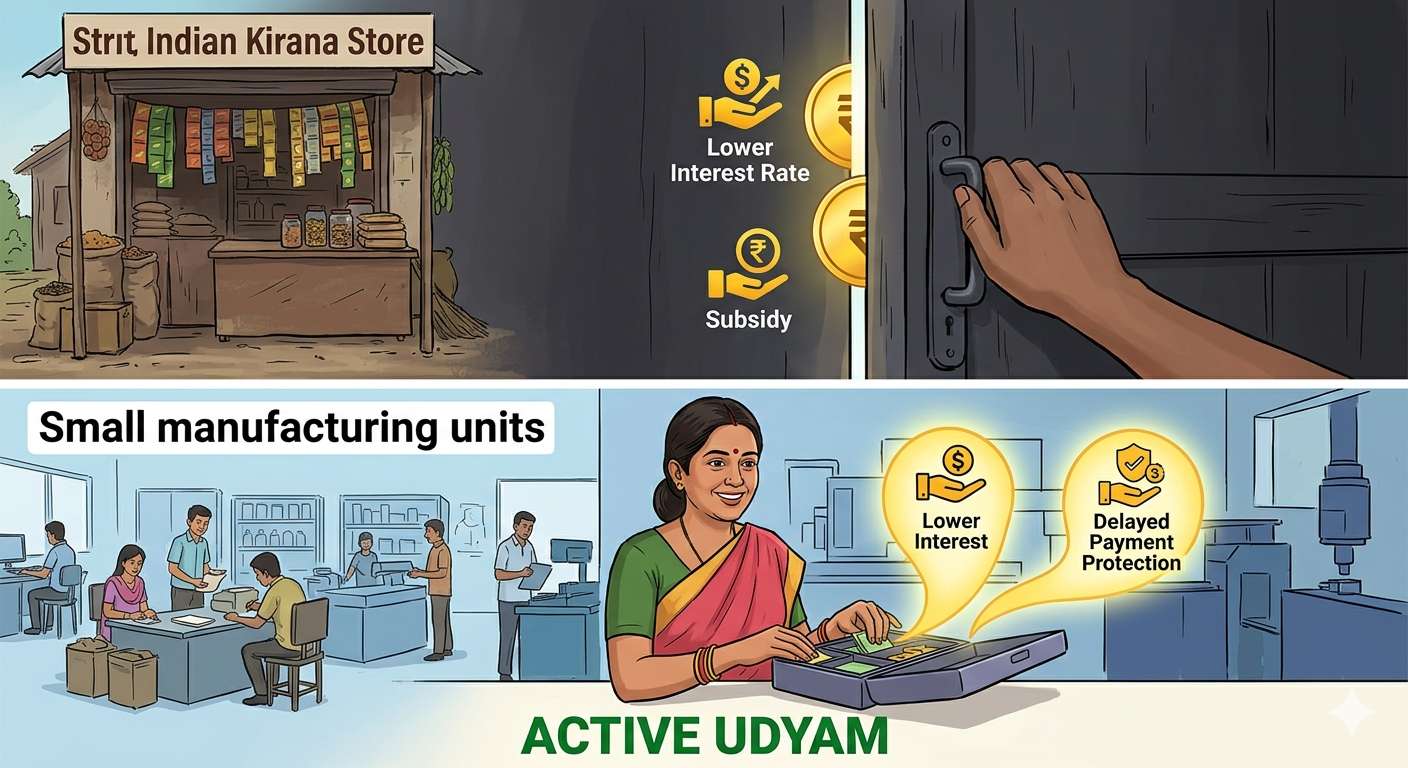
- Loss of Cheaper Bank Loans: MSMEs with a valid Udyam certificate are eligible for lower interest rates on business loans compared to regular commercial loans. If your Udyog Aadhaar expires without migration, your bank may classify you as a standard corporate entity, instantly increasing your interest burden and draining your monthly budget.
- Missing Out on Collateral-Free Credit: The government offers collateral-free loans under schemes like the Credit Guarantee Fund Trust for Micro and Small Enterprises (CGTMSE). Without an active Udyam registration, you lose access to this financial safety net.
- No Protection Against Delayed Payments: One of the biggest challenges for small businesses in India is getting paid on time. Registered MSMEs have legal protection under the MSME Samadhaan scheme, which mandates that buyers must pay within 45 days. If you do not migrate, you lose this crucial legal backing, risking severe cash flow problems.
- Loss of Government Subsidies: From barcode registration subsidies to exemptions in electricity bills, the financial perks of being a recognized MSME are vast. Losing your registration means paying out of pocket for expenses the government would have otherwise covered.
Fraud Prevention: Beware of Fake Udyam Registration Scams
Whenever a new government mandate is announced, scammers quickly try to take advantage of the confusion. The migration from Udyog Aadhaar to Udyam is entirely free, yet the internet is flooded with fake websites that look exactly like the government portal.
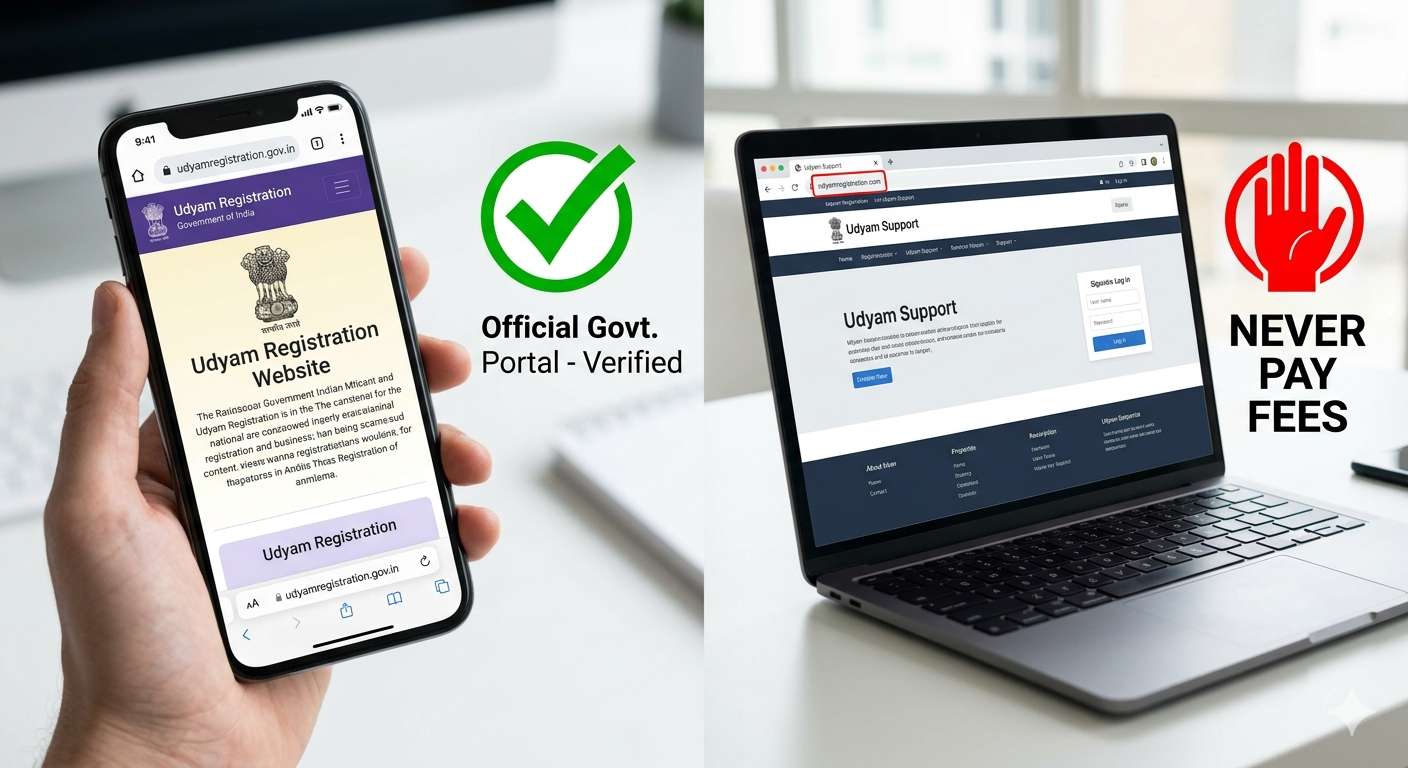
How the Scam Works:
Fraudsters set up private websites or agencies offering to “assist” you with the Udyog Aadhaar to Udyam conversion. They will ask you to fill out your sensitive personal data and then charge a “consultation fee” ranging from ₹1,000 to ₹3,000. Not only do you lose money on a free service, but you also expose your PAN and other crucial financial data to unknown third parties.
How to Protect Your Money and Data:
- Check the URL: The ONLY official website for MSME registration is udyamregistration.gov.in. Any website ending in
.com,.org, or.inclaiming to do this is a private entity. - Never Pay a Fee: The government does not charge a single rupee for new Udyam registrations or for migrating from Udyog Aadhaar. If a website asks for credit card or UPI details, it is a massive red flag.
- Do Not Share OTPs Unnecessarily: The official portal uses Aadhaar-based OTP verification. Never share this OTP with “agents” calling you on the phone promising to do the work for you.
How to Safely Migrate from Udyog Aadhaar to Udyam
Protecting your financial identity means taking control of your own paperwork. Here is the safe, legitimate, and free way to complete the migration yourself:
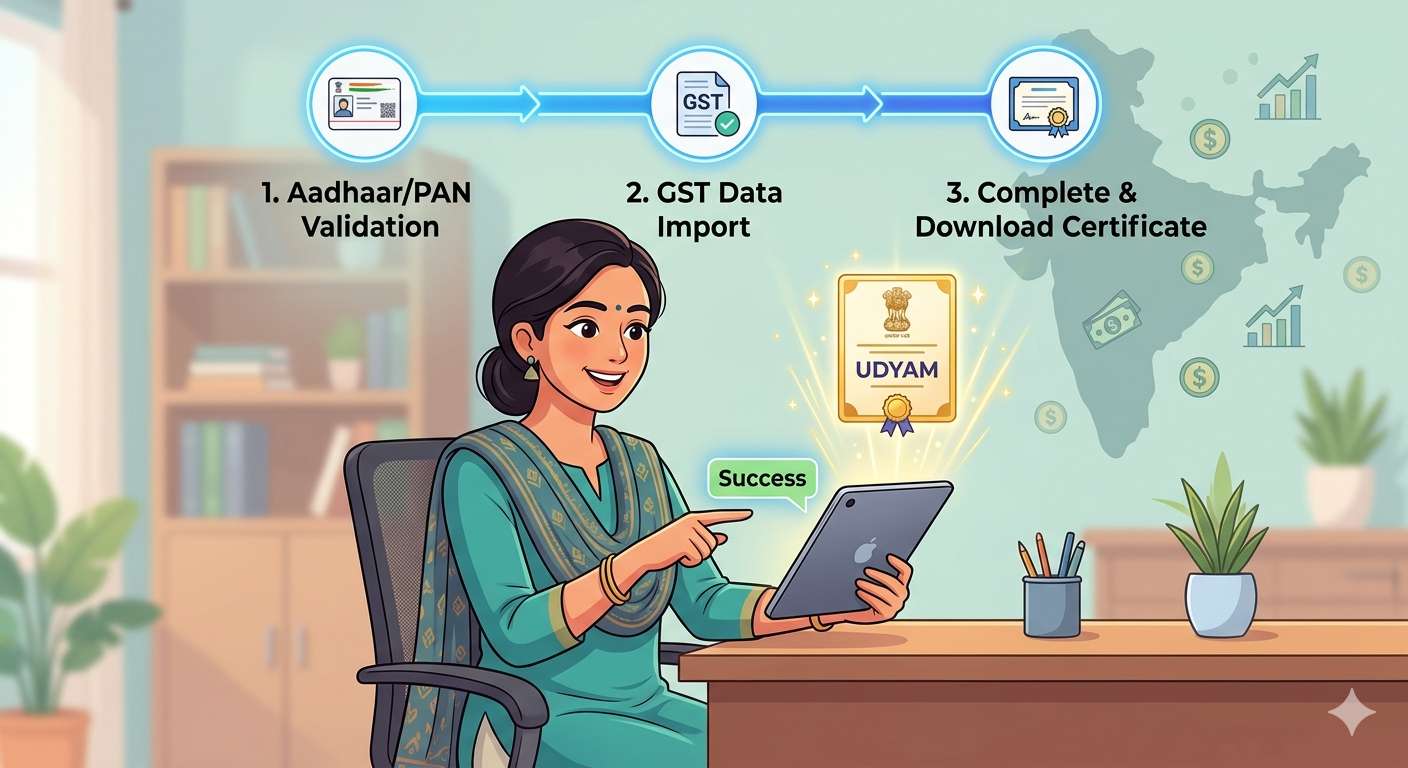
- Visit the Official Website: Go directly to
udyamregistration.gov.in. - Select the Correct Option: On the homepage, look for the option that says, “For those already having registration as UAM”.
- Enter Your Details: You will need to input your old Udyog Aadhaar Number and choose your preferred method for OTP verification (either via the mobile number or email address linked to your Aadhaar).
- Validate and Fill: Once the OTP is validated, the system will fetch your basic details. You will then be prompted to enter your PAN.
- Complete the Form: The system will automatically pull your GST and Income Tax return data based on your PAN. Fill in any remaining mandatory fields about your business activities and employee count.
- Submit and Download: After a final OTP submission, your application will be processed. Within a few days, you will receive an email with a link to download your new Udyam Certificate.
Smart Money Habits for the Registered Business Owner
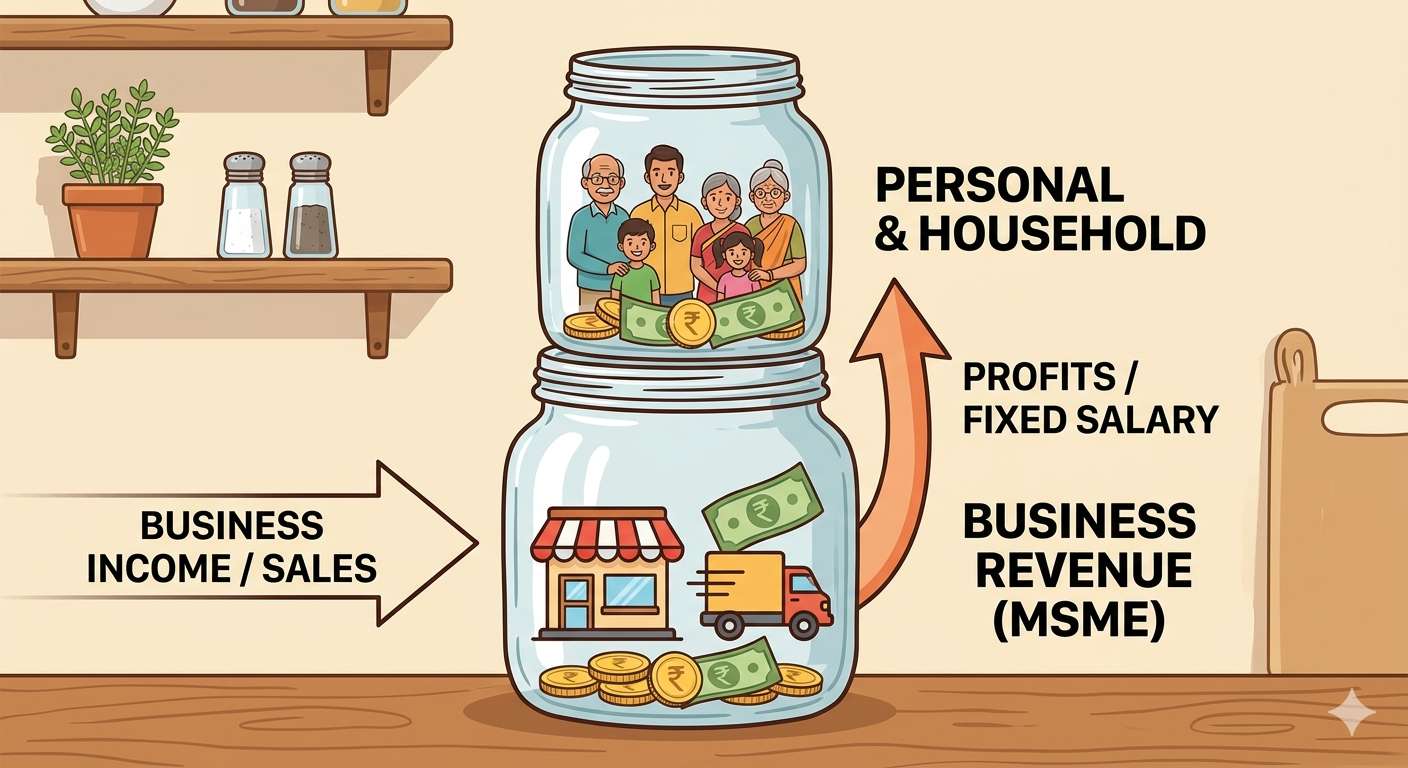
Completing your Udyog Aadhaar to Udyam migration is just the first step in formalizing your business. To truly build wealth and secure your family’s future, you must pair this official recognition with smart financial habits.
1. Strictly Separate Personal and Business Finances
Never mix your household budget with your business income. Now that you have a valid Udyam certificate, visit your bank and open a dedicated Current Account in your business’s name. This prevents you from accidentally spending business capital on personal expenses and makes tax filing significantly easier.
2. Build a Business Emergency Fund
Just as your family needs an emergency savings fund, your business does too. Set aside a percentage of your monthly profits into a liquid mutual fund or a fixed deposit. If a client delays payment or equipment breaks down, this fund will prevent you from taking on high-interest debt.
3. Utilize Government Schemes Wisely
Your Udyam certificate is a key that unlocks various financial doors. Take the time to research state and central government schemes applicable to your specific sector. Subsidies on patent registrations, ISO certifications, and technology upgrades can save you lakhs of rupees in the long run.
4. Track Every Rupee
Financial awareness starts with tracking. Whether you use a simple Excel sheet, an accounting app, or a traditional ledger, record every business expense. Identifying and cutting out unnecessary costs is the fastest way to increase your profit margin without needing to increase your sales.
Understanding the Tax Audit Limit for SMEs: Save Money and Avoid Penalties
Final Thoughts
The shift from Udyog Aadhaar to Udyam is a vital administrative step that holds immense financial consequences for your business. By taking 15 minutes to complete this free migration on the official government portal, you protect your access to affordable credit, secure your business legally, and avoid falling victim to costly online scams. Stay financially aware, protect your data, and continue building your business with confidence!
Frequently Asked Questions (FAQs)
1. Is it mandatory to convert Udyog Aadhaar to Udyam? Yes, it is completely mandatory. The government has deactivated the old Udyog Aadhaar Memorandum (UAM) system. If you do not migrate, your business will lose its official MSME status, which means you will lose access to lower loan interest rates and government subsidies.
2. What are the fees for the Udyog Aadhaar to Udyam migration? The migration process is 100% free of cost. You do not have to pay a single rupee. Please be highly aware of fake private websites or “agents” asking for ₹1,000 to ₹3,000 to do this for you. Always use the official government portal (udyamregistration.gov.in) to protect your money.
3. Do I need to upload any physical documents to migrate? No, you do not need to scan or upload any paperwork. The Udyam registration portal is fully digital and paperless. It uses your Aadhaar number for OTP verification and automatically fetches your business investment details using your linked PAN and GST numbers.
4. Can I still use my old Udyog Aadhaar certificate to apply for a bank loan? No, banks and financial institutions no longer accept the old Udyog Aadhaar certificate. If you want to apply for a collateral-free loan or get the special MSME discount on your loan interest rate, you must provide a valid Udyam Registration Certificate.
5. What should I do if I don’t have a GST number? Can I still migrate? Yes, you can still migrate. While having a GST number is mandatory for most businesses, certain categories that are exempt from the GST Act can still register on the Udyam portal using just their PAN and Aadhaar details.
Conclusion
At the end of the day, updating your business registration is not just a boring government formality—it is a protective shield for your finances. The transition from Udyog Aadhaar to Udyam was designed to make the MSME sector more transparent, fraud-free, and bank-ready.
By taking just a few minutes to complete this free migration on the official government portal, you secure your right to financial benefits and keep your money safe from greedy middlemen and scam websites. Take charge of your financial paperwork today, keep your business money safe, and continue building a secure, profitable future for your family!