
Introduction
Taking a loan is often a necessary step for Indian middle-class families to achieve dreams like buying a home, a car, or funding higher education. However, the most critical part of any loan is not just getting the money, but how you finish the repayment process. When you reach the end of your loan tenure, you will encounter two very different paths: Loan Closure and Loan Settlement.

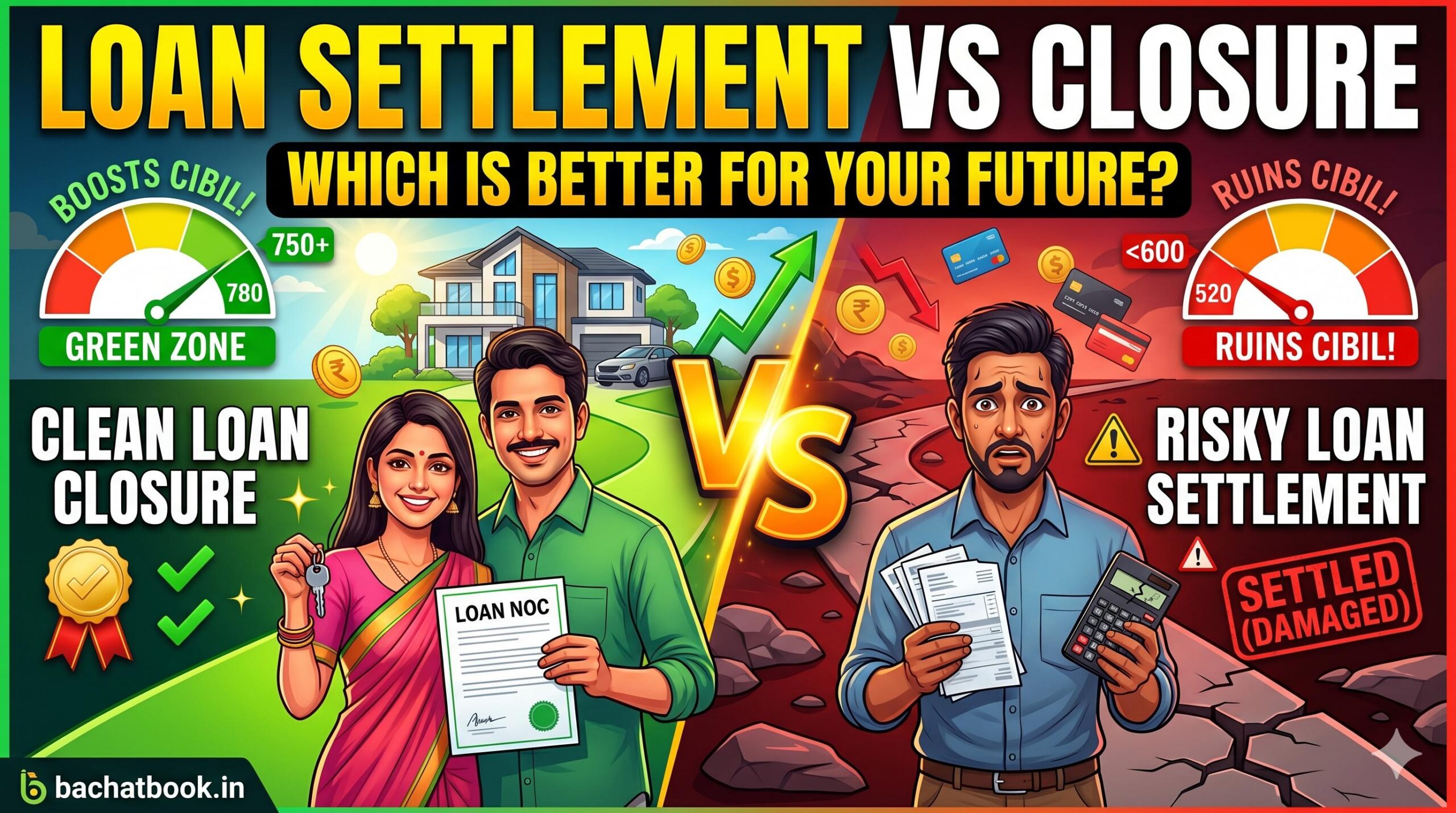
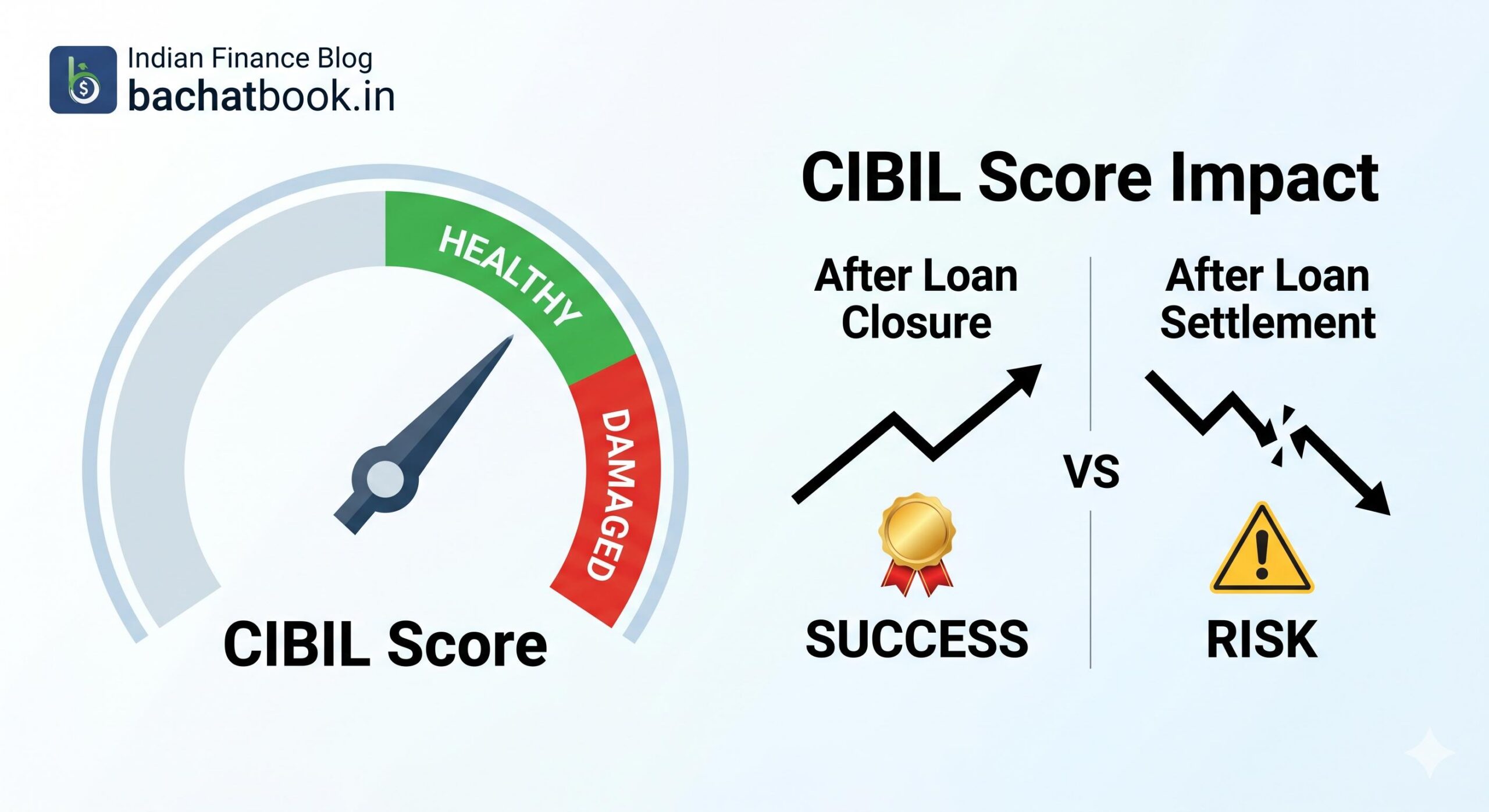
Loan Closure is the ideal scenario where you pay back the entire principal and interest as per the agreement, leading to a “Closed” status and a better credit score. In contrast, Loan Settlement is an emergency measure where you pay only a part of the debt because of financial hardship, resulting in a “Settled” status that severely damages your CIBIL score for years. Understanding loan settlement vs closure is essential to protect your financial reputation and ensure that you can easily get loans in the future.
Table of Contents
1. What is Loan Closure? (The Successful Path)
Loan closure is the natural and healthy way to end a debt. It means you have fulfilled your promise to the lender by paying every single Equated Monthly Installment (EMI) on time until the balance becomes zero.
Why Closure is Important:
- Credit Score Boost: A closed loan shows that you are a responsible borrower. This increases your CIBIL score, making it easier to get future loans at lower interest rates.
- Legal Peace of Mind: Once a loan is closed, the bank has no further claim on your income or assets.
- Document Retrieval: For secured loans like home or car loans, the bank will return your original property papers or the vehicle’s registration certificate (RC).
The Essential Checklist for Loan Closure:
To ensure your loan is properly closed, you must:
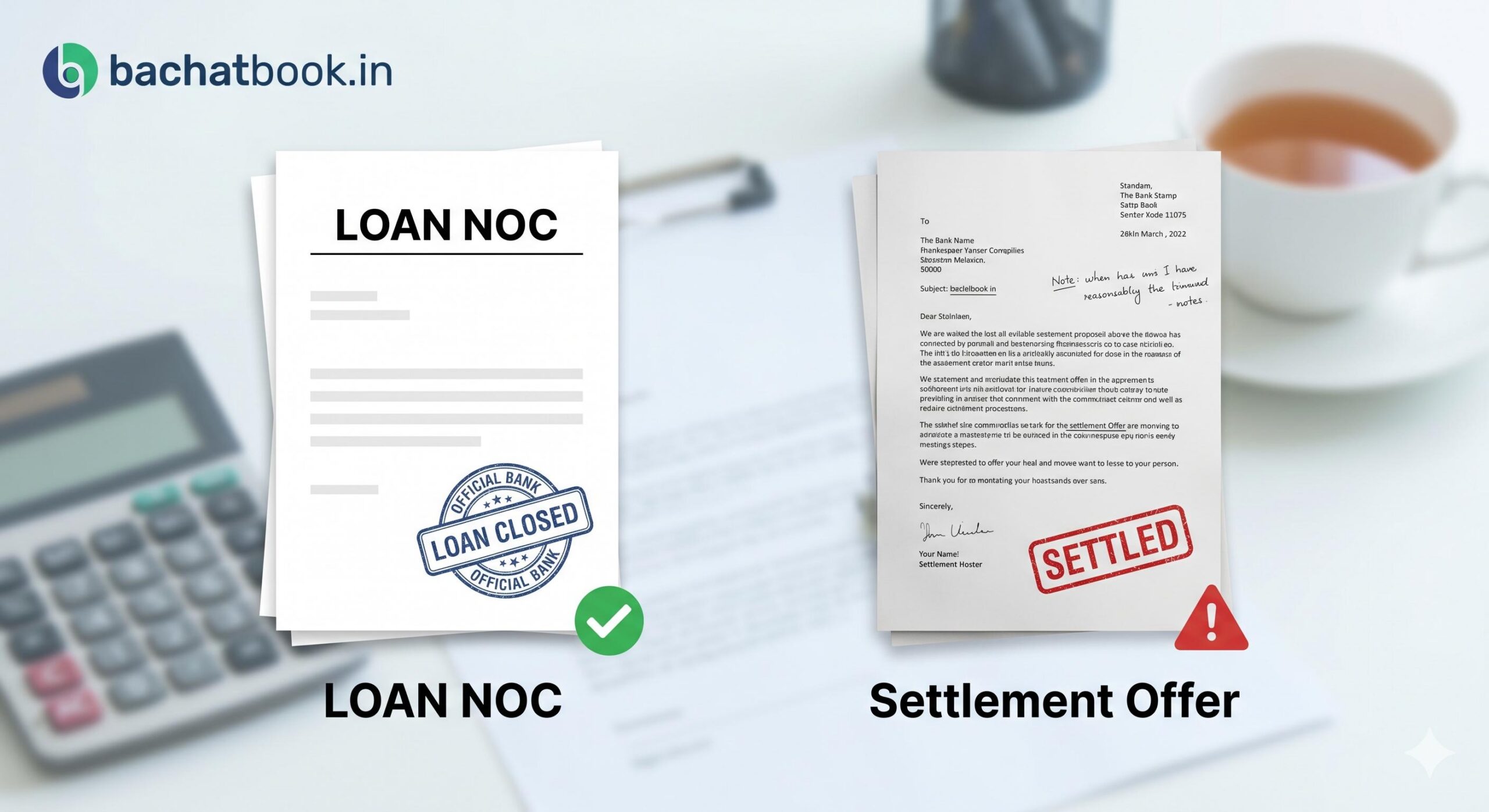
- Obtain the No Due Certificate (NDC) or NOC: This is the most important document. It proves you owe nothing more to the bank.
- Remove Hypothecation: If you took a car loan, ensure the “Lien” or “Hypothecation” is removed from your RC at the RTO.
- Check Your Credit Report: Wait for 45–60 days and check your credit report to ensure the status shows “Closed” and not “Active.”
2. What is Loan Settlement? (The Risky Path)
Loan settlement usually happens when a borrower is in deep financial trouble—perhaps due to a job loss, business failure, or a medical emergency—and has stopped paying EMIs for several months.
When the bank realizes it may not get the full amount back, they offer a “One-Time Settlement” (OTS). They might agree to let you pay 50% or 60% of the total outstanding amount to “settle” the account. While this stops the recovery calls and legal threats, it is not a clean exit.
The Hidden Cost of Settlement:
The bank reports this to credit bureaus (like CIBIL, Equifax, or Experian) as a “Settled” account. To any future lender, “Settled” is a red flag. It tells them that you did not pay back what you borrowed in full. This status can stay on your report for seven years, making it nearly impossible to get a credit card, a home loan, or even a simple personal loan during that period.
3. Comparison Table: Loan Settlement vs Closure
| Feature | Loan Closure | Loan Settlement |
| Payment | Full payment of principal + interest | Partial payment (negotiated) |
| Impact on CIBIL | Positive (Increases your score) | Negative (Significant drop in score) |
| Status on Report | “Closed” | “Settled” |
| Future Eligibility | High; you are a preferred borrower | Low; most banks will reject you |
| Documents Issued | Full NOC / No Due Certificate | Settlement Letter |
| Timeline on Record | Shows a history of discipline | Stays as a “Scar” for 7 years |
4. Connecting to Financial Awareness: Protecting Your Money
At bachatbook.in, our goal is to help you save more and spend smart. Choosing a settlement might feel like “saving money” because you are paying less than you owe, but it is actually a major financial loss. The “discount” you get today will cost you much more in the future through rejected loan applications or extremely high interest rates from private lenders.
Risks of Poor Debt Management:
- The Trap of High-Interest Debt: Credit card debts and instant app loans often lead to settlement because their interest rates are very high.
- Stress and Harassment: Before reaching a settlement, you often have to face months of recovery calls and legal notices, which affects your mental health.
5. Smart Money Habits to Avoid the Settlement Trap
Prevention is always better than a cure. Here are practical ways to ensure you always reach “Loan Closure”:

- Build an Emergency Fund: Always keep 6 months of your EMIs and basic expenses in a separate savings account (Bachat). This ensures that even if you lose your job, your loan payments don’t stop.
- Follow the 40% Rule: Your total monthly EMIs should never exceed 40% of your take-home salary. If you earn ₹50,000, keep your EMIs below ₹20,000.
- Insurance Matters: For large loans like home loans, always take a loan term insurance. If something happens to the breadwinner, the insurance pays off the loan, preventing the family from falling into a settlement situation.
- Avoid “Instant” Debt Traps: Be careful with “Buy Now, Pay Later” (BNPL) schemes and small app-based loans. They are easy to get but can quickly spiral out of control.
6. What to Do if You Cannot Pay Your EMI?
If you are facing a genuine financial crisis, don’t jump to settlement immediately. Try these “Smart Money” alternatives:
- Loan Restructuring: Ask your bank to increase the tenure. This will reduce your monthly EMI, making it easier to pay.
- EMI Holiday: Some banks allow a 3–6 month pause in payments during extreme hardship (though interest still accrues).
- Asset Liquidation: It is better to sell some gold or a piece of land to close the loan fully rather than settling it and ruining your credit history.
The Complete Guide to Getting a Loan Without a Salary Slip in 2026 (Safely)
Frequently Asked Questions (FAQs)
Q1: Can I get a loan after a settlement?
It is very difficult. Most reputable banks in India will reject your application for at least 5 to 7 years after a settlement. You might only get loans from high-interest private lenders or gold loans.
Q2: How can I change “Settled” to “Closed” in my CIBIL report?
You can do this by paying the remaining balance (the “haircut” amount) that the bank waived off earlier. Once you pay the full amount plus interest, the bank will issue a “No Due Certificate,” and the status can be updated to “Closed.”
Q3: Does loan settlement affect my family members?
Not directly. However, if you are a co-applicant or guarantor on their loans, your “Settled” status will affect those applications as well.
Q4: Is an NOC mandatory for loan closure?
Yes. An NOC is your only legal proof that the loan is over. Without it, you cannot prove to another bank or a court that you have no pending dues.
Q5: How long does it take for the status to update on CIBIL?
Banks usually report data to CIBIL once a month. It typically takes 45 to 60 days for your loan closure or settlement to reflect on your credit report.
Conclusion
In the journey of financial literacy, the choice between loan settlement vs closure is a test of your long-term vision. While a settlement offers a quick exit from debt pressure, it leaves a permanent mark on your financial profile that can hinder your future dreams.
Always aim for a Loan Closure. It is the gold standard of borrowing that proves your integrity and financial discipline. By maintaining an emergency fund and borrowing only what you can afford, you can ensure that every loan you take helps you build a better future rather than becoming a burden. Stay aware, save smart, and protect your credit health.
Disclaimer: This article is for educational purposes only and does not constitute professional financial or legal advice. Every individual’s financial situation is different; please consult a certified financial advisor or your bank’s representative for specific guidance on your debts.