

Introduction
Managing finances in today’s fast-paced world goes beyond just saving money in a bank account; it requires building a strong, trustworthy financial reputation. For many Indian salaried employees and middle-class families, securing a home loan, financing a child’s higher education, or handling sudden medical emergencies depends entirely on one crucial three-digit number: the CIBIL score.
If you have ever faced the frustration of a loan rejection, or if you simply want to ensure you get the lowest possible interest rates in the future, learning the right CIBIL score badhane ke tips is an absolute necessity. A strong credit profile acts as a protective financial shield, saving you from high-interest debt and informal lenders.
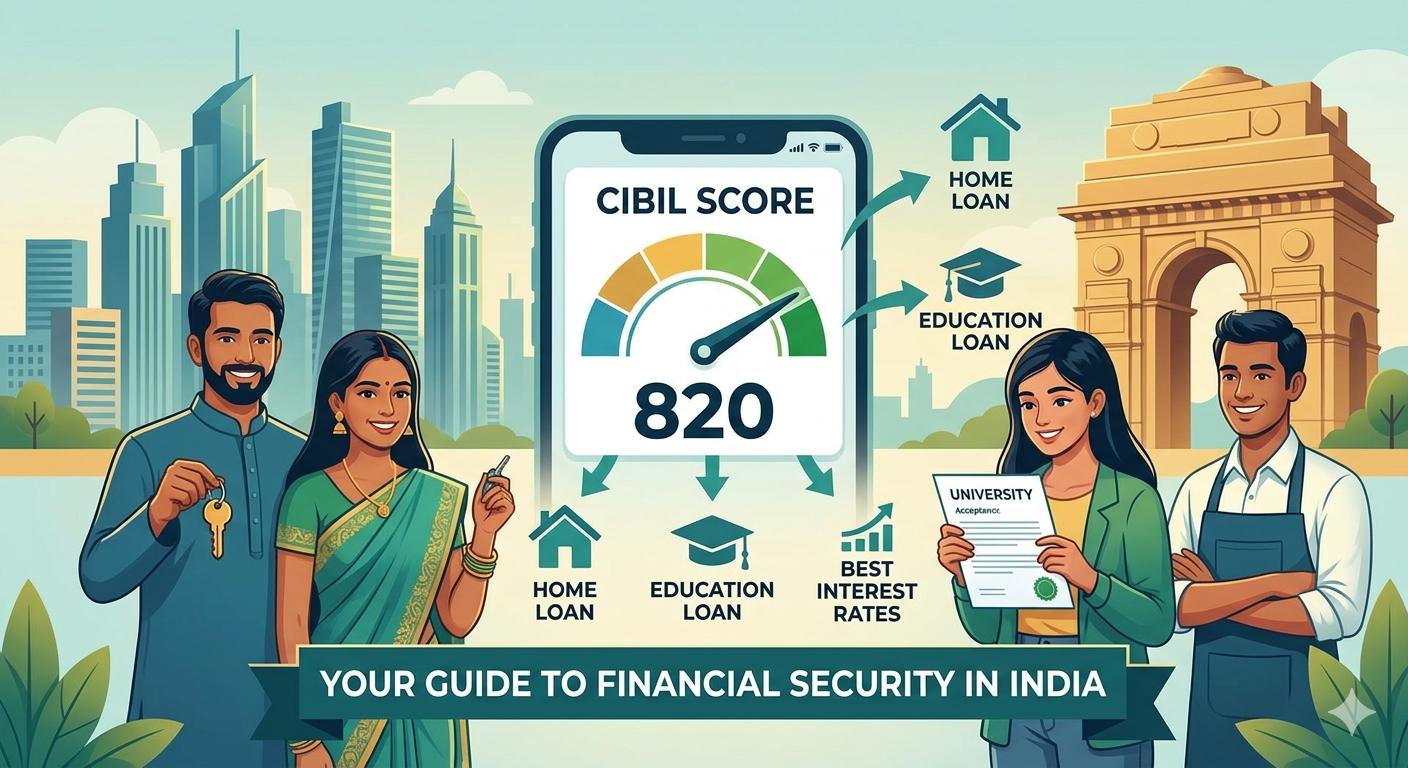
In this comprehensive guide, we will explore exactly what a credit score means for your financial safety, how a bad score secretly drains your wealth, and the smartest, most practical habits you can adopt today to improve your creditworthiness.
Disclaimer: This article is for educational purposes only. It is not professional financial advice. Please consult a certified financial advisor or your bank for specific credit-related decisions.
Table of Contents
The Hidden Risks of Ignoring Your Credit Score
When managing household finances, many people focus entirely on saving money in bank accounts and completely ignore their credit profile until they actually need a loan. This is a significant financial risk. Your CIBIL score is essentially your financial report card. When you ignore it, you expose yourself to several unseen dangers.
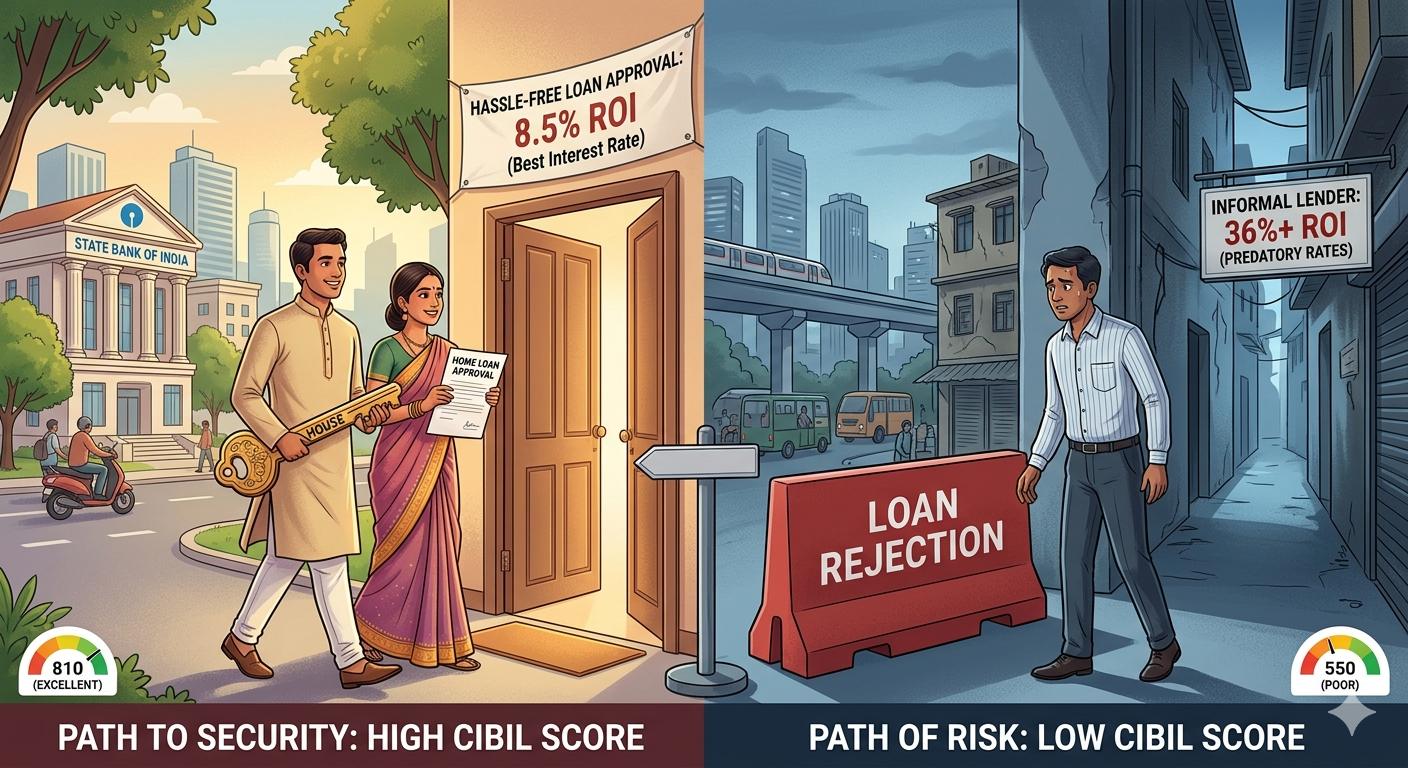
The most immediate risk is loan rejection. Banks and Non-Banking Financial Companies (NBFCs) rely heavily on this three-digit number to gauge your reliability. If your score is below 700, your application might be instantly flagged and denied. Being denied credit during an emergency—like needing funds for a hospital bill or urgent home repairs—can push families toward unregulated, informal lenders who charge devastatingly high interest rates.
Furthermore, a poor credit score leaves you vulnerable to financial instability. It limits your options, forcing you to rely entirely on your liquid savings. In the modern financial ecosystem, having access to affordable, formal credit is a safety net. Ignoring the need to build this safety net puts your family’s financial wellbeing at serious risk.
The Financial Impact: How a Bad Score Drains Your Wealth
Understanding the financial impact of a poor credit score is critical for financial awareness. A bad score does not just stop you from getting a loan; it actively steals from your future savings.
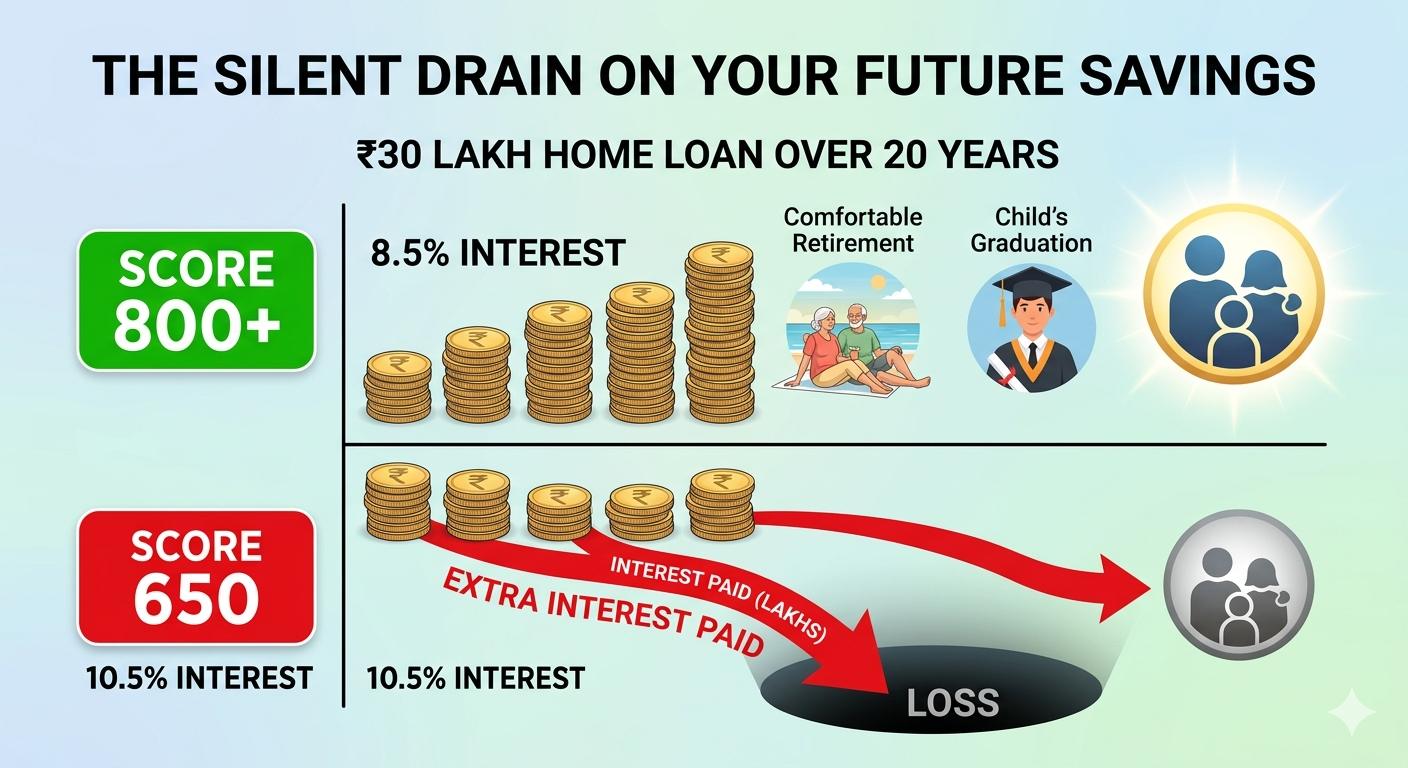
Let us look at a practical example common among Indian middle-class families. Imagine you are taking a home loan of ₹30 Lakhs for a tenure of 20 years.
- If you have followed good CIBIL score badhane ke tips and maintain a score of 800+, a bank might offer you an interest rate of 8.5%.
- If your score is around 650, the bank views you as a higher risk. They might still approve the loan, but at an interest rate of 10.5% or more.
Over 20 years, that 2% difference translates to several lakhs of rupees in extra interest paid to the bank. That is money that could have been invested in your child’s education, added to your retirement fund, or used to build an emergency corpus. A low credit score acts like a silent tax on your life, slowly draining your wealth. Protecting your score is, therefore, one of the most effective ways to save money.
Essential CIBIL Score Badhane Ke Tips (Prevention Habits)
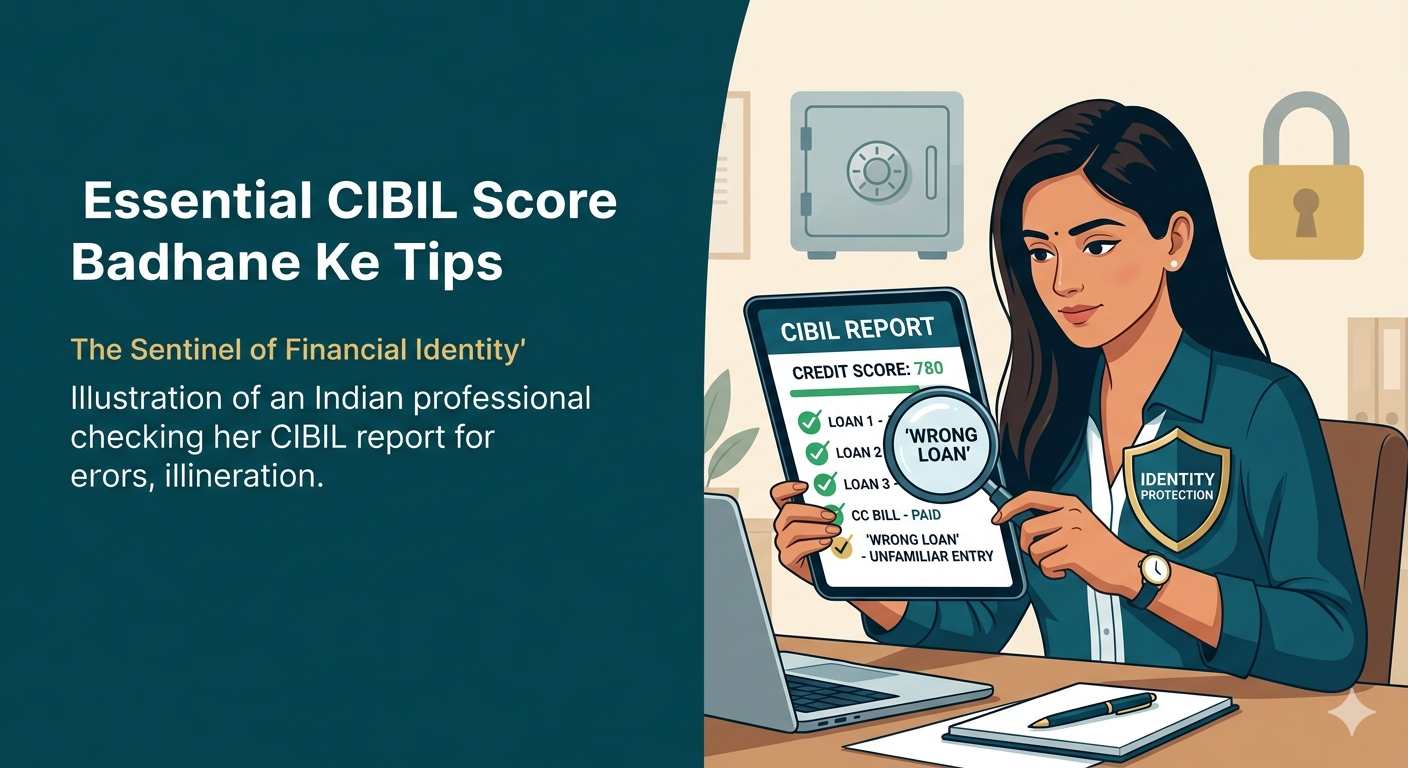
To protect your finances and ensure you never pay more interest than you have to, you must adopt preventive financial habits. Here are the most effective, practical CIBIL score badhane ke tips that you can start implementing today.
1. Pay Your EMIs and Credit Card Bills on Time, Every Time
The most significant factor in your credit score calculation is your repayment history. Missing an EMI payment or delaying your credit card bill by even a few days can negatively impact your score.
The Habit: Set up auto-debit mandates on your salary account for all your loan EMIs. For credit cards, always pay the “Total Amount Due” rather than the “Minimum Amount Due.” Paying only the minimum amount traps you in a high-interest debt cycle and harms your financial health.
2. Keep Your Credit Utilization Ratio (CUR) Below 30%
Your Credit Utilization Ratio is the percentage of your total available credit limit that you are currently using. For example, if your credit card limit is ₹1,00,000 and you spend ₹50,000, your CUR is 50%. Banks view a high CUR as a sign that you are credit-hungry and potentially struggling with cash flow.
The Habit: To maintain a healthy score, strictly keep your credit card spending below 30% of your total limit. If you frequently cross this limit, request your bank to increase your credit limit, but do not increase your spending.
3. Avoid Multiple Hard Inquiries in a Short Time
Whenever you apply for a new loan or a new credit card, the lender checks your CIBIL report. This is called a “hard inquiry,” and it temporarily drops your score by a few points. If you apply for five credit cards or personal loans in a single month, multiple hard inquiries will severely damage your score.
The Habit: Apply for credit only when it is absolutely necessary. Do not apply for credit cards just because a salesperson offered you a free gift. Space out your loan and credit card applications by at least six months.
4. Maintain a Healthy Mix of Credit
Your credit profile is evaluated based on the types of loans you hold. There are two main types: secured loans (like home loans or car loans backed by an asset) and unsecured loans (like personal loans or credit cards). Having exclusively unsecured loans can make you look risky to lenders.
The Habit: While you should not take a loan just to improve your score, maintaining a balanced mix of both secured and unsecured credit over your lifetime shows lenders that you have experience handling different types of financial responsibilities.
5. Check Your CIBIL Report Regularly for Errors
Sometimes, your score might drop through no fault of your own. Administrative errors, such as a bank failing to report a closed loan, or even cases of identity theft and financial fraud, can reflect poorly on your report.
The Habit: You are entitled to one free credit report a year from major credit bureaus in India. Download your report and review it carefully. If you spot an unfamiliar loan or a wrong default entry, raise a dispute immediately to get it corrected and protect your financial identity.
6. Do Not Close Your Oldest Credit Cards
The length of your credit history matters. A longer history of responsible repayment builds immense trust. When you close an old credit card, you wipe out a significant portion of your positive credit history and inadvertently increase your overall Credit Utilization Ratio.
The Habit: Even if you do not use your oldest credit card frequently, keep it active by making one small purchase every few months and paying it off immediately.
Building Smart Money Behaviors Beyond the CIBIL Score
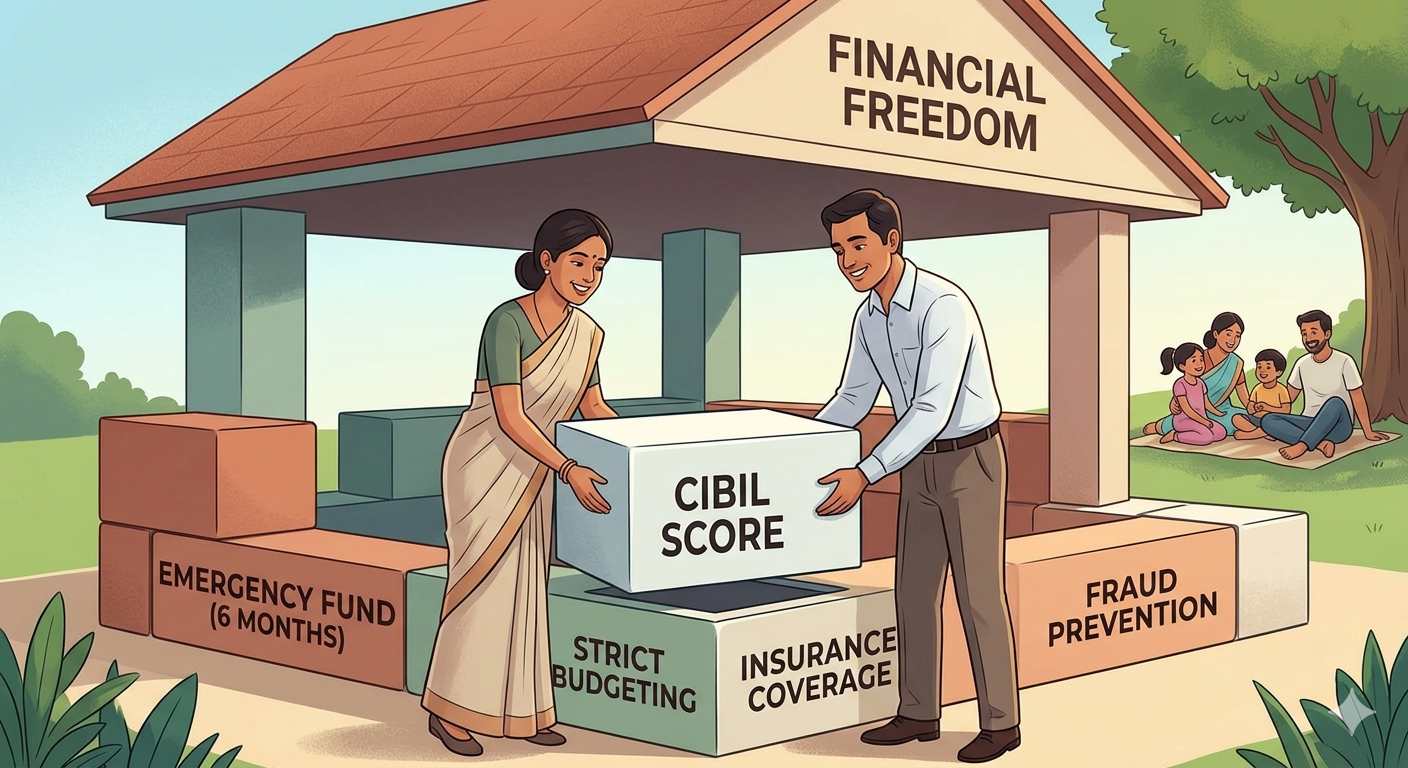
While focusing on CIBIL score badhane ke tips is crucial, true financial awareness goes beyond a single number. A good credit score should be the byproduct of excellent overall money management and budgeting.
For Indian middle-class families, financial safety starts with an emergency fund. You should aim to save at least three to six months’ worth of living expenses in a secure, accessible place like a fixed deposit or a liquid mutual fund. When you have a solid emergency fund, you do not need to max out your credit cards or take high-interest personal loans when a crisis hits. This naturally protects your credit score.
Furthermore, practice strict budgeting. Track your monthly income and categorize your expenses. Before taking on any new EMI—whether it is for a new smartphone or a car—calculate how it will affect your monthly cash flow. Credit cards and loans are financial tools, not free money. Smart money behavior means using these tools to build assets, not to fund a lifestyle you cannot afford.
By prioritizing financial literacy, educating yourself on fraud prevention, and making disciplined spending choices, you create a robust financial foundation. Your CIBIL score will automatically rise as a reflection of your smart, secure, and responsible financial habits.
Understanding a Business Loan Bina Security Ke (2026)
Frequently Asked Questions (FAQs)
1. Kitne time mein CIBIL score badh sakta hai? (How long does it take to improve my CIBIL score?) There are no overnight shortcuts to fixing a credit score. Generally, if you start paying your dues on time and maintain good credit habits, it takes anywhere from 3 to 6 months to see a meaningful improvement in your score. Consistency is the key to proving your reliability to banks.
2. What is the most important of all CIBIL score badhane ke tips? The single most impactful habit is a flawless repayment history. Clearing any past overdue amounts and ensuring every single EMI and credit card bill is paid on or before the due date will do more to improve your score than any other strategy.
3. Does checking my own CIBIL score decrease it? No, absolutely not. When you check your own credit report, it is categorized as a “soft inquiry,” which has zero negative impact on your score. In fact, checking your score regularly is a highly recommended financial safety habit to catch any potential errors or identity fraud early.
4. Does my bank account balance or salary affect my credit score? No. Your monthly salary, savings account balance, and investments are not reported to credit bureaus and do not impact your CIBIL score. The score is calculated purely based on how you handle borrowed money (loans and credit cards). However, a good bank balance is crucial for budgeting and paying those credit bills on time.
5. Will closing my old, unused credit card help improve my score? Usually, no. Closing an old credit card can actually harm your score. It erases a long history of good repayment and reduces your total available credit limit, which immediately increases your Credit Utilization Ratio (CUR). It is a smarter financial move to keep old cards active with very minimal, occasional use.
Conclusion
Building an excellent credit profile does not happen overnight by magic, but the long-term financial security it brings is entirely worth the effort. By consistently following these practical CIBIL score badhane ke tips—such as paying your EMIs strictly on time, keeping your credit utilization low, and regularly monitoring your report for errors—you are actively protecting your family’s wealth.
Remember, a high credit score is not an excuse to take on more unnecessary loans; rather, it is a vital pillar of your overall financial awareness and risk prevention strategy. When you combine a strong CIBIL score with smart money habits like maintaining an emergency fund and strict budgeting, you secure your financial future against unexpected shocks. Stay disciplined, avoid the trap of excessive debt, and watch your financial health grow stronger month by month.