
Introduction
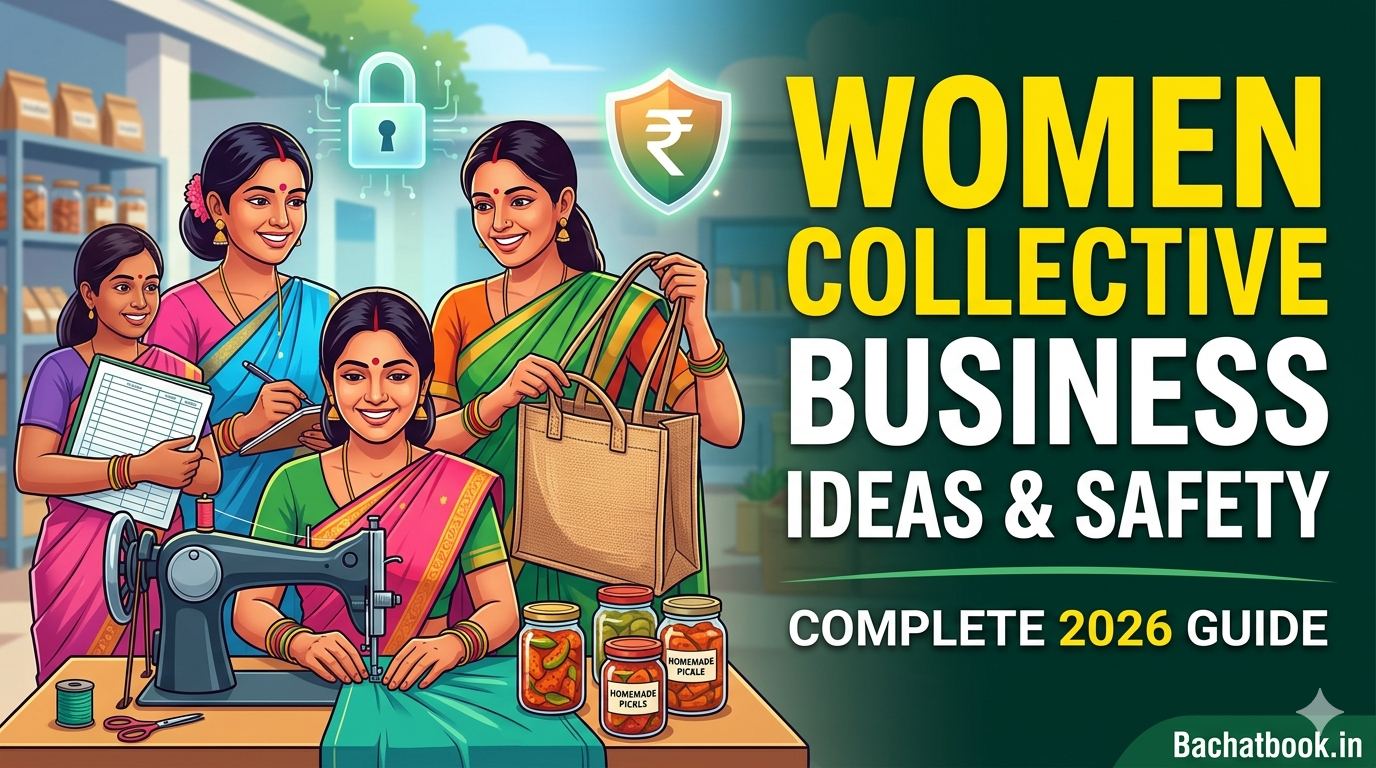
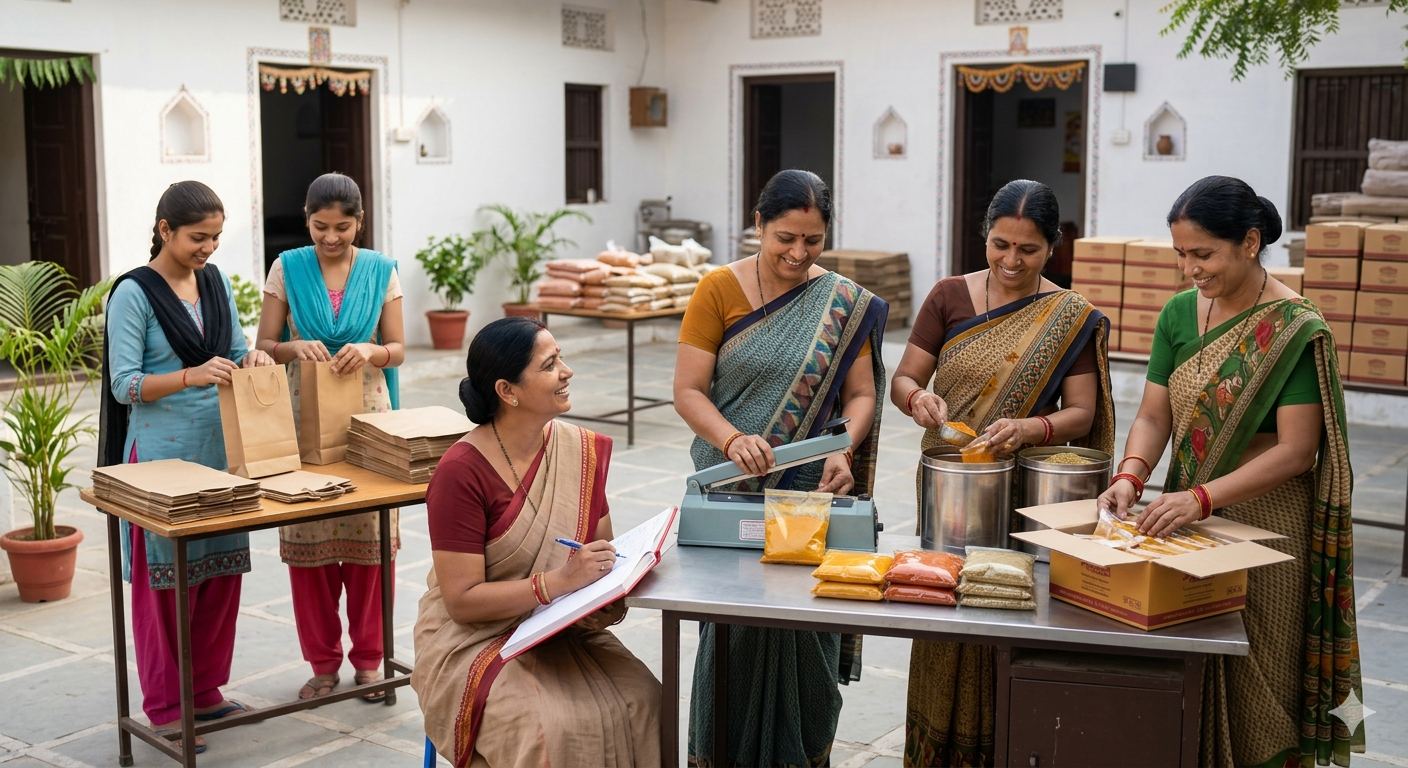
Are you exploring women collective business ideas to build a steady income alongside your friends or neighbors? You are taking a great step. A women’s collective business—often structured as a Self-Help Group (SHG) or cooperative—is an enterprise where a group of women pools their skills, small community savings, and labor to run a shared business. Popular examples include bulk tailoring units, homemade spice and pickle manufacturing, or eco-friendly paper bag production.
However, while starting a collective is a powerful way to generate income, pooling money together brings unique financial risks. If not managed with strict financial discipline, a collective business can lead to internal disputes, loss of household savings, or exposure to online loan frauds. Protecting your group’s money is just as important as starting the business itself.
Disclaimer: This article is for educational purposes only and is not professional financial advice. The information provided is meant to promote financial awareness and safe money management habits. Always consult a certified financial advisor or official bank representative for personalized guidance.
Table of Contents
What Are Women Collective Business Ideas?
A collective business thrives on unity. Instead of one woman taking all the financial burden to start a shop, 5 to 10 women come together. They usually start with a community savings program, contributing a small amount (like ₹500 a month) to a common pool. Once enough capital is built, they launch a joint enterprise.
Some highly effective women collective business ideas in India include:
- Food Processing Units: Making papads, pickles, masalas, or healthy snacks in bulk for local grocery stores.
- Textile and Tailoring Groups: Taking bulk orders for school uniforms, hospital bedsheets, or corporate gifting bags.
- Eco-Friendly Products: Manufacturing leaf plates (pattal), paper bags, or organic soaps.
- Catering or Cloud Kitchens: Providing daily tiffin services to local salaried employees or college students.
These ideas are brilliant because they require low initial investment and rely on skills women often already possess. But as the community savings pool grows and business revenue starts coming in, financial management must become the group’s top priority.
The Hidden Risks: Fraud, Cash Traps, and Fake Schemes
The moment a women’s collective starts pooling money, it becomes vulnerable to both internal mismanagement and external fraud. Search intent for business ideas often overlooks these critical safety risks.
1. The “Fake NGO” or Loan Scam
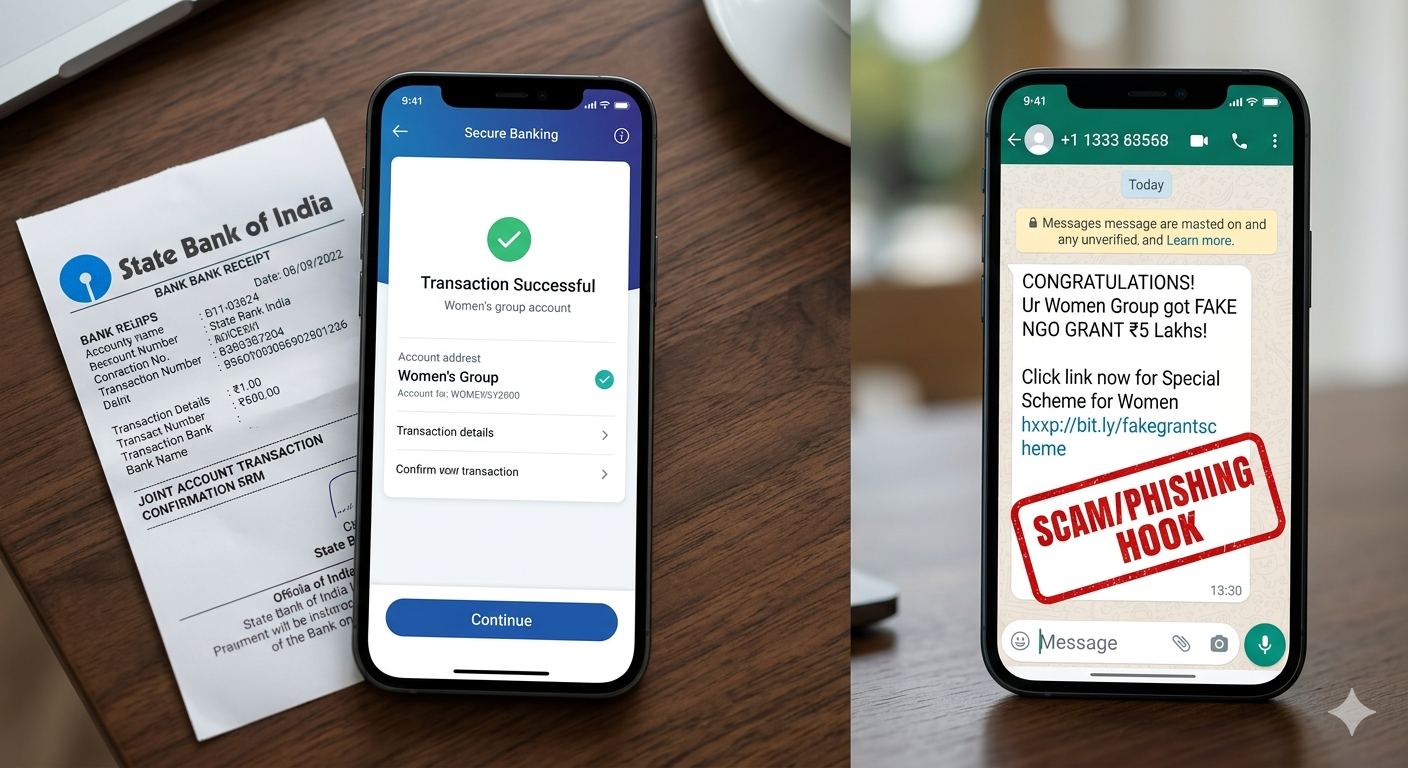
Fraudsters frequently target women’s groups in middle-class or semi-urban areas. Scammers may approach the collective, claiming to be from a government agency or an NGO, promising a massive grant or a “special scheme for women.” They ask the group to pay an upfront “processing fee” or share the group leader’s Aadhaar and PAN details. Once the fee is paid, the scammers disappear.
2. Unregulated Local Debt
To buy machinery (like a commercial sewing machine or a large grinder), collectives sometimes bypass official banks and take loans from local, unregulated moneylenders. These lenders charge exorbitant daily or weekly interest rates that can quickly bankrupt the collective.
3. Mismanagement of Group Funds
Keeping the community savings or business revenue as physical cash in a tin box at someone’s house is a major risk. It is susceptible to theft, loss, or undocumented borrowing by group members for personal emergencies, which creates distrust and ruins the business.
The Financial Impact: How Group Losses Drain Your Bachat
Why does collective financial safety matter so much? Because in a collective business, liability is often shared. The financial impact of a mismanaged collective directly drains your personal household budget (bachat).
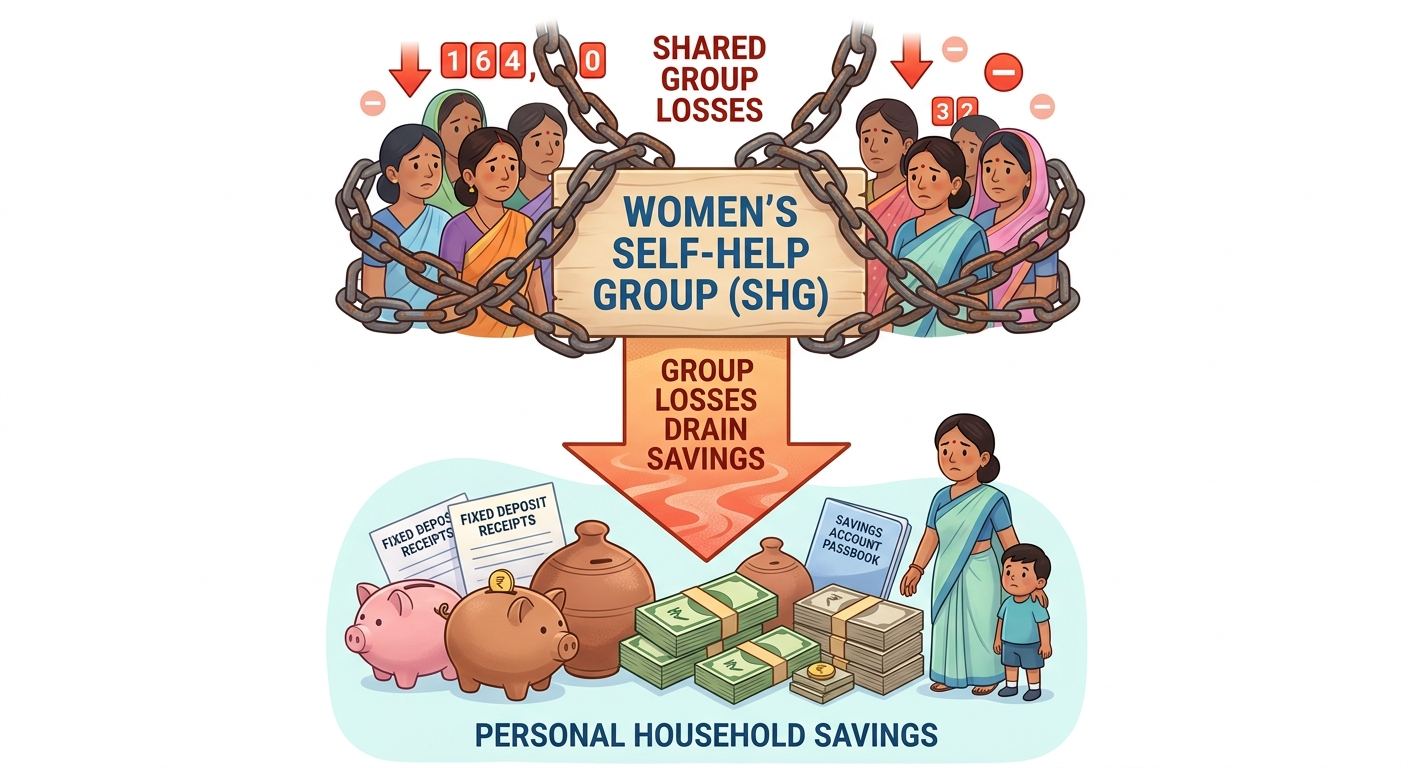
Imagine a scenario where a tailoring collective of 10 women takes an unregulated loan of ₹1 Lakh from a local lender at a 5% monthly interest rate to buy machines.
- If the business faces a slow month or funds are mismanaged, the heavy interest keeps piling up.
- Because the debt is shared, the lender will pressure all members.
- To save their reputation and clear the debt, each woman might be forced to dip into her family’s personal emergency fund, breaking fixed deposits, or selling household gold.
A brilliant business idea can quickly become a financial nightmare if the capital is not sourced safely and managed transparently. This is why financial literacy must be the foundation of any women’s group enterprise.
Understanding the SHG Bank Linkage Programme India: A Guide to Safe Community Savings
Prevention Habits: Protecting the Collective’s Money
To ensure your women collective business ideas succeed without putting your family’s finances at risk, the group must adopt strict, uncompromising financial prevention habits.
1. Open a Joint Bank Account Immediately
Never run a collective business purely on cash. As soon as your group forms, visit a trusted local bank and open a joint account in the name of the collective or SHG. Ensure that the account requires at least two signatures (usually the President and Treasurer of the group) for any cash withdrawal. This prevents any single person from misusing the funds.
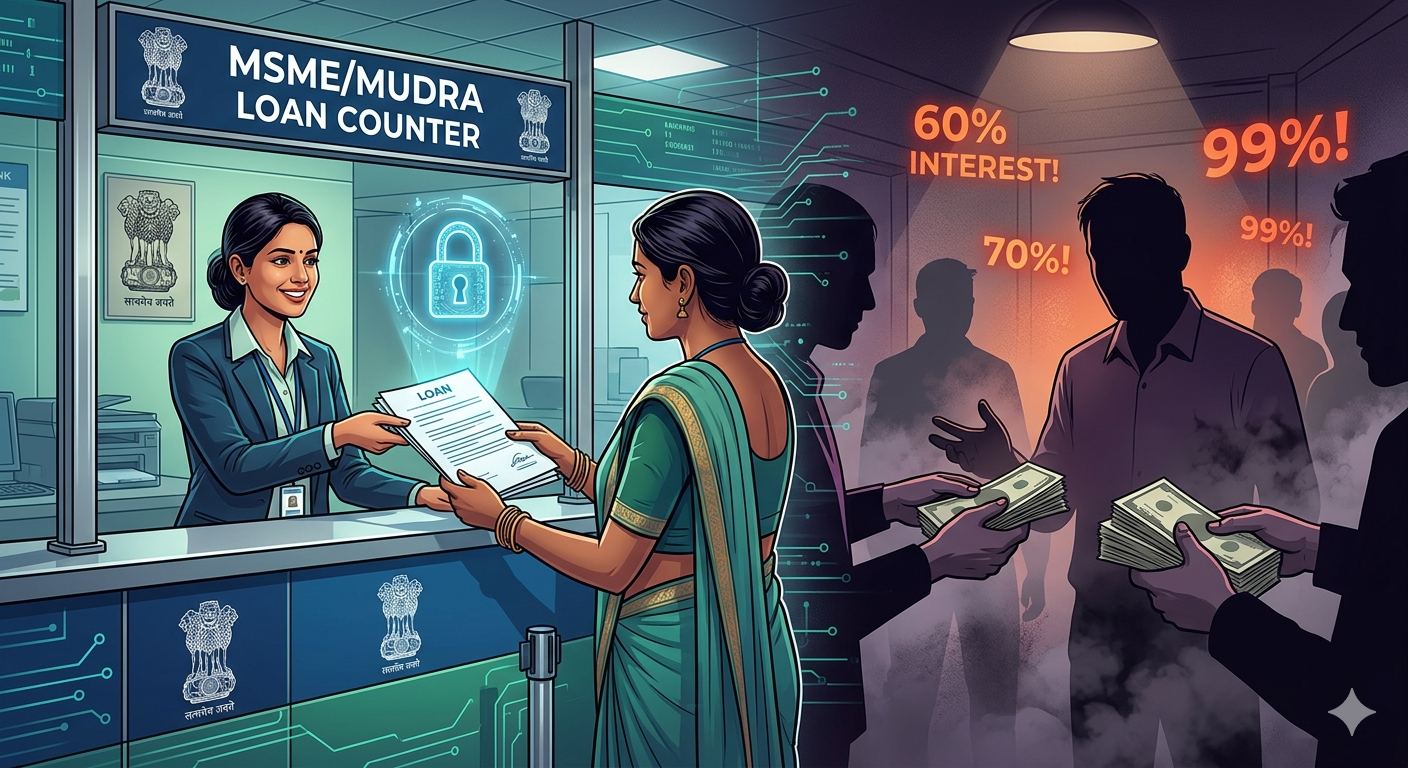
2. Seek Official MSME or Mudra Loans Only
If your business needs funding to grow, strictly avoid private moneylenders or instant loan apps. Instead, approach your bank for official government schemes designed for micro-enterprises. Schemes like the Pradhan Mantri Mudra Yojana (PMMY) or specific state-level women empowerment funds offer collateral-free loans at highly regulated, lower interest rates.
3. Beware of Digital Scams
Never share the bank account’s ATM PIN, UPI PIN, or OTP with anyone, even if they claim to be calling from the bank. If an unknown person messages your group offering a business grant via a WhatsApp link, block the number immediately. Official government schemes never ask for upfront bribes or processing fees via UPI.
4. Maintain a Physical and Digital Ledger
Every single rupee that enters or leaves the business must be recorded. Maintain a strict bachatbook (ledger). Write down who contributed what, what raw materials were purchased, and what revenue was earned. Review this book together in a weekly meeting so every member has full transparency.
Smart Money Behavior for Long-Term Success

Implementing safe women collective business ideas goes beyond just preventing fraud; it involves cultivating smart money behavior that ensures the business grows profitably over the years.
For Indian women building a community enterprise, smart money behavior means:
- Separating Household from Business: Never mix your personal household money with the business money. If you need money for a personal medical emergency, do not secretly take it from the business cash register. Treat the collective’s funds with strict professional respect.
- Paying Yourselves a Fixed Wage: Instead of randomly splitting whatever cash is left at the end of the month, the collective should decide on a fixed hourly or daily wage for the women working. The remaining profit should be safely deposited back into the joint bank account to grow the business.
- Building the Group’s Credit History: By taking a small, official Mudra loan and repaying the EMIs on time, your collective builds a strong credit history. A good credit profile means that three years from now, when you want to expand from a small room to a larger factory setup, banks will easily trust your group with a larger loan at a much better interest rate.
A collective business is a beautiful way for women to gain financial independence and support their families. By choosing practical ideas, strictly using official banking channels, and maintaining crystal-clear records, your group can build a profitable, safe, and long-lasting enterprise.
Conclusion
To sum it up, exploring women collective business ideas is a brilliant step toward financial empowerment for Indian households. Whether your group decides to start a food processing unit, a tailoring hub, or an eco-friendly manufacturing business, the power lies in your unity and shared skills.

However, a great idea only survives if the money is managed securely. By opening a joint bank account, maintaining a strict written ledger, and strictly avoiding high-interest local moneylenders, you protect your family’s bachat (savings) from unnecessary risks. Stay alert against fake NGO scams and always rely on official government schemes like Mudra loans for your funding needs. Treat your collective enterprise with professional respect, and it will reward you with steady income and financial peace of mind. Keep following Bachatbook.in for more practical money management and fraud prevention tips!