
Introduction
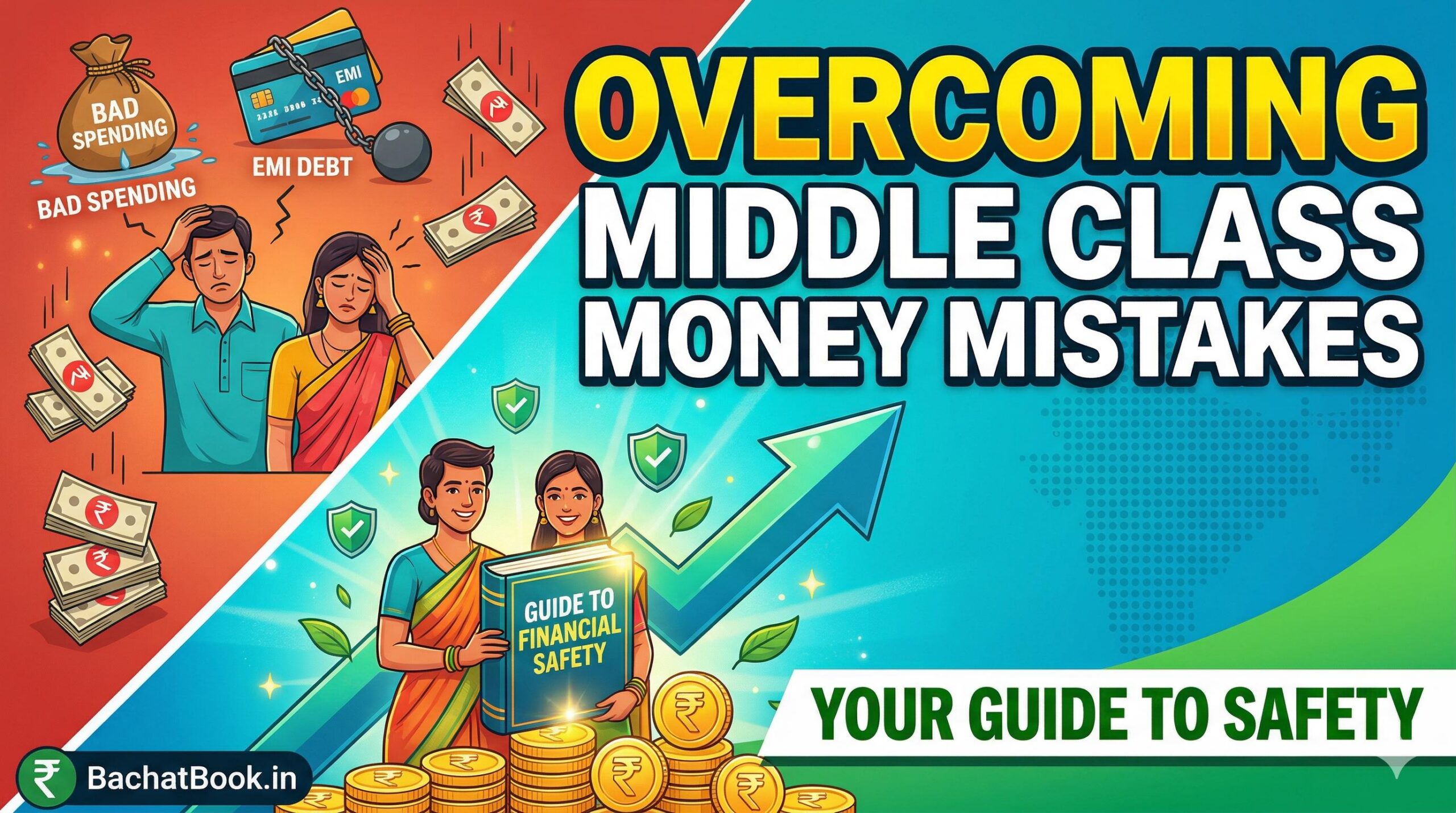
When we talk about middle class money mistakes in India, we are referring to the common financial errors, habits, and traps that salaried employees, small business owners, and families fall into while managing their monthly income. These mistakes typically include spending heavily to maintain social status, relying entirely on credit cards for daily expenses, buying the wrong types of life insurance, and completely ignoring emergency savings.
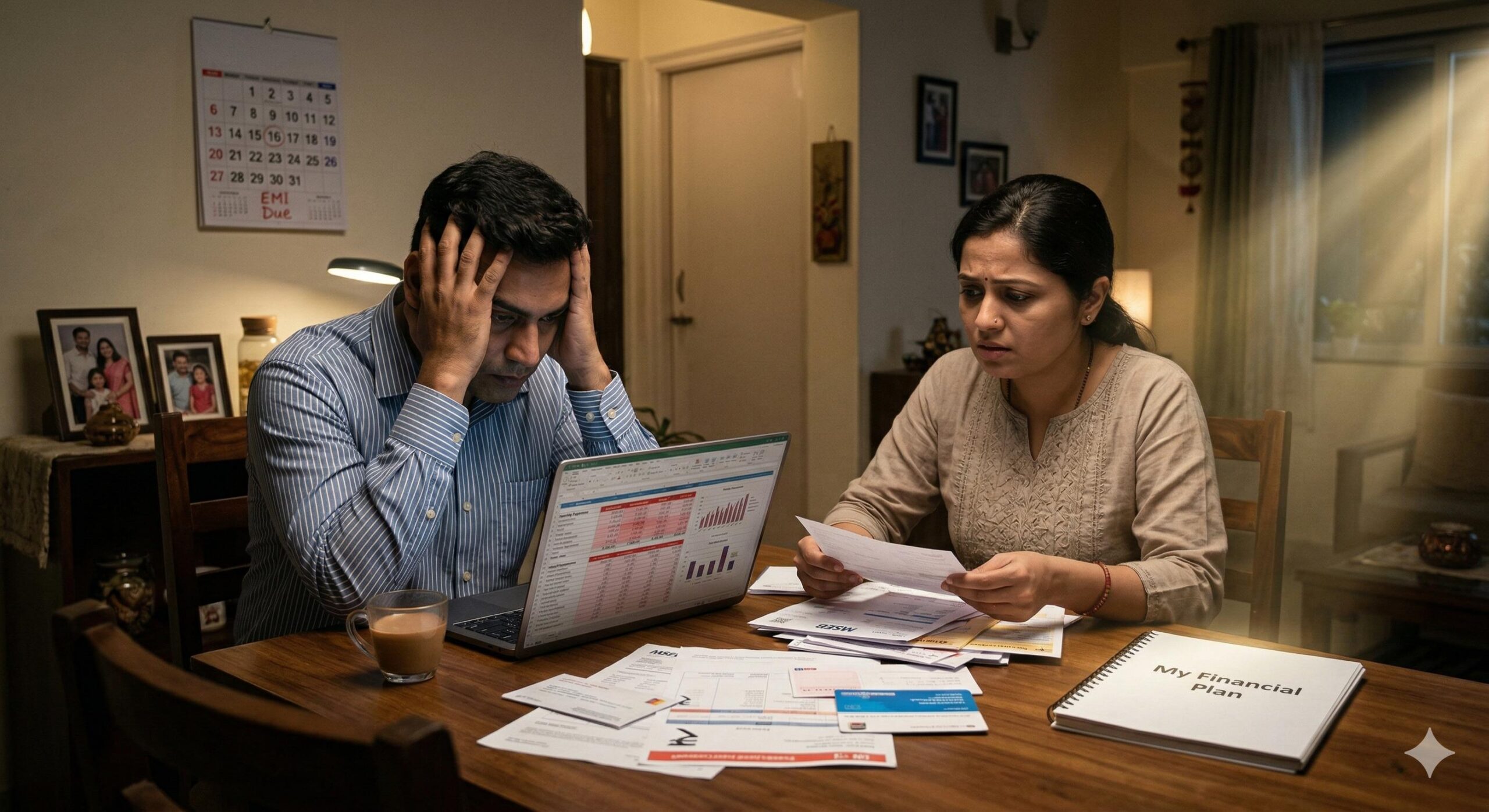
Because the Indian middle class works incredibly hard for every single rupee, making these fundamental errors can quickly lead to heavy debt, severe stress, and financial insecurity. Understanding these middle class money mistakes in India is the essential first step toward financial awareness. By recognizing exactly where our money leaks, we can focus on building a safer, more secure future without falling prey to unnecessary financial risks.
Disclaimer: The information provided on BachatBook.in is for educational purposes only. It is not professional financial advice. Please consult a certified financial planner or financial advisor before making any major financial decisions.
Table of Contents
The Hidden Risks: How Mistakes Lead to Vulnerability
It is crucial to understand that money mistakes do not just result in an empty bank account at the end of the month; they directly threaten your overall financial safety.
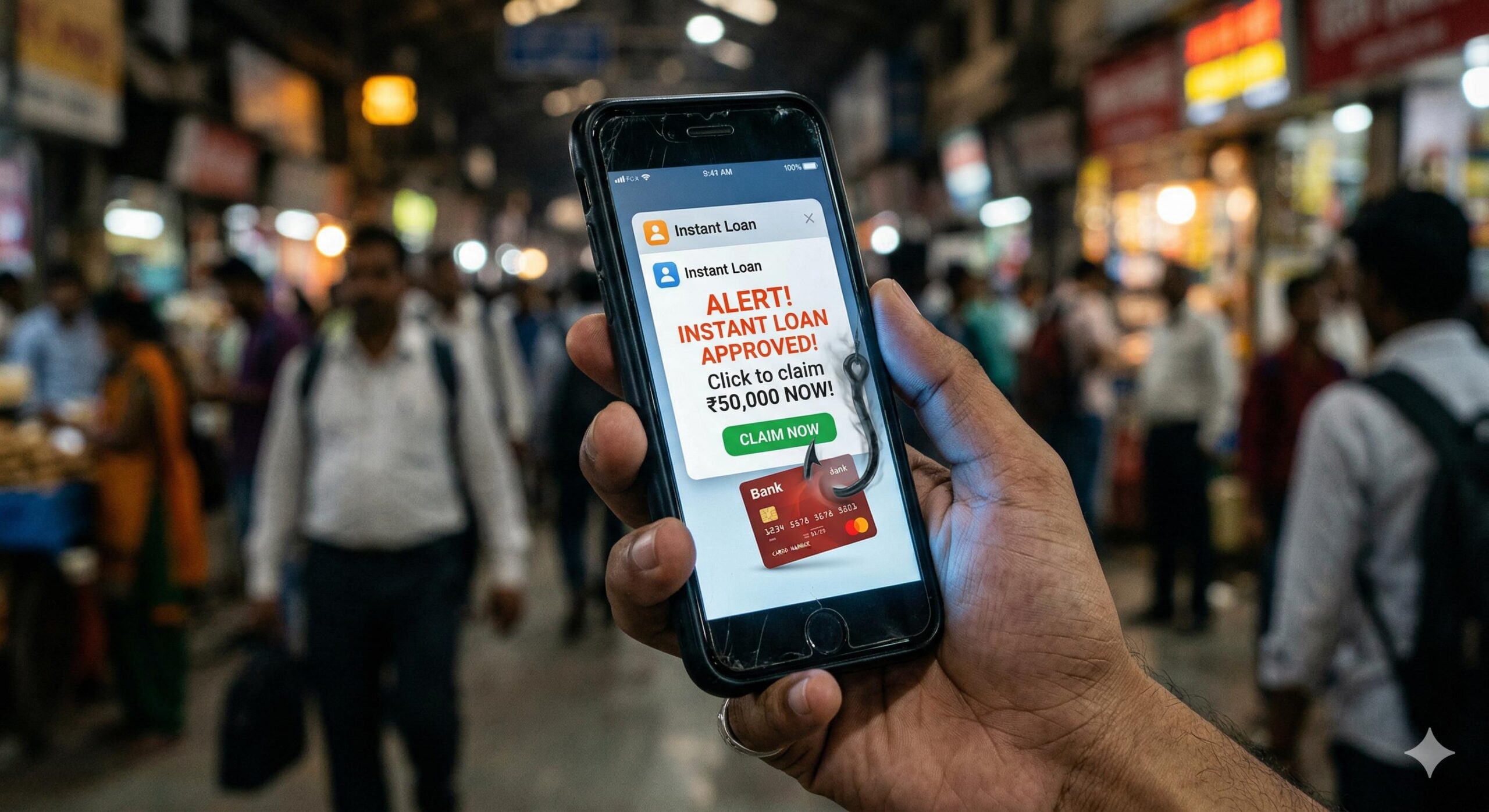
When families live paycheck to paycheck because of high EMIs or poor budgeting, a single emergency—such as a medical crisis, a sudden job loss, or a major home repair—can cause instant financial panic. This desperation forces people to seek quick cash. Unfortunately, this is exactly when individuals become prime targets for financial fraudsters.
Desperate for funds, people often click on unverified links offering “instant zero-interest loans,” download fraudulent loan apps that steal phone contacts, or fall for phishing scams promising easy money. The risk of losing data, facing digital harassment, and losing whatever savings are left is immense. Therefore, correcting these money mistakes is not just about getting richer; it is about protecting yourself and your family from severe financial harm and digital fraud.
6 Major Middle Class Money Mistakes in India and Their Financial Impact
To fix a problem, we must first identify it. Let’s explore the most common financial traps Indian families face and the direct impact they have on financial stability.
1. Falling for the Easy EMI Trap
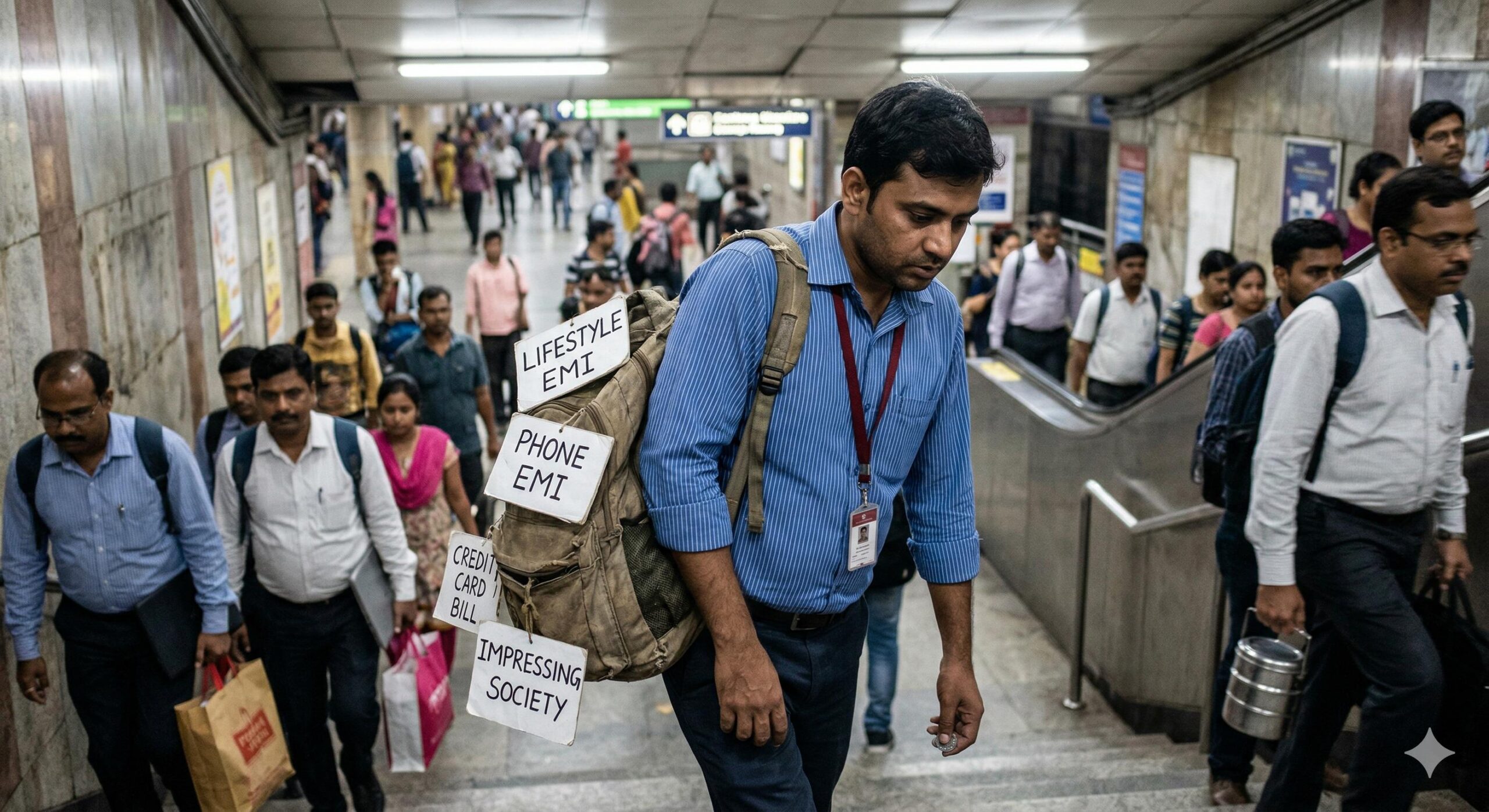
- The Mistake: Buying expensive smartphones, luxury gadgets, cars, or even funding holidays on “No-Cost EMIs” simply because the monthly deduction looks small and manageable.
- The Financial Impact: You end up committing a massive portion of your future income to pay off past lifestyle choices. This creates a severe cash crunch, leaving absolutely no room in your budget for savings or dealing with inflation.
2. Treating Insurance as a “Money-Back” Investment
- The Mistake: A classic middle-class error is buying traditional endowment policies or ULIPs (Unit Linked Insurance Plans) just to “get the money back” with bonuses, while ignoring pure term life insurance and comprehensive health insurance.
- The Financial Impact: You end up paying very high premiums for an incredibly low life cover. If a tragedy occurs, the low payout is never enough to sustain the family. Furthermore, a single hospitalization without a good health cover can wipe out ten years of savings.
3. Having Zero Liquid Emergency Savings
- The Mistake: Assuming your monthly salary will never stop and locking all available cash into long-term illiquid assets like Provident Funds (PF), fixed deposits with high penalty breakages, or real estate.
- The Financial Impact: When an urgent need arises, you are forced to swipe a credit card at a 36% annual interest rate or borrow money from unsafe, high-interest informal lenders, pushing you into a debt trap.
4. Succumbing to “Log Kya Kahenge” (Lifestyle Inflation)
- The Mistake: Upgrading your lifestyle, renovating your home, or throwing lavish parties and weddings purely driven by social pressure and peer validation.
- The Financial Impact: This leads to a dangerous cycle of living above your means. You might look wealthy to society, but internally, you are living paycheck to paycheck with zero financial safety net.
5. Trusting Unverified Financial Advice and Links
- The Mistake: Following random social media “finfluencers” blindly, joining unverified Telegram groups for quick stock tips, or clicking on SMS links that promise debt relief or lottery winnings.
- The Financial Impact: This directly exposes you to phishing attacks. Scammers gain access to your banking passwords, OTPs, or UPI PINs, leading to devastating bank account drainages.
6. Overspending on Children’s Education via Debt
- The Mistake: Taking massive personal loans to fund premium schooling or coaching classes out of a sense of obligation, without evaluating the actual return on that educational investment.
- The Financial Impact: Parents compromise their own retirement funds and take on unmanageable debt, eventually becoming a financial burden on their children in the future.
Prevention Habits to Protect Your Money and Data
Now that we have identified the core middle class money mistakes in India, how do we prevent them? Prevention requires discipline, awareness, and simple daily habits.
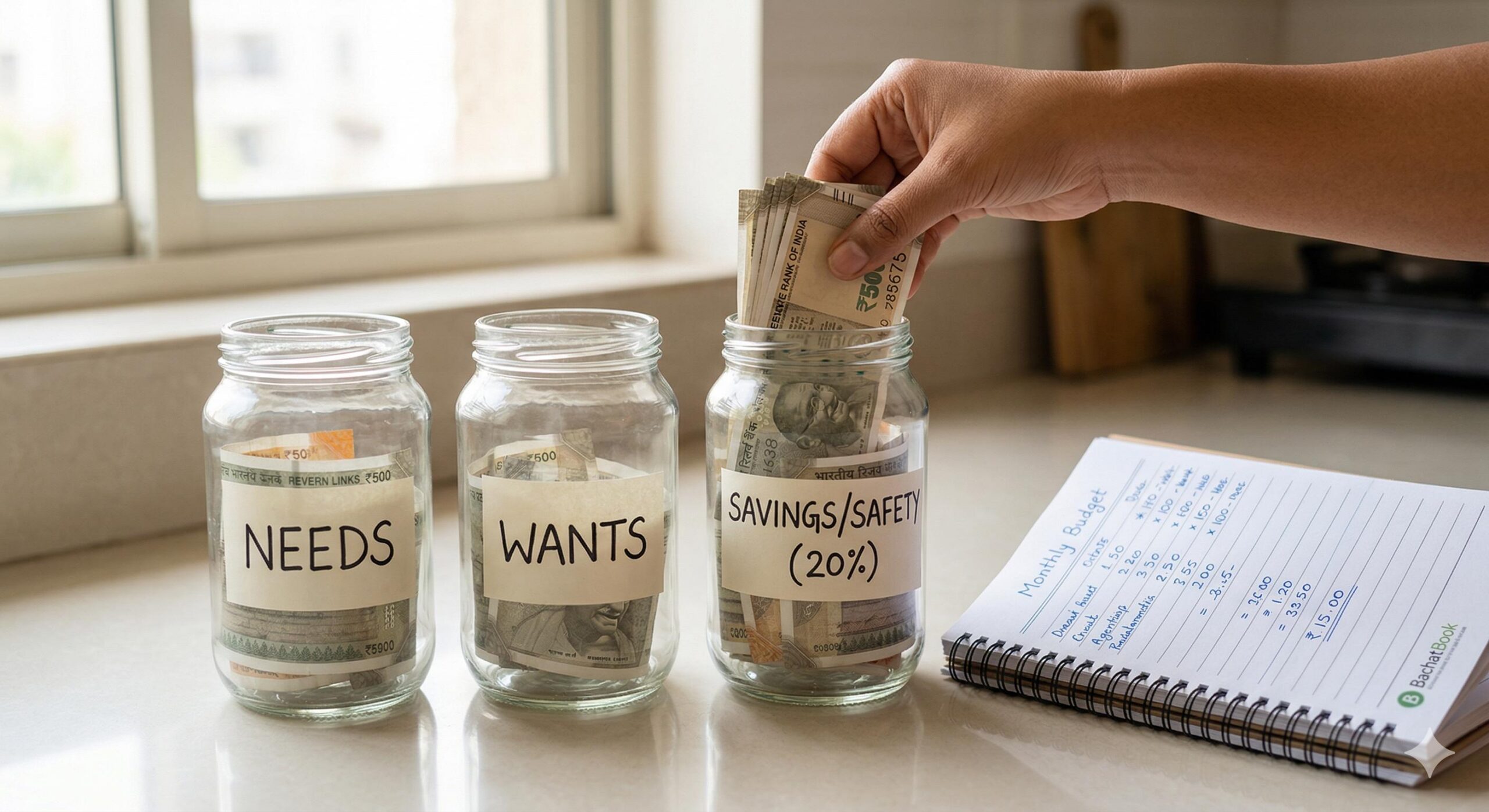
- Budget Using the 50/30/20 Rule:Allocate 50% of your income to absolute needs (rent, groceries, utilities), 30% to wants (entertainment, dining out, hobbies), and strictly save or secure 20% before spending on anything else. Pay yourself first.
- Build a Solid Emergency Fund:Calculate your total monthly expenses (including EMIs) and multiply it by 6. Keep this amount in a separate, easily accessible savings account or a liquid sweep-in fixed deposit. This is your personal safety shield.
- Practice Digital Financial Hygiene:Never share your OTP, UPI PIN, or banking passwords with anyone, even if they claim to be from your bank. Do not download screen-sharing apps like AnyDesk or TeamViewer if a customer care executive asks you to. Always verify the source before making a digital payment.
- Track Every Single Rupee:Use a simple notebook or a secure, trusted budgeting app to write down your expenses daily. Knowing exactly where your money goes is the ultimate defense against unconscious overspending.
- Separate Insurance from Investment:Buy a pure Term Life Insurance policy for the breadwinners and a robust Family Floater Health Insurance policy. Keep your savings and investments completely separate from these protective covers.
Cultivating Smart Money Behaviors
To truly break free from the cycle of middle class money mistakes in India, we must shift our mindset from simply “spending what is left” to “protecting our future first.”
Here is a simple comparison of typical financial habits versus smart money behaviors that build lasting awareness:
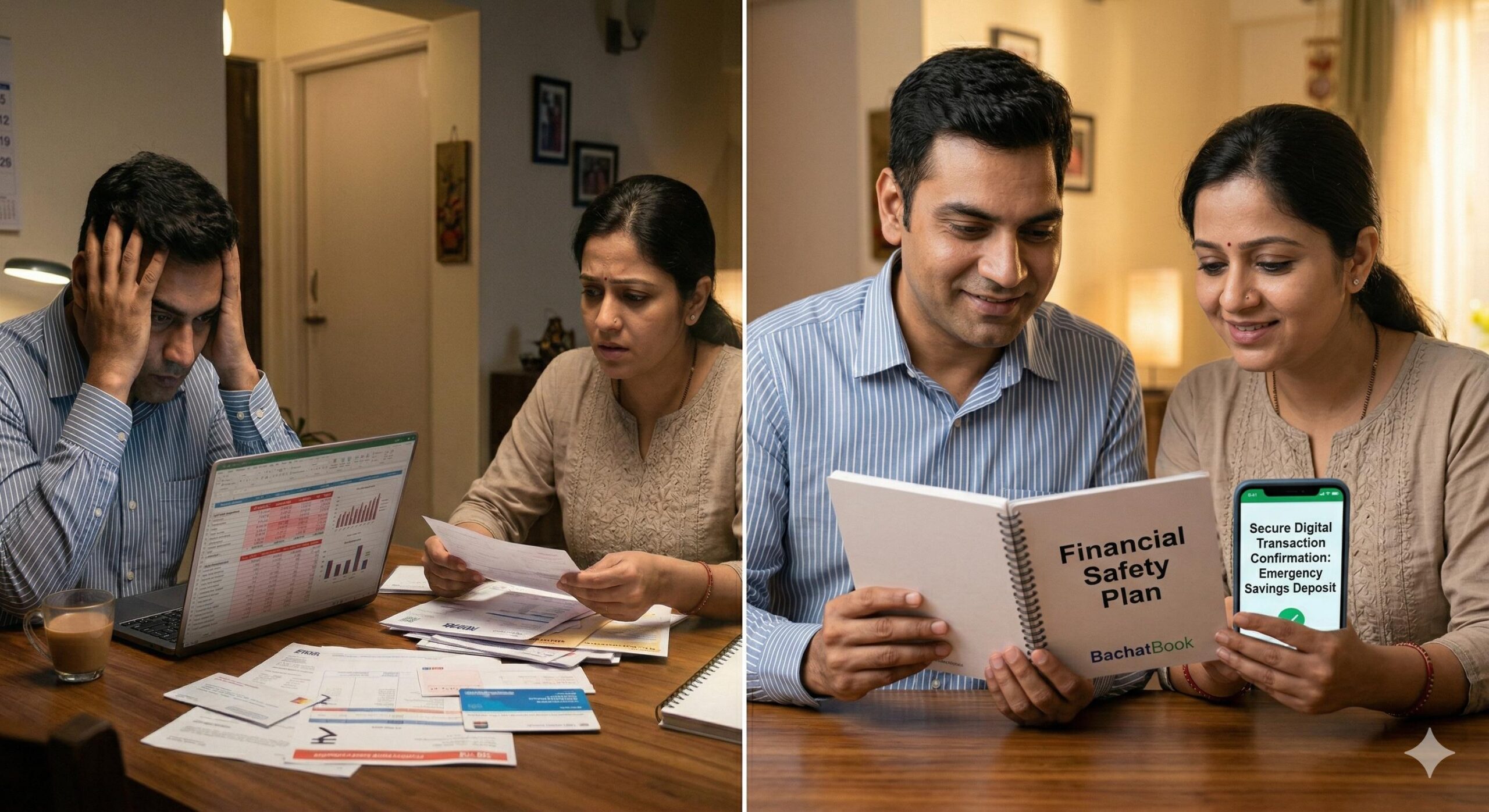
| Typical Middle Class Behavior | Smart Money Behavior |
| Buying depreciating items on credit cards without having the cash backup. | Using credit cards solely for budgeted expenses and paying the full bill before the due date. |
| Relying exclusively on employer-provided corporate health insurance. | Purchasing an independent, comprehensive family health insurance policy for guaranteed continuous coverage. |
| Making financial decisions based on fear, greed, or WhatsApp forwards. | Taking time to read trusted educational resources like BachatBook.in and verifying all facts. |
| Showing off wealth through expensive liabilities (cars, high-end phones, clothes). | Quietly building secure, hidden assets (emergency funds, debt-free living, skill development). |
Smart Money Saving Tips for Indian Families & Business WhatsApp for Shop Owners Guide (2026)
Frequently Asked Questions (FAQs)
Q1. What are the biggest middle class money mistakes in India? The most critical mistakes include relying too heavily on credit cards or EMIs for lifestyle expenses, having absolutely zero emergency savings, mixing life insurance with investment policies, and clicking on unverified links that lead to severe digital financial fraud.
Q2. How can an Indian middle-class family realistically save money every month? The most practical method is to follow the 50/30/20 budgeting rule. Dedicate 50% of your salary to absolute needs (rent, groceries), 30% to wants, and strictly save the remaining 20% before you start spending. Writing down your daily expenses in a notebook or app is also highly effective in stopping money leakage.
Q3. Why do so many salaried people fall into the EMI debt trap? Many fall into the EMI trap due to the pressure of lifestyle inflation—buying expensive smartphones, vehicles, or appliances just to match social expectations. Schemes like “No-Cost EMIs” make expensive liabilities look temporarily affordable, which eventually eats up future income and leaves zero room for real savings.
Q4. How can I protect my hard-earned savings from online financial scams? To ensure absolute financial safety, never share your OTP, UPI PIN, or internet banking passwords with anyone, even if they claim to be from your bank. Additionally, never click on SMS or WhatsApp links offering “instant zero-interest loans” and refuse to download screen-sharing apps if requested by unknown customer care callers.
Q5. Is an emergency fund really necessary if I have a steady job? Yes, it is absolutely essential. A steady job does not protect you from sudden medical emergencies, unexpected home repairs, or global economic changes. Keeping 6 months’ worth of expenses in a highly liquid savings account prevents you from taking high-interest loans during a crisis.
Conclusion: Take Control of Your Financial Journey

Making middle class money mistakes in India is incredibly common, largely due to a lack of formal financial education in our schooling system. However, continuously repeating them is a choice. By focusing on strict budgeting, actively avoiding the trap of unnecessary EMIs, prioritizing adequate health and life insurance, and staying highly vigilant against digital financial fraud, Indian families can build a secure, peaceful, and prosperous life.
At BachatBook.in, our primary goal is to empower you with the right knowledge to protect your wallet. Remember, true financial peace of mind is much more valuable than any luxury item bought on an installment plan. Start small, track your expenses today, evaluate your financial habits, and take the first confident step toward a safer, fraud-free financial future.