

Disclaimer: This article is for educational purposes only and does not constitute professional financial advice. The information provided is meant to improve financial awareness. Always consult a certified Chartered Accountant (CA) or tax professional for your specific tax filing needs.
Introduction
For many Indian middle-class families and small business owners, the month of July usually brings a wave of “tax tension.” The struggle to gather old bills, calculate every minor expense, and find a reliable accountant can be overwhelming.

However, the Indian government provides a significant relief measure designed specifically for small-scale entrepreneurs. The primary Section 44AD benefits revolve around the “Presumptive Taxation Scheme,” which allows eligible businesses with a turnover of up to ₹2 crore (or ₹3 crore for digital-heavy businesses) to file taxes without maintaining complex accounting books. By declaring a flat profit of 6% or 8%, you can legally bypass audits and expensive bookkeeping fees. This isn’t just about taxes; it’s about protecting your hard-earned money from administrative leakage and legal risks.
Table of Contents
The Hidden Risks and Financial Impact of Complex Tax Compliance
If you are not aware of the simplified rules available to you, you might end up making expensive financial mistakes. The traditional method of filing business taxes requires you to maintain daily cash books, journals, ledgers, and expense receipts.
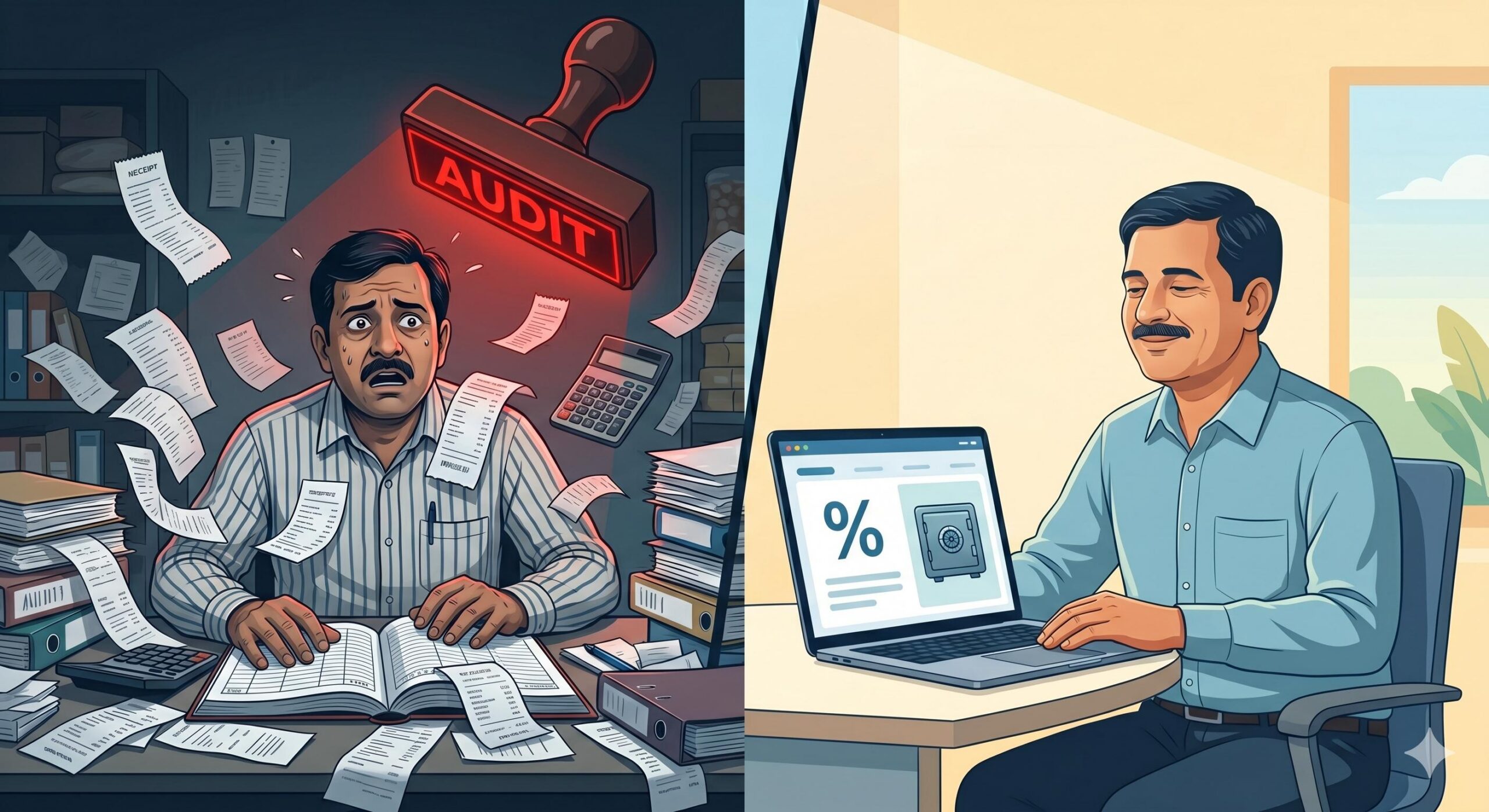
The Risk: If you fail to maintain these detailed records correctly, you expose yourself to scrutiny from the Income Tax Department. Even a small, unintentional calculation error can trigger a tax notice. Furthermore, if your turnover crosses certain limits without opting for presumptive taxation, you are legally required to get your accounts audited by a Chartered Accountant.
The Financial Impact:
This lack of awareness leads to a direct loss of your hard-earned money. Hiring a professional accountant to maintain daily books can cost you thousands of rupees every month. If an audit is required, CA fees can range anywhere from ₹10,000 to ₹50,000 or more. Worse, if the tax department finds your books incomplete, you can face a flat penalty under Section 271A of the Income Tax Act.
Understanding the Core Section 44AD Benefits
The government introduced Section 44AD specifically to protect small taxpayers from these heavy compliance costs and to promote ease of doing business. Here is a clear breakdown:
1. Freedom from Maintaining Detailed Books of Accounts
The biggest advantage is that you are legally exempt from maintaining complex financial records. You do not need to hire a full-time accountant. You only need to know your total sales (turnover) for the year. This saves you a significant amount of money that would otherwise go toward administrative costs, allowing you to route those funds into your family savings.
2. Complete Exemption from Tax Audits
Usually, businesses must undergo a strict tax audit if their turnover exceeds ₹1 crore. However, if you opt for the presumptive scheme under Section 44AD, you do not need to get your accounts audited, provided your turnover is within the eligible limits and you declare the minimum required profit. This acts as a financial safety net, protecting you from hefty audit fees.
3. Lower Profit Declaration for Digital Transactions (6% Rule)
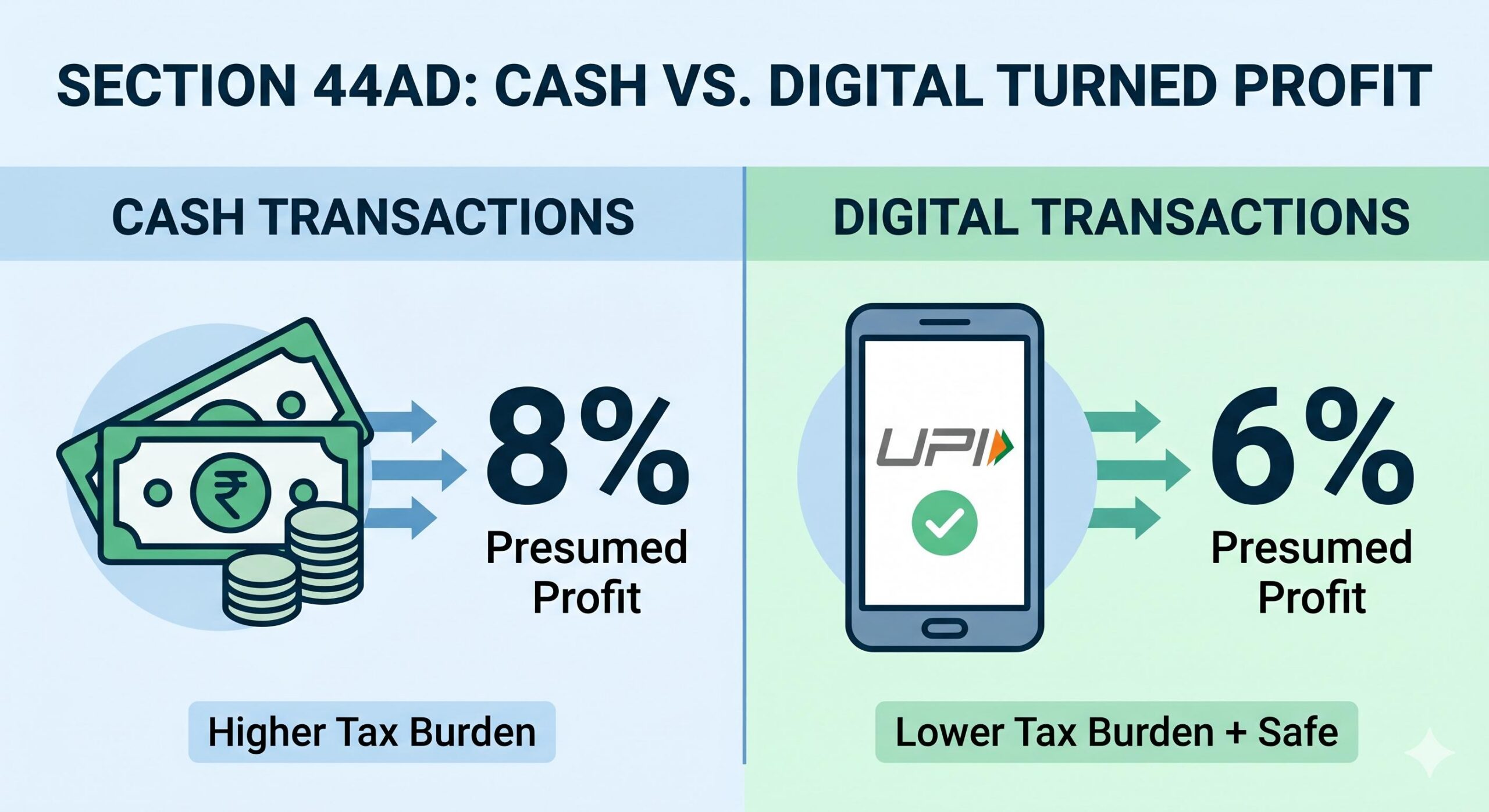
To encourage a safer, digital economy, if you receive your business payments digitally (via UPI, NEFT, or cheques), you only need to declare 6% of that turnover as your profit. If you receive payments in cash, you must declare 8%. This 2% difference is a direct financial reward for keeping transparent, digital records.
4. Simplified Advance Tax Payment
Normally, businesses must pay advance tax in four installments. Missing these deadlines attracts interest penalties. One of the best Section 44AD benefits is that it allows you to pay your entire advance tax in a single installment on or before March 15th. This simple rule prevents accidental default and saves you from paying unnecessary penalty interest.
Prevention Habits & Smart Money Behavior
While Section 44AD makes tax filing incredibly easy, smart money management is still required to protect your financial future.
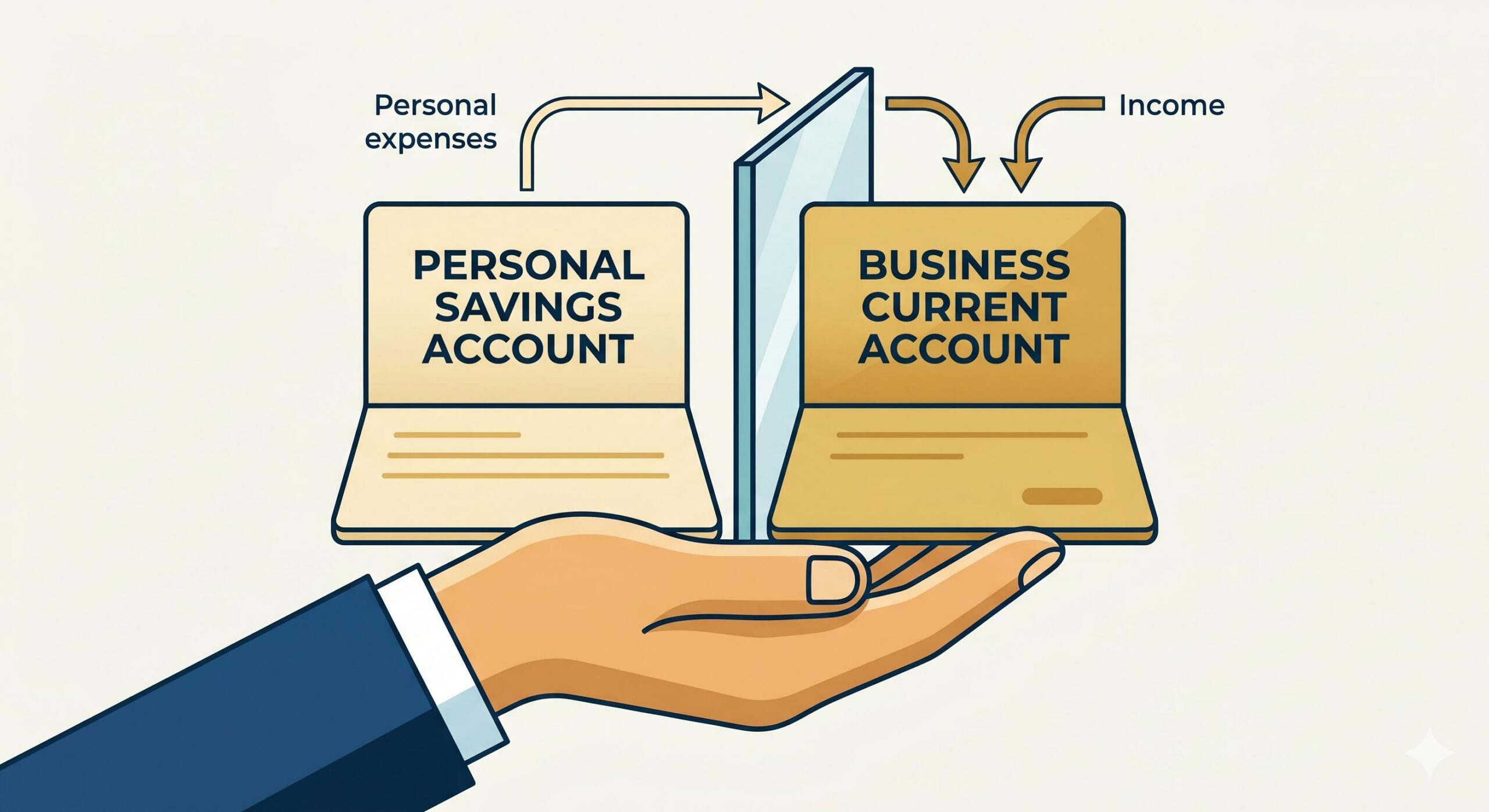
- Strictly Separate Business and Personal Accounts: One of the most dangerous financial habits is mixing household money with business income. Open a dedicated current account for your business. This prevents confusion and keeps your personal savings safe.
- Shift Completely to Digital Payments: Handling large amounts of cash is a major security risk. By shifting to digital, you physically secure your money and legally reduce your tax burden to the 6% rate.

- Keep Basic Proof of Turnover: Even though you do not need to maintain detailed ledgers, keep bank statements, GST returns, and sales invoices. This prevents panic and financial exploitation if you ever receive a routine inquiry.
The Complete Guide to Migrating from Udyog Aadhaar to Udyam
Conclusion
Filing taxes should not be a source of fear or financial loss for the Indian middle class. The Section 44AD benefits provide a clear, legal path to simplify your business life, save on professional fees, and avoid the trap of high compliance costs. By staying financially aware and moving toward digital transactions, you aren’t just filing a return—you are building a secure, transparent, and efficient financial future for your business. Remember, every rupee saved on an unnecessary audit or a tax penalty is a rupee that goes back into your family’s dreams.
Frequently Asked Questions (FAQs)
1. Can a professional like a doctor or a lawyer claim Section 44AD benefits?
No. Section 44AD is for businesses (like traders, retailers, and wholesalers). Professionals such as doctors, lawyers, and engineers have a separate presumptive scheme under Section 44ADA, where the profit is generally presumed to be 50% of gross receipts.
2. What happens if my turnover exceeds ₹2 Crore?
If your turnover exceeds ₹2 crore, you generally cannot use Section 44AD. However, if 95% of your transactions (both receipts and payments) are digital, the limit for the presumptive scheme is increased to ₹3 crore. If you exceed these limits, a formal audit by a CA becomes mandatory.
3. Is it mandatory to declare 8% or 6% profit? Can I declare more?
The 8% (cash) and 6% (digital) are the minimum profit rates you must declare to stay in the scheme. If your actual profit is higher (say 15%), you should ideally declare the higher amount to stay compliant and avoid future scrutiny if your lifestyle or assets don’t match your declared income.
4. If I choose Section 44AD this year, can I change next year?
There is a “5-year lock-in” rule. If you opt for Section 44AD and then decide to opt out (by declaring a profit lower than the prescribed rates) in any of the next five years, you will be barred from using the scheme for the following five years and will be required to get an audit.
5. Do I still need to pay GST if I use Section 44AD?
Yes. Section 44AD is for Income Tax, whereas GST is a separate law. If your turnover exceeds the GST registration threshold (generally ₹40 lakhs for goods and ₹20 lakhs for services in most states), you must register for GST regardless of whether you use Section 44AD for your income tax.
6. Can a Partnership Firm or a Company use Section 44AD?
Section 44AD is available to Individuals, Hindu Undivided Families (HUFs), and Partnership Firms. However, it is not available to Limited Liability Partnerships (LLPs) or Private Limited Companies.