
Introduction
Knowing the tricks to save money on a small salary is among one of the most important financial hacks every Indian middle-class families, students, and young salaried employees should acquire. In simpler terms saving on a low income means controlling your daily spendings, closing the unseen money leaks and focusing on bare necessities not luxuries to create an emergency fund! It’s not all about eliminating every penny from your spending plan or living a life of intense denial.

But it is instead the controlled and intentional practice of getting the most out each every rupee that you earn. If the money you get every month is already allocated for expenses, a penny saved does add to your long-term goals, which will help protect you from disasters down the road.
Operating within an economy that continually appears to grow the costs of day-to-day living then some, you can take command over your information. But a cheap cup of tea is not the fastest route to wealth and layers of financial safety (i.e. proper storage) combined with risk assessment ensures that your money survives all manner of modern perils.
Disclaimer: This article is strictly for educational purposes and financial awareness only. It does not constitute professional financial advice. Always verify information and exercise caution before making any financial decisions or using third-party financial applications.
Table of Contents
The Risks: Digital Threats to Your Hard-Earned Income
This is one of the things that come with learning how to save money on a low salary and it renders us more vulnerable in this day and age where everything seems to change at lightning speed. If people do not have money excess to pay their bills, stress of more savings or finding fast solutions may cause these people to take untested possible shortcuts that come with a lot of risk.
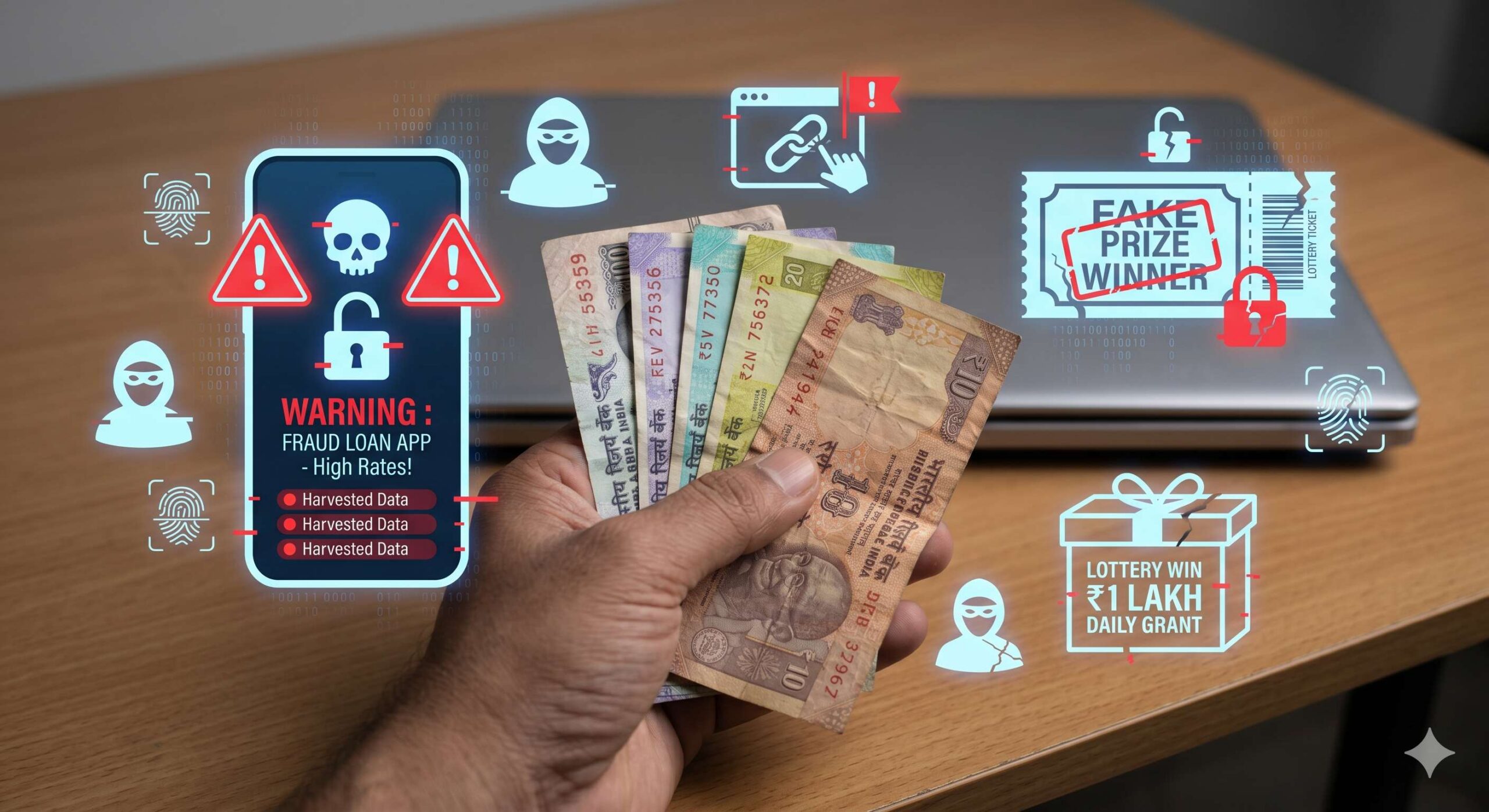
Millions, out of real need, are taken in by bogus “quick cash” loan applications or fake digital savings schemes promising high yields on low deposits. Those malicious platforms typically siphoned private information. Disguised as assistance in managing your limited funds or providing you with a micro-loan, these apps demand extremely invasive permissions, including access to contacts for the whole list of contacts and photographs along.
Also, the greediness to get extensions of a poor pay perseverance face individuals click on some phishing links distributed by WhatsApp or email. I hope these links are hidden under the disguise of fake government subsidies, cashback offers, or bogus festive discounts directly aimed at stealing you UPI PINs or banking passwords. If you are living on a shoestring budget your margin for error is razor thin and digital scam artists who scent blood will see you as the perfect victim to exploit financial anxiety.
The Financial Impact: When Small Leaks Sink the Ship
It can be utterly devastating to ignore this digital safety and financial awareness when trying to save on a low paycheck. Hackers can wipe out your bank account in seconds with fake saving app or phishing link if you get hacked.
When a person was already juggling their household budget, losing just a little bit to fraud can be the loss of months or even years of hard-fought saving. This immediate loss of capital wipes out your emergency fund leaving you totally unprotected against the relatively routine but unforeseen medical bills, travel away from home for unexpected events, or urgent repairs to your home.
Where there is no safety net, families often need to turn to expensive credit card or informal lenders — at rates that can climb almost as high as 30 percent per month — just to pay utility bills and other basic expenses. And this sets off a horrible spiral of debt that is nearly impossible to break free from. If a single transaction can hurt and backfire on that limit if creates defaults on legitimate loan EMIs, inhibiting you from getting access to safe formal banking credit in future when you actually need credit. Scalping vs Swing Trading – Which Is Better? But one first needs to delve into the mechanics of the forex world’s “sprinter”: Scalping.
Scalping is a high-frequency trading style whereby a trader, in the case of retail forex can profit from microscopic price changes. Request to remove A scalper may buy and sell in 30 seconds Scalpers need to trade many more times per day; a typical scalper will net 50-100 trades in one day, because each trade only aims for up or down by a few “pips” (the tiny movements of price) for the gain to add up.
Prevention Habits: Protecting Your Wealth as It Grows
To successfully navigate how to save money on a low salary without falling into these destructive traps, you must build strong, preventive financial habits. Protecting your money is just as important as saving it. Here are the essential habits you need to adopt:
1. Verify Before You Trust
When choosing to download a digital budgeting app where you will have your budget tracked along with your limited income, remember always to source from the official places such as the Google Play Store or Apple App Store. Review app permissions before instalation. A valid expense tracker will never ever have to have access to your digital camera, microphone or contacts. If the app is asking for these deny the permissions and uninstall it now.
Complete Guide to the MSRLM Umed Scheme 2026: Protect Your SHG’s Savings
2. Practice Strict Digital Hygiene
Be highly skeptical of unsolicited SMS, emails, or WhatsApp messages claiming you have won a cash prize or a special financial grant to “boost your salary.” Understand that no money, bank or financial institution will ever call you asking to check if your account is working by clicking the link provided in a particular message — they would never ask for your OTP on phone and so. UPI PIN should never be shared with anyone and a UPI PIN is to enter while sending money only & not receiving it.
3. Rely on Trusted Community Systems
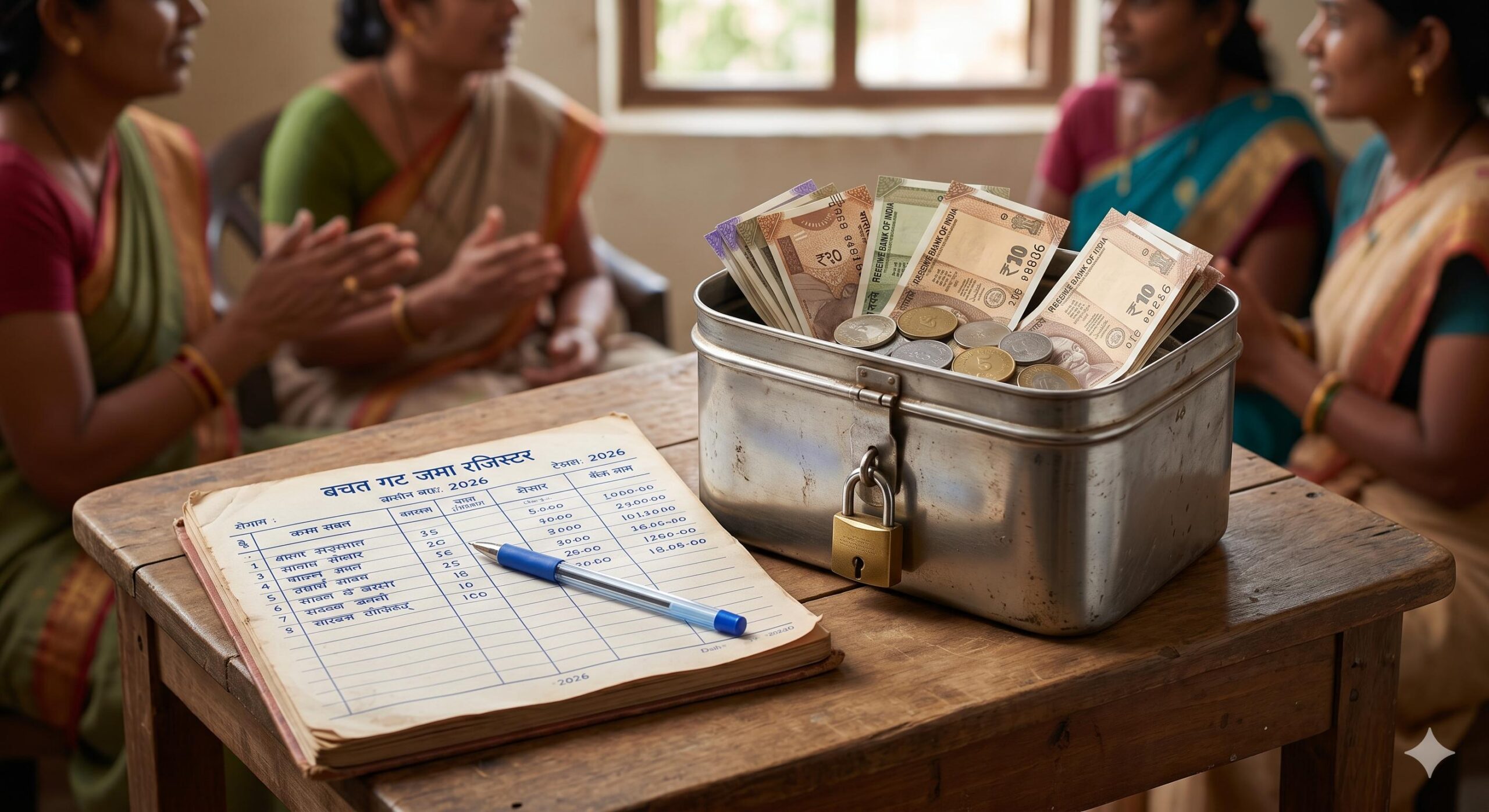
This means looking to community-based safety mechanisms, instead of chasing risky digital promises or unreviewed online investment vehicles. One secure, disciplined and well verified way for Indian middle-class families to pool their resources is to get in the habit of trying a local verified बचत गट (Bachat Gat / Self-Help Group). Such groups enable members to pool small amounts on a regular basis and provide financial support to each other — all without the extreme risks posed by Big Tech’s digital data extraction or usurious interest rates imposed by rogue lenders.
Smart Money Behavior: Actionable Steps for Limited Incomes
The ultimate secret to mastering how to save money on a low salary is adopting smart, consistent money behaviors that fit your specific lifestyle. Installing a safe app or knowing about fraud is only the first step; the real change happens in your daily habits.
Master the Art of Tracking
Invisible spending is your worst enemy when you are on a low income, Refers to everything from the ₹20 for your quick snack, the ₹100 delivery charge that you ordered at midnight or a digital subscription fee that was automatically renewed without cancelling. Begin with every single transaction that you physically or digitally track. You are learning by the day, remembering how you spent it and where your money is really going to that direction you can make cuts and spend less on these leaks and invest in those savings.
Adapt Budgeting Rules to Your Reality
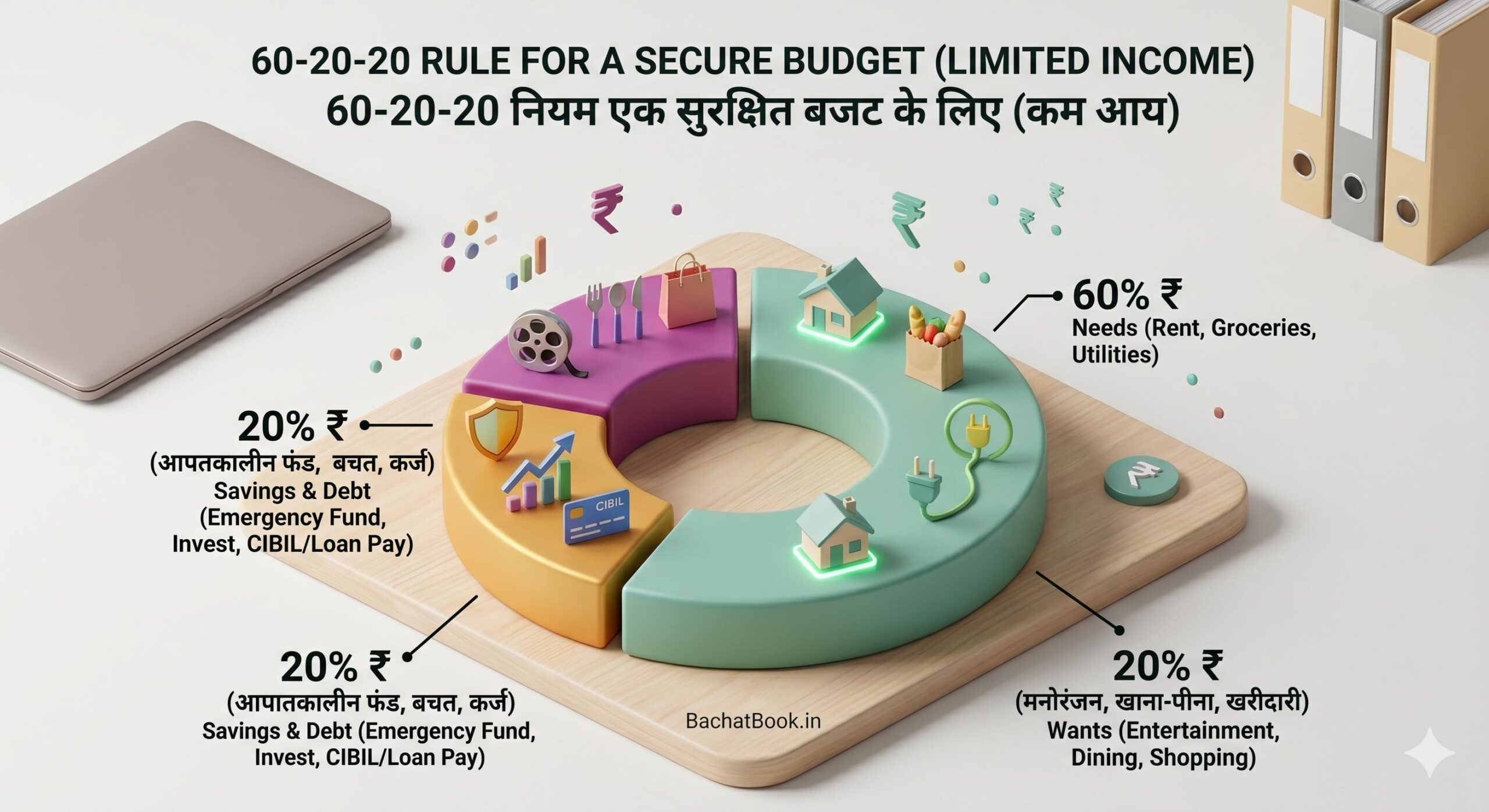
While financial experts often recommend the 50-30-20 rule, a strict low salary might require a more realistic approach, such as the 60-20-20 method.
- 60% for Needs: Allocate this strictly to non-negotiable expenses like rent, groceries, electricity bills, and essential transport.
- 20% for Wants: Keep a small portion for dining out, entertainment, or personal shopping so you do not feel overly restricted.
- 20% for Savings: Forcefully direct this remaining amount into a secure bank account, a recurring deposit (RD), or your community savings group the moment your salary arrives. Do not wait until the end of the month to save what is left; save first and spend the rest.
Implement the 24-Hour Rule
A low salary specifically is a humongous enemy of impulse buying. Any time you are tempted to buy something other than an absolute need, such as a new gadget or a piece of clothing you saw on the internet, wait 24 hours and force yourself not to purchase it. This was when the engines of emotional excitement had run out and allowed you to rationally come to the conclusion whether the item was even worthy enough to rob you of some of your hard earned straight.
Prioritize the Emergency Fund
Before thinking of anything like long-term financial goals, you must first go about building an emergency fund. Prepare enough savings to cover three to six months of basic living costs in a high-interest, liquid, and safe-savings account. This fund acts as your final line of defense financially. It allows that when the crisis comes, you do not have to borrow unhealthily or chop your assets which takes a long time to create. With a foundation of hard but safe digital protection built on top of proper daily monetary discipline you can account for your money, cover your back as far as your data is concerned and gradually create a secure future, no matter your current paycheck.