
Introduction
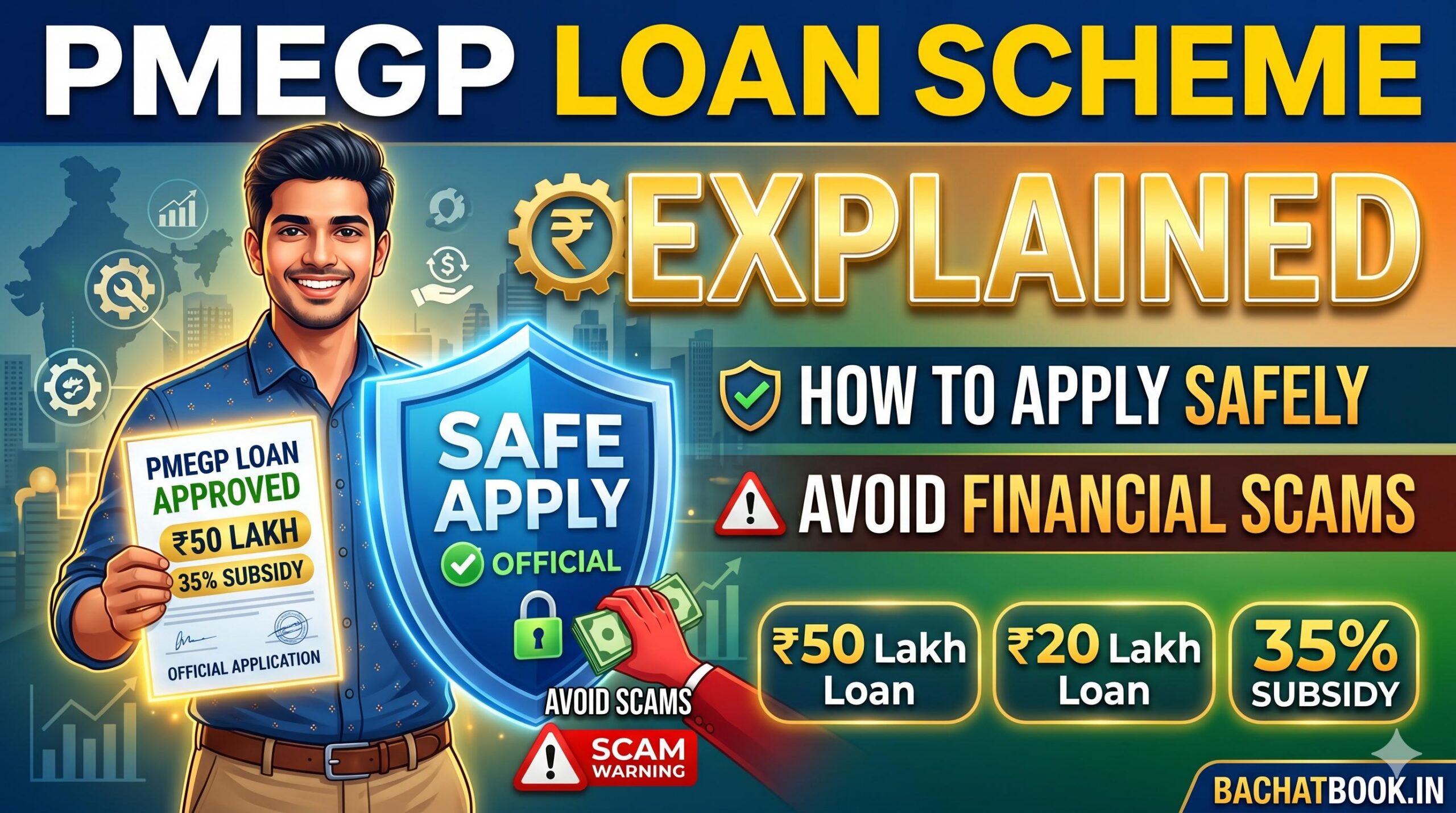
Have you been searching to get the pmegp loan scheme explained in simple terms? The Prime Minister’s Employment Generation Programme (PMEGP) is a major government-backed credit-linked subsidy scheme in India. It is designed to help unemployed youth, salaried employees looking to start businesses, and traditional artisans set up their own micro-enterprises in the manufacturing or service sectors.

Under this scheme, the government provides a direct subsidy of up to 35% on your project cost. You can apply for a business loan of up to ₹50 lakh for manufacturing projects and ₹20 lakh for the service sector. This initiative helps middle-class Indian families achieve financial independence. However, whenever a popular government scheme offers financial benefits, scammers are rarely far behind. Understanding how the scheme works and how to protect your money from loan frauds is just as important as getting the loan itself.
Welcome to Bachatbook.in, where we prioritize your financial safety. Let’s dive deeper into how this scheme works and how you can apply without losing your hard-earned money to fraudsters.
Table of Contents
How the PMEGP Scheme Works (The Financial Breakdown)
To fully understand the PMEGP scheme, you need to look at how the funds are divided. The government does not give you the entire money for free; instead, it provides a subsidy (margin money), while a bank provides the rest as a standard loan.
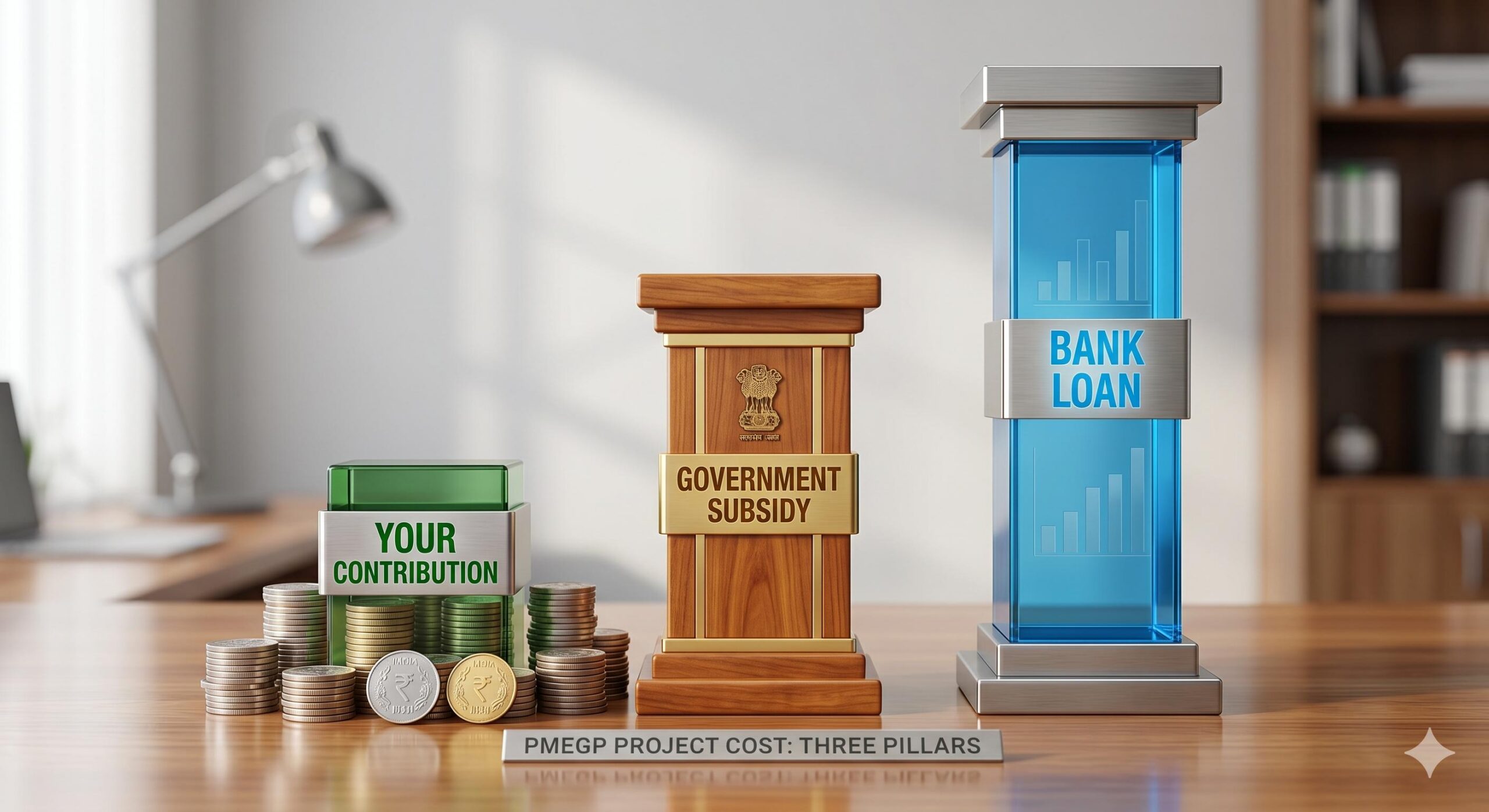
- Your Contribution: You need to invest 5% to 10% of the total project cost from your own pocket.
- Government Subsidy: The government provides a subsidy ranging from 15% to 35%, depending on whether you live in an urban or rural area, and whether you belong to a general or special category (SC/ST/OBC/Women/Veterans).
- Bank Loan: The remaining amount (roughly 60% to 75%) is provided by a public or private sector bank as a standard term loan.
While this structure makes starting a business highly affordable, the promise of government subsidies often makes applicants vulnerable to financial traps.
The Hidden Risk: PMEGP Fake Agents and Loan Scams
Because the PMEGP scheme is highly attractive, it has become a prime target for financial fraudsters. Many applicants from middle-class families or student backgrounds fall victim to scams because they lack digital financial awareness.
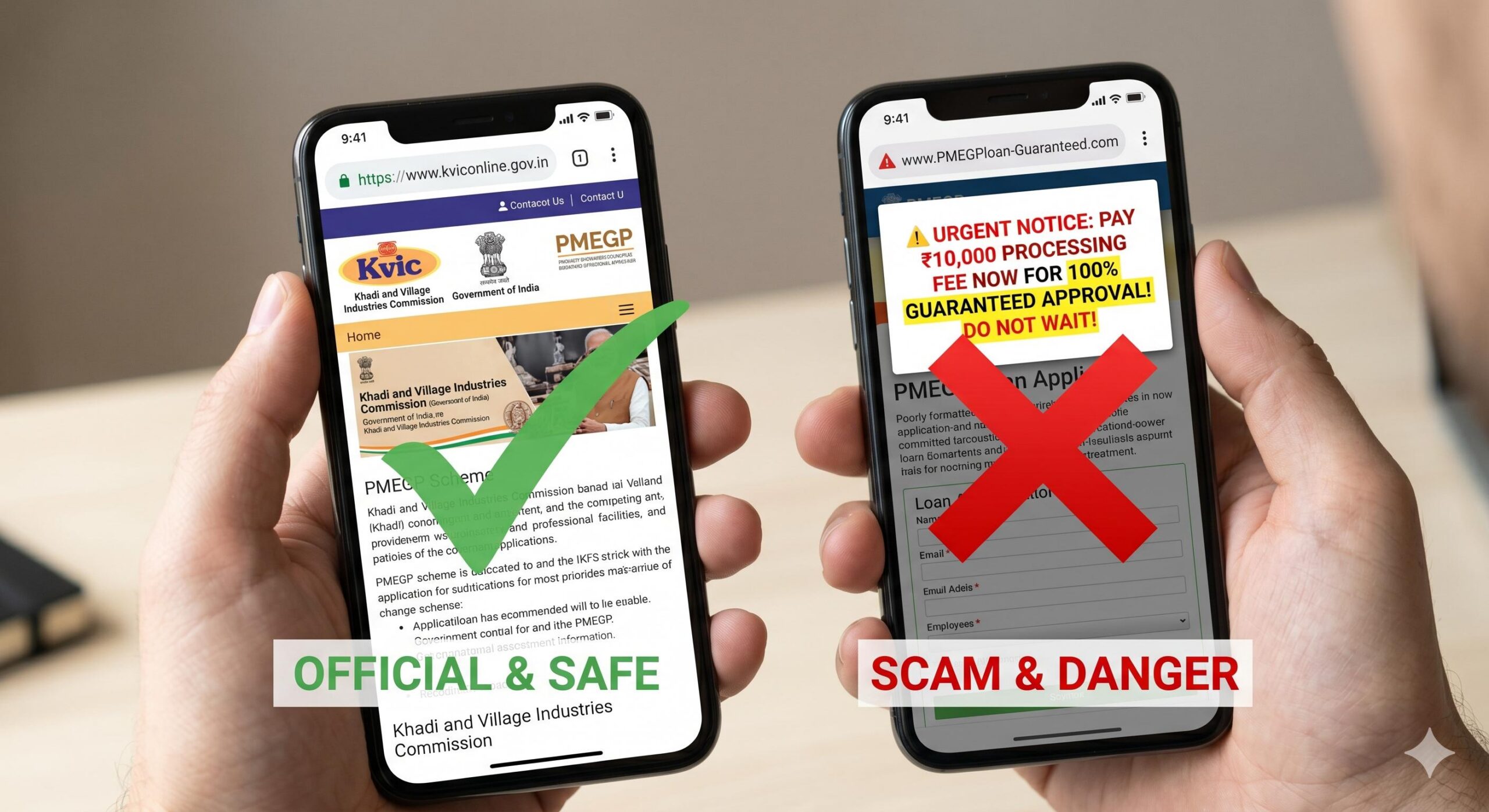
Scammers often pose as “authorized PMEGP agents” or “bank officials.” They create fake websites that look exactly like government portals or send WhatsApp forwards promising “100% guaranteed loan approval.” These fraudsters will tell you that to release your ₹50 lakh loan, you need to pay a ₹10,000 “processing fee,” “registration charge,” or “file clearance bribe.”
The Financial Impact of Falling for Loan Scams
Falling for a PMEGP loan scam can have a devastating impact on your personal finances:
- Direct Loss of Savings: Paying upfront fees to fake agents means losing your hard-earned savings. Once the money is sent via UPI or bank transfer, the scammer usually blocks your number.
- Identity Theft: Fake portals will ask for your Aadhaar card, PAN card, and bank account details. Scammers can misuse this sensitive data to take out other unauthorized loans in your name, ruining your CIBIL score.
- Debt Traps: In desperation, some individuals borrow money from family or informal lenders at high interest rates just to pay these fake “agent fees,” pushing them into a cycle of debt before their business even starts.
Prevention Habits: How to Apply Safely
Financial awareness is your best defense. To protect your money and data while applying for the PMEGP scheme, strictly follow these preventive habits:
- Use Only the Official Website: The only valid portal to apply for this scheme is the official Khadi and Village Industries Commission (KVIC) website: kviconline.gov.in. Never apply through third-party apps or unknown links.
- Zero Agent Fees: The government does not charge any application or processing fees to submit your PMEGP form. Never pay anyone who claims they can fast-track your application.
- Verify Bank Communication: If you receive a call from someone claiming to be a bank manager asking for an OTP or advance payment to clear your subsidy, hang up immediately. Banks will always ask you to visit the branch for official loan processing.
Understanding the Best Meme Coins 2026: An Educational Guide for Trading Beginners
Smart Money Behavior for PMEGP Beneficiaries
If your PMEGP loan is officially approved by the bank, practicing smart money habits is crucial to ensure you don’t default on your repayments.
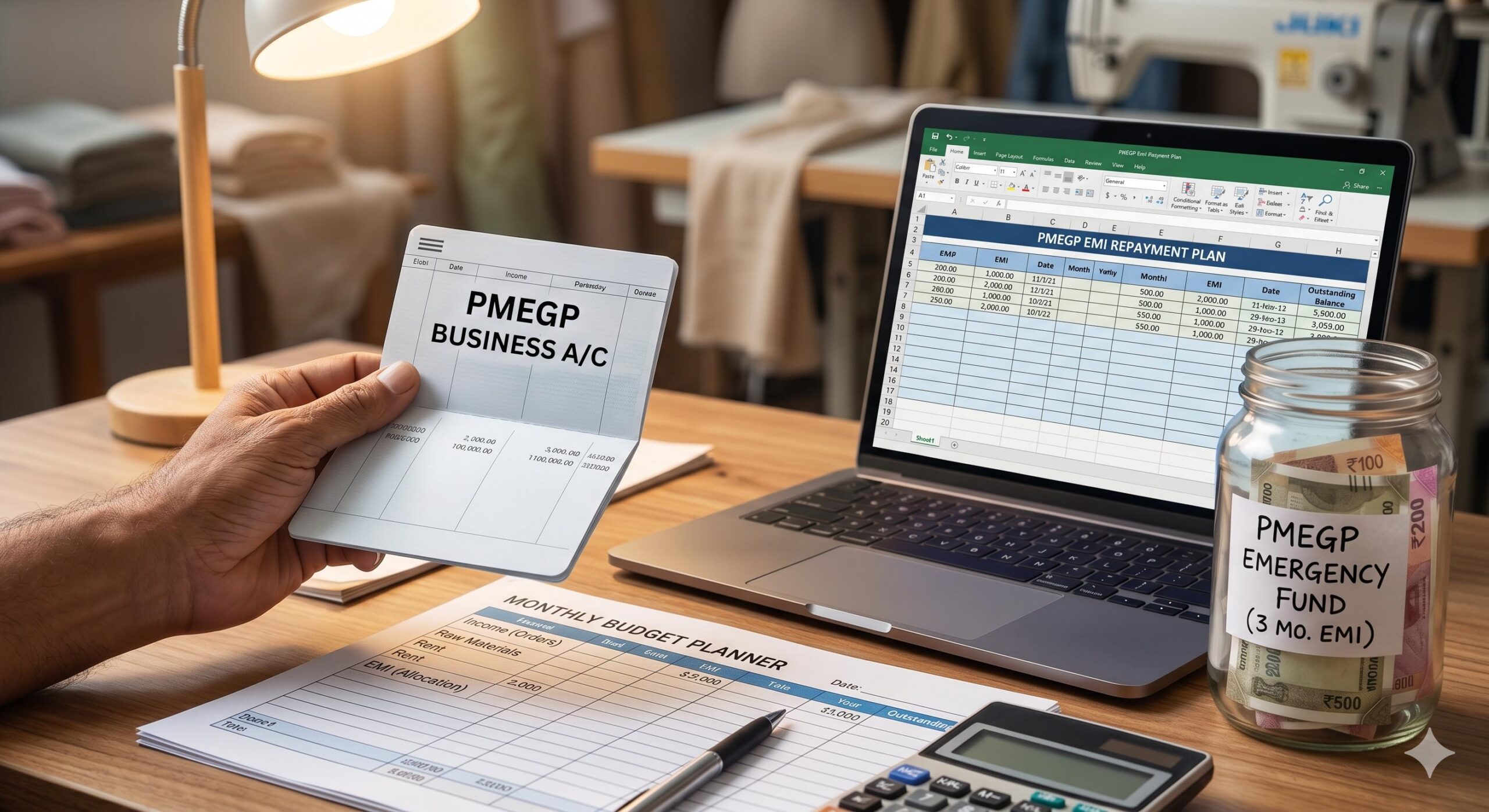
- Create a Strict Business Budget: Do not use the loan amount for personal expenses like buying a car or upgrading your lifestyle. Track every rupee spent on machinery, raw materials, and marketing.
- Separate Personal and Business Accounts: Never mix your household budget with your business funds. Open a current account specifically for your PMEGP enterprise to track cash flow accurately.
- Plan for EMIs: The bank loan portion must be repaid. Build an emergency fund covering at least three months of loan EMIs so that you don’t default if your business faces a slow month.
By combining the benefits of the PMEGP scheme with strong financial awareness and fraud prevention habits, you can safely build your business and secure your family’s future.
Frequently Asked Questions (FAQ)
1. Do I need to hire an agent to apply for the PMEGP scheme?
No. The application process is entirely online and completely free. Hiring middlemen exposes you to financial fraud. Apply directly at kviconline.gov.in.
2. Can I use the PMEGP loan to invest in the stock market?
Absolutely not. The loan is strictly provided to set up physical micro-enterprises in the manufacturing or service sectors. Misusing loan funds can lead to legal action and financial ruin.
3. What should I do if a caller demands money to approve my PMEGP loan?
Do not pay them. Disconnect the call and report the phone number to the National Cyber Crime Reporting Portal (cybercrime.gov.in) or call the 1930 helpline.
Disclaimer: The information provided in this article is for educational purposes only. It is meant to spread financial awareness, fraud prevention, and safe money habits. It is not professional financial advice. Always verify scheme details directly with official government portals or your local bank branch before making any financial decisions.