

Introduction
Starting a small business in India—whether it is a vegetable cart in a busy market, a beauty parlour in a residential colony, or a small mobile repair shop—requires immense courage. But courage alone cannot buy raw materials or pay for essential equipment; you need capital. For years, small shopkeepers and aspiring entrepreneurs faced a massive hurdle: banks demanded collateral (security) like land deeds or gold jewelry, which most ordinary middle-class families simply did not have.
To solve this persistent problem, the government introduced the Pradhan Mantri Mudra Yojana (PMMY). Among its three categories, the Shishu category is specifically designed for beginners and startups. It offers loans up to ₹50,000 to help you take that crucial first step towards financial independence.

However, many applications get rejected simply because applicants do not understand the specific rules. If you are searching for Mudra loan Shishu eligibility, you are in the right place. This guide breaks down exactly who can apply, what documents are strictly needed, and how to manage this money wisely to build a debt-free future.
Table of Contents
What is the Mudra Shishu Loan?
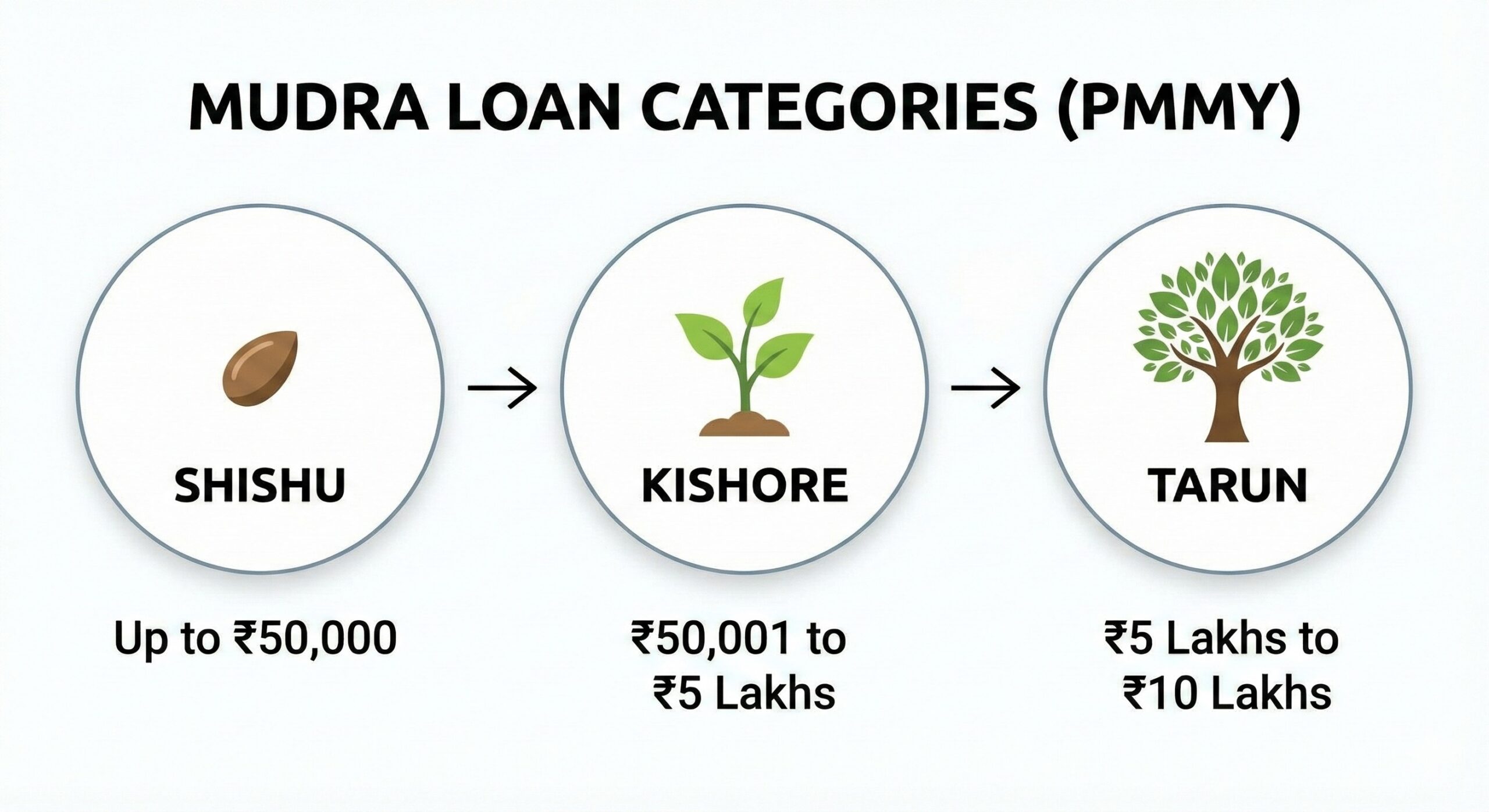
Under the Pradhan Mantri Mudra Yojana (PMMY), loans are divided into three distinct stages of business growth, symbolizing the development of a child:
- Shishu (Child): Loans up to ₹50,000. This is strictly for beginners, startups, or those requiring very small capital.
- Kishore (Adolescent): Loans from ₹50,001 to ₹5 Lakhs. This is for businesses that have started and now want to expand.
- Tarun (Young Adult): Loans from ₹5 Lakhs to ₹10 Lakhs. This is for established businesses needing significant growth capital.
The Shishu category is the entry-level scheme. It is non-farm based, meaning it is for income-generating activities in manufacturing, trading, or services. It generally excludes direct farming (like crop loans) but often includes allied agricultural activities like dairy, poultry, or bee-keeping. The best part? It is a collateral-free loan. You do not need to mortgage your house, shop, or family jewelry to get it.
Detailed Mudra Loan Shishu Eligibility Criteria (2026)
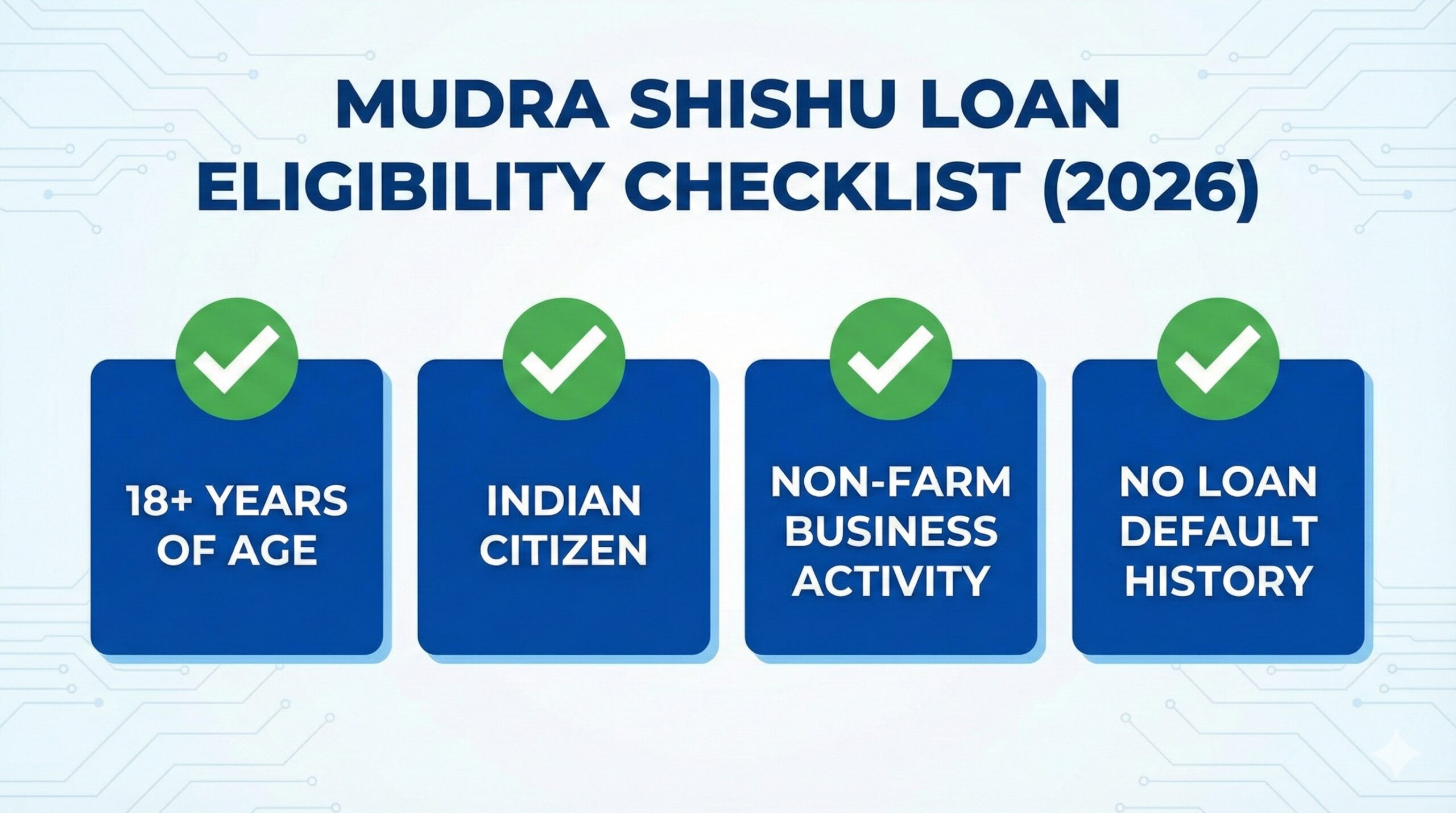
To get approved, you must meet specific, strict criteria. Banks in 2026 are very particular about due diligence, so ensure you check every box below before applying.
1. Citizenship & Age
- Nationality: You must be an Indian citizen. Non-residents (NRIs) are generally not eligible for this specific scheme.
- Age Limit: The applicant must be at least 18 years old at the time of application. While there is no strict upper age limit defined by PMMY guidelines, banks generally prefer applicants under 65 years to ensure they have the working capacity to run the business and repay the loan.
2. Nature of Business (Activity)
This is the most critical part of Mudra loan Shishu eligibility. The loan is strictly for income-generating activities. You can apply if you fall into these categories:
- Vendor: Fruit/vegetable vendor, street hawker, flower seller.
- Shopkeeper: Grocery (Kirana) store, medical shop, mobile repair shop, electrical store.
- Artisan: Potter, weaver, idol maker, carpenter, blacksmith.
- Service Provider: Tailoring unit, beauty parlour, dry cleaning service, cycle/bike repair garage.
- Food Business: Papad making, pickle manufacturing, jam/jelly making, small food stall or tiffin service.
Who is NOT Eligible?
- Loans for personal needs (e.g., marriage, children’s education, home repair/renovation).
- Direct farming activities (e.g., buying seeds or fertilizers for crops).
3. Credit History (CIBIL Score)
While Shishu loans are for beginners, banks will check your credit history to judge your repayment intent.
- No Default: You must not be a defaulter with any bank or financial institution. If you have defaulted on a previous loan, your application will be rejected immediately.
- Score: A CIBIL score of 650-700+ is preferred. However, if you have never taken a loan before (score is -1 or 0), you are still eligible, provided you have a clean savings bank record.
4. Business Experience
For Shishu loans, prior experience is not mandatory, but having a clear plan helps.
- Example: If you are applying for a loan to start a tailoring shop, holding a certificate from a skill development center (like PMKVY) significantly increases your chances of approval compared to someone with no training.
Documents Required for Application
Having the right paperwork ready speeds up the process and shows the bank manager you are serious.
- Identity Proof: Self-attested copy of Aadhaar Card, Voter ID, PAN Card, or Driving License.
- Address Proof: Recent Electricity bill, water bill, or a recent bank statement (not older than 3 months).
- Proof of Business:
- Udyam Registration Certificate (Highly Recommended in 2026 as it proves you are a registered MSME).
- Shop & Establishment license (if available).
- Or a simple declaration of business address with photos for very small street vendors.
- Photos: 2 recent passport-sized photographs of the applicant.
- Quotation: If you are buying a machine (e.g., a sewing machine, deep freezer, or photocopier), get a valid price quotation (proforma invoice) from the supplier to show the bank manager. The bank often pays the supplier directly.
- Caste Certificate: (If applicable, for special category tracking purposes).
Step-by-Step Application Process (Offline & Online)
Method 1: The Digital Way (JanSamarth Portal)
In 2026, the government actively encourages digital applications for transparency.
- Visit the JanSamarth or Udyamimitra official portal.
- Select “Business Activity Loan” and then choose “Mudra Scheme”.
- Enter your details (aadhaar, mobile number) to check basic eligibility.
- Upload the digital copies of the required documents.
- The portal matches you with interested lenders (banks) in your area who will contact you.
Method 2: The Traditional Way (Bank Branch)
- Visit the nearest branch of a Public Sector Bank (like SBI, PNB, BOB), Private Bank, or Regional Rural Bank (RRB).
- Ask specifically for the Mudra Shishu Application Form.
- Fill it out accurately. Do not inflate your income figures; be realistic.
- Attach your KYC documents and the supplier’s quotation.
- Meet the Branch Manager personally to explain your business plan confidently.
- Tip: Applying at a bank where you already have an active Savings Account and a good relationship usually has a much higher success rate than walking into a new bank.
Smart Ways to Use the ₹50,000 Loan Amount
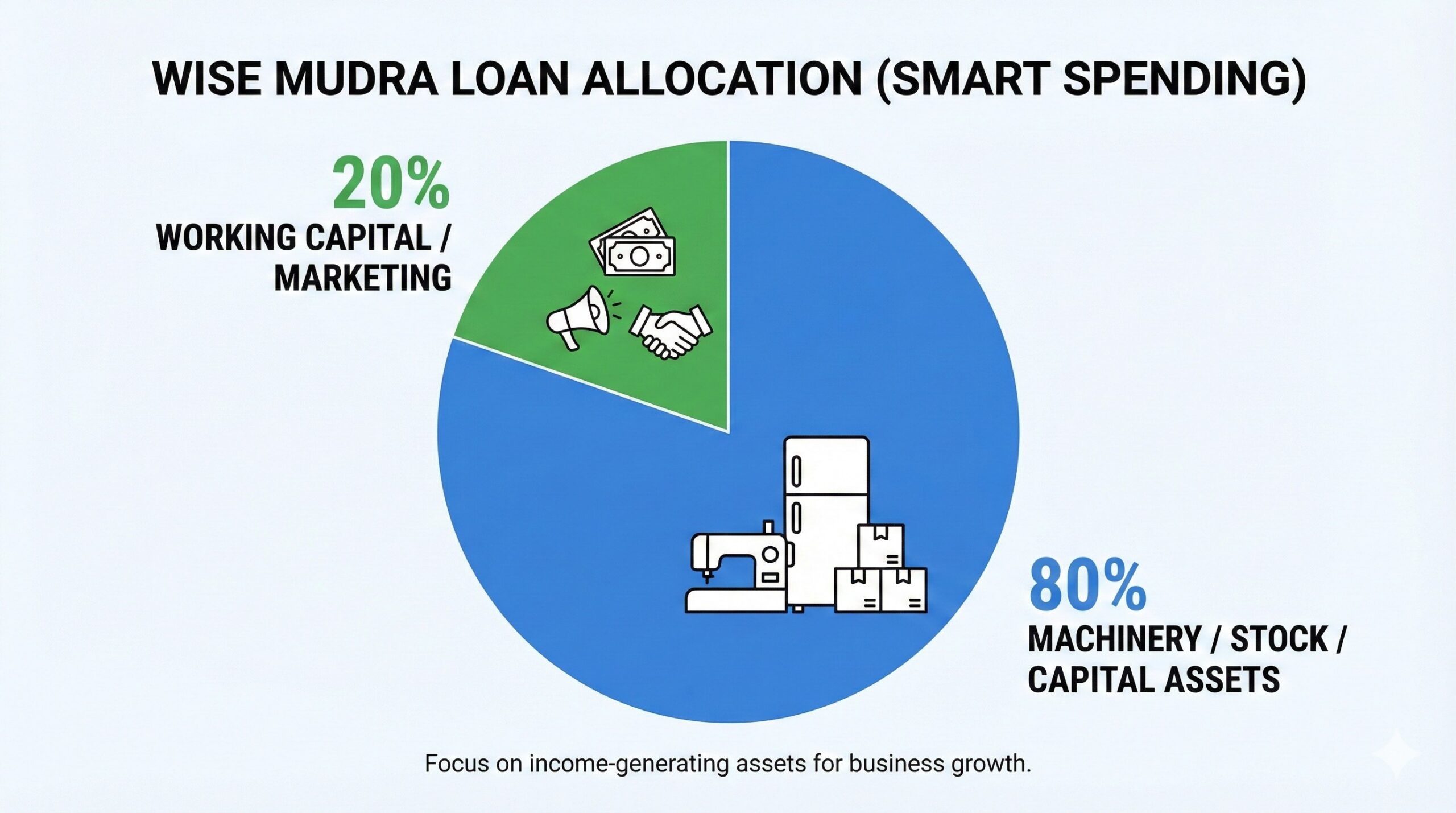
At BachatBook, we believe borrowing is easy, but spending wisely is hard. ₹50,000 is a small amount; use it to generate asset value, not for consumables.
1. Buy Machinery, Not Decor
Spend 70-80% of the loan on “Capital Assets”—things that help you produce goods or services.
- Good Spend: Buying a second-hand refrigerator for a cool-drinks shop or a new sewing machine for a boutique.
- Bad Spend: Painting the shop walls, buying fancy furniture, or installing expensive lights. These do not directly generate income.
2. Bulk Inventory Purchase
Use the money to buy stock in bulk to get a discount. If you own a Kirana store, buying rice, sugar, or oil in wholesale quantities (quintals) reduces your cost price, thereby increasing your profit margin immediately on every sale.
3. Avoid Cash Withdrawals
Try to pay your suppliers digitally (UPI/NEFT) or via cheque/demand draft directly from the loan account. Banks prefer this transparency as it proves the money is being used for business. It also builds trust for future, bigger loans (Kishore/Tarun).
Common Reasons for Loan Rejection
Even if you meet the Mudra loan Shishu eligibility, applications often get rejected. Here is why:
- Vague Business Plan: Simply telling the manager “I will do some business” is not enough. Be specific: “I will buy 50kg of raw cotton, make shirts, and sell them at the Tuesday weekly market for ₹200 each.”
- Poor Banking Habits: If your existing savings account shows frequent cheque bounces, penalties for non-maintenance of minimum balance, or suspicious transactions, the bank will hesitate to lend you money.
- Existing Debt: If you already have multiple active personal loans that consume most of your monthly income in EMIs, you may be denied due to “low repayment capacity.”
- Location Issues: If your business location is temporary, illegal, or disputed, verification officers may give a negative report during their field visit.
Digital Tools to Manage Your Loan (Neutral)
Once you get the loan, proper management is key to ensuring you can repay it and grow.
- BHIM / UPI Apps: Use these to accept customer payments directly into your business account. This creates a “Digital Turnover” record which is useful for future loans.
- Khata Apps: Use digital ledger apps (like Khatabook or OkCredit) to track who owes you money. Recovering customer dues on time ensures you have cash to pay your loan EMI on time.
- Mudra Card: If issued by your bank, use the Mudra Debit Card for business expenses. It works like a credit card with a pre-set limit, helping you manage working capital needs flexibly.
FAQ Section
Q1: Is there any processing fee for Mudra Shishu loans? No. As per RBI and PMMY guidelines, there is zero processing fee for Shishu loans (up to ₹50,000). If an agent or middleman asks for money “commission” to get your loan approved, it is a scam. Report it immediately.
Q2: What is the interest rate for Shishu loans? Interest rates are not fixed by the government; they depend on the bank’s MCLR (Marginal Cost of Funds based Lending Rate) policy. In 2026, it typically ranges from 9% to 12% per annum, which is much cheaper than local moneylenders.
Q3: Can I get a Mudra loan to buy a personal bike? No. However, if you are buying a vehicle for commercial use (e.g., a delivery scooter for food delivery or a load-carrying auto), you can apply under Mudra. You will likely need to register the vehicle as a commercial vehicle (yellow plate).
Q4: Do I need to file Income Tax Returns (ITR) for Shishu eligibility? For the Shishu category (₹50k), filing ITR is usually not mandatory. However, if you have filed it (even nil returns), it serves as excellent proof of income and stability, increasing your chances of approval.
Q5: What is the repayment period? You can repay the loan in monthly EMIs over a flexible period of 3 to 5 years. You can also close it earlier (pre-payment) without penalty in most banks if your business does well.
Q6: Can college students apply? Only if they are 18 years or older and are starting a legitimate, income-generating business. The loan is not for paying education fees or college tuition. It is strictly for business activities.
Conclusion
The Mudra Shishu Loan is a powerful tool for financial inclusion, designed to lift small entrepreneurs out of the trap of high-interest private lenders. But remember, it is not “free money.” It is a financial responsibility. Qualifying for Mudra loan Shishu eligibility is just the first step. The real test is how disciplined you are with the funds.
Do not borrow just because the scheme exists. Analyze your business needs first. Can you manage with your savings? If not, take the loan, invest it strictly in assets that earn money, and repay on time. A successfully repaid Shishu loan opens the door to the Kishore category (up to ₹5 Lakhs), paving the way for substantial business growth and a secure future for your family.
Disclaimer: The information provided in this article regarding the Pradhan Mantri Mudra Yojana (PMMY) is for educational and informational purposes only. While we strive to provide accurate data based on the latest 2026 guidelines, policies and interest rates are subject to change by the RBI and respective banks.
BachatBook.in is a private financial literacy blog and is not affiliated with the Government of India or any bank. We do not provide loans. Readers are advised to visit the official portal www.udyamimitra.in or contact their nearest bank branch for official processing. We are not liable for any financial decisions made based on this content.