
Introduction
Saving money in India has always been challenging, but in 2026, it requires a mix of traditional discipline and modern financial tools. With rising inflation (Mehangai) and household expenses touching new highs, every rupee saved is crucial. However, saving isn’t just about cutting costs—it is also about knowing where to get affordable credit when you need it.
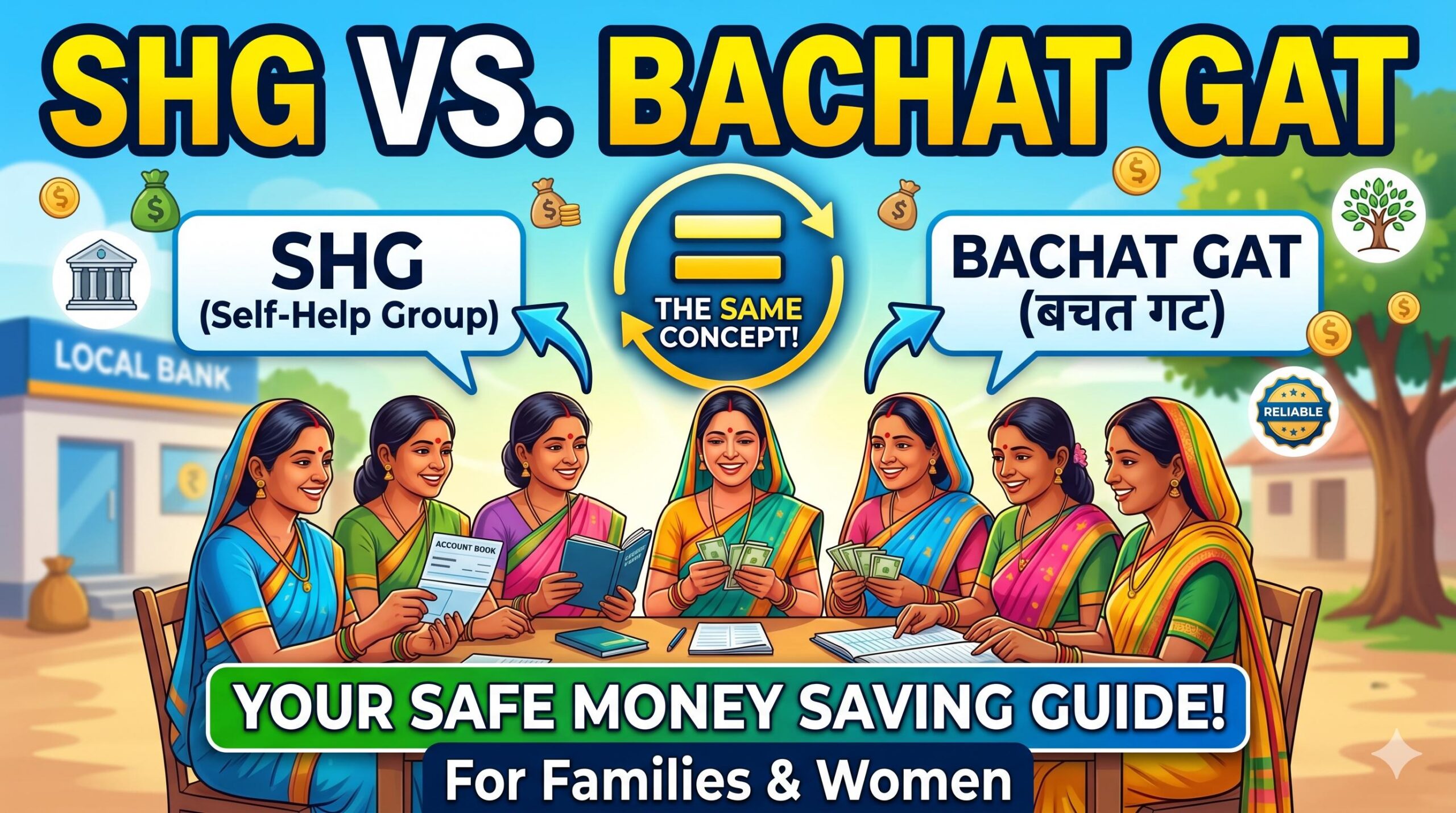
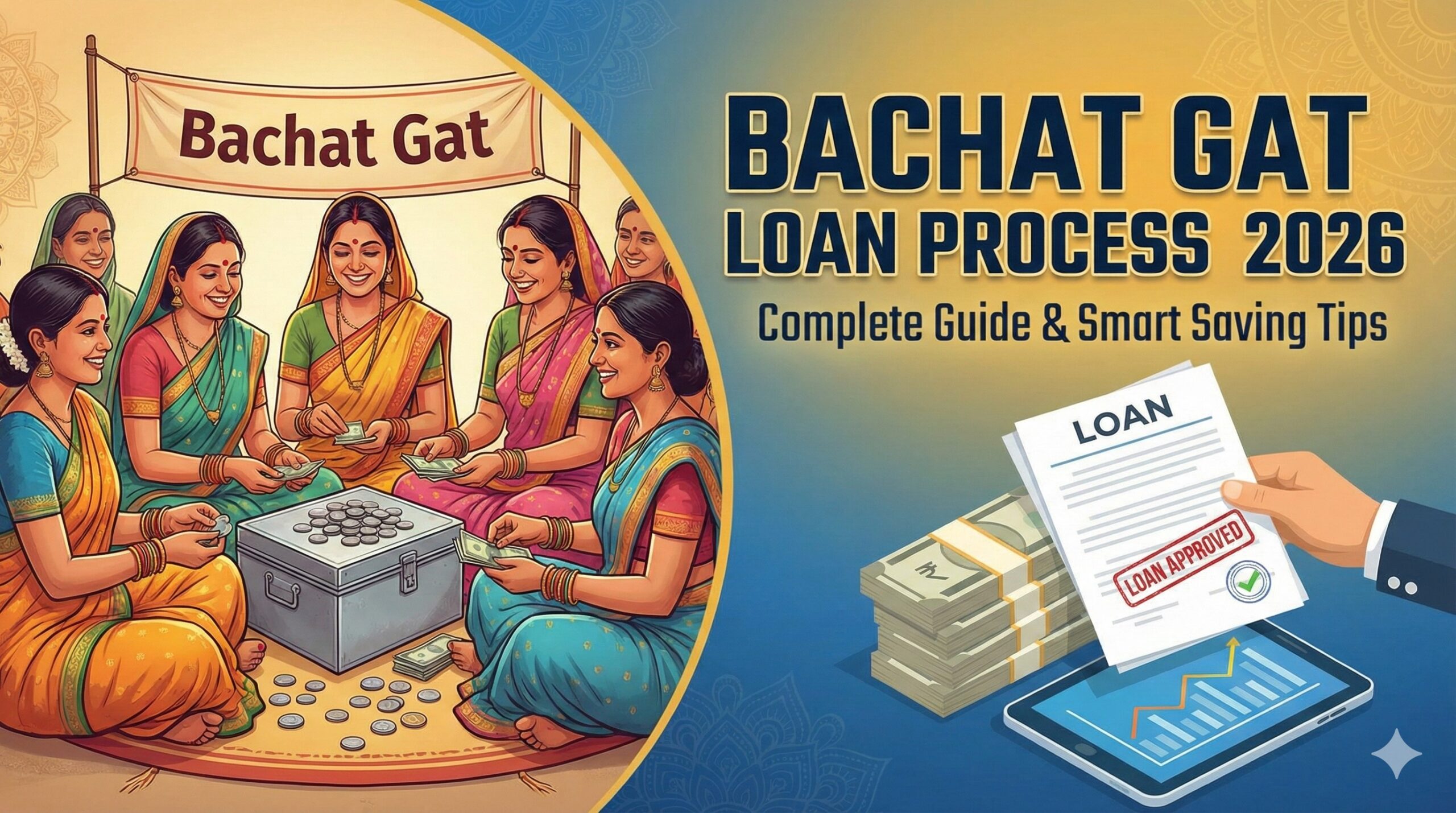
For millions of Indian households, especially in rural and semi-urban areas, the Bachat Gat (Self Help Group) has become a lifeline. It is not just a saving tool but a powerful way to access loans without falling into the trap of high-interest moneylenders.
This guide is designed for Indian middle-class families, women entrepreneurs, and salaried employees. We will cover the Bachat Gat loan process 2026 in detail, along with a realistic monthly budgeting method to help you build your own financial safety net.
Table of Contents
Why Saving Money Is Important in India
For most Indian families, savings are the only safety net. Unlike in some western countries, we often rely on our own funds for medical emergencies or sudden job losses.
- Emergency Fund: Life is unpredictable. A sudden medical bill or urgent home repair can derail your finances if you don’t have liquid cash ready.
- Family Responsibilities: In India, we often support aging parents or extended family. Having a financial buffer ensures you can help your loved ones without taking bad loans.
- Job Uncertainty: The job market can be volatile. Having 6 months of expenses saved gives you the freedom to find the right job without panic.
- Future Goals: Whether it is a child’s education (Lagane/Shikshan), a dream home, or a comfortable retirement, these goals require years of disciplined saving.
Understanding the Bachat Gat Loan Process 2026
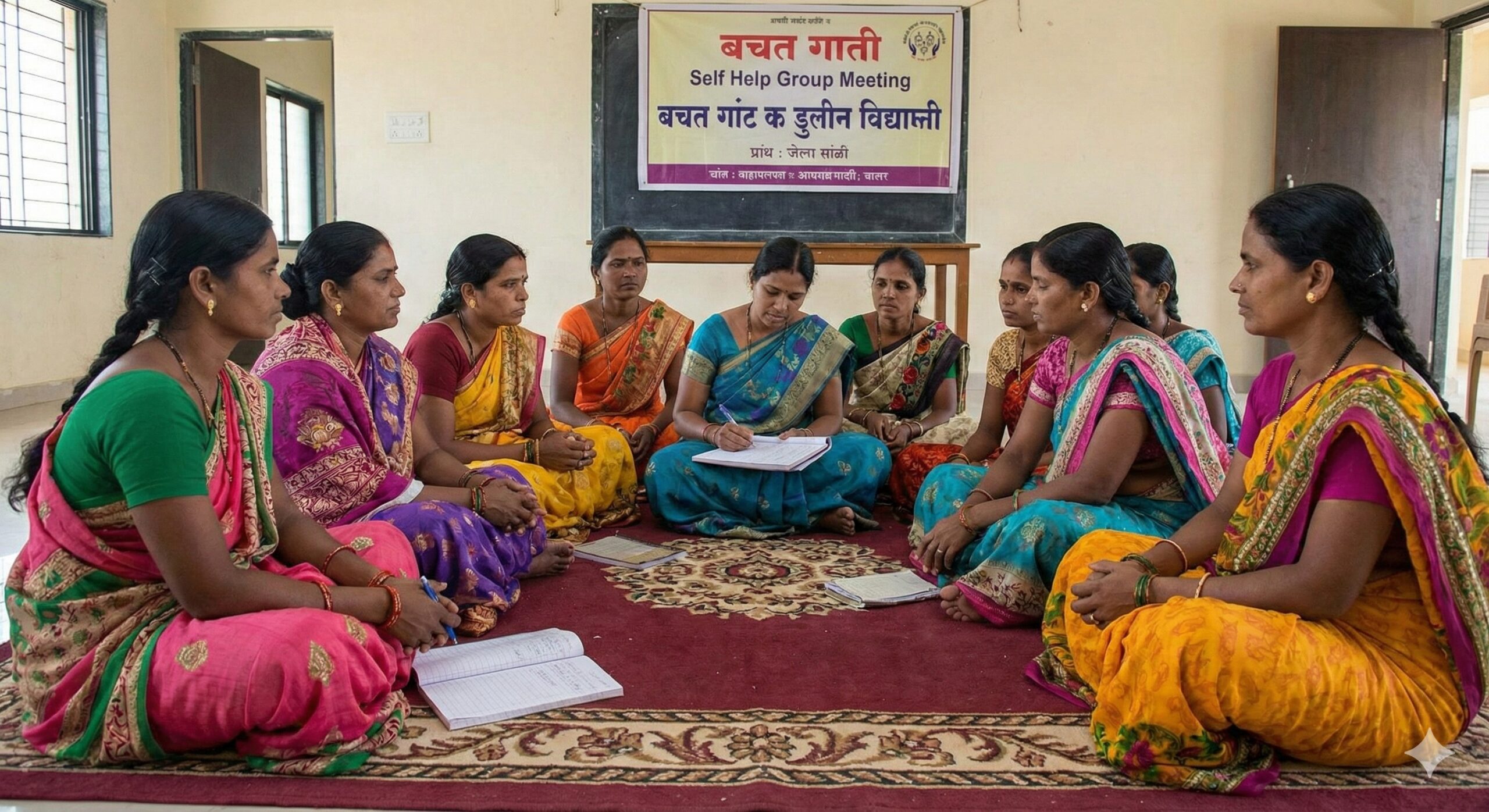
This section is essential for anyone looking to leverage Self Help Groups (SHGs) for financial stability.
A Bachat Gat (Self Help Group/SHG) is a group of 10–20 individuals (usually women) who save a small amount monthly. Once the group has enough savings (corpus), members can take loans from this money. Here is the process for 2026:
1. Eligibility for Bachat Gat Loan
- Active Membership: You must be an active member of a registered SHG for at least 6 months.
- Panchasutra Adherence: The group must follow the “Panchasutra” (Regular Meetings, Regular Savings, Regular Internal Lending, Regular Repayment, and Proper Bookkeeping).
- Savings Record: Your personal contribution to the group’s savings must be consistent.
2. Types of Loans Available
- Internal Loan (Manch Loan): This is a small loan taken directly from the group’s collected savings. It is approved by group members during the weekly/monthly meeting.
- Bank Linkage Loan: After 6 months of good performance, the SHG is “graded” and linked to a bank. The bank provides a loan to the group, which is then distributed to members.
- 2026 Limit Update: As per recent trends, the 1st dose of Bank Linkage loan is often up to ₹1.5 Lakh to ₹3 Lakh (or 6 times the savings).
- No Collateral: For loans up to ₹10 Lakhs, banks typically do not ask for collateral (security) under the DAY-NRLM scheme.
3. Documentation Required (2026)
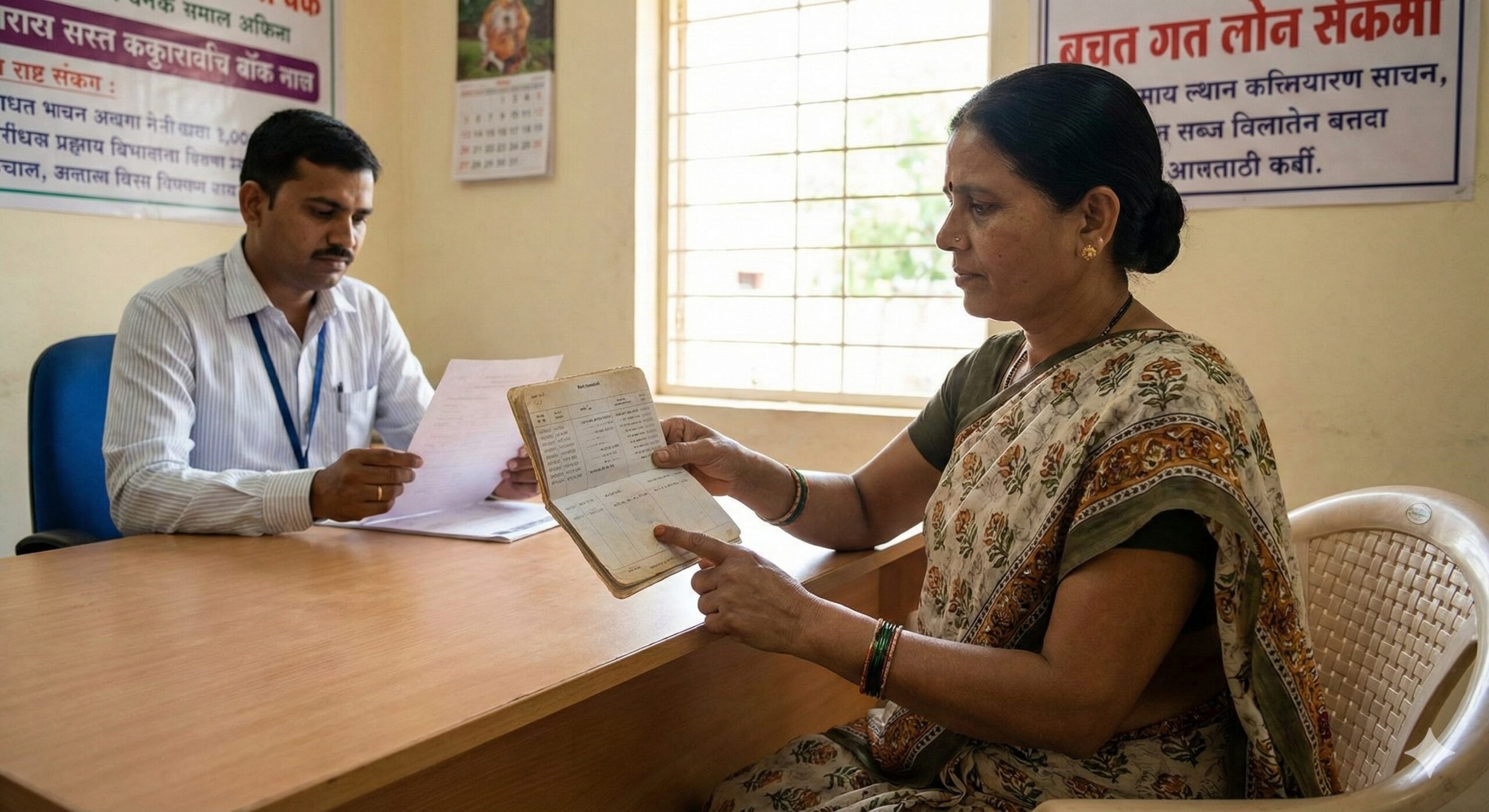
To apply for a bank loan via your Bachat Gat, the group needs:
- Resolution (Tharav): A written resolution signed by all members authorizing the loan application.
- KYC Documents: Aadhaar Card and PAN Card of the office bearers (President, Secretary).
- Bank Passbook: Updated record of the group’s savings account.
- Grading Sheet: A certificate showing the group has passed the grading norms.
4. Interest Rates
- Internal Loans: Decided by the group, usually 1% to 2% per month (12–24% p.a.). The interest earned stays within the group, increasing your own group’s wealth.
- Bank Loans: Usually 7% to 12% p.a. depending on the bank and government subsidy (Interest Subvention) status.
Common Reasons Indians Fail to Save Money
Even with good intentions, many of us struggle to save. Recognizing these traps is the first step to fixing them.
- Lack of Budgeting: Many families spend first and save what is left. Often, nothing is left.
- Impulse Spending: The ease of online shopping and 10-minute grocery deliveries makes it easy to buy things we don’t need.
- EMI Overload: Buying phones, appliances, or even clothes on “No Cost EMI” can trap you. A large chunk of your salary goes into paying off yesterday’s purchases.
- Lifestyle Inflation: As our salary increases, our expenses often increase to match it, leaving our savings rate stagnant.
Step-by-Step Monthly Budgeting Method
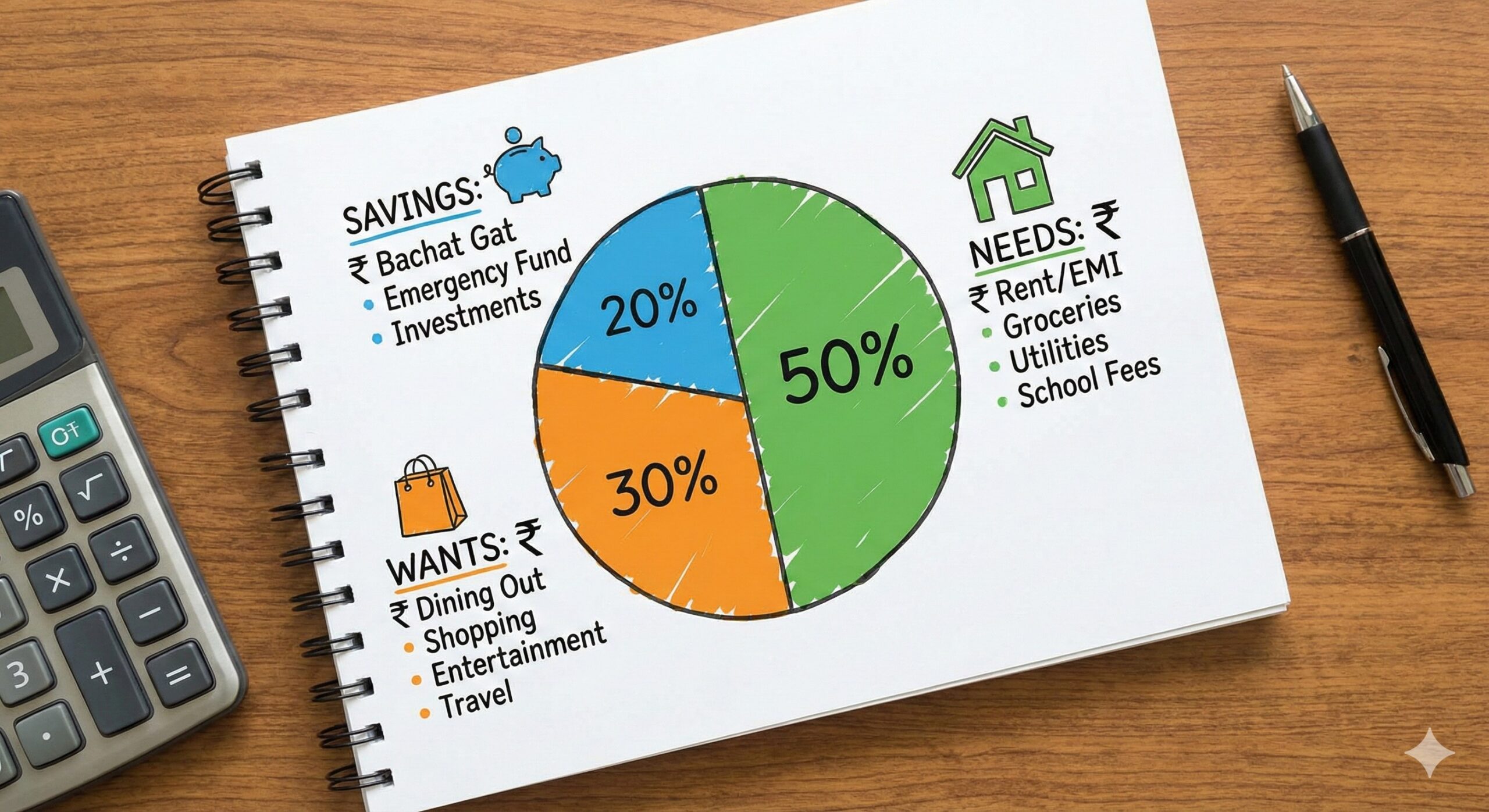
A budget gives every rupee a job. Here is a simple method tailored for an Indian household earning ₹40,000 per month (example figures).
1. Calculate Net Income
Start with your “in-hand” salary after tax and PF deductions. Include any other sources of income like rent or freelance work.
2. The 50-30-20 Rule (Indian Context)
Divide your income into three buckets:
- 50% Needs (₹20,000): Rent, grocery, school fees, electricity, mobile bills, transport. These are unavoidable.
- 30% Wants (₹12,000): Dining out, movies, festivals, shopping.
- 20% Savings (₹8,000):
- Bachat Gat Contribution: ₹500 – ₹1,000
- Emergency Fund (RD): ₹2,000
- Long-term Investments (PPF/SIP): ₹5,000
3. Track Your Expenses
Write down every expense. If you spend ₹20 on tea, note it down. You will be surprised to see where your money actually goes.
Note: If you are planning to take a Bachat Gat loan, ensure your “Needs” bucket includes the EMI repayment amount before you take the loan.
Smart Money Saving Tips for Indian Households
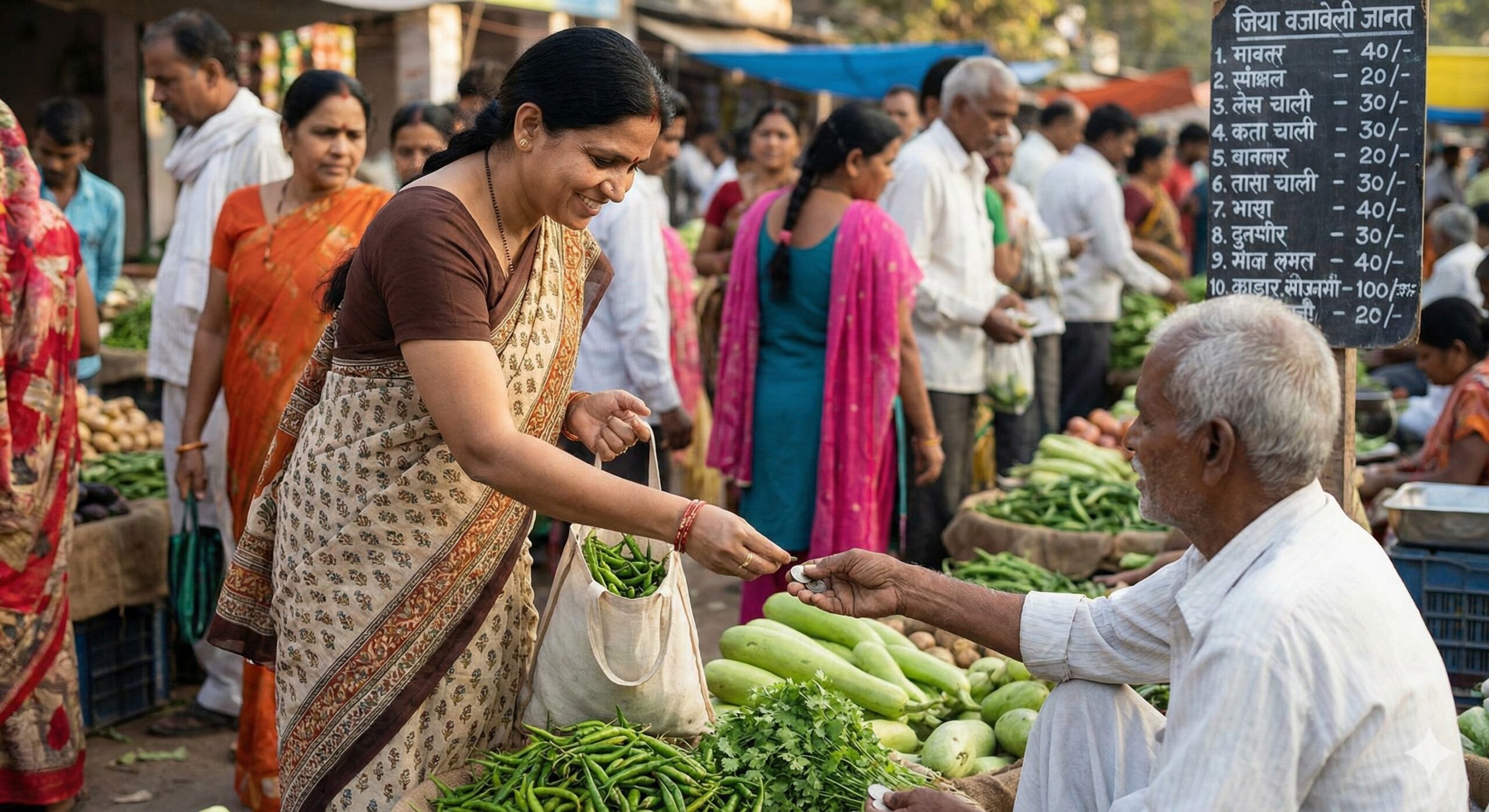
Small changes in daily habits can save thousands over a year.
Grocery Savings
- Buy in Bulk: Non-perishables like rice, dal, and oil are cheaper when bought in 10kg or 5kg packs.
- Stick to a List: Never go grocery shopping without a list. Supermarkets are designed to make you impulse buy.
- Seasonal Vegetables: Buy vegetables that are in season. They are cheaper, healthier, and tastier.
Electricity & Gas Savings
- Switch to LED: Replace old bulbs with LEDs to cut lighting costs by up to 50%.
- LPG Usage: Ensure your gas stove burner is clean (blue flame). A yellow flame wastes gas. Use a pressure cooker to speed up cooking.
Mobile & Internet Bills
- Family Plans: Instead of individual recharges for four members, check if a postpaid family plan or a shared broadband plan is cheaper.
- Review Subscriptions: Do you need Netflix, Prime, Hotstar, and SonyLIV? Rotate subscriptions based on what you are watching.
Saving Money for Students & Young Earners
If you are a student or in your first job, building habits now will make you wealthy later.
- Pocket Money Management: Treat your pocket money like a salary. Save 10% before you spend the rest.
- Student Discounts: Always ask for student discounts on travel, software, and food outlets. Your ID card is a discount coupon.
- Avoid the “Buy Now Pay Later” Trap: It is tempting to buy expensive gadgets on EMI, but this debt eats into your future freedom. If you can’t pay cash for a luxury, you can’t afford it yet.
Digital Tools That Help Save Money (Neutral)
Technology can be your friend in budgeting and managing your Bachat Gat records.
- Bookkeeping Apps: For Bachat Gat members, apps like LokOS (NRLM) help digitize transactions and transparency.
- Budgeting Apps: Apps like Walnut or Money View (examples, not endorsements) automatically read your transaction SMS and categorize your spending into “Food,” “Travel,” etc.
- Bank Alerts: Set a limit on your debit card. If you cross a certain spending amount, your bank can send you an alert.
Long-Term Saving Habits Indians Should Build
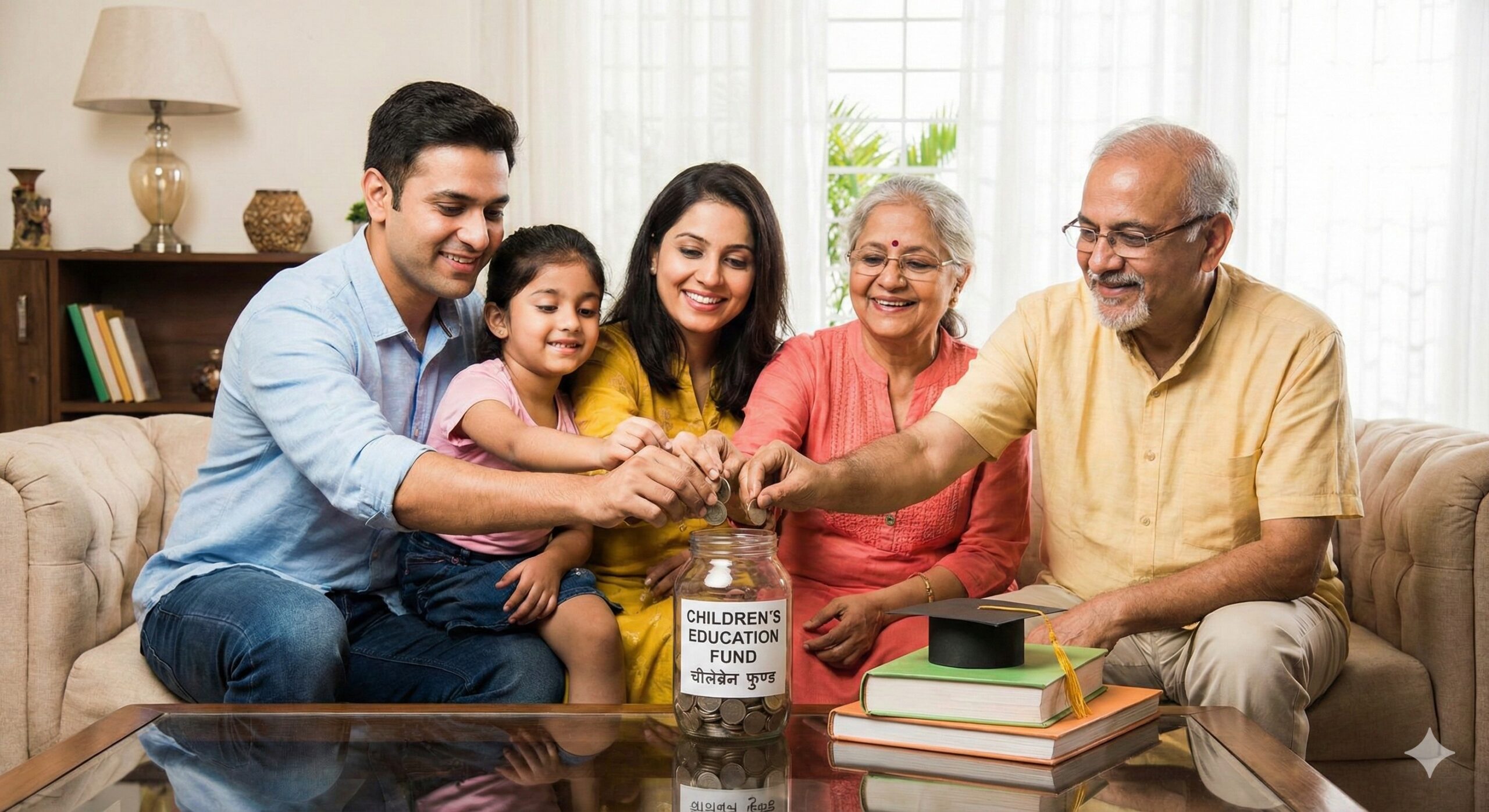
Saving is a marathon, not a sprint.
- Discipline: The ability to say “no” to unnecessary purchases is your biggest asset.
- Goal-Based Saving: Don’t just “save.” Save for something. Label your funds: “Home Repair,” “Sister’s Wedding,” or “Bachat Gat Repayment.”
- Review Expenses Monthly: Sit down with your family on the last Sunday of every month. Discuss where you overspent and how to fix it next month.
- Increase Savings with Income: If you get a 10% salary hike, increase your savings by 10% too. Don’t just increase your spending.
FAQ Section
Q1: What is the maximum loan limit for a Bachat Gat in 2026? A: Under the bank linkage program, SHGs can get up to ₹20 Lakhs in later doses (4th dose onwards). First-time loans usually start around ₹1.5 Lakh to ₹3 Lakh.
Q2: How much interest does a Bachat Gat charge? A: Internal loans (from your own group’s savings) usually charge 1% to 2% per month. Bank loans to the group charge around 7% to 12% per annum.
Q3: Can I get a personal loan from a Bachat Gat? A: Yes, if you are a member. You need to request the loan during a meeting, state the purpose (e.g., medical, education, business), and the group members must approve it.
Q4: Is budgeting necessary for low income? A: Yes, budgeting is more important for low incomes. It helps you prioritize essentials (Roti, Kapda, Makaan) and ensures you don’t run out of money before the month ends.
Q5: How can families save money easily? A: Cook at home more often, reduce electricity wastage, and buy non-perishable groceries in bulk. Also, review family mobile/data plans for cheaper shared options.
Q6: Are Bachat Gat loans safe? A: Yes, they are safer than private moneylenders because the interest rates are regulated and the profit (interest) goes back into the group’s own account.
Conclusion
Saving money in 2026 is about being smart—smart with your budget and smart with your borrowing. Whether you are using a Bachat Gat loan process to start a small business or using the 50-30-20 rule to manage your salary, the key is consistency.
Remember, financial freedom doesn’t come from earning a lot; it comes from managing well what you earn. Start your budgeting journey today, attend your SHG meetings regularly, and build a secure future for your family!