
Introduction
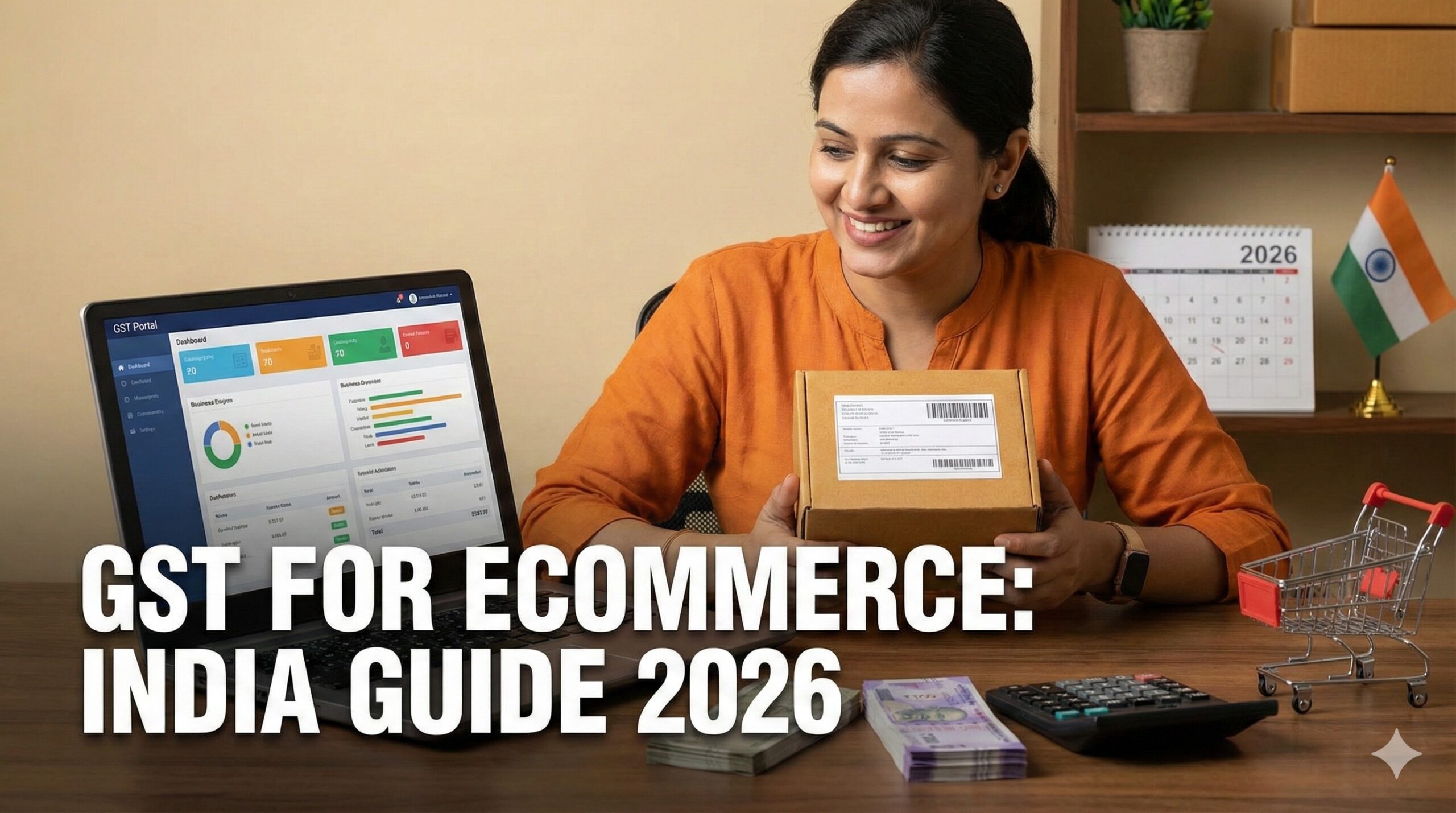
In the last few years, the definition of “earning” for the Indian middle class has changed. It is no longer just about the 9-to-5 salary. Many salaried employees, homemakers, and students are turning to the internet to start side hustles—selling handmade crafts on Instagram, trading on Amazon/Flipkart, or starting Direct-to-Consumer (D2C) brands. While this is a fantastic way to beat inflation and increase household income, it brings a new challenge: GST (Goods and Services Tax).
For many new entrepreneurs, GST for ecommerce sounds intimidating. Complex terms like “TCS,” “Input Tax Credit,” and “GSTR-1” can be confusing. However, ignoring these rules can lead to heavy fines, which defeats the purpose of earning extra money.

Understanding GST is not just about following the law; it is about financial smartness. By managing your taxes correctly, you can claim money back (ITC), avoid late fees, and keep your business profit margins healthy. This guide is based on common financial challenges faced by Indian small business owners and is designed to simplify the tax maze for you.
Table of Contents
Why Understanding GST is Crucial for Online Sellers
Just as a household budget protects your family’s future, understanding GST protects your business’s future. For an Indian seller, GST compliance is the foundation of a sustainable business.
- Legitimacy: Having a GST number (GSTIN) makes your business look trustworthy to customers and suppliers.
- Inter-state Trade: You cannot sell goods to customers in other states (e.g., from Maharashtra to Karnataka) without GST registration.
- Avoiding Fines: The penalties for non-compliance in India can range from ₹10,000 to 100% of the tax evaded. This can wipe out your hard-earned savings.
Do You Need GST? The Mandatory Registration Rule
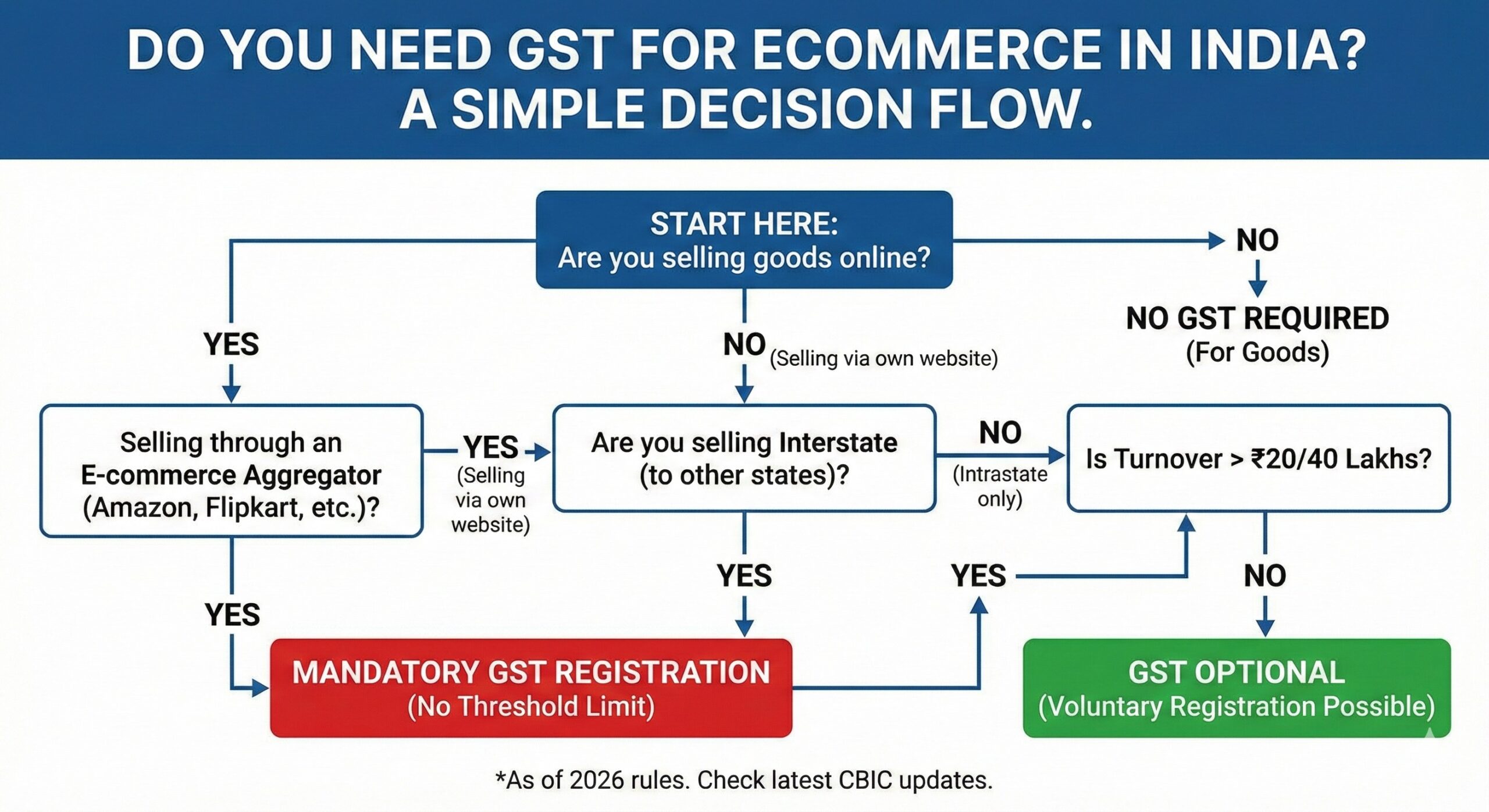
This is the most common question: “My turnover is less than ₹20 lakhs. Do I still need GST?”
For offline (brick-and-mortar) shops, there is a threshold exemption (₹40 lakhs for goods, ₹20 lakhs for services). However, the rules for ecommerce are different.
- Selling via Aggregators (Amazon, Flipkart, Myntra): If you sell goods through an e-commerce operator, GST registration is mandatory from day one, regardless of your turnover. You cannot sell a single rupee worth of goods without it.
- Selling via Own Website (Direct to Consumer): If you sell only within your state, the threshold limit may apply. However, if you ship even one parcel to a different state, mandatory registration kicks in.
The Reality: In the digital age, limiting yourself to one state restricts growth. Therefore, obtaining a GST number is usually the first step for any serious online seller.
How GST for Ecommerce Works: The Flow of Tax
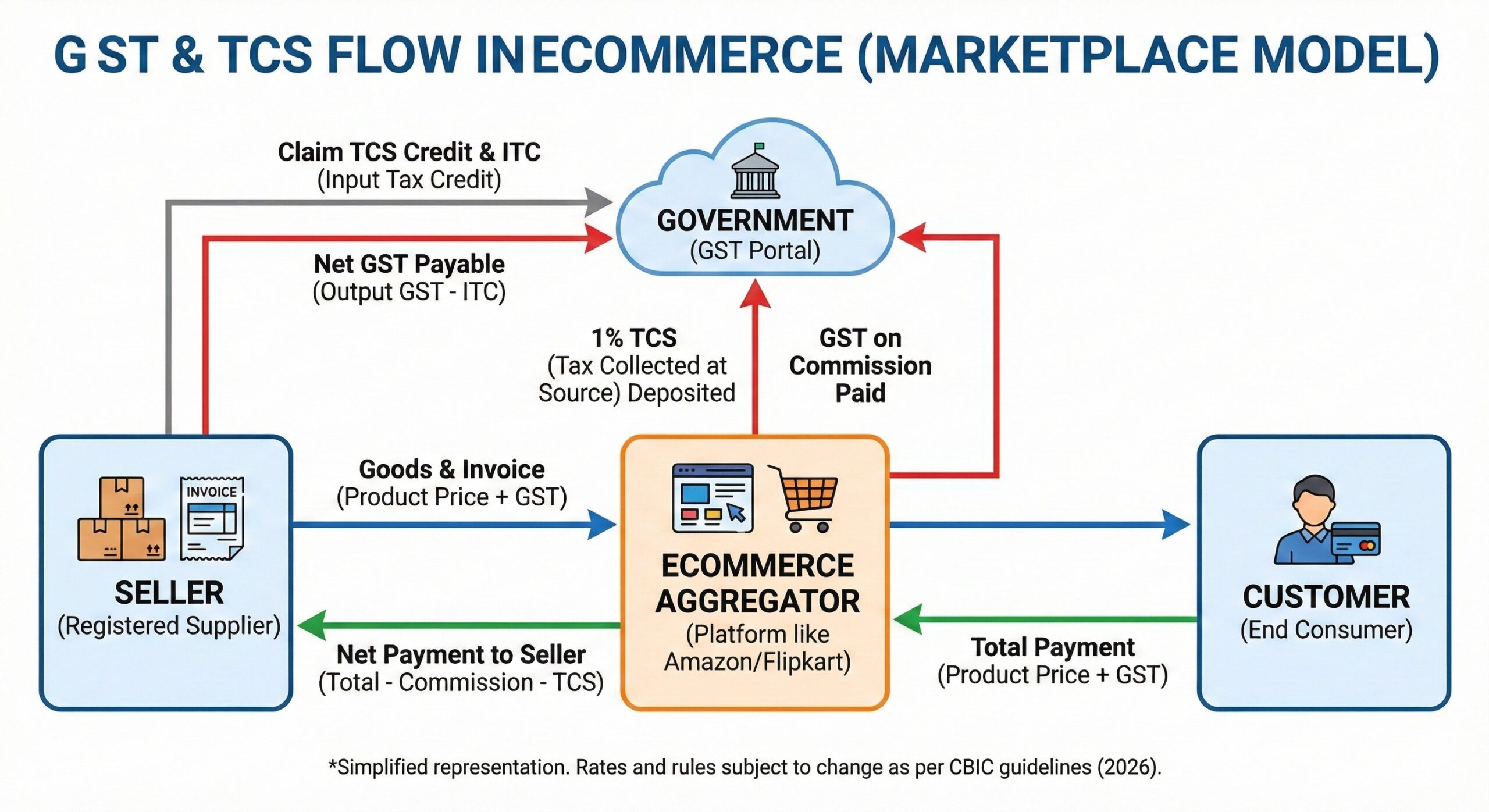
To manage your finances smartly, you must understand how money flows in the GST system.
- IGST (Integrated GST): Charged when you sell to a customer in a different state. The tax goes to the Centre, which then shares it with the destination state.
- CGST + SGST: Charged when you sell to a customer within your own state. Half goes to the Centre, half to your State.
Example: If you sell a saree worth ₹1,000 (with 5% GST) from Surat to a customer in Mumbai:
- You invoice ₹1,050.
- The ₹50 is IGST.
- You collect this from the customer and pay it to the government.
Understanding TCS (Tax Collected at Source)
If you are selling through a marketplace like Amazon or Meesho, you will notice they deduct a small amount before sending your payout. This is TCS.
- The Rule: E-commerce operators must deduct 1% TCS (0.5% CGST + 0.5% SGST or 1% IGST) on the net value of taxable supplies.
- Is this a cost? No! This is money deposited in your name with the government.
- How to get it back: You can claim this amount as credit in your “Electronic Cash Ledger” when you file your returns. It can be used to pay your final tax liability.
How to Save Money: The Power of Input Tax Credit (ITC)
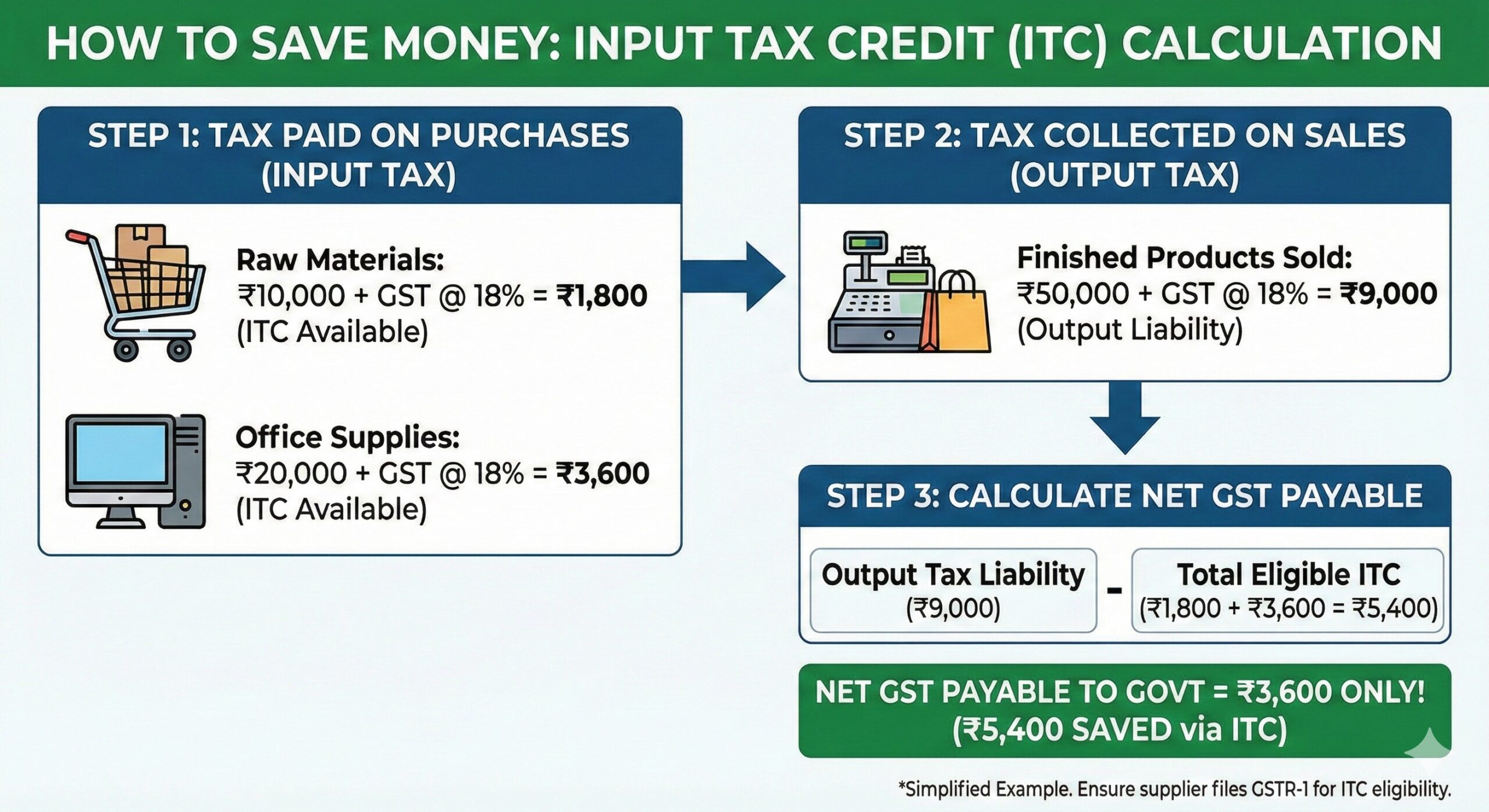
This is the most critical section for “Bachat” (Saving). GST is not just about paying tax; it is about claiming credit for the tax you have already paid.
Input Tax Credit (ITC) means reducing the tax you have to pay on sales by the tax you have already paid on purchases.
Example of Saving Money:
- You buy raw material for ₹10,000 and pay ₹1,800 GST (18%) to your supplier.
- You sell the finished product for ₹15,000 and collect ₹2,700 GST from the customer.
- Tax to be paid to Govt: You do not pay the full ₹2,700.
- Tax Collected (Output Liability): ₹2,700
- Less: Tax Paid on Purchase (ITC): ₹1,800
- Net Payable: Only ₹900.
Smart Tip: Always ensure your suppliers file their GSTR-1 on time. If they don’t, their invoice won’t reflect in your portal, and you cannot claim this ₹1,800 credit, resulting in a direct financial loss.
Step-by-Step Guide to GST Compliance
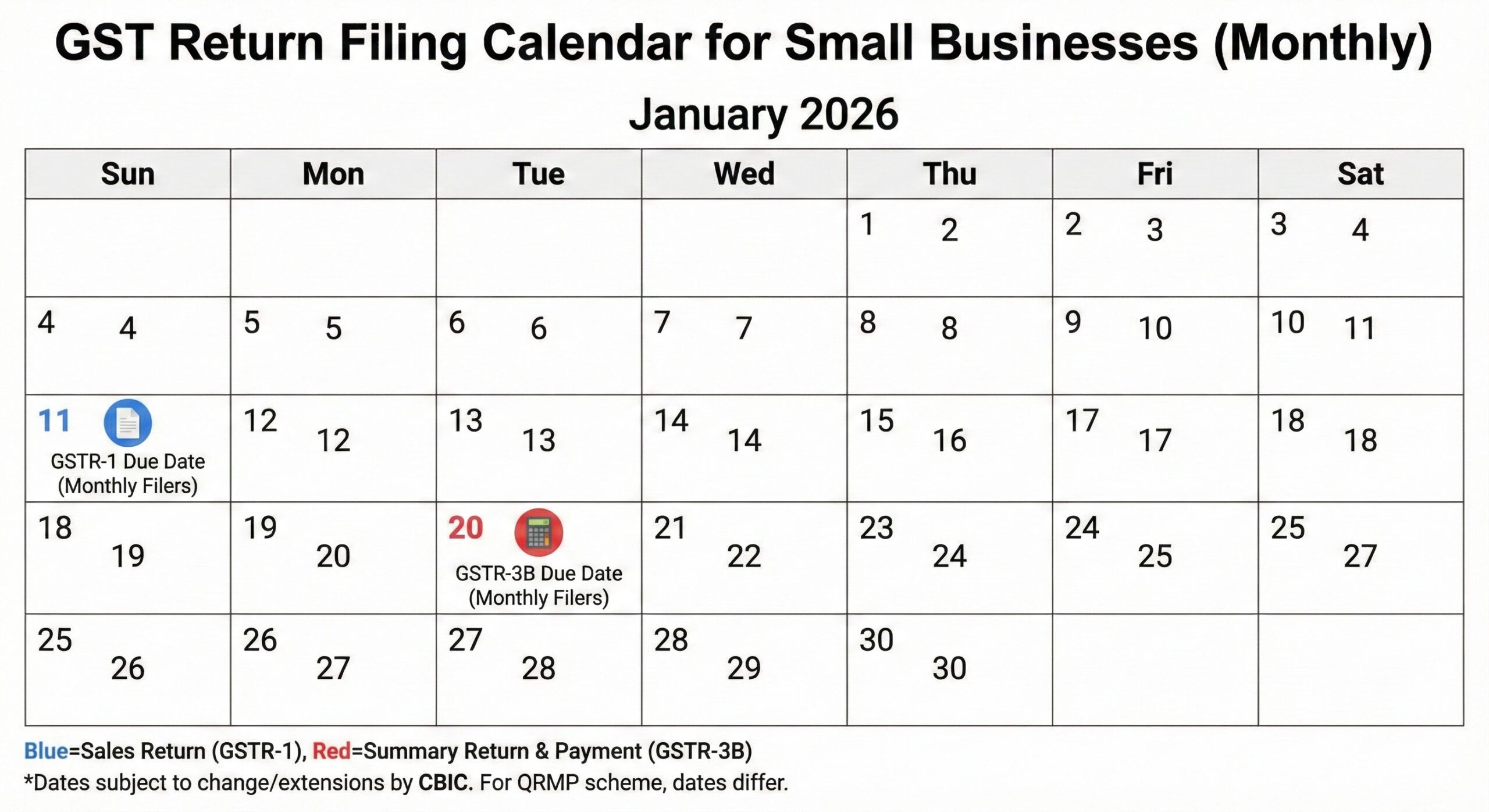
Managing GST requires a monthly routine, similar to your household budgeting.
- GSTR-1 (Sales Return): Filed monthly or quarterly. You upload details of all your sales invoices.
- GSTR-3B (Summary Return): Filed monthly. You declare your total sales, claim ITC, and pay the net tax liability.
- GSTR-8: (Applicable only for E-commerce Operators, not sellers).
- Annual Return (GSTR-9): A consolidated view of the entire financial year.
Smart Habits to Avoid Penalties and Late Fees
In the world of finance, avoiding a penalty is as good as earning income.
- The “Zero Return” Habit: Even if you made zero sales in a month, you must file a “Nil Return.” Failing to do so attracts a late fee of ₹20 to ₹50 per day.
- Separate Bank Account: Never mix personal savings with business income. Open a current account. It makes reconciliation easier during tax filing.
- Verify HSN Codes: Every product has a Harmonized System of Nomenclature (HSN) code. Using the wrong code means charging the wrong tax rate (e.g., charging 12% instead of 18%). This leads to interest penalties later.
Digital Tools to Simplify GST Filing
You don’t always need an expensive accountant for small businesses. Several tools can help:
- Official GST Portal: Free and comprehensive for filing.
- ClearTax / Tally: Paid software that automates invoice matching.
- Zoho Books: Good for inventory management and auto-generating e-invoices.
Common GST Mistakes New Sellers Make
- Ignoring the Reverse Charge Mechanism (RCM): Sometimes, if you buy goods/services from an unregistered dealer, you have to pay the tax on their behalf.
- Forgetting to Claim TCS Credit: Many sellers forget that Amazon/Flipkart has already deposited tax on their behalf. Ensure you offset this against your liability.
- Not Filing Because “Sales are Low”: As mentioned, the government does not know your sales are low until you file the return. Non-filing always leads to notices.
Frequently Asked Questions (FAQs)
Q1: Can I sell on Amazon without a GST number? No. To sell taxable goods on any ecommerce marketplace in India, a GSTIN is mandatory. However, for certain exempted categories (like books), rules might differ, but registration is generally required for platform onboarding.
Q2: I am a student selling handmade gifts. Is GST required? If you sell through your own website or Instagram within your state and turnover is under ₹20/40 lakhs, you might be exempt. But if you ship to another state or list on Amazon, you need GST.
Q3: What is the Composition Scheme? Can online sellers use it? The Composition Scheme offers a lower tax rate and simpler compliance. However, ecommerce sellers selling through aggregators cannot opt for the Composition Scheme. You must register as a regular taxpayer.
Q4: How much does GST registration cost? The government does not charge a fee for GST registration; it is free online. However, if you hire a CA or professional to do it for you, they may charge a service fee.
Q5: What happens if I file my return 2 days late? You will be charged a late fee (calculated per day) and interest (usually 18% per annum) on the outstanding tax amount.
Q6: Can I revise a GST return after filing? No, you cannot revise a return once filed. However, you can make corrections/adjustments in the subsequent month’s return.
Conclusion
Navigating GST for ecommerce might seem difficult initially, but it is a skill that every modern Indian entrepreneur must master. Just as you track your household expenses to save money, tracking your Input Tax Credit and filing returns on time is essential to “save” your business from unnecessary fines.
Do not look at GST as a burden. Look at it as a system that legitimizes your hard work and allows you to compete on a national scale. Start with the right habits, keep your documentation clean, and focus on growing your sales.
Disclaimer: The content provided in this article is for educational and informational purposes only. It does not constitute professional financial or legal advice. Tax laws are subject to change. Please consult a Chartered Accountant (CA) or a certified tax professional for specific business queries.