

Disclaimer: The information provided in this article is for educational purposes only. It does not constitute professional financial advice. Always consult with a qualified financial advisor or your bank before making financial decisions.
Introduction
If you are trying to save your hard-earned money, you have likely asked yourself: Fixed Deposit vs Recurring Deposit: which is better? The direct answer is that neither is “better” in every situation; it entirely depends on how you earn your money.
If you have a large lump sum amount ready right now—like a yearly bonus, an inheritance, or money from selling an asset—a Fixed Deposit (FD) is the better choice.
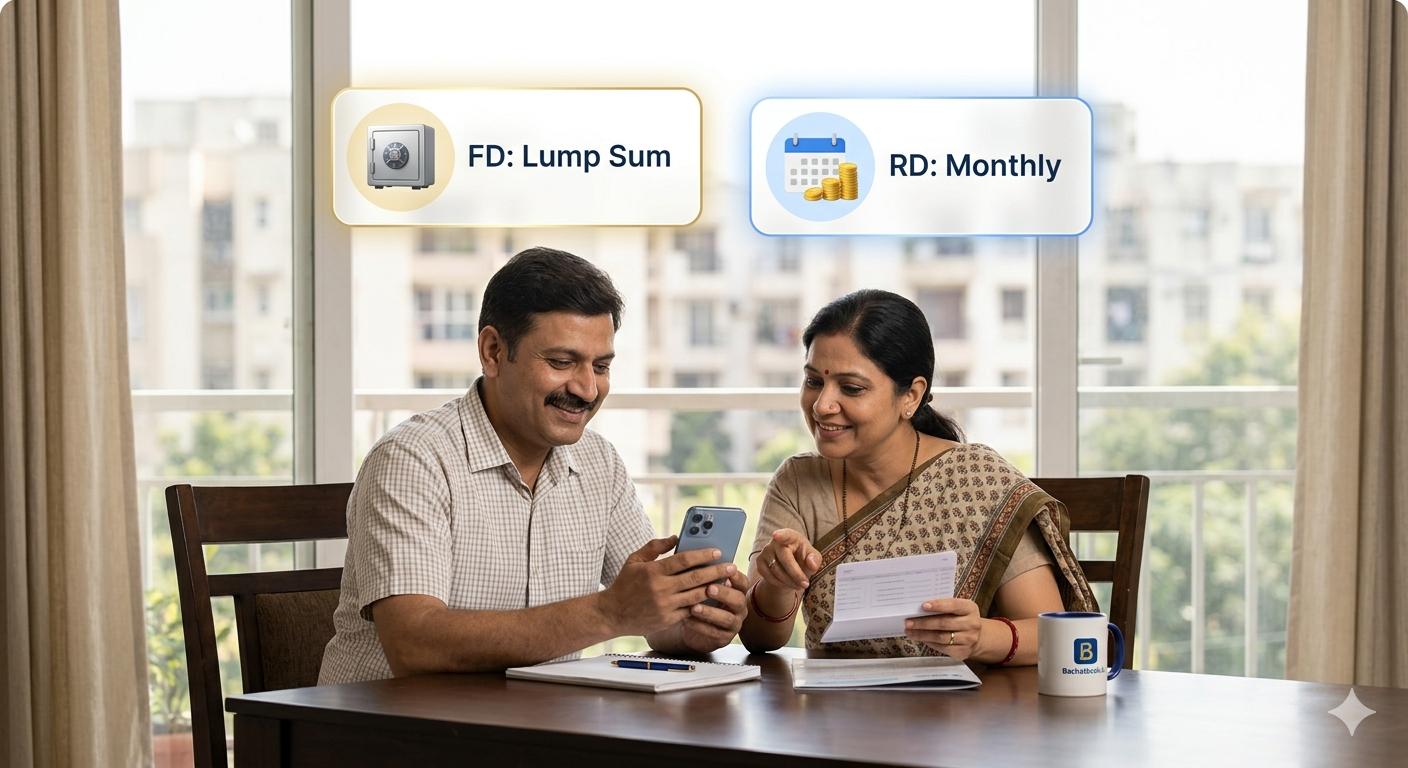
It locks your bulk money at a guaranteed interest rate. On the other hand, if you are a salaried employee or a student who wants to save a small portion of your monthly income regularly, a Recurring Deposit (RD) is the better option. It builds a strong saving habit without requiring a large initial amount.
Both are safe, traditional tools that protect your money from market volatility. However, choosing the right one is just the beginning of building true financial awareness.
Table of Contents
Understanding the Fixed Deposit (FD)
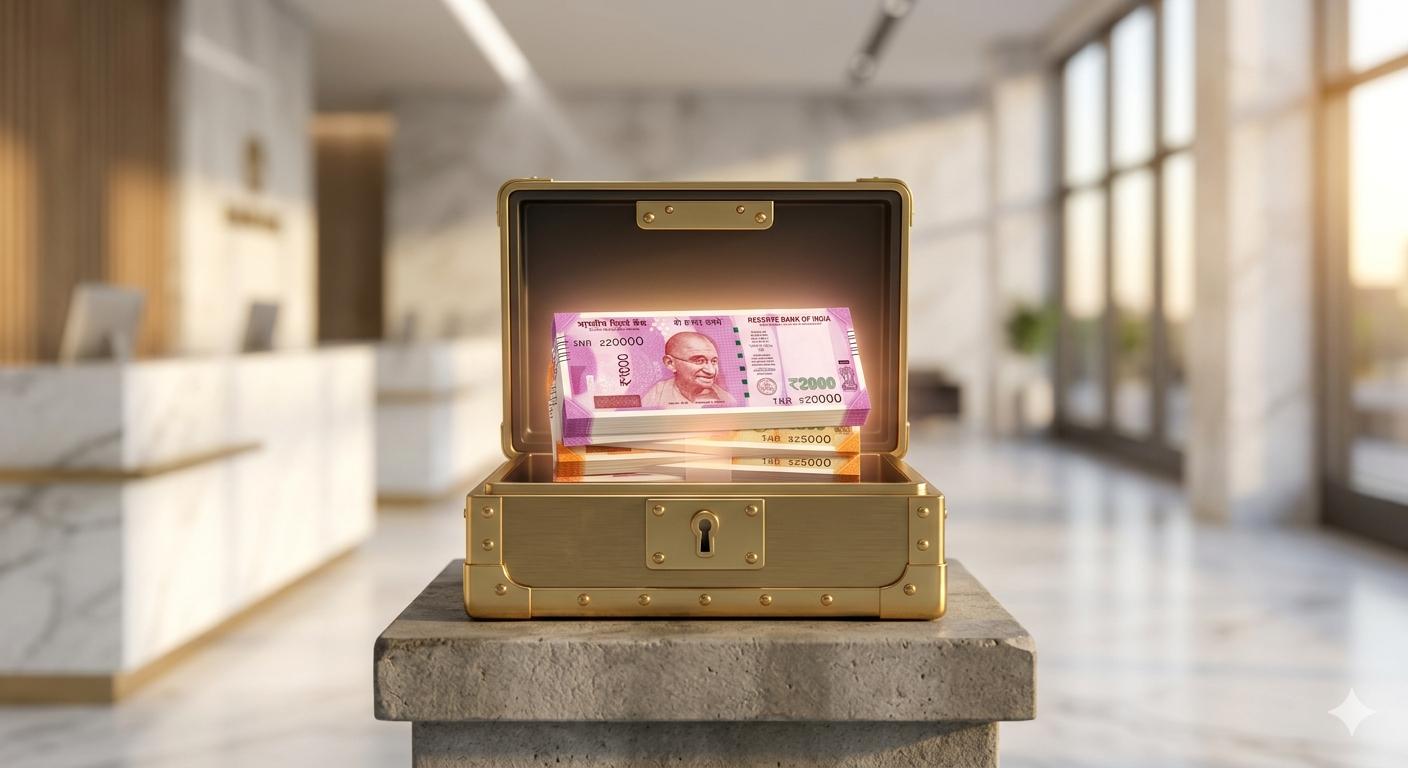
A Fixed Deposit is a financial instrument provided by Indian banks and post offices where you deposit a lump sum amount for a specific time period (tenure). The bank offers a fixed rate of interest for this period, which is generally higher than a regular savings account.
Key features of an FD:
- One-time investment: You deposit the money only once at the beginning.
- Flexible tenure: You can choose a period ranging from 7 days to 10 years.
- Guaranteed returns: The interest rate is locked on the day you open the FD, protecting you from future rate cuts.
An FD is excellent for wealth preservation. If you have ₹1,00,000 sitting idle in your savings account, moving it to an FD prevents you from spending it impulsively while ensuring it grows steadily.
Understanding the Recurring Deposit (RD)
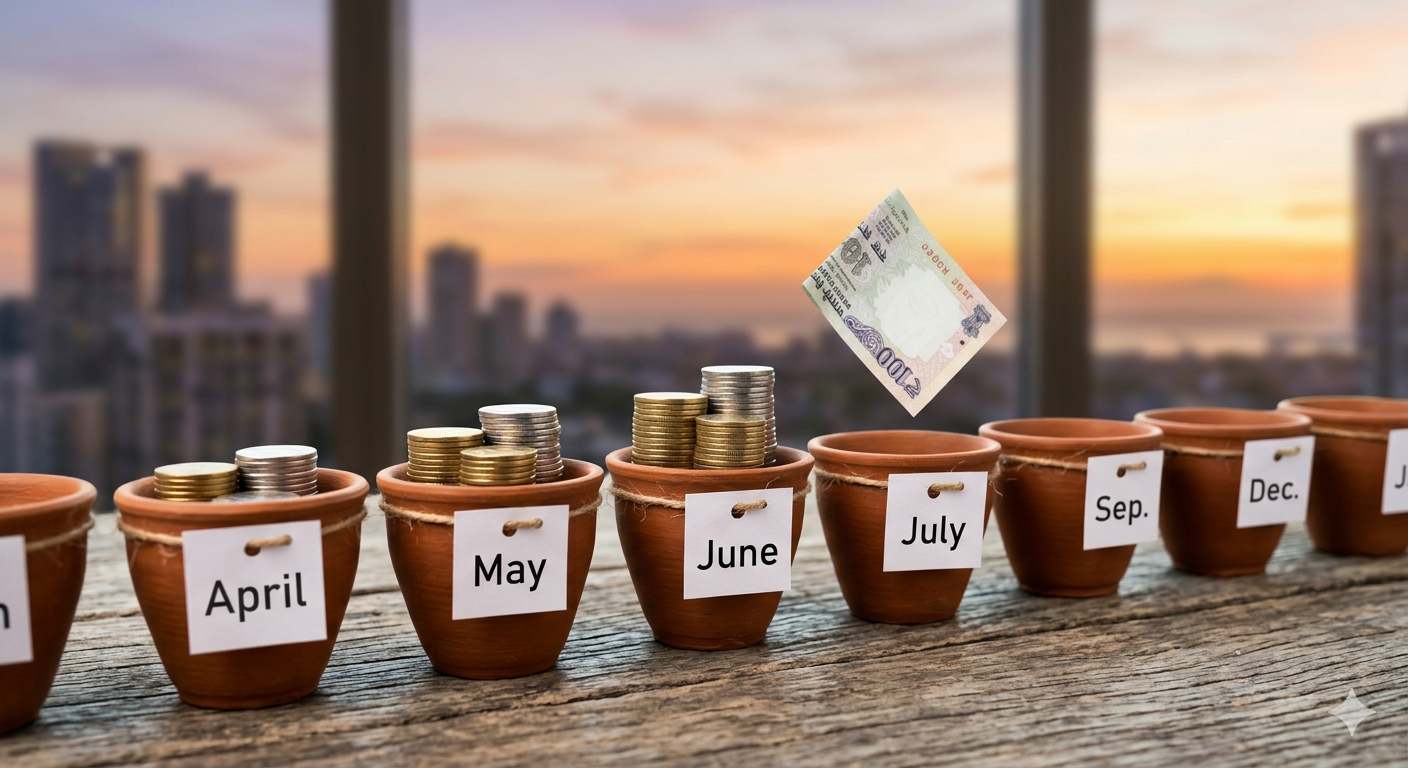
A Recurring Deposit is designed for people who want to save consistently but do not have a large amount of money upfront. You choose a specific amount (as low as ₹100 in many banks) and deposit it every month for a fixed tenure.
Key features of an RD:
- Monthly commitment: You deposit a fixed amount every month.
- Habit building: It forces you to budget your salary and save before you spend.
- Goal-oriented: It is perfect for short-term goals like paying annual school fees, buying a two-wheeler, or funding a family vacation.
Key Differences at a Glance
To make the comparison clearer, here is a simple breakdown of how these two products differ:
| Feature | Fixed Deposit (FD) | Recurring Deposit (RD) |
| Deposit Method | Single, lump-sum payment | Monthly fixed payments |
| Ideal For | People with bulk cash to save | Salaried employees saving monthly |
| Minimum Amount | Usually ₹1,000 to ₹5,000 | Can start from ₹100 to ₹500 |
| Interest Calculation | Calculated on the total lump sum | Calculated on the increasing monthly balance |
| Compounding | Higher compounding benefit | Slightly lower compared to FD |
The Hidden Risks and Financial Impact

While FDs and RDs are celebrated as the safest ways to save money in India, they are not entirely free from risks. As a smart saver, you need to be aware of the financial impact of poor planning and the growing threat of modern banking fraud.
1. The Penalty of Premature Withdrawal
The biggest risk of FDs and RDs is a lack of liquidity. If you face a medical emergency and need to break your deposit before the maturity date, banks will charge a premature withdrawal penalty (usually 0.5% to 1% of the interest rate). Furthermore, you lose the power of compounding. Breaking an FD early means you are losing money that rightfully belonged to you.
2. The Invisible Risk of Inflation
If the inflation rate in India is 6% and your FD is giving you 6.5% interest, your “real” return is almost zero. While your money is safe from market crashes, its purchasing power might not grow significantly. This is why financial awareness is critical: you must use deposits for safety and short-term goals, not to get rich quickly.
3. The Rise of Banking and Deposit Scams
Because FDs are so popular among Indian middle-class families and senior citizens, scammers actively use them as bait. Cybercriminals often send SMS or WhatsApp messages promising “Special 12% Interest FD Rates” with a link. Clicking these links or downloading fake banking apps can give hackers full access to your bank account, resulting in the theft of your hard-earned savings.
Prevention Habits: Protecting Your Money and Data
At Bachatbook.in, we believe that saving money is useless if you do not know how to protect it. Choosing between an FD or RD is irrelevant if a fraudster drains your account. Adopt these non-negotiable financial safety habits today:
- Ignore Unrealistic Offers: Legitimate banks operate within the guidelines of the Reserve Bank of India (RBI). If someone offers a guaranteed 12% or 15% return on a “fixed scheme,” it is a scam.
- Use Official Channels Only: Never open an FD or RD through a link sent on WhatsApp, Telegram, or SMS. Always log in directly to your bank’s official mobile banking app or internet banking website.
- Never Share OTPs: Bank officials will never call you asking for an OTP, PIN, or CVV to “verify your deposit” or “upgrade your interest rate.”
- Verify App Permissions: If you are using a digital banking app to manage your RDs, ensure it is downloaded from the official Google Play Store or Apple App Store. Do not grant unnecessary permissions like access to your personal photo gallery or microphone.
How to Save Money on a Low Salary: A Guide to Secure Budgeting
Smart Money Behavior: How to Use FD and RD Properly

Now that you know how to protect your data, how do you apply the “Fixed Deposit vs Recurring Deposit” debate to your daily life? The secret lies in smart money behavior and budgeting.
Rule 1: Build an Emergency Fund with an FD
Calculate six months’ worth of your household expenses. Slowly save this amount and put it into a standard Fixed Deposit. Do not touch this money unless there is a job loss or a medical crisis. This protects you from having to take expensive personal loans during bad times.
Rule 2: Plan Expenses with an RD
If you know your car insurance premium of ₹12,000 is due exactly 12 months from now, do not wait until the last minute. Start a Recurring Deposit of ₹1,000 per month today. By the time the bill arrives, the money (plus interest) will be sitting there waiting for you. This is the essence of smart budgeting.
Rule 3: Ladder Your Deposits
Instead of locking all your bulk money in one 5-year FD, break it into smaller FDs of 1, 2, and 3 years. This strategy, known as FD laddering, ensures that you have money maturing regularly, providing liquidity without having to pay premature withdrawal penalties.
Frequently Asked Questions (FAQs)
1. Can I withdraw my RD or FD money before the maturity date? Yes, you can break both an FD and an RD before they mature in case of a medical or family emergency. However, banks will usually charge a premature withdrawal penalty (often around 0.5% to 1% of the interest rate), which reduces your overall earnings. It is always best to build a separate emergency fund to avoid touching your locked deposits.
2. Is the interest earned on FD and RD taxable in India? Yes. The interest you earn on both Fixed Deposits and Recurring Deposits is fully taxable according to your income tax slab. If your interest income exceeds ₹40,000 in a financial year (₹50,000 for senior citizens), the bank will deduct TDS (Tax Deducted at Source) at 10%. You can submit Form 15G or 15H to the bank if your total income is below the taxable limit to avoid this deduction.
3. Which gives a higher interest rate, FD or RD? Generally, banks offer the exact same annual interest rate for an FD and an RD for the same tenure. For example, a 1-year FD and a 1-year RD will usually have the same rate. However, an FD will give you a slightly higher total return at the end of the year because the entire lump sum starts compounding from day one, whereas RD installments are deposited month by month.
4. Are my FDs and RDs safe if the bank fails? Yes, traditional bank deposits are highly secure. In India, deposits up to ₹5,00,000 (including both principal and interest) per person, per bank, are insured by the DICGC (Deposit Insurance and Credit Guarantee Corporation), which is a wholly-owned subsidiary of the Reserve Bank of India (RBI).
5. Can I open an FD or RD online safely? Absolutely. In fact, opening deposits through your bank’s official mobile app or net banking portal is highly recommended and very safe. Just ensure you are using the official app from the Google Play Store or Apple App Store. Never click on random links sent via SMS or WhatsApp promising abnormally high interest rates, as these are common financial scams.
Final Thoughts
So, Fixed Deposit vs Recurring Deposit: which is better? They are simply different tools in your financial toolkit. Use an FD when you have a lump sum to protect, and use an RD to build monthly saving discipline. By understanding how these products work, avoiding the trap of premature withdrawals, and staying highly alert against digital banking frauds, you take complete control of your financial destiny. True wealth is not just about how much you earn; it is about how wisely you save and how safely you protect it.