
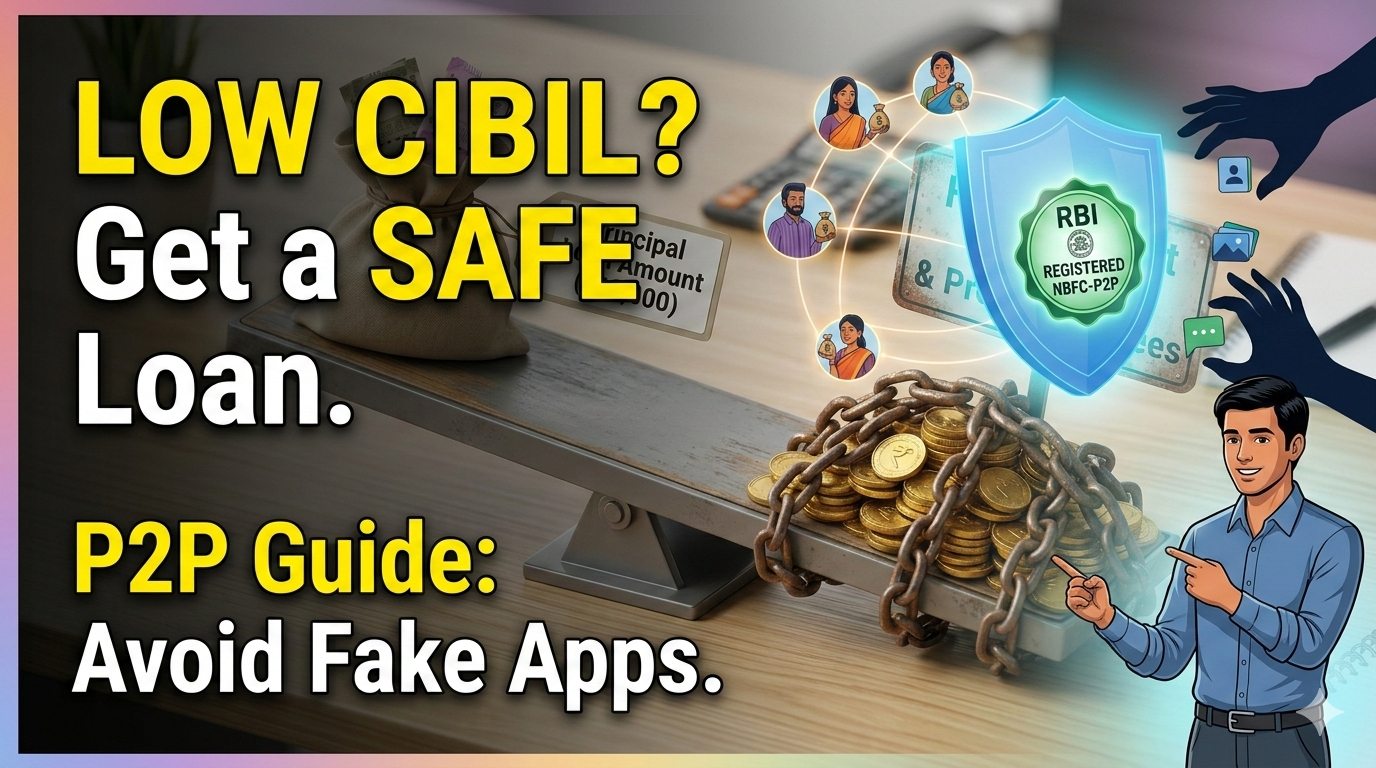
Introduction: Navigating Financial Emergencies with Low Credit
Financial emergencies never check your credit score before arriving. Whether it is a sudden medical hospital bill, urgent home repairs, or unexpected school fees, middle-class Indian families often need instant access to capital. Traditionally, a low credit score meant a direct rejection from banks, leaving borrowers vulnerable to local money lenders who charge predatory interest rates. Today, P2P lending for low CIBIL has become a popular digital alternative for salaried employees and small business owners struggling with past credit mistakes.
While Peer-to-Peer (P2P) platforms offer a second chance by evaluating your actual income rather than just your credit history, this convenience comes with hidden dangers. The digital lending space is crowded with fake applications designed to steal your data and trap you in endless debt.
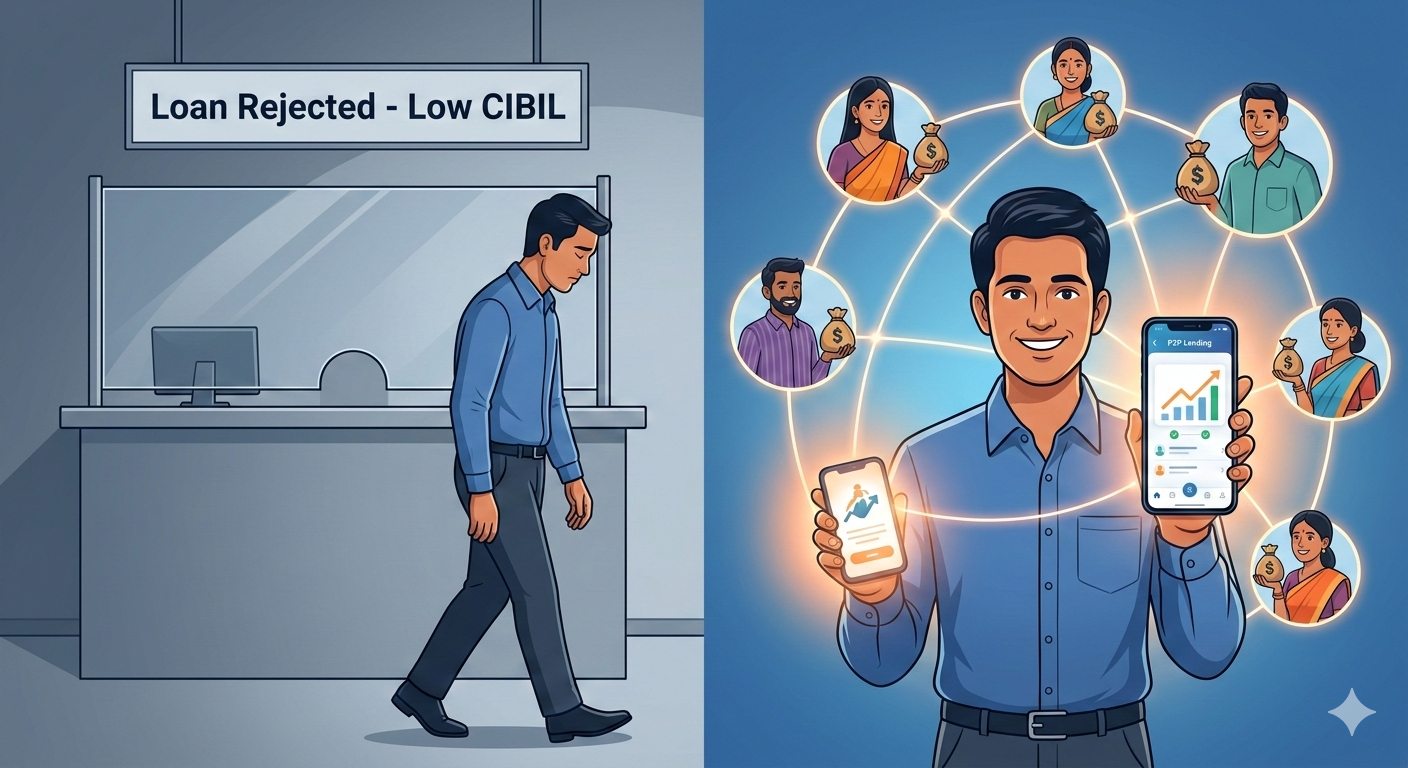
This guide explains how alternative lending works, the severe financial risks involved, and the smart money habits you need to protect your family’s finances while safely navigating loan applications.
Disclaimer: Educational purposes only. Not professional financial advice. Always verify the credentials of any financial platform before sharing personal details or accepting loan offers.
Table of Contents
The Hidden Risks of Alternative Borrowing
While legitimate P2P lending platforms provide a valuable service, the digital loan market in India is heavily targeted by scammers. When you search for P2P lending for low CIBIL, you are likely to encounter significant risks that can compromise your financial safety.
Unregistered “Loan Shark” Apps The biggest risk is falling for illegal, unregistered loan apps that disguise themselves as legitimate P2P platforms. These fake apps promise instant money without any CIBIL check. Once you download them, they force you to agree to exorbitant hidden charges that were never clearly stated during the application process.
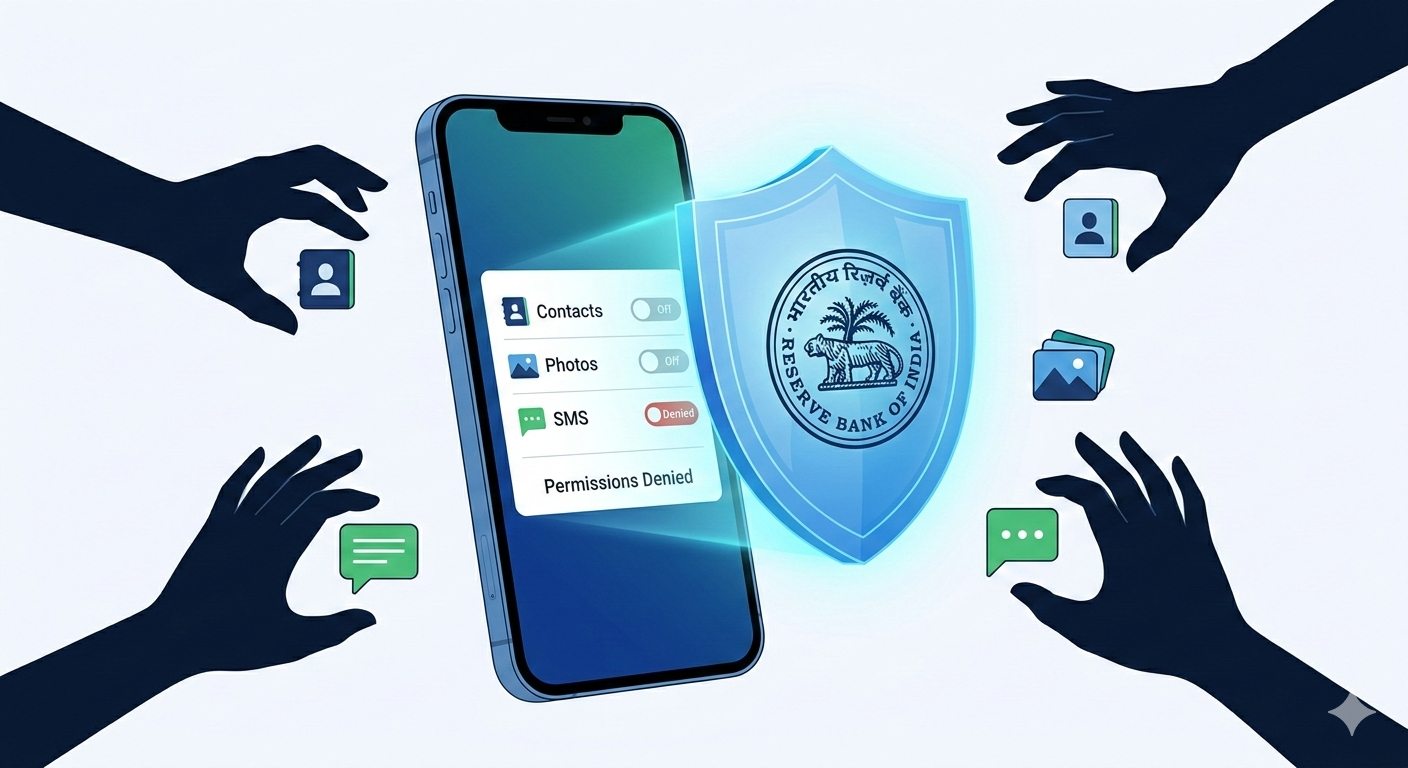
Data Privacy and Blackmail Threats To process your loan, many fake apps ask for permission to access your smartphone’s contacts, photo gallery, and text messages. If you delay a payment even by one day, these fraudulent operators use your stolen data to harass you. They may send threatening messages to your family, friends, and colleagues, causing severe mental stress and social embarrassment.
The Illusion of “Easy Money” Because P2P platforms make the borrowing process incredibly fast and paperless, it creates an illusion of “easy money.” This psychological trap often leads individuals to borrow more than they actually need, setting the stage for long-term financial trouble.
Financial Impact: The Heavy Cost of Low Credit
Taking a loan through a P2P platform when your credit score is low has a direct and severe impact on your monthly budget. Financial safety means understanding exactly how much this money will cost you in the long run.
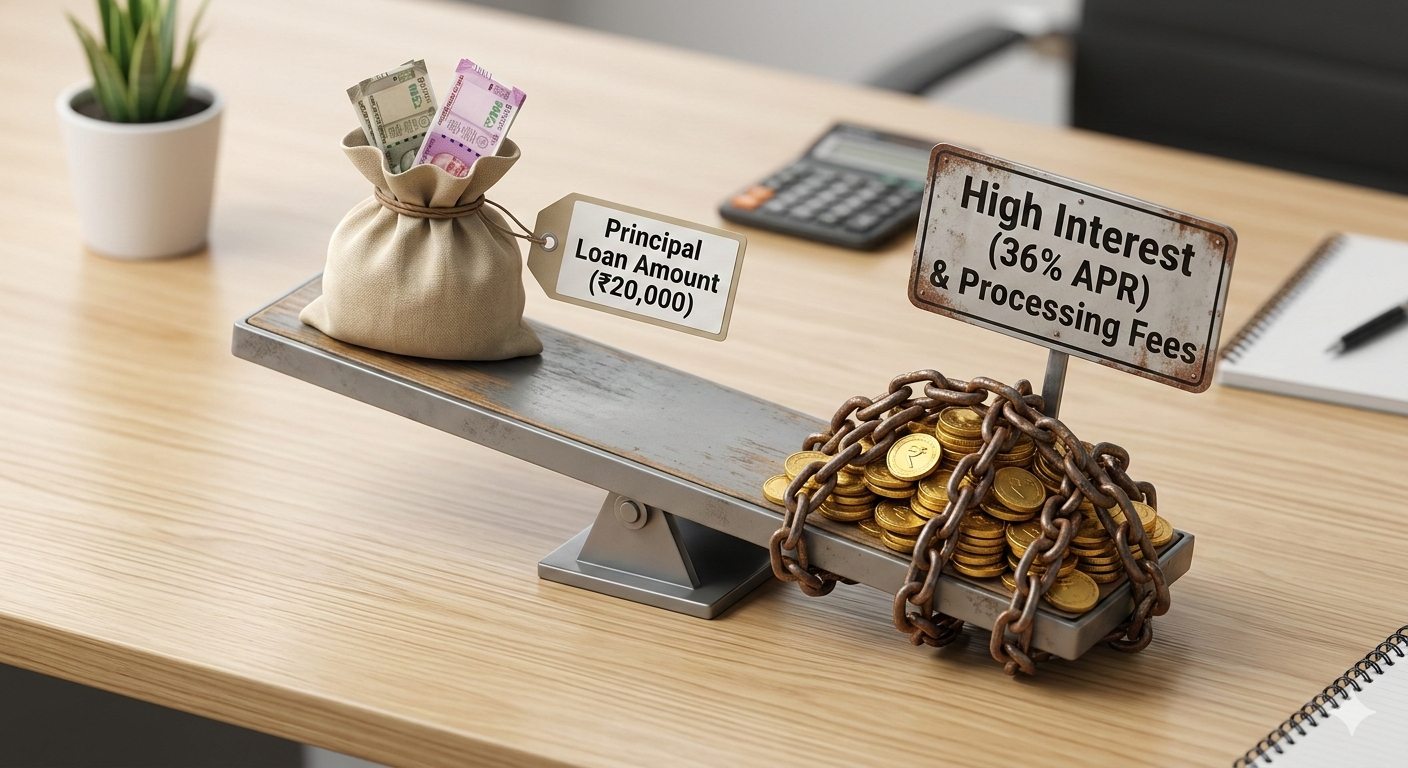
Extremely High Interest Rates In the world of finance, low CIBIL means high risk. Since the lenders on P2P platforms are taking a bigger risk by giving money to someone with a poor credit history, they demand a much higher return. While a standard bank loan might cost you 12% to 15% interest annually, P2P lending for low CIBIL can carry interest rates ranging from 24% to 36% or even higher. This massive interest burden eats directly into your monthly household budget.
Heavy Processing Fees and Penalties P2P platforms charge high processing fees, which are often deducted from the loan amount before it even reaches your bank account. Furthermore, if you miss an EMI on a high-interest P2P loan, the late payment penalties are incredibly harsh. The interest starts compounding daily, quickly turning a small ₹20,000 emergency loan into a ₹40,000 nightmare.
The Debt Trap Cycle If a large portion of your salary goes toward paying high-interest EMIs, you will struggle to meet your daily household expenses. This forces many salaried employees into a vicious cycle where they take a new loan from a second app to pay off the EMI of the first app. This is the classic debt trap, leading to total financial ruin.
Prevention Habits: How to Protect Your Money and Data
If you are in a genuine emergency and must use P2P lending for low CIBIL, adopting strict preventive habits is your only defense against digital fraud and financial loss.
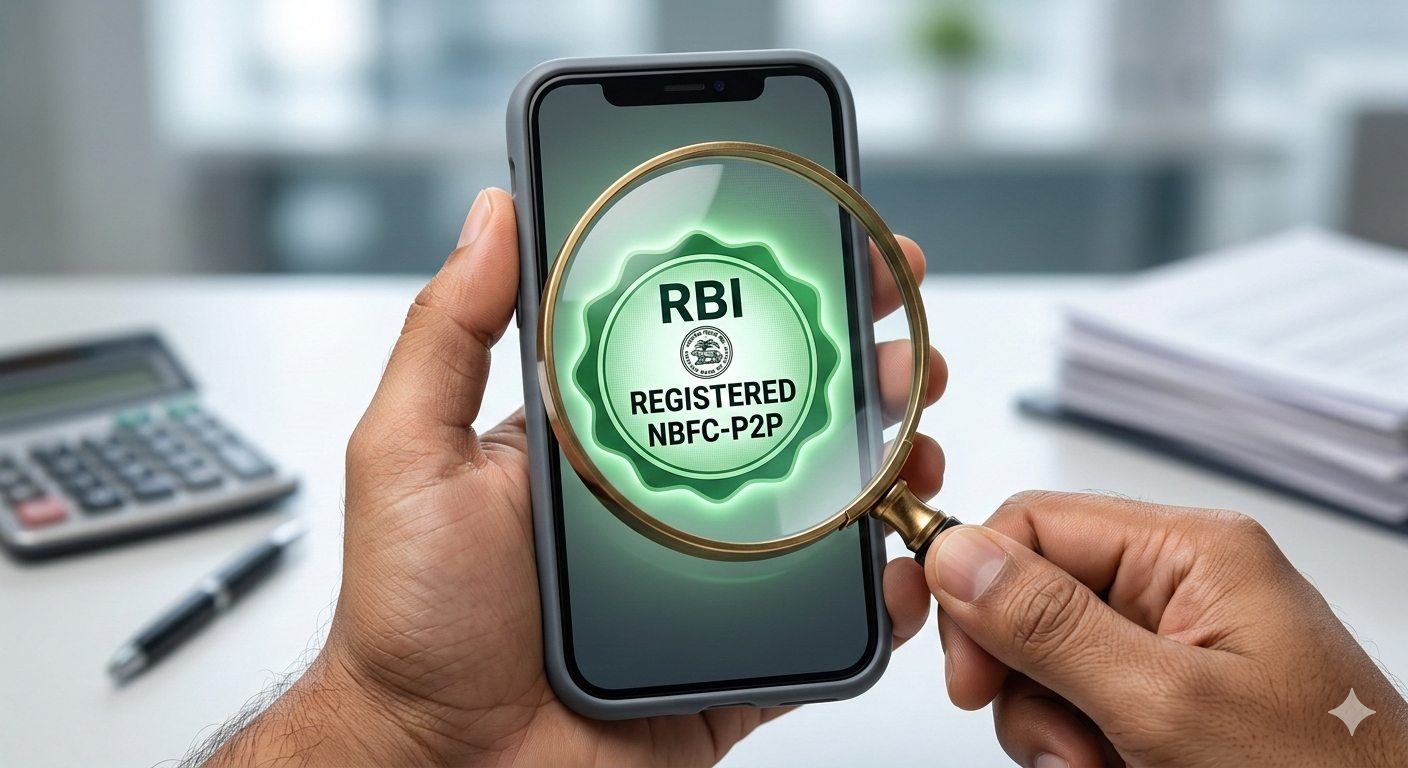
- Always Verify RBI NBFC-P2P Status: Never download a loan app from a random link sent on WhatsApp or Telegram. Only use platforms that are officially registered with the Reserve Bank of India (RBI) as an NBFC-P2P (Non-Banking Financial Company – Peer to Peer). You can verify this list directly on the official RBI website.
- Deny Unnecessary App Permissions: A genuine lending platform does not need to look at your personal photo gallery or your entire contact list to approve a loan. If an app refuses to function without access to your personal contacts, uninstall it immediately. It is a data-harvesting scam.
- Read the Key Fact Statement (KFS): The RBI mandates that all digital lenders provide a Key Fact Statement before you accept the loan. This document clearly lists the Annual Percentage Rate (APR), which includes the interest rate plus all hidden processing fees. Always read the KFS so you know the exact final cost of the loan.
- Borrow Only What You Can Repay: Calculate your monthly EMI capacity before applying. Your total loan EMIs should never exceed 30% of your monthly take-home salary. If the EMI is higher than that, you are putting your family’s financial safety at risk.
Smart Money Behavior: Moving Beyond Debt
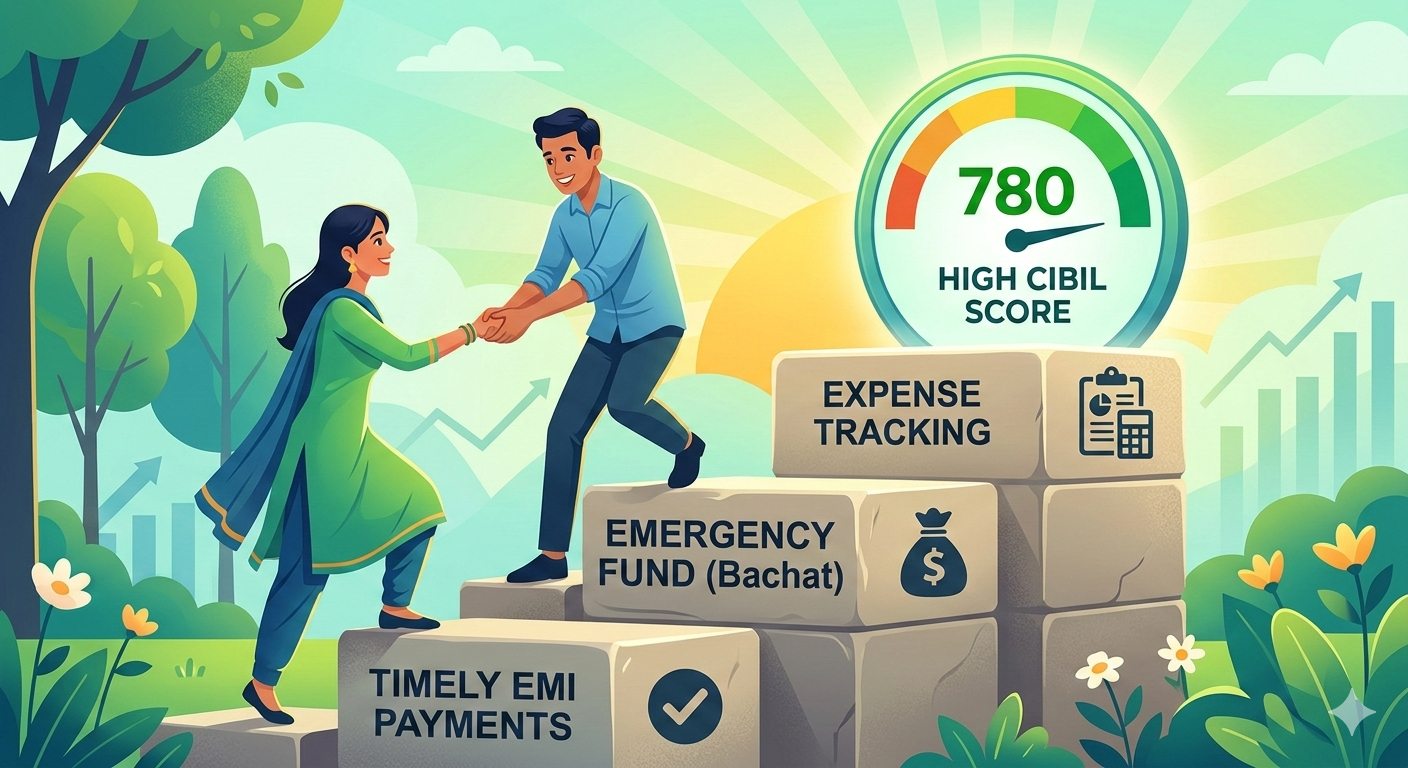
Relying on high-interest loans should never be a long-term financial strategy. Smart money behavior means taking control of your financial habits so you never have to worry about a low CIBIL score again.
1. Focus on Rebuilding Your CIBIL Score If you have a low CIBIL, your primary financial goal should be to fix it. If you take a legitimate P2P loan, treat it as an opportunity. Pay every single EMI on or before the due date. P2P platforms report your repayment behavior to credit bureaus (like CIBIL, Experian). Consistent, on-time payments will slowly rebuild your credit score, making you eligible for cheaper bank loans in the future.
2. Build an Emergency Fund (Bachat) The main reason people look for P2P lending for low CIBIL is that they face a sudden medical bill, school fee demand, or home repair, and have no savings. Protect yourself by starting an emergency fund. Try to save at least 10% to 20% of your salary every month in a separate savings account or a liquid mutual fund. Having a cash buffer means you won’t have to beg for high-interest loans when life throws a surprise at you.
3. Track Your Expenses You cannot fix what you do not track. Use a notebook or a simple digital budgeting app to write down every rupee you spend. Identifying where your money leaks—like ordering food too often or paying for unused subscriptions—allows you to redirect that money toward clearing your debts faster.
Taking control of your finances takes time and discipline. While P2P platforms can provide a temporary bridge during tough times, true financial independence comes from safe digital habits, consistent saving, and living within your means.
Best CIBIL Score Check Karne Wala App: A Complete Guide for Indians (2026)
Frequently Asked Questions (FAQ)
What exactly is the minimum CIBIL score required for P2P platforms?
Unlike traditional banks that strictly require a score of 750 or above, genuine P2P platforms do not have a hard cutoff. Because they look at alternative data—such as your monthly salary slips, bank statement cash flow, and employment stability—you can often secure a loan even with a score between 600 and 700, or if you are “New to Credit” (NTC).
Is P2P lending safe and legal in India?
Yes, it is completely legal, but only if you use a platform that is officially registered as an NBFC-P2P (Non-Banking Financial Company – Peer to Peer) with the Reserve Bank of India (RBI). Borrowing from unregistered, random apps found on social media is highly unsafe and often leads to data theft and extortion.
Will taking a P2P loan help improve my damaged CIBIL score?
Yes, it can. Legitimate, RBI-registered P2P platforms report your borrowing and repayment behavior to major credit bureaus like CIBIL and Experian. If you take a small loan and pay every EMI on or before the due date, it will generate positive credit history and gradually increase your score.
What happens if I cannot pay the EMI of a P2P loan?
Defaulting on a P2P loan carries severe financial consequences. The platform will apply heavy daily late fees, drastically increasing your total debt. Furthermore, they will report the default to the credit bureaus, which will crash your CIBIL score even further, making it impossible to get any standard bank loan, home loan, or credit card in the future.
How do I identify a fake loan app on the Google Play Store?
Fake loan apps often promise “instant cash without PAN card” or “zero interest.” Their biggest red flag is asking for unnecessary phone permissions, such as access to your personal photo gallery or your entire contact list. A genuine NBFC-P2P app only needs basic KYC documents (Aadhar/PAN) and will never threaten to call your relatives if you are late on a payment.
Conclusion: A Stepping Stone, Not a Permanent Solution
Exploring P2P lending for low CIBIL can help you survive an urgent cash crunch when traditional banking doors are closed. However, taking a high-interest loan should never become a regular habit. The ultimate goal of borrowing from these platforms should be to clear your immediate emergency and simultaneously rebuild your damaged credit score by paying every EMI perfectly on time.
True financial peace of mind does not come from finding new ways to borrow money; it comes from disciplined saving and absolute financial awareness. By strictly verifying RBI registration to avoid scam apps, protecting your digital privacy, and aggressively building an emergency fund (bachat), you can break free from the debt cycle. Use these digital tools carefully as a temporary bridge, but rely on smart budgeting to build a permanently secure financial future for your family.