
Introduction
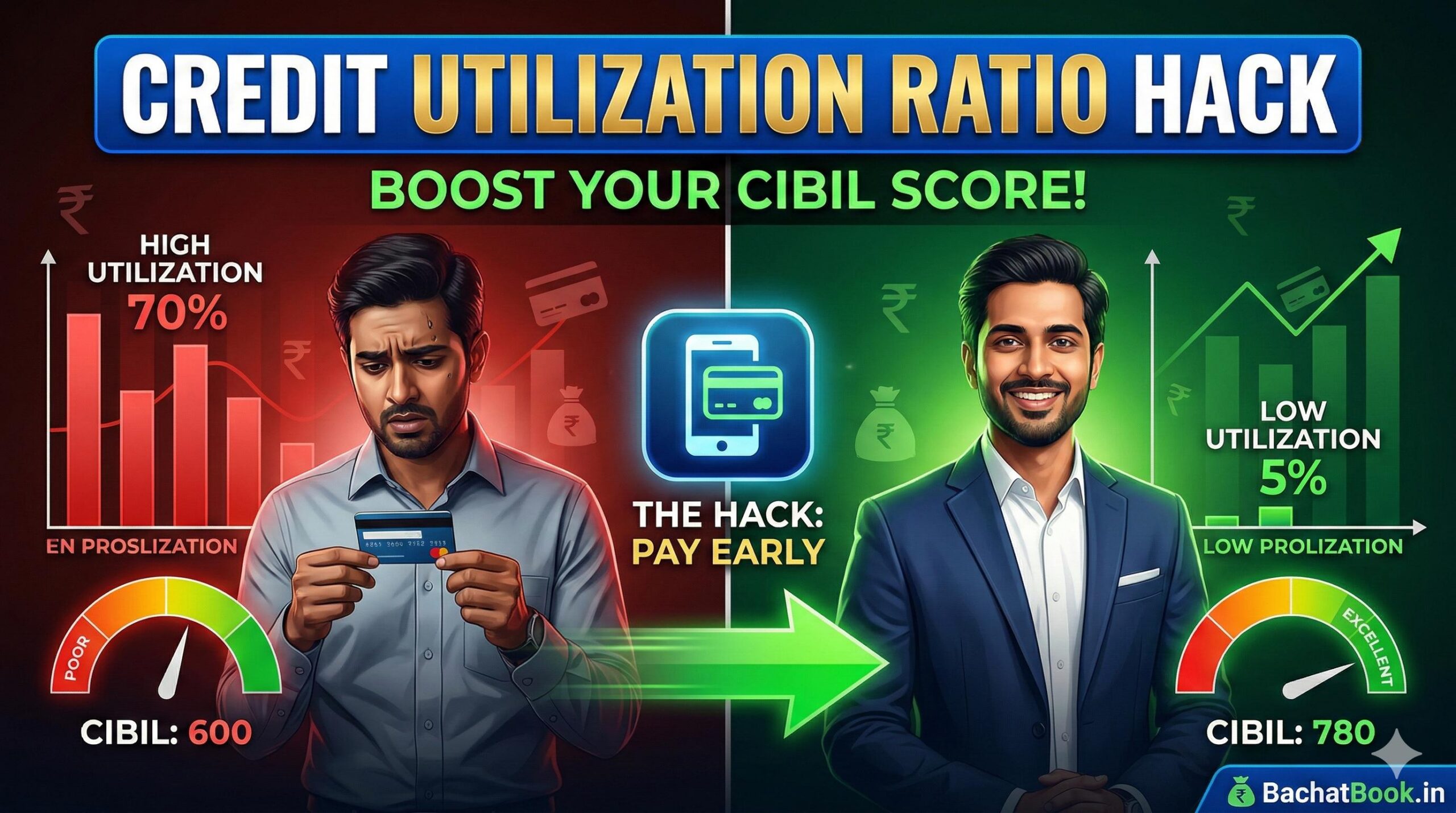
Managing credit cards in India can feel like a stressful balancing act for middle-class families, students, and salaried employees. You want the convenience of digital payments, but you also fear falling into a hidden debt trap. One powerful way to maintain a strong financial profile is by understanding a specific billing strategy. A credit utilization ratio hack is a smart financial technique used to improve your CIBIL score by paying down a large portion of your credit card balance a few days before your monthly statement generation date.

Your credit utilization ratio is simply the percentage of your total available credit limit that you are currently using. By clearing most of your unbilled transactions right before the bank generates your statement, the bank reports a very low outstanding balance to the credit bureaus. Keeping this reported ratio below thirty percent signals that you are a highly responsible borrower. This approach not only protects your credit profile but also helps you maintain strict control over your monthly budget, shielding your finances from high-interest debt and potential financial loss.
Table of Contents
Understanding the Mechanics Behind the Credit Utilization Ratio Hack
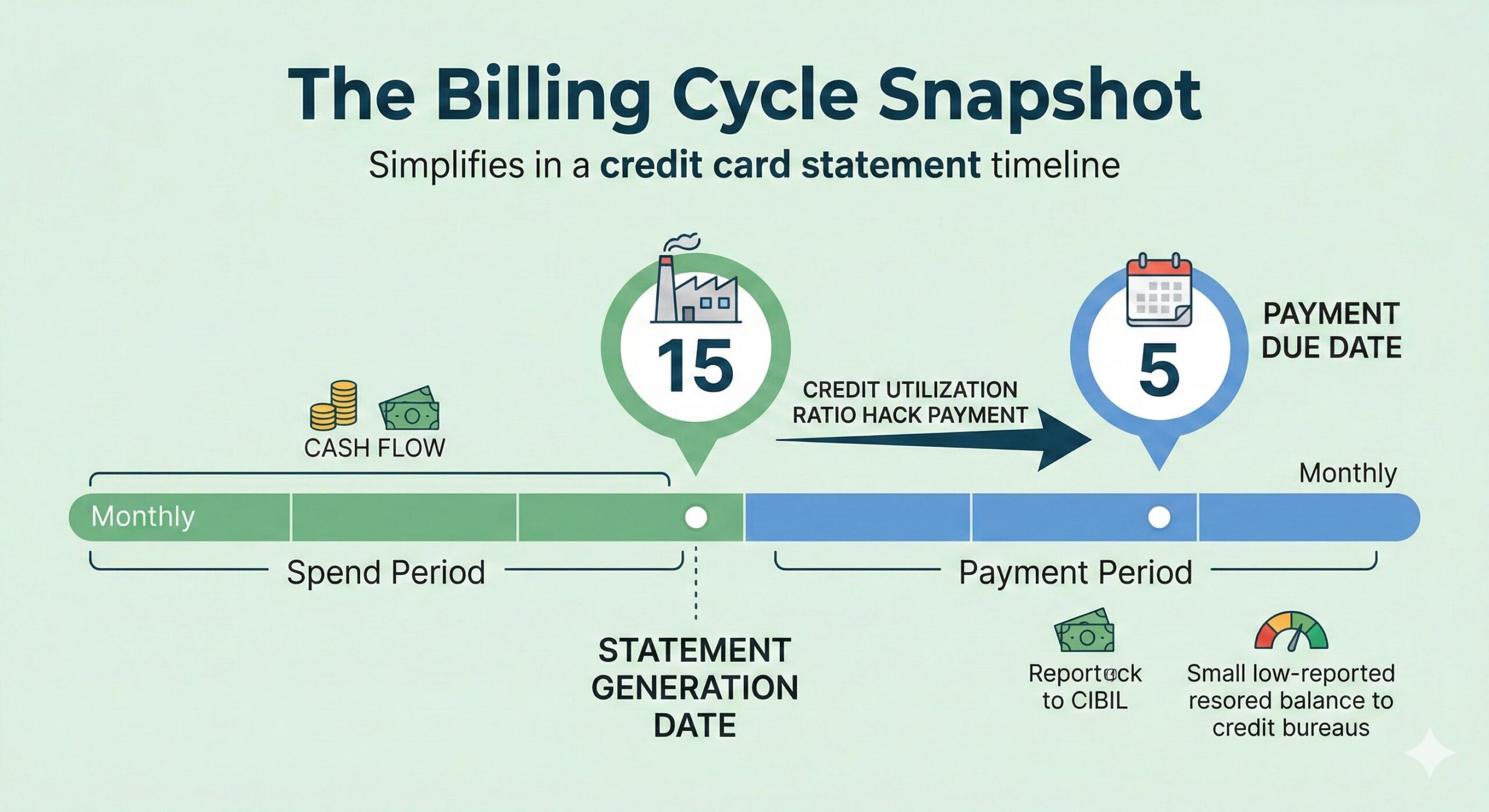
To fully grasp how the credit utilization ratio hack protects your financial profile, it is essential to understand how credit card companies communicate with credit bureaus like CIBIL in India. Every month, your bank generates a credit card statement. This document outlines everything you have spent over the past thirty days, any fees applied, and the total amount you owe. Most importantly, it clearly states your statement generation date and your final payment due date.
Many people mistakenly believe that as long as they pay their full bill by the due date, their credit score is perfectly safe. While paying by the due date protects you from late fees, it does not fully protect your credit utilization ratio. Banks typically report your outstanding balance to CIBIL exactly on the statement generation date. If you spend heavily during the month and wait until the due date to pay, the bank reports that high balance.
The credit utilization ratio hack steps in right here. By manually paying off the majority of your unbilled transactions two to three days before the statement is generated, you intercept the reporting process. When the bank finally captures the snapshot of your account, they see only a tiny remaining balance.
Hidden Risks of Mismanaging This Credit Strategy

While the credit utilization ratio hack is an excellent way to optimize your CIBIL score, it comes with hidden psychological and financial risks that can negatively impact Indian households. The most significant danger is the illusion of affordability. When you constantly pay off balances mid-month to keep your reported utilization artificially low, it is very easy to lose track of exactly how much of your actual monthly income you are burning through. You might feel a false sense of security because your credit score is rising, but your primary salary account is quietly depleting.
Another major risk involves cash flow mismanagement. Salaried employees usually receive their paychecks at the beginning of the month. If you are trying to execute this hack and prepay a credit card bill in the middle of the month before your statement generates, you might accidentally drain the liquid cash you need for everyday essentials like groceries, school fees, or utility bills. This can lead to a dangerous cycle where you are forced to use the credit card again immediately just to survive the rest of the month, entirely defeating the purpose of controlling your credit utilization.
Financial Impact on Your CIBIL Score and Future Loans
The way you handle your credit utilization directly impacts your wallet in ways that go far beyond a simple three-digit number on a screen. Your CIBIL score is the gateway to your financial future in India. Whether you are planning to take a home loan to buy a flat, an education loan for higher studies, or a personal loan for a medical emergency, lenders heavily scrutinize how much of your available credit you actively use.

If you fail to manage this ratio and consistently max out your credit cards without using the credit utilization ratio hack, lenders view you as a high-risk, credit-hungry individual. The immediate financial impact of this is severe. Your loan applications face a much higher risk of direct rejection. Even if a loan is approved, a history of high credit utilization means you will be penalized with significantly higher interest rates. For a long-term commitment like a home loan, even an interest rate increase of half a percent can equate to lakhs of rupees in extra interest paid over twenty years.
Prevention Habits for Safe Credit Card Usage
Understanding the credit utilization ratio hack is only one piece of the puzzle; true financial awareness requires building strong prevention habits to protect your money from both debt traps and external fraud. In the digital age, safe credit card usage goes hand-in-hand with smart score management.
A critical preventive habit is strictly ignoring the “minimum amount due” trap. Paying only the minimum due completely ruins any benefits gained from the credit utilization ratio hack, as it allows the bank to apply exorbitant interest rates on the remaining balance. Always pay the total outstanding amount.
From a fraud prevention standpoint, managing your credit card settings is non-negotiable for financial safety. Use your bank’s mobile application to set strict transaction limits. If your total credit limit is one lakh rupees, but you only ever need twenty thousand for monthly expenses, lower your daily transaction limit to that amount. Disable international transactions entirely unless you are traveling. These simple toggles in your banking app act as a massive shield against unauthorized digital theft, ensuring a fraudster cannot max out your card and ruin your utilization ratio overnight.
Practical Examples for Indian Users
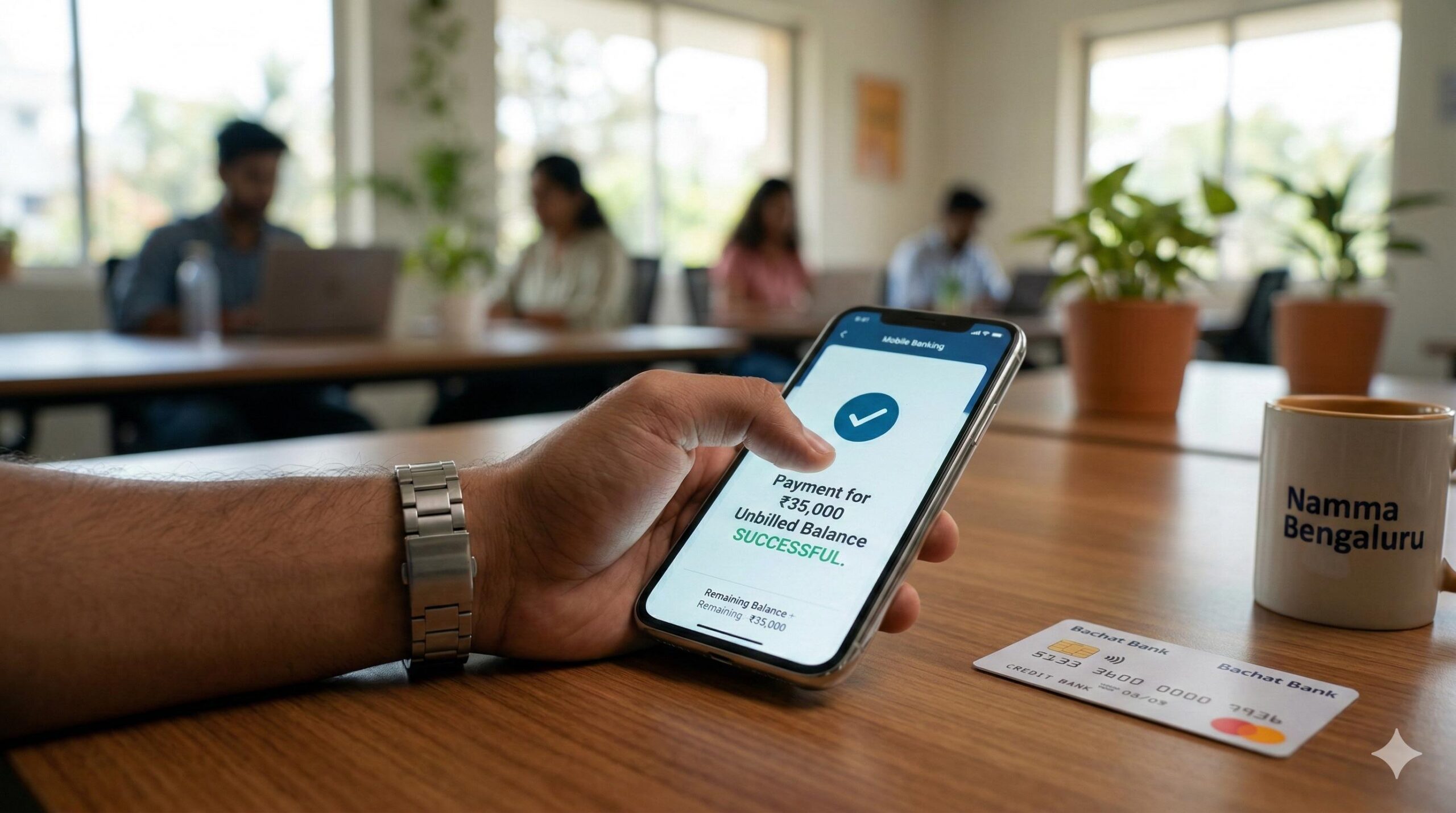
Let us look at a relatable situation for a salaried employee in India to see the credit utilization ratio hack in action. Suppose Rahul has a credit card with a total limit of ₹1,00000. His statement generation date is the 15th of every month. By the 12th of the month, Rahul has spent ₹40,000 on household groceries, utility bills, and fuel.
If Rahul waits until his statement generates on the 15th, the bank will report a 40% credit utilization ratio to CIBIL, which is above the recommended 30% threshold and could slightly ding his score. However, Rahul decides to use the credit utilization ratio hack. On the 13th of the month, he logs into his banking app and manually pays ₹35,000 towards his unbilled credit card transactions. When the 15th arrives, the bank generates a statement for the remaining ₹5,000. The bank reports a highly impressive 5% credit utilization ratio to CIBIL, keeping Rahul’s credit profile in the excellent category.
Common Mistakes to Avoid While Managing Credit
When attempting the credit utilization ratio hack, people often make errors that can accidentally harm their finances. The most common mistake is forgetting to check the final generated statement. Because you manually paid off a large chunk of the bill early, you might assume your balance is zero and ignore the final statement email. If there is a small remaining balance of ₹500 or an unexpected annual fee, missing that final payment due date will incur massive late fees and severely damage your CIBIL score.
Another mistake is completely draining your emergency savings to execute the hack. Your credit utilization ratio should never take priority over having liquid cash on hand for absolute emergencies.
Safe Habits Checklist for Smart Money Behavior
To successfully implement the credit utilization ratio hack without falling into a debt trap, integrate these smart money behaviors into your daily life:
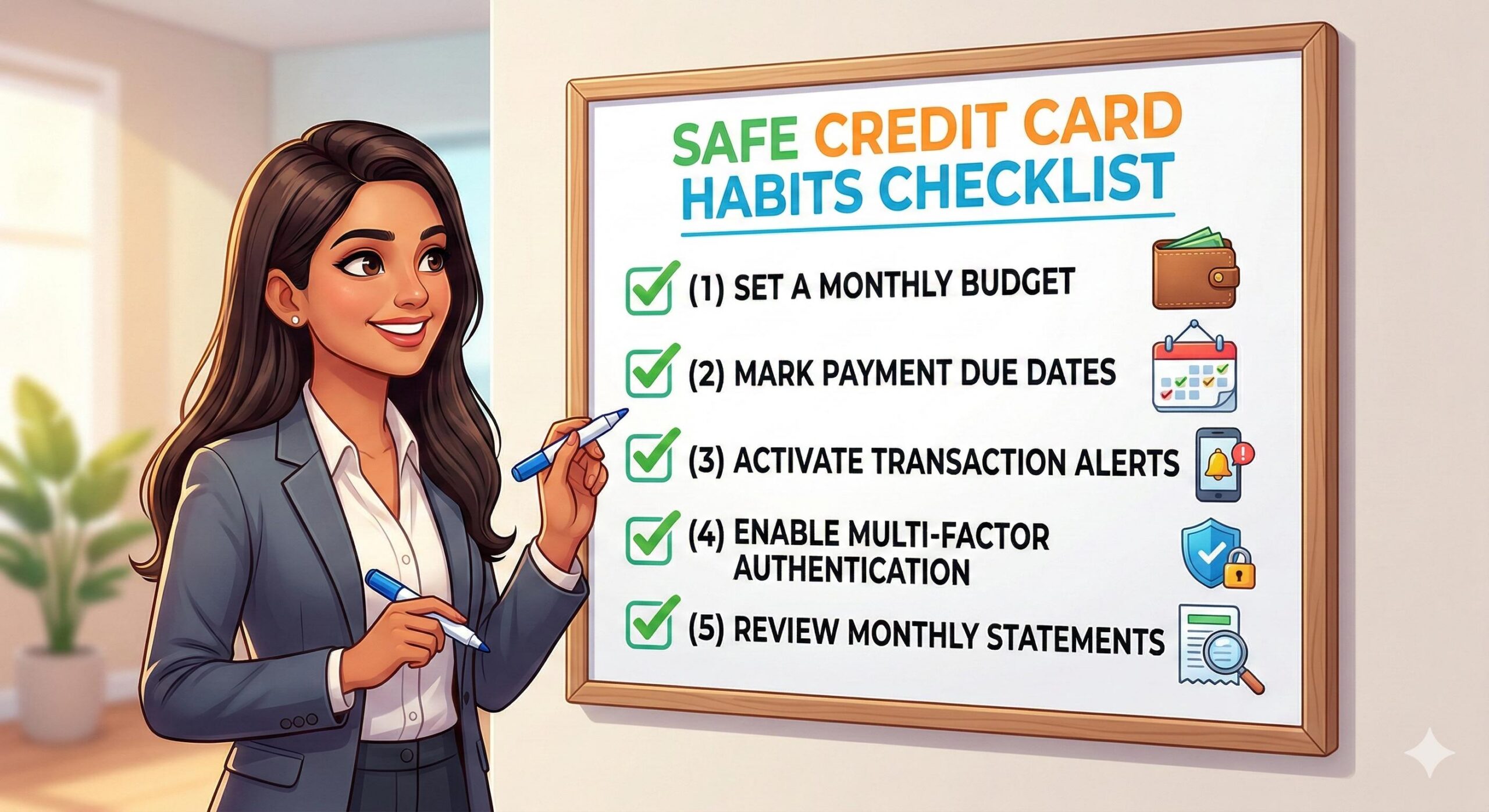
- Treat your credit card exactly like a debit card; only spend money you already have in your bank account.
- Set a calendar reminder two days before your statement generation date to review and prepay your balance.
- Keep your reported credit utilization consistently below thirty percent.
- Never share your OTP, CVV, or PIN with anyone claiming to offer credit limit upgrades.
- Always review your final generated monthly statement line by line to spot any fraudulent charges or hidden fees.
- Build a separate emergency fund in a savings account so you never have to rely on maxing out your credit card during a crisis.
Saving Money in India: MSME Payment 45 Day Rule (2026)
Conclusion
The credit utilization ratio hack is a powerful, proactive tool for any Indian consumer looking to build a robust financial profile and secure the best possible loan terms in the future. By simply timing your payments before the statement generation date, you take control of the narrative your bank sends to credit bureaus. However, this technical hack must always be paired with genuine financial discipline. True financial safety comes from living within your means, protecting your banking data from scammers, and consistently saving for the future. By mastering your credit utilization and practicing smart money habits, you ensure your hard-earned money remains safe and your financial reputation stays spotless.
Disclaimer: This article is for educational purposes only and does not constitute professional financial advice.