
Introduction
Are you and your community members looking to formalize your collective savings? Understanding the process of Self Help Group Registration Online is the most crucial first step. A Self Help Group (SHG) is a voluntary association of 10 to 20 people, usually from similar socio-economic backgrounds, who come together to pool their daily or monthly savings and offer internal micro-loans to each other.
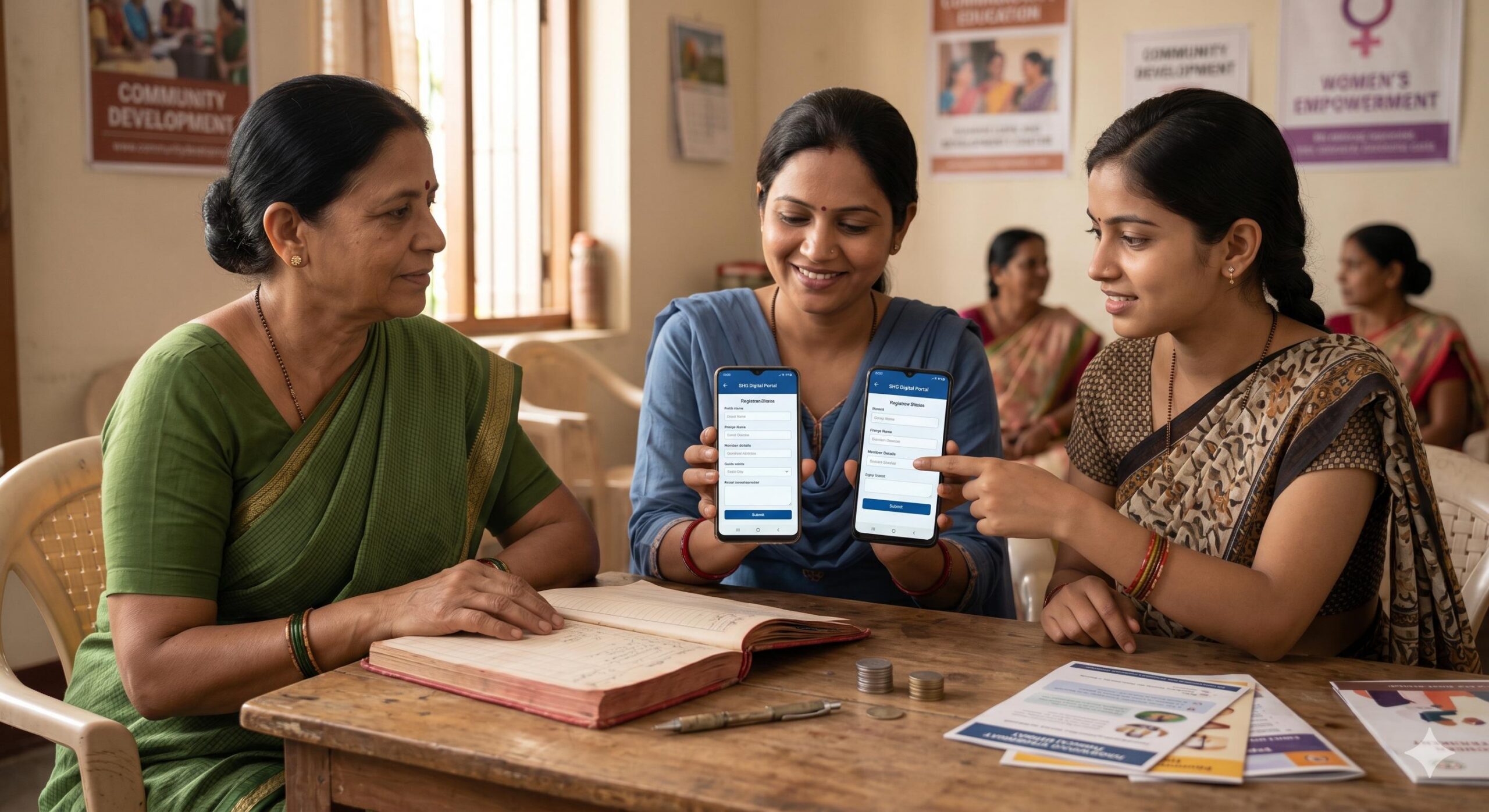
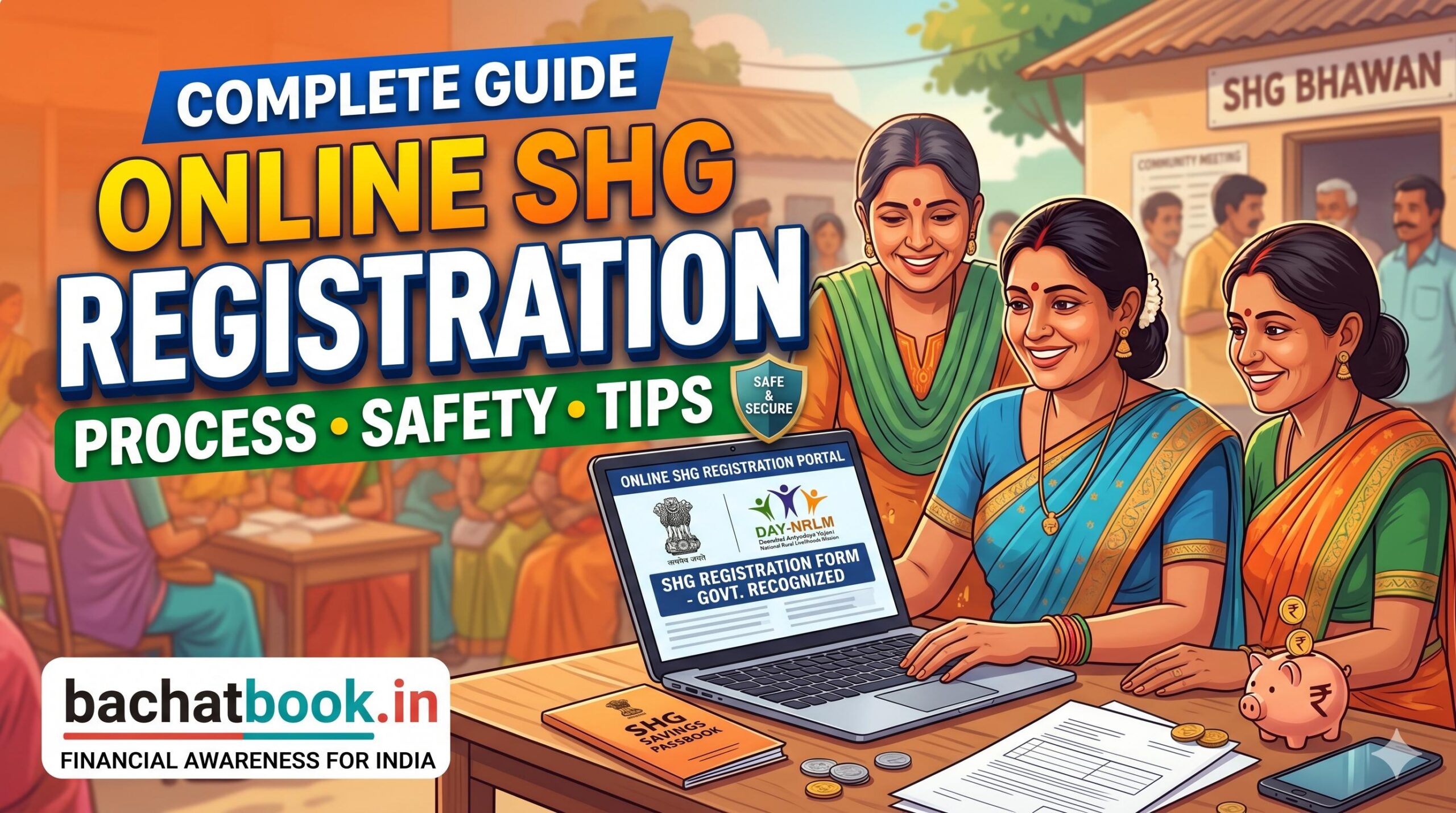
Doing your Self Help Group registration online means submitting your group’s details, resolution documents, and member KYC through official government portals—such as the National Rural Livelihoods Mission (DAY-NRLM) website or your specific state’s rural development portal—to gain official recognition. This digital step is essential because it legally allows your group to open a joint bank account, build a credit history, and access government support schemes.
However, as we always emphasize here at Bachatbook.in, whenever money and online processes are involved, financial safety must be your top priority. Let us explore the risks associated with online registrations and how to protect your group’s funds.
Table of Contents
The Hidden Risks in the Online Registration Process
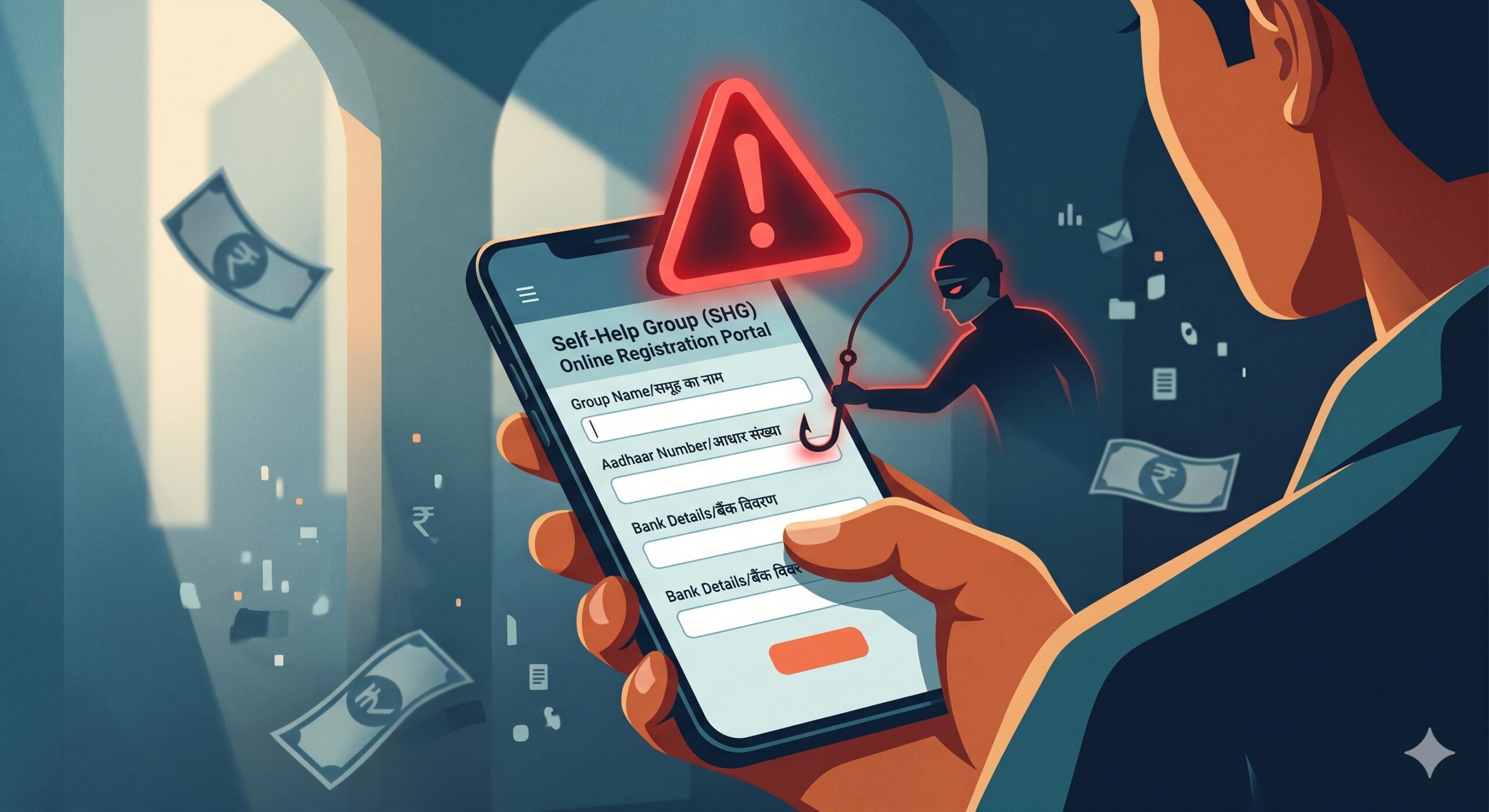
While the internet makes government processes highly accessible for Indian middle-class families and rural citizens, it also opens the door to financial fraud. When searching for how to complete your Self Help Group registration online, you may encounter several risks:
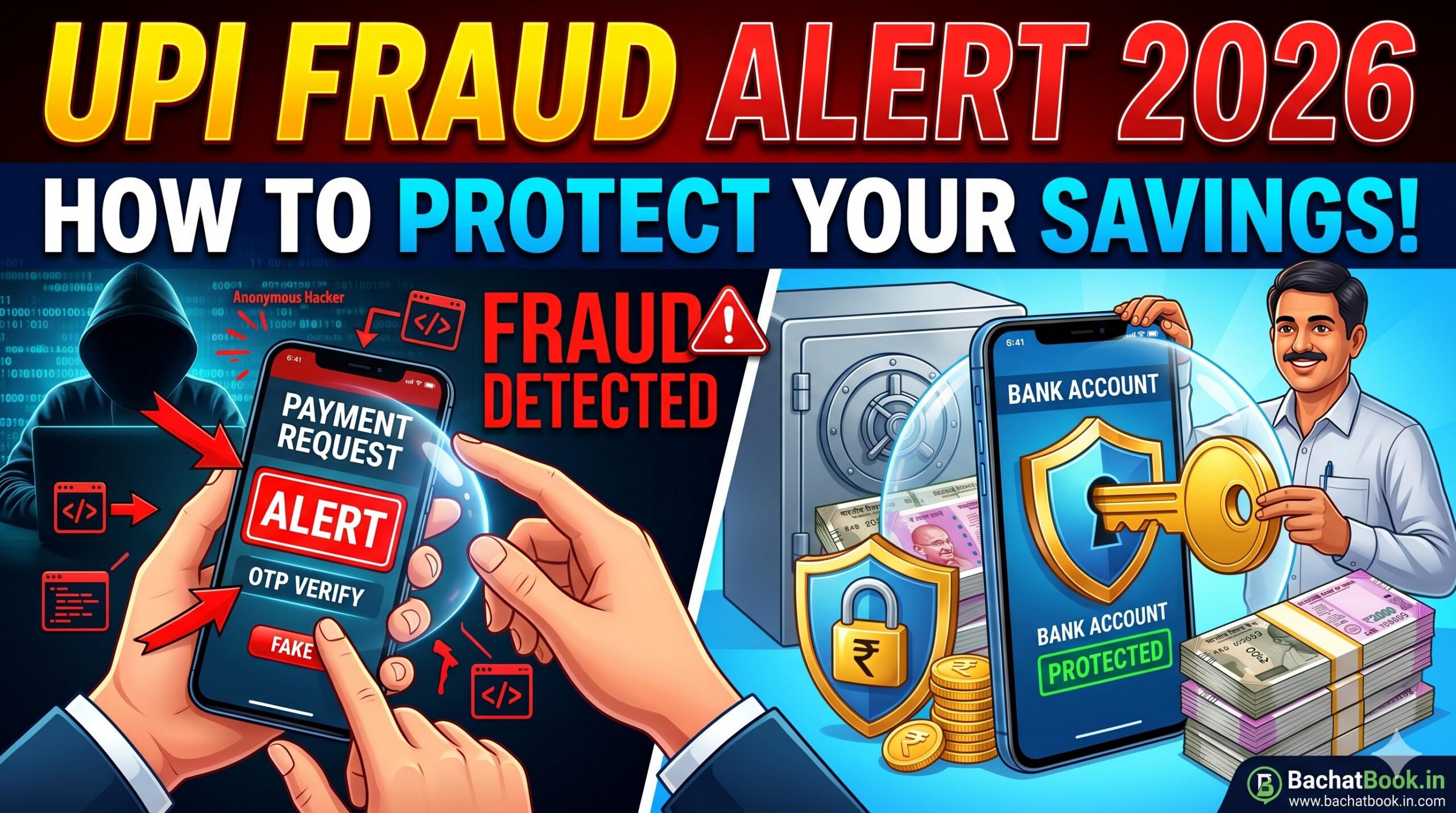
- Fake Registration Portals: Scammers often create websites that look exactly like official government portals. These fake sites are designed to steal your data and your money.
- Unauthorized Middlemen: You might find online “agents” on social media or WhatsApp promising to fast-track your SHG registration in exchange for a hefty processing fee.
- Data Theft and Phishing: Uploading the Aadhaar cards, PAN cards, and bank details of 10 to 20 members on an unsecured website can lead to severe identity theft.
The Financial Impact of Registration Scams
Falling for a fraudulent registration scheme does not just delay your group’s official status; it has a direct and painful impact on your pooled savings.
If members contribute their hard-earned money to pay fake agents, that money is lost forever. Furthermore, if your group’s KYC details are stolen through a fake portal, fraudsters can open unauthorized bank accounts or apply for illicit loans in your members’ names. For a newly formed SHG trying to build financial stability, losing initial capital to a cyber scam can destroy the trust among members and break the group apart before it even begins its savings journey.
Complete Guide to SHG Zero Balance Account (Latest Update 2026)
Prevention Habits: How to Safely Register Your SHG
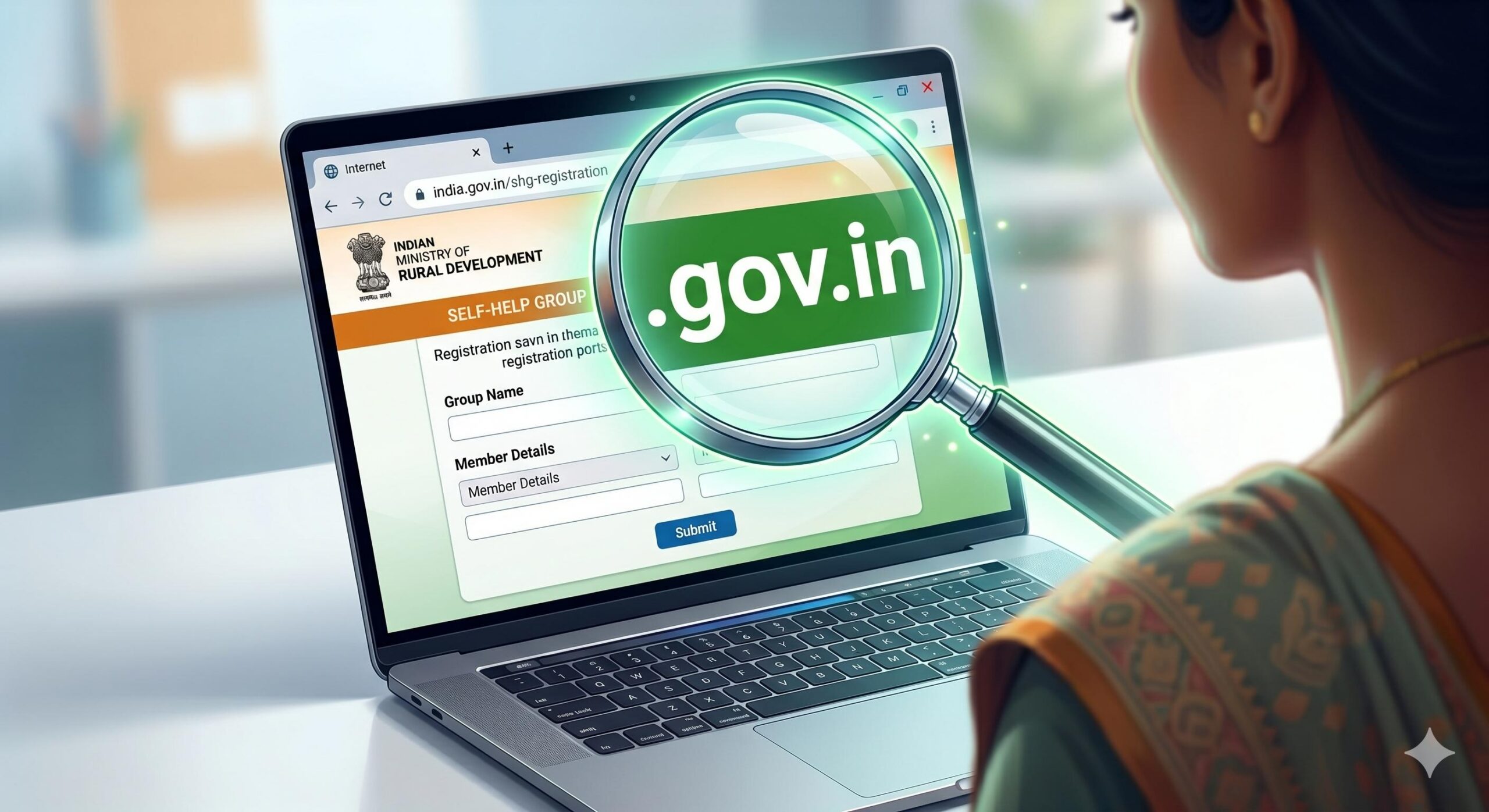
To ensure your funds and personal data remain secure, follow these preventive habits when applying for your Self Help Group registration online:
- Verify the Website URL: Only submit your documents on official government websites. Look for URLs that end in .gov.in or .nic.in. If a website ends in .com, .org, or .in and claims to be the official government registration portal, leave it immediately.
- Do Not Pay Unofficial Fees: Government registration for SHGs is generally free or involves very minimal, transparent official charges. Never pay money via UPI to an online agent claiming they can “approve” your file faster.
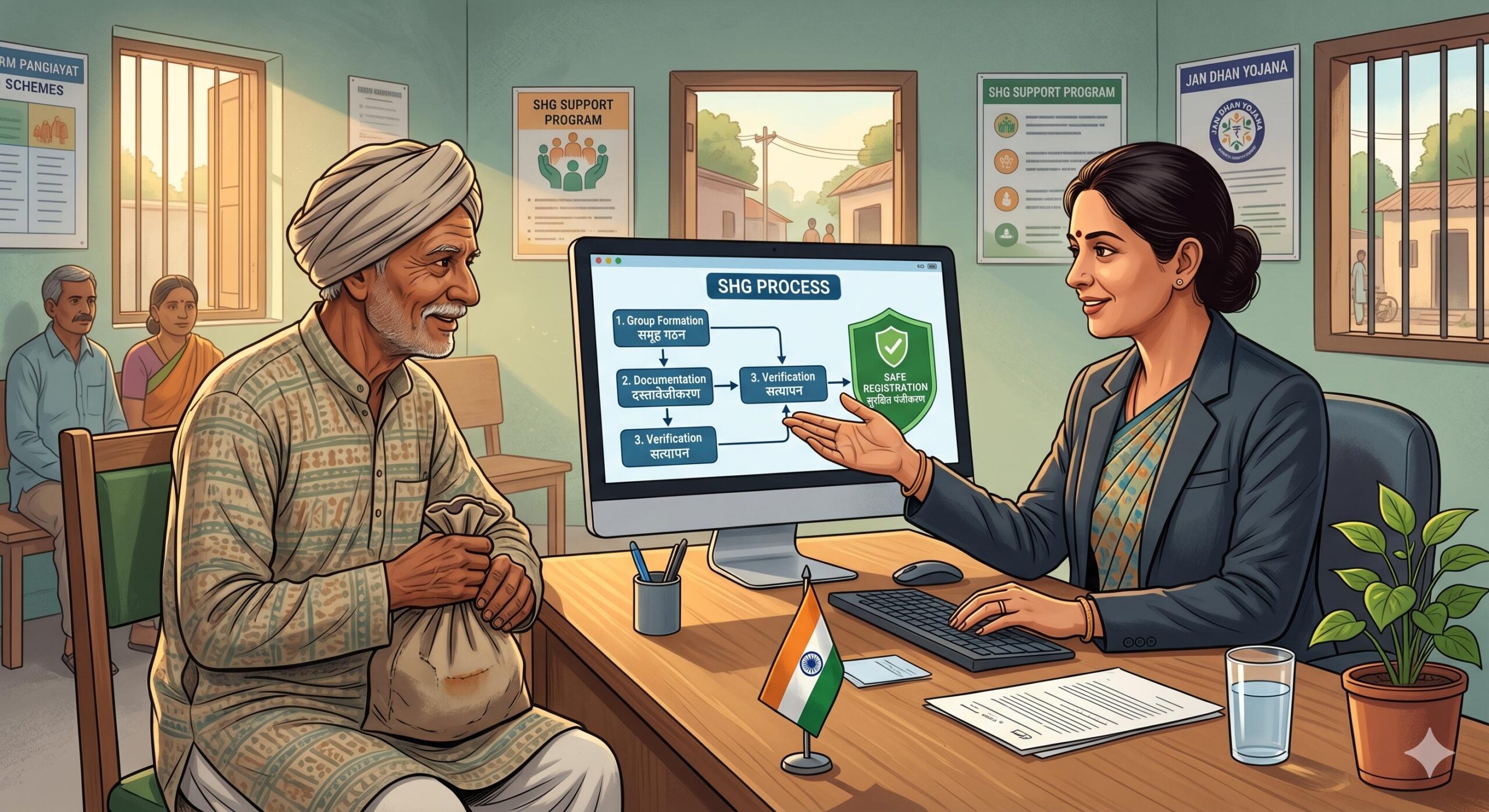
- Consult Local Authorities: If you are confused by the online portal, visit your local Gram Panchayat, Block Development Officer (BDO), or the nearest bank branch. They have authorized personnel (like Bank Mitras) who can guide you through the genuine online process at no extra cost.
- Protect Member OTPs: During the online Aadhaar verification process, never share any OTPs (One-Time Passwords) over a phone call with unknown individuals claiming to be portal support staff.
Smart Money Behavior for New Self Help Groups
Once you have safely navigated the Self Help Group registration online and received your official documentation, it is time to build strong financial habits:
- Open a Joint Bank Account Promptly: Use your registration certificate to open an SHG savings account in a nationalized bank or regional rural bank. Ensure the account requires at least two or three authorized signatories to withdraw money, preventing misuse.
- Maintain Transparent Bookkeeping: Keep a physical or digital ledger (your group’s bachat book) recording every member’s contribution, every loan given, and every rupee of interest earned. Transparency prevents internal financial disputes.
- Budgeting and Goal Setting: Decide as a group what the pooled money will be used for. Whether it is for emergency medical funds, children’s education, or starting a small collective business, having a clear budget ensures the money grows purposefully.
Frequently Asked Questions (FAQs)
Q: What documents are required for Self Help Group Registration Online?
A: Typically, you will need a copy of the group’s written resolution, the rules and regulations formulated by the group, passport-sized photographs of the office bearers, and the Aadhaar and PAN cards of the members for KYC purposes.
Q: Can we track our registration status online?
A: Yes. Once you apply through the official NRLM or state portal, you will receive an application reference number. You can use this number to track the approval status safely on the same official website.
Q: Is it mandatory to use a middleman for online registration?
A: Absolutely not. The online portals are designed for direct access. Using middlemen increases the risk of financial fraud and data misuse.
Disclaimer:
The information provided in this article is for educational purposes only and is intended to promote financial awareness and fraud prevention. It does not constitute professional financial or legal advice. Always consult with official government guidelines, your local bank, or authorized rural development officers for the most current and accurate registration procedures.