

Introduction
In the world of microfinance and community-based lending, SHG Passbook Rules serve as the fundamental framework for financial transparency and creditworthiness. A Self-Help Group (SHG) passbook is an individual member’s official record of savings, internal loan repayments, and group contributions. Borrowers and group members search for these rules to understand how their financial discipline is documented, as this record is the primary document banks scrutinize before approving a group loan. Factors such as the regularity of savings, the accuracy of interest calculations, and the authentication of entries directly affect a member’s ability to access larger credit facilities.

Understanding these rules is not just about record-keeping; it is about building a financial identity that lenders trust. For many first-time borrowers, the SHG passbook is their first “credit report.”
Table of Contents
What are SHG Passbook Rules?
The SHG passbook is a mirrored record of the group’s master ledger. While the group ledger tracks the collective funds, the individual passbook ensures each member knows exactly where they stand. The rules governing these passbooks ensure that there is no ambiguity regarding a member’s equity in the group.
1. Mandatory Entry of Regular Savings
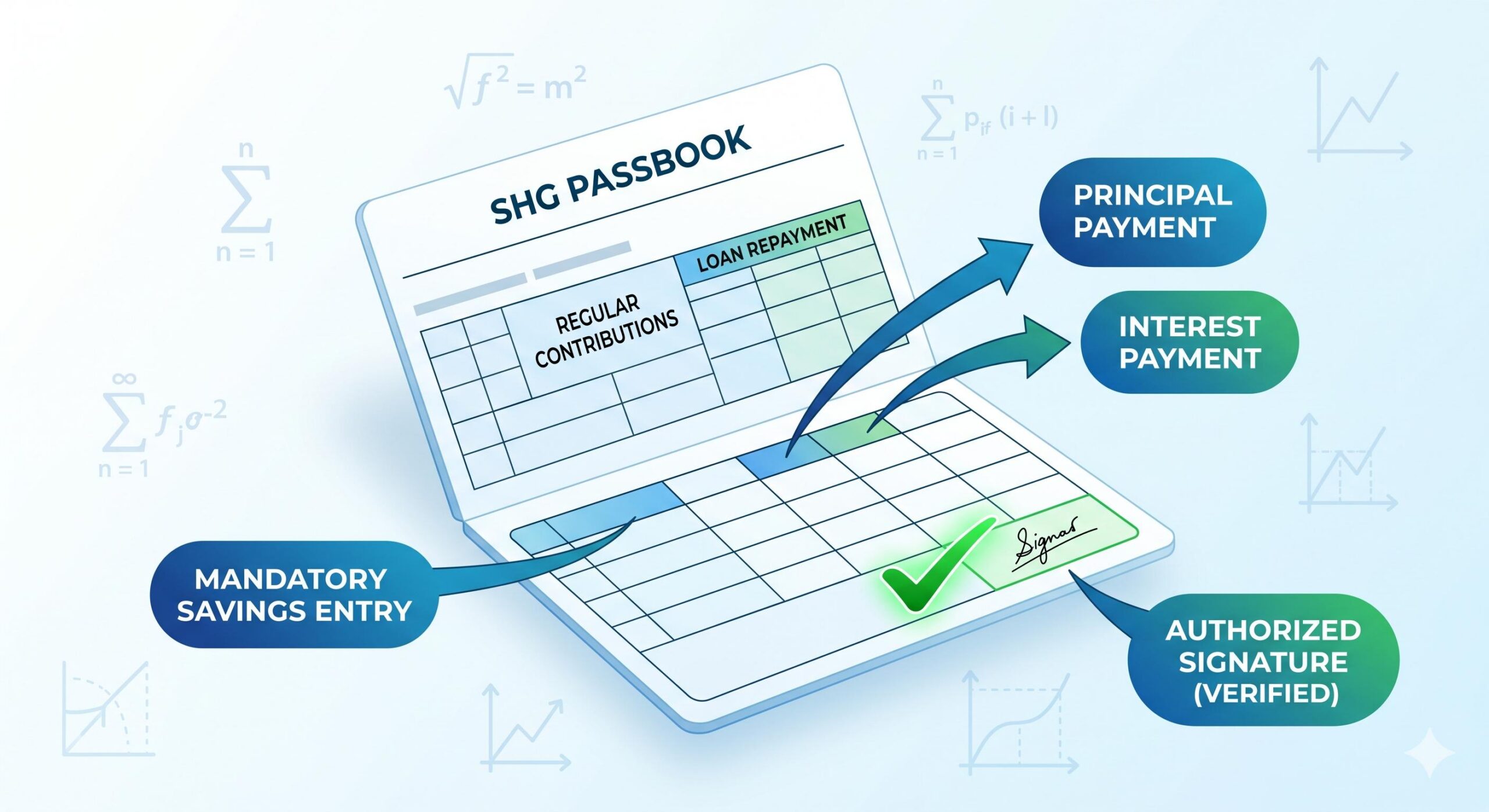
The most critical rule of an SHG passbook is the chronological recording of periodic savings. Most SHGs follow a weekly or monthly savings cycle. The passbook must reflect:
- The exact date of the deposit.
- The amount contributed.
- The signature or thumbprint of the member and the group’s bookkeeper (often the Secretary or Animator).
2. Distinction Between Principal and Interest
When a member takes an internal loan from the group’s corpus, the passbook rules dictate a clear separation between the principal repayment and the interest paid. This is vital because banks look for the “interest-earning capacity” of the group. If these are clubbed together, it becomes impossible to track the actual growth of the group’s fund.
3. Attendance and Fine Records
Many SHG passbook rules include a section for meeting attendance and fines. Since SHGs are built on social collateral, regular attendance is a proxy for reliability. Fines for late payments or missed meetings must be recorded to maintain the integrity of the group’s discipline.
How SHG Passbook Accuracy Affects Loan Approval
For a bank to extend a “linkage loan” to an SHG, they perform a grading exercise. The passbook is the “evidence” of the group’s health. If the SHG Passbook Rules are followed diligently, the chances of approval skyrocket.
Why Banks Scrutinize the Passbook
Lenders look for a pattern of Consistent Savings. If a passbook shows a member saved ₹500 every month for two years without a break, it signals a low-risk profile. Conversely, “lumpy” savings (saving nothing for three months and then depositing a large sum) often suggests financial instability, which can lead to loan rejection.
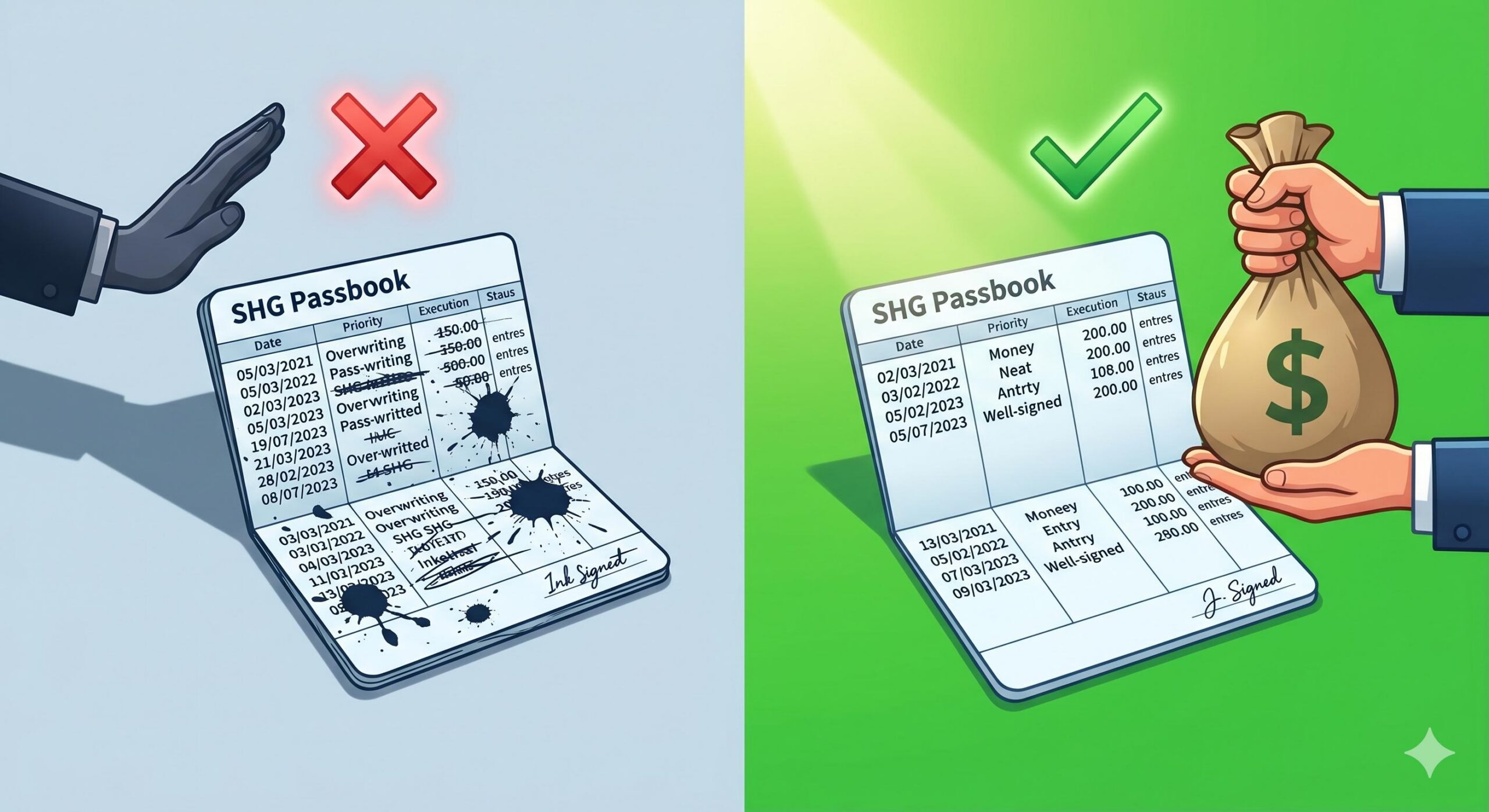
The Impact of “Cutting and Overwriting”
One of the strictest rules in financial documentation is the prohibition of overwriting. In an SHG passbook, any correction must be struck through and initialed by the authorized representative. Messy passbooks with frequent corrections are often flagged as potential signs of fraud or mismanagement, leading to delays in credit disbursement.
Common Reasons for Loan Rejection Related to Passbooks
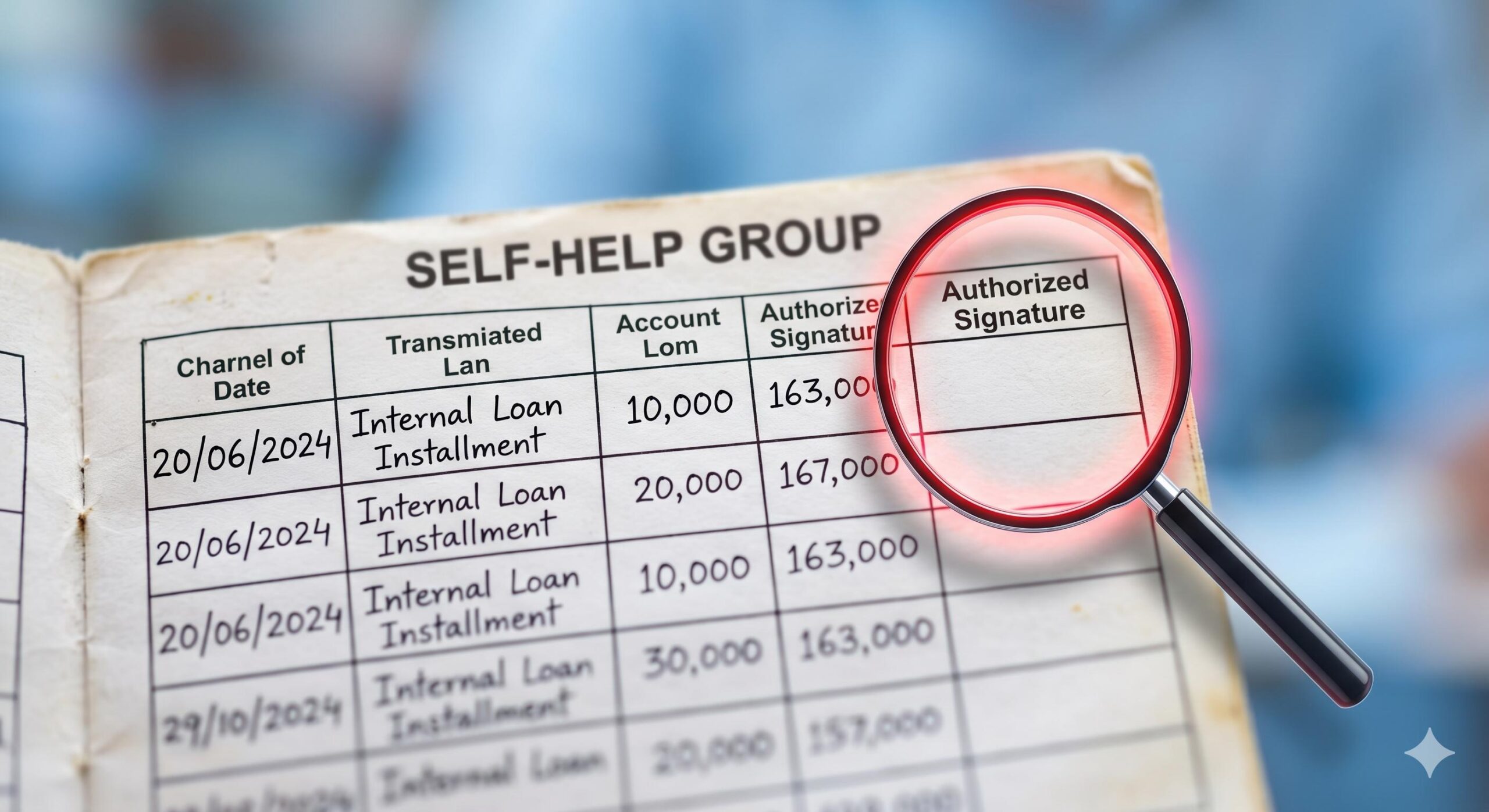
At loanrejectionhelp.com, we frequently see borrowers struggle with credit access because of simple documentation errors. Here are the primary passbook-related reasons for rejection:
- Incomplete Entries: If the passbook hasn’t been updated for the last three to six months, a bank will treat the account as inactive.
- Missing Signatures: Every entry must be authenticated. An unverified entry holds no legal or financial weight in the eyes of a credit officer.
- Negative Balance Trends: If internal loans are consistently higher than the group’s total savings without a clear repayment plan, the group is viewed as “over-leveraged.”
- Discrepancy with the Master Ledger: If the individual passbook does not match the group’s main register, it indicates a lack of transparency, which is a major red flag for lenders.
Best Practices for Maintaining a Healthy SHG Passbook
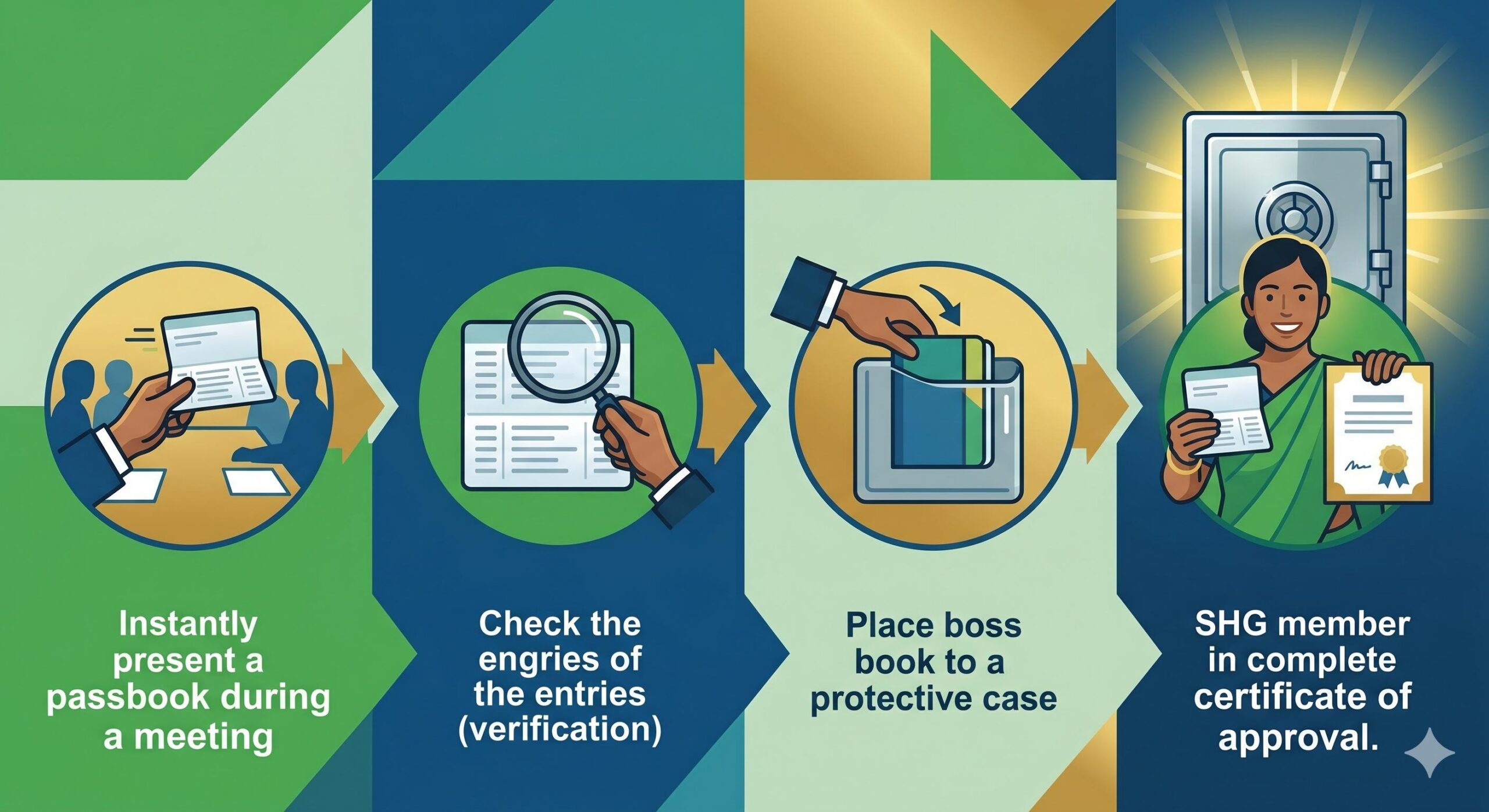
To ensure your group remains eligible for bank loans and government subsidies, follow these best practices:
- Update at the Meeting: Never leave a meeting without your passbook being updated. Real-time entries prevent “memory-based” errors later.
- Verify Interest Rates: Ensure the interest charged on internal loans matches the rate agreed upon by the group (usually 1% to 2% per month).
- Keep it Physical and Clean: Treat the passbook like a legal document. Keep it in a plastic cover and avoid folding the pages.
- Regular Audits: Once a year, the group should have an external person or a federation official audit the passbooks against the bank account statements.
Conclusion: The Path to Financial Literacy
The SHG Passbook Rules are designed to empower members by providing a clear, undeniable history of their financial progress. By adhering to these rules, members do more than just save money; they build a “financial CV” that opens doors to formal banking, lower interest rates, and entrepreneurial opportunities.
If you are facing difficulties with loan approvals, start by auditing your passbook. Often, the solution to a rejection isn’t more income—it’s better documentation.
SHG Meeting Rules Explained: A Complete Guide to Safe Group Savings
Frequently Asked Questions (FAQ)
Q1: Can I get a bank loan if my SHG passbook is lost?
A: It is difficult but not impossible. You will need to request a “duplicate passbook” prepared from the group’s Master Ledger, which must be certified by the group’s President and Secretary with an official seal.
Q2: Is the SHG passbook a valid address proof?
A: Generally, no. While it is a financial record, it is usually not accepted as a primary KYC document like an Aadhaar card or Voter ID, though some local cooperative societies may accept it as secondary evidence.
Q3: What should I do if the bookkeeper makes a mistake in my passbook?
A: Immediately bring it to the attention of the group during the meeting. The error should be corrected openly, struck through with a single line, and signed by the authorized office bearers.
Q4: How often should the interest be updated in the passbook?
A: According to standard SHG rules, interest on internal loans should be calculated and recorded at every monthly meeting during the repayment installment.
Educational Disclaimer: This article is for informational purposes only and does not constitute legal or financial advice. Loan approval is at the sole discretion of the lending institution based on their specific criteria and your credit profile. Always borrow responsibly and ensure you understand the repayment terms before committing to a loan.