
Introduction
In the rapidly evolving landscape of Indian finance, the way we handle our daily transactions has undergone a massive transformation. Just a few years ago, the idea of buying a packet of milk or a vegetable bundle using a credit card seemed impossible—credit cards were reserved for big purchases like televisions, flights, or jewelry. However, as we settle into 2026, the integration of the Unified Payments Interface (UPI) with credit cards (specifically the RuPay network) has democratized access to credit.
For the average Indian middle-class family, this shift is not just about convenience; it is a significant opportunity for smart money management. Inflation continues to be a challenge, eating into household budgets. In such a scenario, every Rupee saved counts. Traditionally, using UPI meant debiting money directly from your savings account—money that was gone instantly. Now, by using UPI on credit card rewards, you can keep your hard-earned salary in your bank account for longer, earning interest, while utilizing the bank’s money for your daily needs.
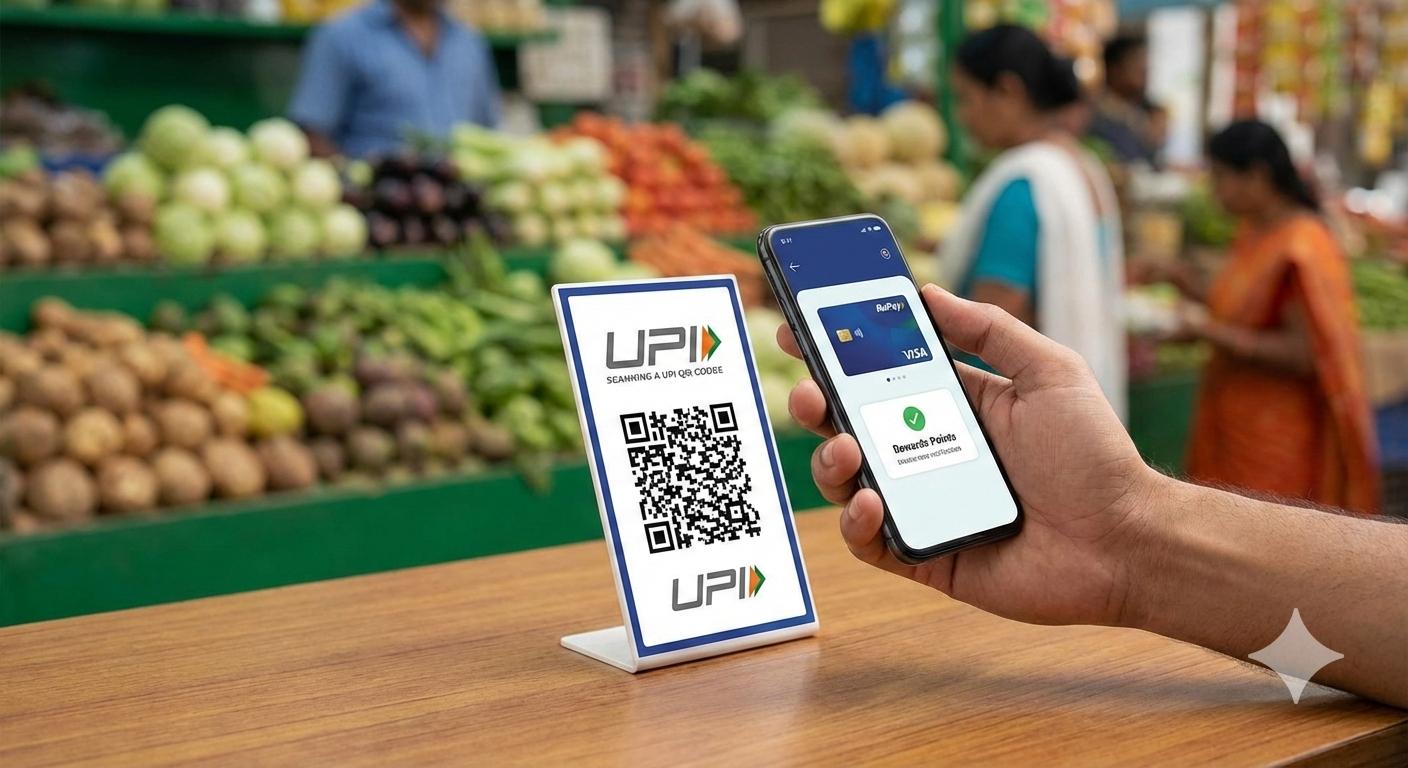
But with great convenience comes great responsibility. The ease of scanning a QR code can sometimes lead to overspending. This guide is designed to help you navigate this new financial tool wisely. We will explore how to earn rewards on groceries and fuel, how to build a strong credit score using UPI, and most importantly, how to avoid the hidden traps of debt.
Table of Contents
Why Smart Spending on UPI is Important in India
For salaried employees and homemakers managing a tight monthly budget, “smart spending” is the first line of defense against financial stress. The integration of credit cards with UPI is not just a payment method; it is a financial strategy if used correctly.
The Power of the “Float” (Interest-Free Period)
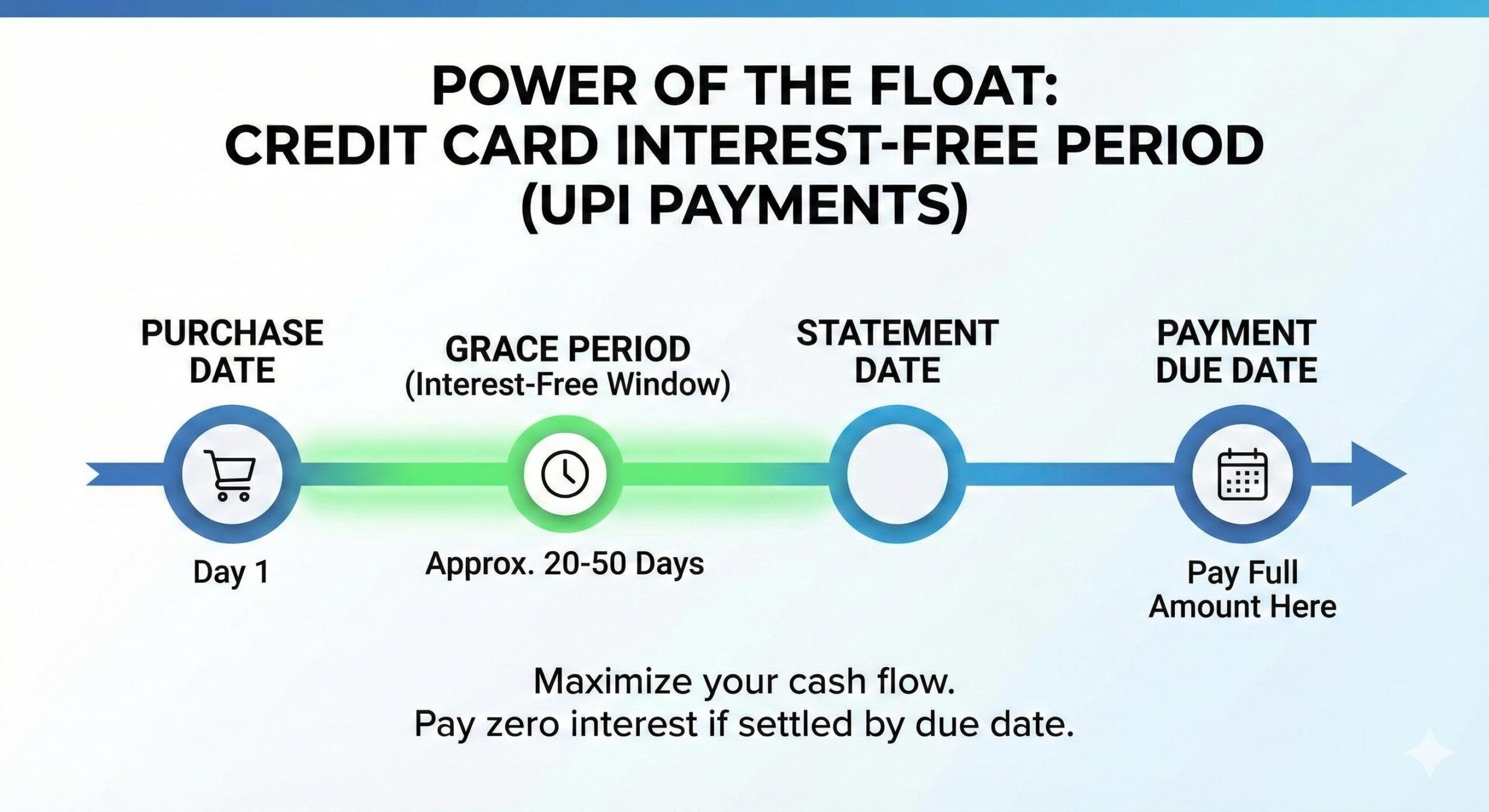
The most underrated benefit of using a credit card on UPI is the “interest-free float.” When you pay ₹5,000 for your monthly groceries using your savings account UPI, that ₹5,000 leaves your account immediately. However, if you use a credit card via UPI, the bank pays the merchant on your behalf. You typically get a grace period of 45 to 50 days to pay the bank back.
- The Math: If your salary is ₹50,000 and your monthly expenses are ₹30,000, paying via credit card allows that ₹30,000 to sit in your savings account for an extra month. Over a year, earning even 3-4% interest on this “floating” money adds up to a small but risk-free saving.
Combating Inflation with Reward Points
Prices for essentials like cooking oil, pulses, and fuel are rising. Paying by cash offers zero return on investment.
- The Reward Structure: Many entry-level UPI credit cards in 2026 offer between 0.5% to 2% value back in the form of reward points or cashback.
- Real Life Example: If a family spends ₹2 Lakhs a year on domestic expenses (groceries, bills, medicine) via UPI credit, a 1.5% reward rate yields ₹3,000 in value. This ₹3,000 can be used to pay a utility bill or buy vouchers for a festival, effectively subsidizing your inflation costs.
Building a Credit History for Future Loans
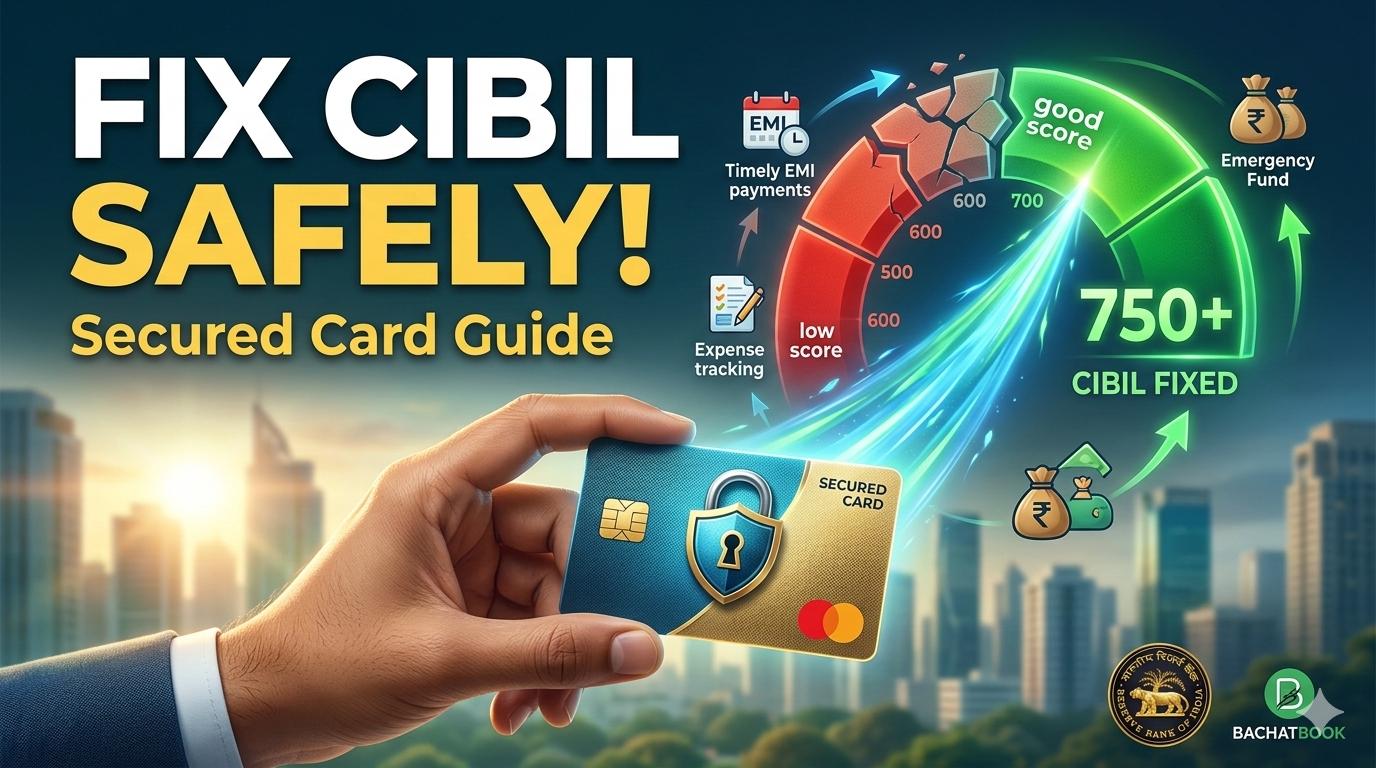
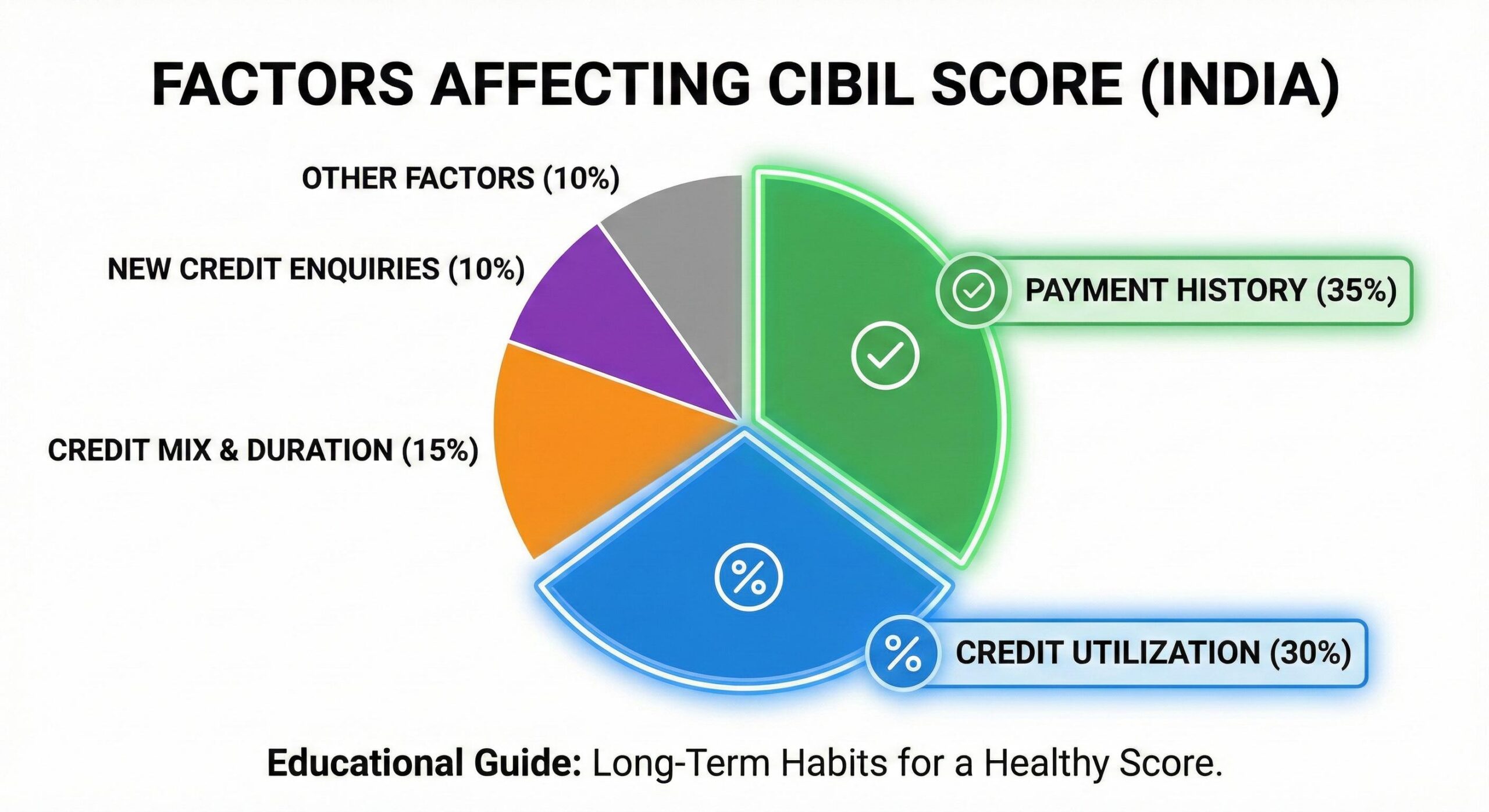
In India, a “thin credit file” (lack of credit history) is a major hurdle for young earners trying to get a home loan or car loan. UPI transactions are frequent and small. By using a credit card for these small amounts and paying the bill in full every month, you generate a robust history of “on-time payments.” This builds your CIBIL score much faster than taking a single large loan, making you eligible for lower interest rates on future big-ticket loans.
Common Mistakes Indians Make with Credit on UPI
While the system is designed to help you, the friction-less nature of “Scan and Pay” can be dangerous for those without discipline. Understanding these pitfalls is crucial.
Treating Credit Limit as Extra Income
Your bank has psychologically profiled you. If you have 1 Lakh limit, and your take-home salary is 40,000 a month, your disposable income is 40,000 (minus the savings a month, of course). I have a limit, so I can purchase an expensive gadget and pay it off later’ is a completely irrational and flawed way of thinking. Such a mindset is responsible for purchasing beyond one’s means, overextending, and accumulating high-interest debt.
Ignoring the Merchant Discount Rate (MDR) Issues
You might find that your local vegetable vendor or tea stall owner accepts UPI but refuses your credit card payment via QR.
- The Reason: For small merchants, accepting credit card payments often comes with a “Merchant Discount Rate” (MDR)—a small fee they have to pay to the bank. Regular UPI (bank-to-bank) is usually free for them.
- The Mistake: Forcing a small vendor to accept credit payments might lead to them passing that extra 1-2% charge onto you, negating any rewards you might have earned.
Paying Small Merchants & Reward Exclusion
Not all UPI transactions are created equal. In 2026, banks have refined their reward charts.
- Minimum Thresholds: Spending ₹10 or ₹20 often yields zero points. You might clutter your bank statement with hundreds of tiny transactions without gaining any financial benefit.
- Excluded Categories: Peer-to-Peer (P2P) transfers (sending money to a friend) are generally not allowed on credit cards. Furthermore, categories like insurance, government tax payments, and fuel often have caps or exclusions on rewards.
Lifestyle Inflation (The “Latte Effect”)
Not having to part with physical money or watch their bank account decrease leads to reduce ‘pain of paying’ significantly. This often leads to purchasing more expensive things like a ₹200 coffee instead of a ₹20 tea because ‘it goes on the card’. Over a month, these little upgrades can really hurt your budget.
Step-by-Step: How to Link and Use Credit Cards on UPI
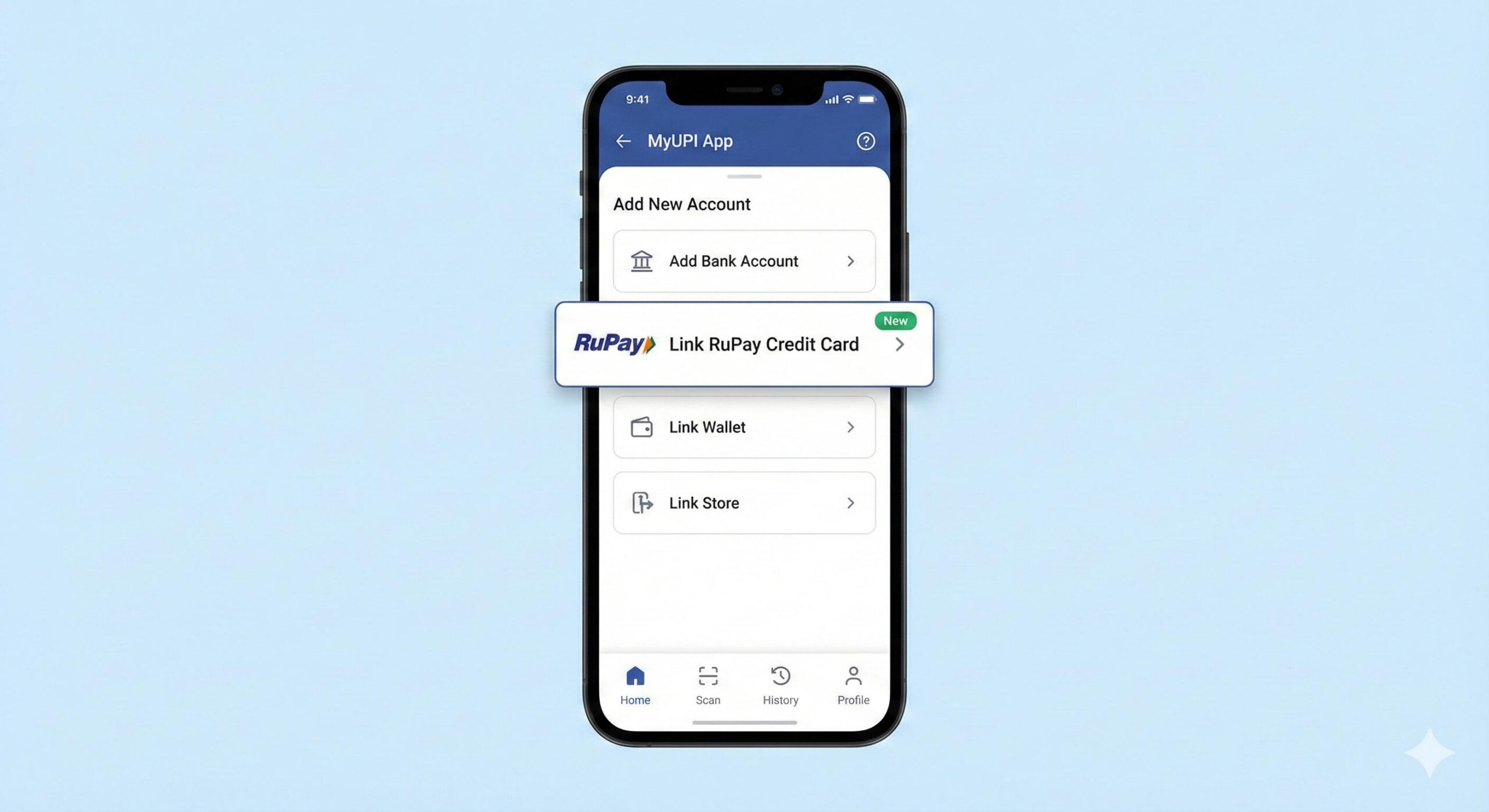
Those unfamiliar with this technology may find the process somewhat complicated. However, there are particular steps that need to be taken to guarantee both the security and the operational functionality of the process. As of now, this feature is primarily available on the RuPay network in India.
Step 1: Check Eligibility and Card Network
First, ensure you possess a compatible credit card. Look for the “RuPay” logo on your card. If you have a Visa or Mastercard, you may need to request your bank to issue a virtual RuPay card specifically for UPI usage. Most major public and private sector banks now offer this as a standard feature.
Step 2: Link to Your UPI App
You can use any standard UPI application (like BHIM, PhonePe, Google Pay, or Cred).
- Open the app and navigate to your Profile or Account Settings.
- Look for an option that says “Link RuPay Credit Card” or “Add Credit Card to UPI”. (Do not select “Add Bank Account”).
- Select your issuing bank from the list. The app will automatically fetch the card linked to your registered mobile number.
Step 3: Set Your UPI PIN
Security is paramount. Just like your bank account has a UPI PIN, your credit card needs one too.
- Select the newly added card.
- You will be asked to enter the Last 6 digits of your card number and the Expiry Date.
- Authenticate using the OTP sent to your phone.
- Set a unique 4-digit or 6-digit PIN. Tip: Do not use the same PIN as your ATM card or main bank account.
Step 4: Making a Payment
- Scan any standard merchant QR code (shops, malls, petrol pumps, pharmacies).
- Enter the amount you wish to pay.
- On the payment confirmation screen, you will see a “Debited From” option. Tap it and switch from your Savings Account to your Credit Card.
- Enter your Credit UPI PIN and confirm.
Smart Strategies to Maximize UPI on Credit Card Rewards
To truly benefit from UPI on credit card rewards 2026, you need to treat it like a strategic game. Random spending yields random results; planned spending yields savings.
Categorize Your Expenses for Maximum Points
Analyze your monthly budget and identify which categories allow UPI payments.
- High Reward Categories: Departmental stores, dining, and supermarkets often have the highest “Merchant Category Codes” (MCC) for rewards. Using your card here ensures you get the maximum 1-2% back.
- Fuel Surcharge Waivers: When paying for petrol or diesel via UPI credit, check if your card offers a waiver on the surcharge. This can save you the 1% extra fee usually charged at pumps.
Aggregate Small Purchases
To overcome the issue of minimum transaction thresholds (e.g., no points for spends under ₹100), try to aggregate your buying.
- Strategy: Instead of buying milk daily for ₹30 (which earns 0 points), ask your local shopkeeper if you can pay ₹210 in advance for the whole week using your UPI credit card. This ₹210 transaction is likely to cross the threshold and earn you points.
Verify Merchant Categories (MCC)
Rewards are determined by how the merchant is registered.
- The Trap: Sometimes a small electronics shop might be registered as a “utility service” or “repair shop,” which might earn fewer points than a “retail store.”
- ** The Fix:** For large purchases, do a small test transaction first or ask the merchant how their QR code is categorized (though they may not always know).
Using UPI Credit for Students and Young Earners
For college students and first-time jobbers (Gen Z), this tool can be a double-edged sword. It is excellent for building a financial resume but dangerous for impulse control.
Pocket Money Management & Tracking
If you are a student using an “Add-on” credit card (linked to your parent’s account) or a secured card against a Fixed Deposit, UPI is a great tracking tool. unlike cash, which disappears without a trace, every UPI scan is recorded. You can review your monthly statement to see exactly how much you spent on canteen food, stationery, or travel.
Building the “Credit Mix”
Credit bureaus like CIBIL look at your “Credit Mix.” Having a credit card at a young age and managing it well (paying in full, on time) adds to the “Age of Credit History.” A longer history is beneficial when you apply for a home loan in your 30s.
Avoiding the EMI Trap
Young earners are often targeted with “Convert to EMI” offers on their credit card apps.
- The Warning: Buying a phone on EMI might seem easy, but the interest rates (often 15-24%) negate any rewards you earned. Use UPI credit strictly as a payment tool, not a borrowing tool.
Digital Tools and Apps for Managing Rewards
In 2026, technology is your biggest ally in saving money. You don’t need to use a notebook; your phone can do the heavy lifting.
Spend Analysis Features
Most modern banking apps and UPI platforms now have a “Spend Analyzer” dashboard.
- How to use it: Check this dashboard weekly. It visually categorizes your spends into “Food,” “Travel,” “Shopping,” etc. If you see the “Food” bar growing too fast, you know it’s time to cut back on dining out for the rest of the month.
Reward Redemption Trackers
It is pointless to earn rewards if they expire.
- Tip: Set a quarterly reminder on your calendar to check your reward point balance. Many banks allow you to convert these points directly into cash credit (statement credit) or use them to pay for specific UPI transactions.
Automated Payment Reminders
The most critical tool is the Auto-Pay feature.
- Setup: Configure your bank account to automatically pay the “Total Amount Due” of your credit card bill 3 days before the due date. This ensures you never miss a payment, protecting your credit score and saving you from hefty late fees.
Long-Term Financial Habits for Credit Discipline
Winning with credit cards is 20% knowledge and 80% behavior. Adopting these habits will ensure you remain on the profitable side of the system.
The “Full Payment” Rule
This is the golden commandment of personal finance.
- The Rule: Always pay the Total Amount Due.
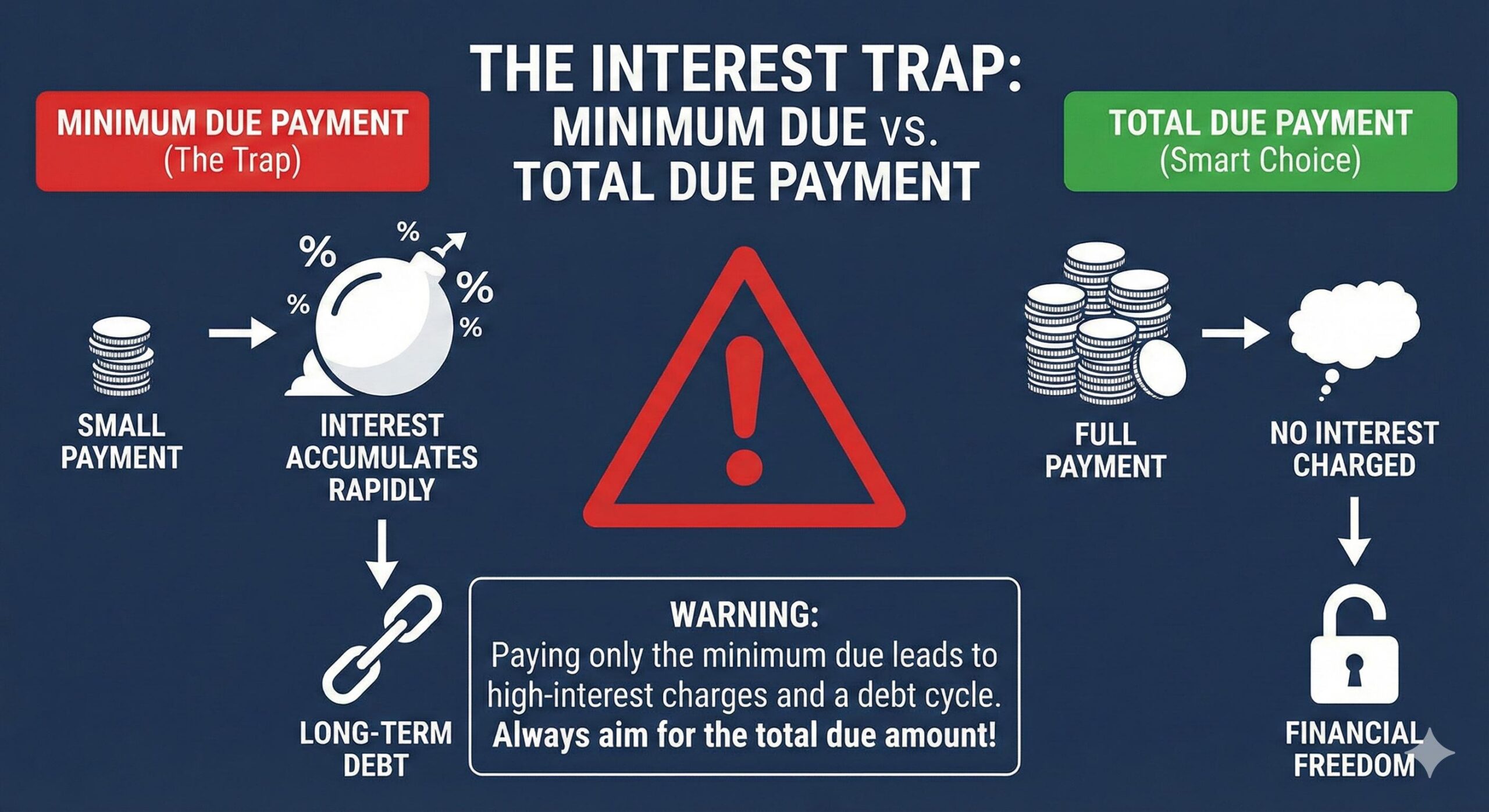
- The Trap: Banks will prominently display the “Minimum Amount Due” (usually 5% of the total). If you pay only this, the bank charges interest on the remaining balance and on all new purchases immediately. This interest trap can ruin your finances.
Regular Statement Audits
Once a month, schedule a “Finance Friday” with your family. Download the PDF statement of your credit card.
- What to look for:
- Phantom Subscriptions: Did a free trial turn into a paid monthly charge?
- Double Charges: Did a UPI transaction fail but the money got deducted twice?
- Overspending: Did you spend more on entertainment than you planned?
The 30% Utilization Rule
Your “Credit Utilization Ratio” is a major factor in your credit score.
- The Guideline: Try not to use more than 30% of your assigned limit. If your limit is ₹1 Lakh, keep your monthly spends under ₹30,000. If you consistently max out your card (e.g., spending ₹90,000), banks view you as “credit hungry,” which can lower your score.
Maintain an Emergency Fund
Never rely on your credit card limit as your emergency fund.
- Why? If you lose your job, you cannot pay the credit card bill, and the debt will balloon.
- The Solution: Keep 3 to 6 months of living expenses in a liquid savings account or Fixed Deposit. This gives you the confidence to use credit cards for rewards without the fear of default.
QR Code Fraud Prevention 2026: How to Protect Your Hard-Earned Savings from Digital Scams
FAQ Section
What are the distinctions between UPI transactions with credit cards and those with debit cards? When you make a UPI transaction using a debit card, the money is taken from the bank account linked to the debit card. When you make a UPI transaction using a credit card, the amount isn’t deducted from the credit card right away. Instead, the bank covers the amount, and you are required to pay the bank back after 30 – 50 days.
Are there restrictions/limits on UPI transactions with credit cards? Yes, there are limits on UPI transactions. For risk and security reasons, the NPCI and the banks impose limits. The typical limit is one lakh (1,00,000) rupees for debit cards, but for credit cards, the transaction limit can be between 5,000 to 10,000 depending on the merchant category.
Is it possible to send money to my friends using a credit card with UPI? No. You can only perform Person to Merchant (P2M) transactions with a credit card through UPI. You are not allowed to send money to friends, family, or your other bank accounts.
Are there any additional transaction fees associated with using a credit card on UPI? You should not expect any additional transaction fees for retail transactions. Merchants can, however, discourage the use of credit cards due to Merchant Discount Rate (MDR) fees.
Will you earn rewards on small transactions of ₹10? It will depend on your particular bank’s policy. Most credit cards have a maximum amount (like ₹50 or ₹100) you can earn reward points for.
Is linking credit cards to UPI apps safe? Yes, it is safe, because it is also protected by the same encryption that is used for regular UPI. You should never disclose your UPI PIN or OTP to anyone.
How does this benefit my CIBIL score? Regular activity on your credit card and, more importantly, repaying your credit card bill in full and on time shows lenders that you can be trusted, and this is communicated to the credit bureaus, resulting in an increase of your score.
Conclusion
The integration of UPI on credit card rewards 2026 is more than just a technological upgrade; it is a powerful tool for financial efficiency. By shifting your necessary daily spends—groceries, fuel, bills—from a savings account to a rewarding credit card, you can earn cashback, improve your credit score, and keep your liquidity intact for longer.
However, the key lies in discipline. The rewards are only valuable if you never pay a single Rupee in interest. Treat your credit card like a debit card—spend only what you actually have in the bank—and you will find it to be one of the most effective tools in your personal finance toolkit.
Start small, track your expenses diligently, and let your daily habits build your long-term wealth.