
Introduction
Saving money in India has historically been a deep-rooted cultural value. Our parents and grandparents were masters of frugality, often repurposing items, bargaining for every rupee, and thinking twice before making even a small purchase. However, as we step further into 2026, the financial landscape of the country has shifted dramatically. While incomes for the middle class have risen, they have been aggressively chased by the rising cost of living, healthcare inflation, education expenses, and housing costs.
For many middle-class families, salaried employees, and especially small business owners (shopkeepers), the end of the month brings a familiar and stressful anxiety: the bank balance is nearing zero, yet the expenses keep coming. It is not necessarily that we are earning less; it is that money seems to flow out faster—digitally and invisibly. The convenience of UPI payments, the lure of online sales, and the pressure of social status have disconnected us from the physical pain of parting with cash, making it easier to overspend without realizing it.
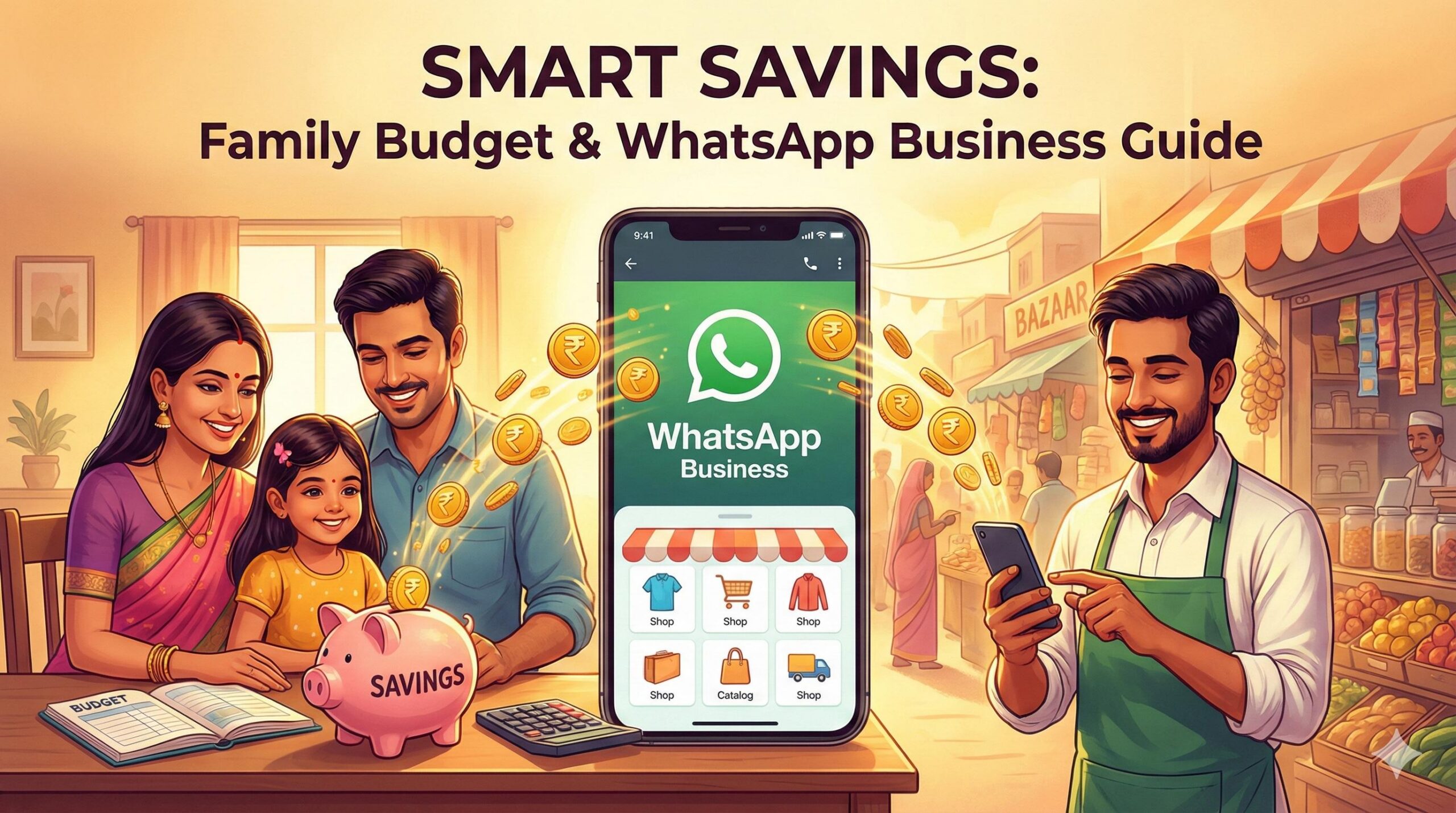
This guide is not just about cutting costs; it is about regaining control over your financial life. We will move beyond generic advice and dive deep into the specific mechanics of running an Indian household budget. For our readers who manage small businesses alongside their household duties, we will also explore how utilizing free digital tools like Business WhatsApp for shop owners can replace expensive marketing and CRM software, directly contributing to your family’s savings. Whether you are managing a joint family’s finances or trying to save your first 1 lakh rupees, these strategies are designed to help you plug financial leaks and build a secure future.
Table of Contents
Why Saving Money Is Important in India
In many Western countries, rigorous social security systems support citizens during unemployment, disability, or old age. In India, despite various government initiatives, the primary responsibility for financial security still rests heavily on the individual and the family unit. Understanding why we save is the fuel that keeps the habit alive when the temptation to spend arises.
The Necessity of a Robust Emergency Fund
Life is inherently unpredictable. In 2026, medical inflation in India is outpacing general inflation significantly. A sudden hospitalization, a critical illness, or a medical emergency can wipe out years of hard-earned savings if you are unprepared. An emergency fund is not an investment for growth; it is survival money. It prevents you from having to take high-interest personal loans or selling family jewelry during a crisis.
Fulfilling Family Responsibilities (The Sandwich Generation)
The Indian social structure often involves what is known as the “Sandwich Generation”—individuals who are financially responsible for their aging parents while simultaneously raising their own children. You might need to fund your parents’ healthcare and daily needs while also saving for your child’s school admission fees, which are skyrocketing every year. Saving is the only bridge that connects your current income to these dual, heavy responsibilities.
Navigating Job Market Volatility
The nature of employment in India is changing rapidly. The rise of automation and global economic shifts means that job security is no longer guaranteed, even in established corporate sectors or IT. Having a financial cushion equivalent to 6 to 12 months of living expenses provides you with the dignity and freedom to navigate career gaps, upskill yourself, or search for a new job without the desperation of missing the next home loan EMI payment.
Achieving Future Goals and Freedom
Beyond emergencies, savings are the ticket to your dreams. Whether it is buying your own flat, funding a dream wedding, or taking a foreign vacation, these goals require disciplined capital accumulation. Reliance on loans for every life goal leads to a debt trap; reliance on savings leads to financial freedom and peace of mind.
Common Reasons Indians Fail to Save Money
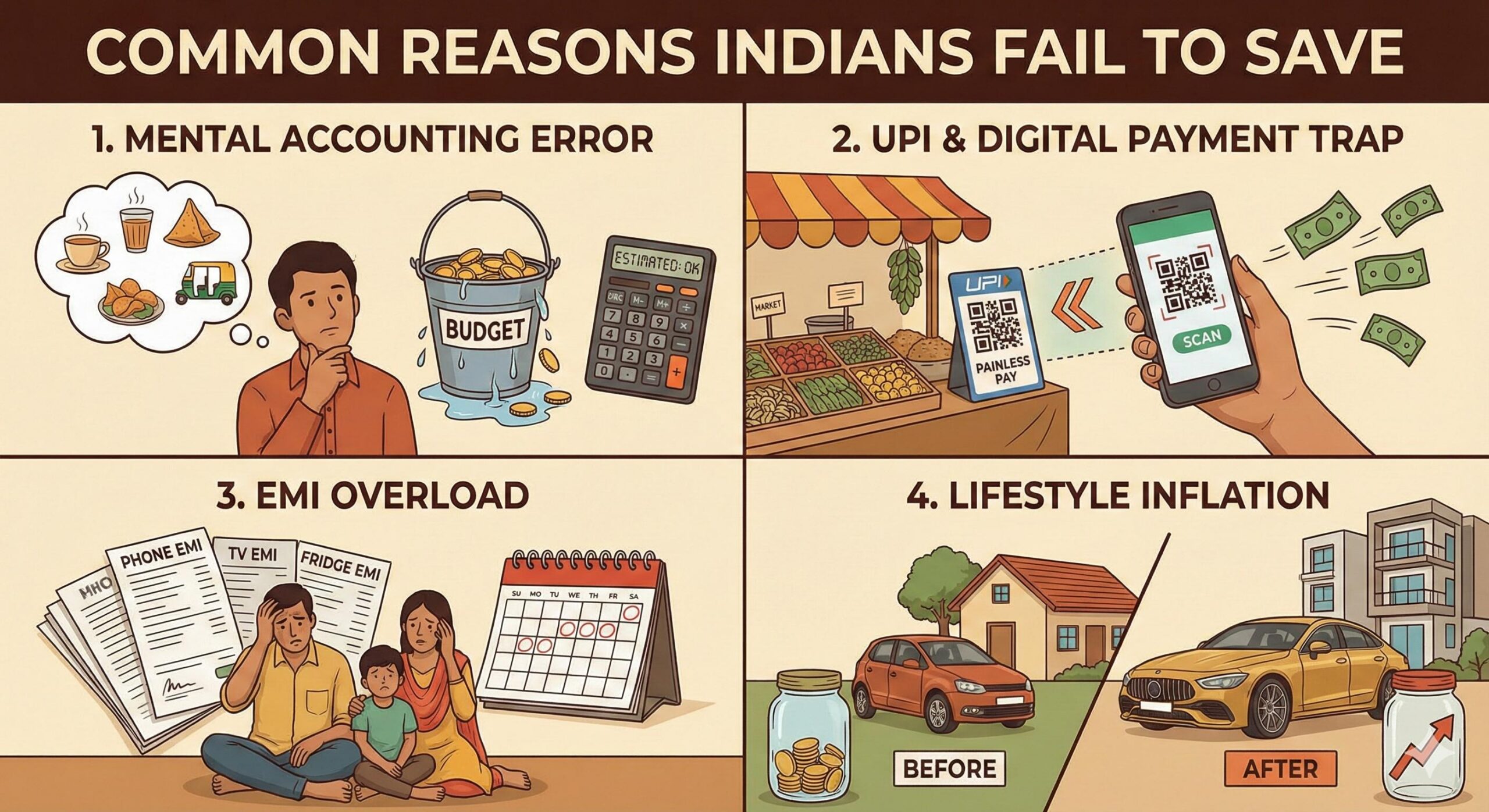
To solve a problem, we must first diagnose it. Why do hard-working people struggle to save? It is rarely a lack of income; it is usually a lack of a system or psychological traps.
The “Mental Accounting” Error
Most people do not write down their expenses. They perform “mental accounting,” roughly estimating that they have enough money. The problem is that the human brain conveniently forgets small expenses—the evening snacks, the weekend auto rides, the subscription renewals, the “small” treats. These small, untracked expenses accumulate to form a massive hole in the monthly budget that goes unnoticed until the bank account is empty.
The UPI and Digital Payment Trap
While UPI has revolutionized payments in India, it has a psychological downside. When you pay cash, you physically feel the money leaving your hand—there is a “pain of paying.” When you scan a QR code, the transaction feels painless, abstract, and instant. This “frictionless” spending often leads to impulse purchases because the immediate psychological barrier to spending is removed.
EMI Overload and the Credit Trap
The availability of “No Cost EMI” schemes on e-commerce platforms has normalized buying things we cannot afford. A smartphone that costs ₹50,000 feels affordable at ₹4,000 a month. However, when you stack up 3 or 4 such EMIs (phone, TV, washing machine), a significant portion of your future income is already spent before you even earn it. This leaves no room for savings and increases financial stress.
Lifestyle Inflation
This is the silent killer of wealth. As soon as a person gets a salary hike or a promotion, their lifestyle expenses rise to match the new income. They move to a slightly better apartment, upgrade their car, or switch from domestic to international vacations. Because spending grows at the same rate as income, the savings rate remains stagnant at zero, despite earning more.
Step-by-Step Monthly Budgeting Method
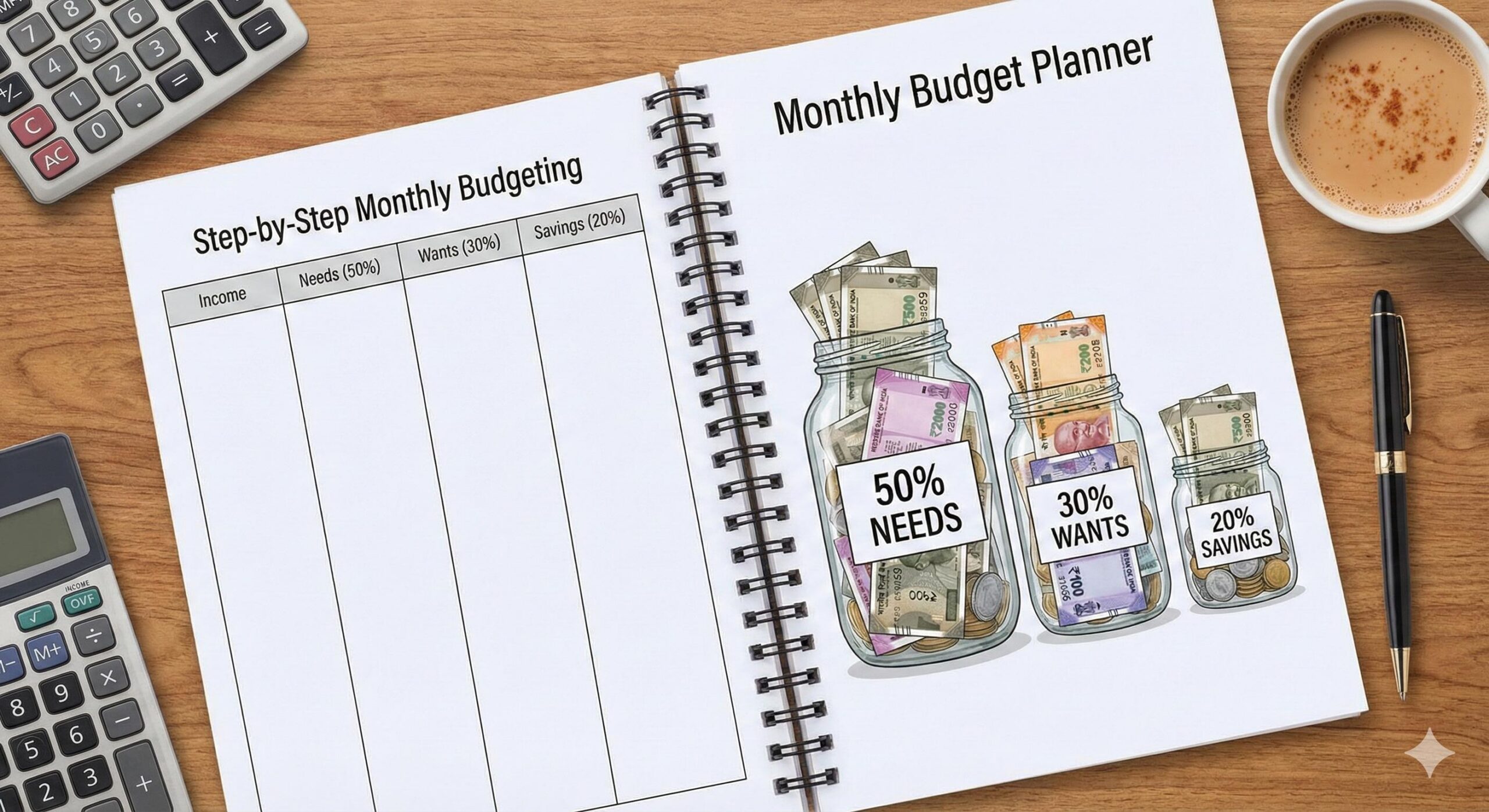
Budgeting is the backbone of personal finance. It tells your money where to go instead of wondering where it went. For Indian households, the 50-30-20 Rule is the most effective framework because it balances discipline with the need to enjoy life.
Step 1: Calculate Your Net Income
This is the foundational step. Look at your bank statement. Do not count your “CTC” (Cost to Company); count the actual In-Hand Salary that hits your account after taxes, PF, and professional tax deductions. If you have variable income (like freelancing or business), take the average of the last 3 months.
Step 2: The 50% Needs (Non-Negotiable Expenses)
Half of your income should go toward things you cannot survive without. If this section exceeds 50%, you are living beyond your means and need to cut costs or move to a cheaper locality.
- Housing: Rent or Home Loan EMI.
- Utilities: Electricity, Water, Gas cylinders, Mobile/Internet bills.
- Groceries: Dal, rice, oil, milk, vegetables (home cooking supplies).
- Transport: Fuel, metro card, or bus pass to get to work.
- Education/Healthcare: School fees and monthly medicines for parents.
Step 3: The 30% Wants (Lifestyle and Leisure)
This is the fun part of your salary. It is important to have this category so you don’t feel deprived, but it must be capped at 30%.
- Dining Out: Restaurants, Zomato/Swiggy orders.
- Entertainment: Movies, Netflix/Amazon Prime subscriptions, weekend outings.
- Shopping: Clothes, gadgets, accessories, home decor.
- Vacations: Saving for a holiday or weekend trips.
Step 4: The 20% Savings (Pay Yourself First)
This category is not for “leftover” money. This 20% must be moved to a separate account immediately when you receive your salary.
- Emergency Fund: Building that 6-month safety net.
- Investments: SIPs in Mutual Funds, PPF (Public Provident Fund), or Recurring Deposits (RD).
- Insurance: Life insurance (Term Plan) and Health Insurance premiums.
Practical Example (Salary: ₹50,000) Let’s break down a ₹50,000 salary for a family living in a Tier-2 city:
- Needs (₹25,000): Rent (₹10k), Grocery & Milk (₹8k), Bills (₹3k), Transport (₹2k), Misc (₹2k).
- Wants (₹15,000): Weekend outings, new clothes, cable TV, broadband.
- Savings (₹10,000): ₹5,000 into an SIP for the future, ₹5,000 into a liquid fund for emergencies.
Smart Money Saving Tips for Indian Households
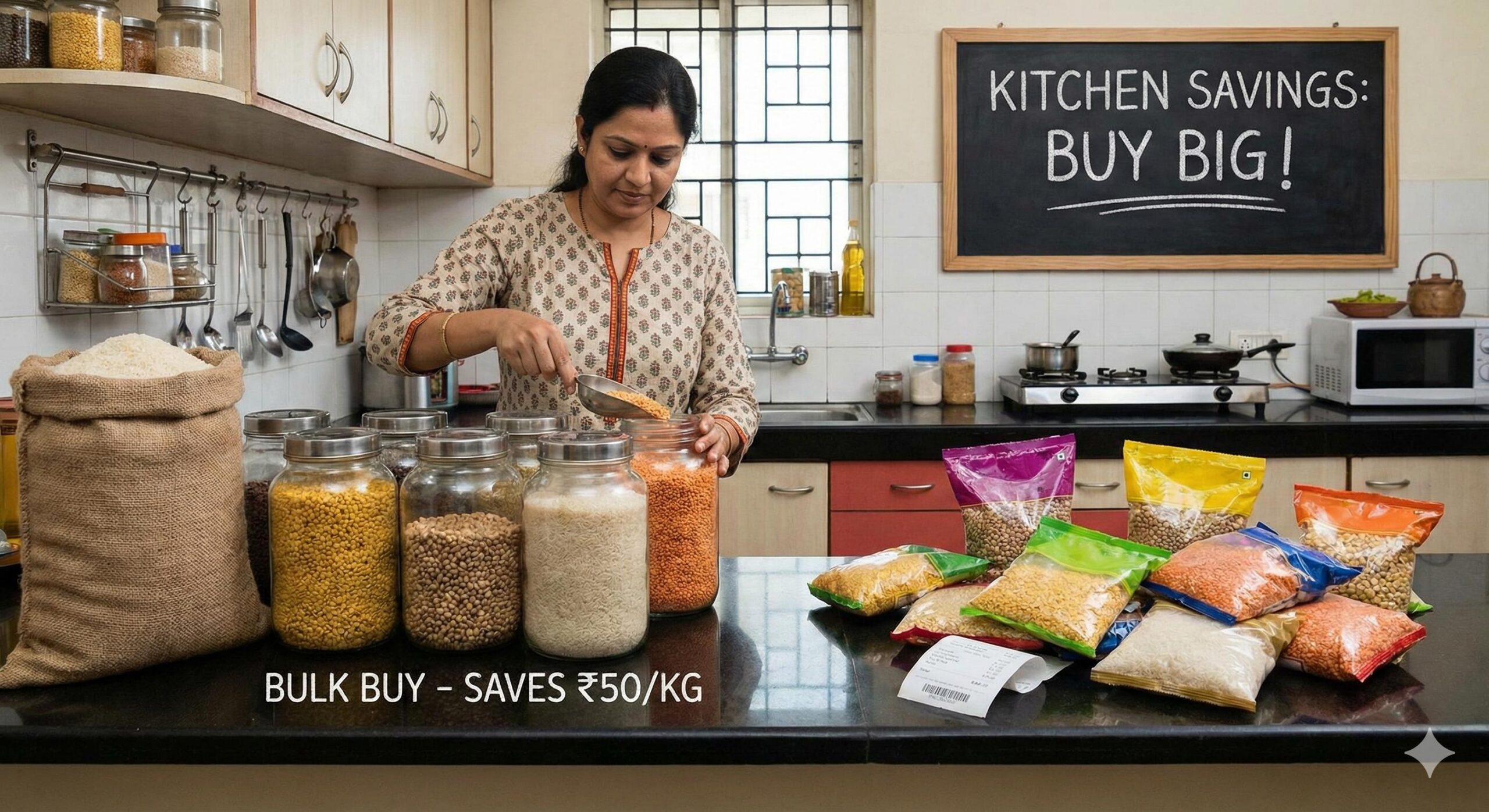
Saving money doesn’t mean living miserably; it means living efficiently. Here are elaborate, India-specific tactics to reduce bills without impacting your happiness.
Grocery and Kitchen Savings
- Menu Planning: Plan your meals for the week on Sunday. If you know you are making Rajma Chawal on Tuesday, you won’t panic and order expensive takeout.
- Bulk Buying vs. Retail: Buy non-perishable staples (Rice, Atta, Dal, Oil, Surf/Soap) in monthly bulk from wholesale markets or supermarkets (like D-Mart or Reliance Smart) where prices are lower than the MRP.
- The “Loose” Product Myth: Often, loose dal or pulses at a trusted local Kirana store are of equal quality to branded, packaged versions but cost 20-30% less because you aren’t paying for the fancy packaging and marketing.
- Seasonal Eating: Vegetables that are out of season are imported or cold-stored, costing double. Eat Methi in winter and Bhindi in summer to save naturally.
Electricity and Utility Savings
- The Phantom Load: Appliances like TVs, microwaves, and stabilizers consume electricity even on standby. Switch them off from the main plug when not in use.
- AC Management: In Indian summers, setting the AC to 24°C is sufficient. Every degree lower increases electricity consumption by roughly 6%. Use a ceiling fan along with the AC for better circulation.
- Pressure Cooker Usage: Using a pressure cooker is one of the most gas-efficient ways to cook. Soaking dals and rice for 30 minutes before cooking also drastically reduces gas consumption.
Transport and Commute
- Carpooling: If you drive to work, use apps to find carpoolers or coordinate with colleagues living nearby. This splits the fuel cost significantly and reduces traffic stress.
- Public Transport: In cities like Delhi, Mumbai, and Bangalore, the Metro is often faster and 90% cheaper than taking a cab.
- Vehicle Maintenance: Keep your car/bike tires properly inflated. Under-inflated tires increase rolling resistance, burning more petrol for the same distance.
Saving Money for Students & Young Earners
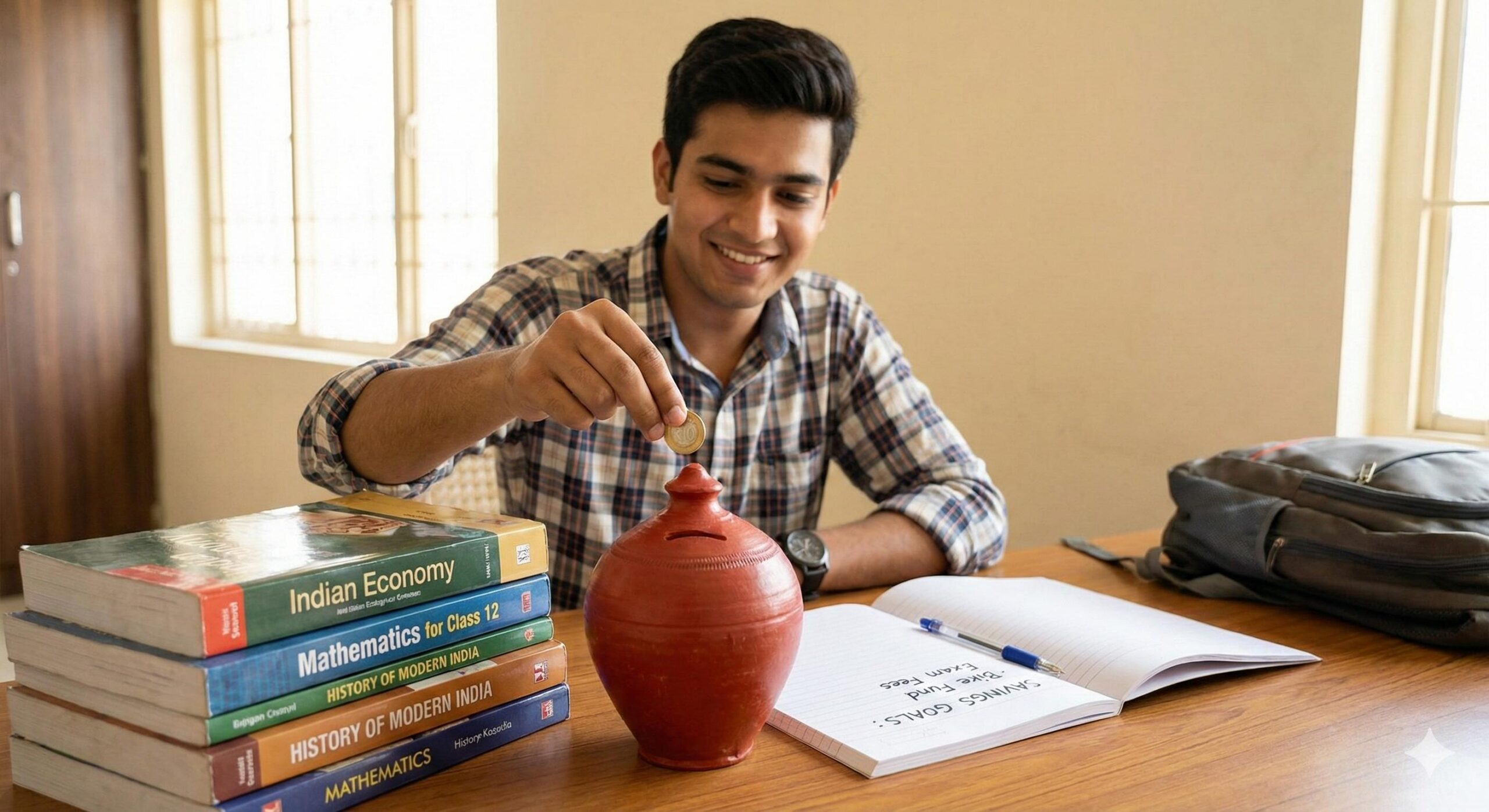
Financial habits formed in your early 20s define your wealth in your 40s.
The “Latte Factor” (Chai/Coffee Expenses)
Spending ₹50-₹100 daily on cafe coffee or fast food snacks adds up to ₹3,000 a month. That is ₹36,000 a year! Opting for college canteen food or carrying home-cooked meals can save a fortune.
Second-Hand Economy
Textbooks, engineering drawing tools, and even gadgets depreciate quickly. Buying second-hand books from seniors or markets (like College Street or Daryaganj) can save you 50-70% on education costs. Resell them when you are done to recover costs.
The 30-Day Rule for Gadgets
Young earners are often targeted by phone companies with flashy ads. If you feel the urge to upgrade your phone, wait 30 days. Usually, the marketing hype dies down, and you realize your current phone works just fine, saving you ₹20,000+.
Digital Tools That Help Save Money
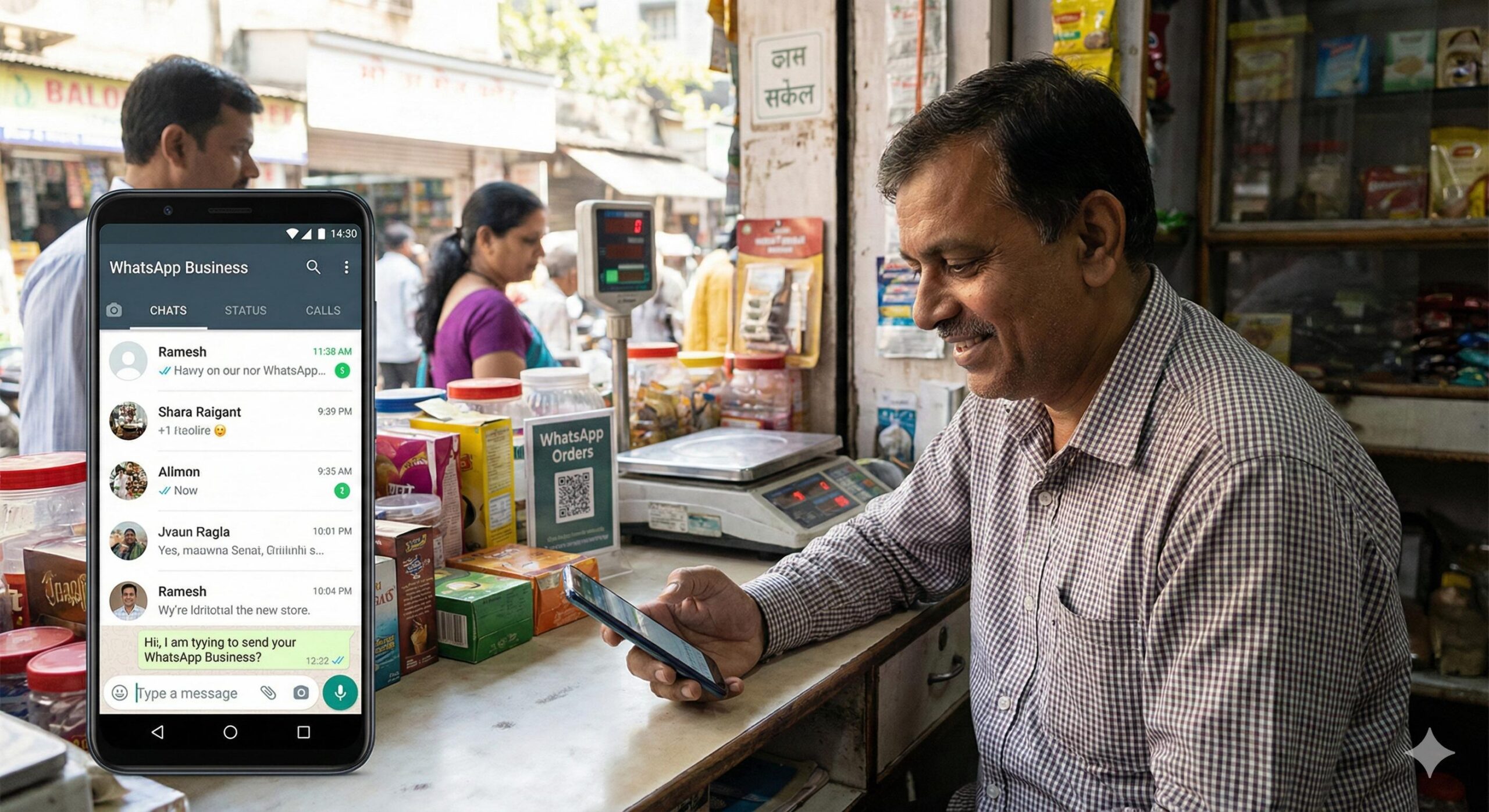
Leverage technology to act as your personal financial manager. In 2026, many Indian families also run small businesses, boutiques, or kirana stores alongside their regular jobs. Saving on business operational costs is a direct way to boost household savings.
Expense Tracking Apps
Apps like “Walnut” or generic “Expense Managers” read your transaction SMSs (securely) to automatically categorize your spending. They generate charts showing you exactly how much you spent on “Food” vs “Travel.” This visual feedback is powerful for changing behavior.
Free Business Tools: Business WhatsApp for Shop Owners
For small business owners, every rupee spent on marketing or operations eats into the profit that could have gone into the family’s savings. Instead of paying for expensive bulk SMS services or printing paper pamphlets, switching to Business WhatsApp for shop owners is a game-changer.
This free tool allows shopkeepers to:
- Create a Digital Catalog: Showcase your products (sarees, electronics, groceries) with prices and descriptions directly on your profile. Customers can browse without visiting the shop, saving you time.
- Automated Greetings & Replies: Set up “Away Messages” or “Quick Replies” for common questions like “Shop open time?” or “Do you have milk?” This reduces the need for hiring extra staff to manage the phone.
- Labels for Organization: You can label chats as “New Customer,” “Pending Payment,” or “Order Complete.” This acts as a free CRM system, preventing you from losing track of orders and revenue.
By adopting free digital tools like Business WhatsApp for shop owners, you eliminate unnecessary business expenses, directly increasing the disposable income available for your personal financial goals.
Automated Savings (Auto-Sweep)
Activate the “Auto-Sweep” facility in your savings bank account. This feature automatically moves excess money (above a certain threshold, say ₹20,000) into a Fixed Deposit to earn higher interest, while keeping it liquid enough to use if needed.
Long-Term Saving Habits Indians Should Build
Discipline Over Motivation
Motivation is fleeting; discipline is consistent. You won’t always feel like saving. That is why automating your investments (SIPs) to deduct on the 1st of the month is crucial—it removes willpower from the equation.
The “No-Spend” Days
Challenge yourself to have 4 to 8 “No-Spend Days” a month. On these days, you spend ₹0 apart from fixed bills and commute. You bring lunch, you don’t buy snacks, and you don’t shop online. It is a mental detox for your wallet.
Periodic Financial Reviews
Schedule a “Money Date” with your spouse or family once a month. Review the credit card bill line-by-line. Discuss upcoming large expenses (like insurance renewals or school fees) so you can start saving for them 3 months in advance, rather than stressing at the last minute.
Money Saving Tips for Indian Families 2026: A Practical Monthly Budgeting Guide
Frequently Asked Questions
How much of my salary should I save ideally? While the 50-30-20 rule suggests saving 20%, this is a starting point. If you live with parents and have low rent expenses, you should aim to save 40-50% of your income. If you have heavy loans, even 10% is a good start. The key is consistency, not just the percentage.
Is it better to save cash at home or in the bank? Always keep savings in a bank account or liquid mutual funds. Cash kept at home loses value due to inflation. Money in a high-yield savings account or a Fixed Deposit earns interest, helping it grow or at least keep pace with inflation.
How does Business WhatsApp for shop owners help me save money? It is a free tool that replaces paid marketing channels. By using its catalog and broadcast features, you can reach hundreds of customers without spending money on pamphlets or paid ads, thus increasing your net profit margin.
Should I use a Credit Card? Credit cards are excellent financial tools if used correctly. They offer reward points and an interest-free period. However, they are dangerous if you only pay the “Minimum Due.” Always pay the full bill amount every month. If you cannot control your spending, switch to a Debit Card or Cash.
What is the best way to save for a child’s education? Start early. Education inflation is high (10-12%). Relying on savings accounts isn’t enough. Consider long-term equity mutual funds (SIPs) or government schemes like PPF or Sukanya Samriddhi Yojana (for a girl child) which offer tax-free, guaranteed returns.
How do I stop impulse buying online? Delete shopping apps from your phone and only use the desktop version when you truly need something. Unsubscribe from marketing emails. The extra friction of having to log in on a computer often gives you enough time to rethink the purchase.
Conclusion
Saving money in India in 2026 is no longer just about filling a piggy bank or keeping cash under the mattress; it is a vital survival skill in a rapidly changing economic landscape. As we have explored throughout this guide, the path to financial stability is not paved with massive salary hikes or lottery wins, but with the small, intentional choices you make every single day.
It is easy to feel overwhelmed by the rising cost of living, the pressure of social media lifestyles, and the constant digital demands on your wallet. However, true financial freedom begins the moment you decide to take control. By adopting the 50-30-20 budgeting method, you are not restricting your freedom; you are buying your future peace of mind. When you track your expenses, you are not being “stingy”; you are being smart enough to tell your money where to go instead of wondering where it went.
For our entrepreneurial readers, remember that tools like Business WhatsApp for shop owners are not just about technology; they are about efficiency. Every rupee saved in business operations is a rupee earned for your family’s future.
Ultimately, the goal of bachat (savings) is not just to accumulate numbers in a bank account. It is about the safety of knowing you can handle a medical emergency without debt. It is about the joy of funding your child’s education without stress. It is about the dignity of retiring on your own terms. You have the tools, the knowledge, and the capability to build a secure life for your family. Start today—not with a grand gesture, but with a single, smart financial decision. Your future self is depending on the habits you build right now.
Disclaimer: This content is strictly for educational and informational purposes. It does not constitute professional financial or business advice. Please consult a SEBI-registered financial advisor or business consultant before making significant financial decisions.