
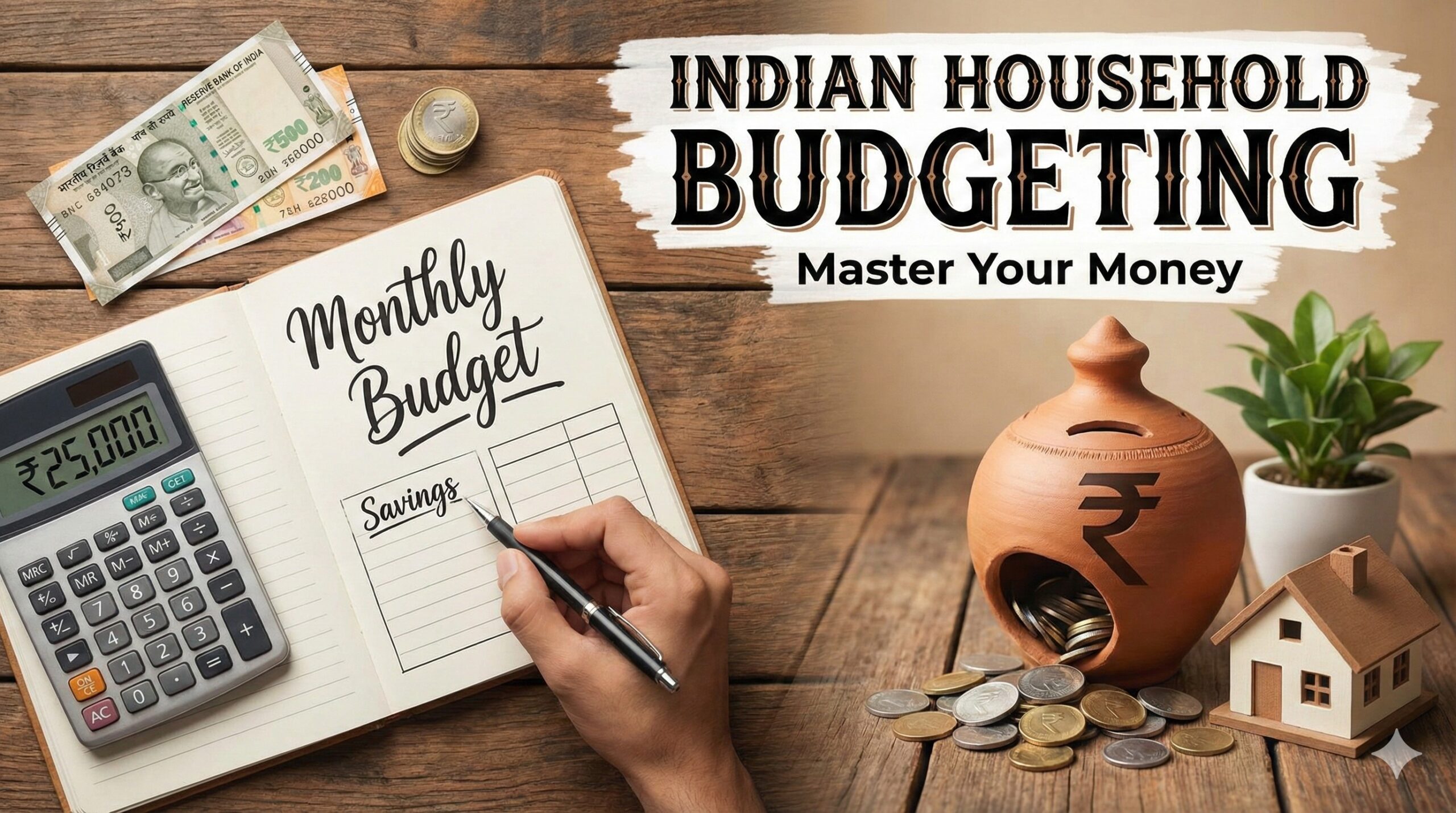
Introduction
Saving money is one of the most critical and pressing challenges facing the Indian middle class today. With daily expenses rising steeply, lifestyle expectations shifting toward modernization, and the persistent pressure of inflation eroding purchasing power, a significant portion of a salaried employee’s or small business owner’s income often disappears before the month even ends. For many families, the idea of setting aside a substantial emergency fund feels entirely out of reach when faced with high residential rents, exorbitant education fees, and unpredictably high medical costs. The cost of living in both metro cities and tier-2 towns has skyrocketed, making every single rupee count more than ever before.
However, saving money in India is not merely about cutting expenses drastically and living a life of extreme deprivation. True financial security comes from smart, proactive management: understanding exactly where your money goes, creating a realistic budget that aligns with your income, and exploring legitimate ways to fund growth. This mindset is what leads many small business owners to ask, “dukan ke liye loan kaise milta hai” (how to get a loan for a shop) so they can expand their livelihood without depleting their family’s hard-earned savings.
Whether you are a student managing pocket money for the first time, a salaried employee dealing with the heavy burden of EMIs, or a small business owner looking to optimize your personal and professional finances, adopting small, consistent habits can entirely transform your financial future. This comprehensive guide will walk you through the essential steps to build a practical monthly budget and save money effectively in the current economic landscape.
Table of Contents
Why Saving Money Is Important in India
Financial stability in India requires proactive and aggressive planning. Unlike some Western nations with extensive state-sponsored social security systems, robust retirement benefits, or universal healthcare, Indian households must rely heavily on their own accumulated savings to navigate life’s uncertainties. Your savings are your only true safety net.
- The Need for an Emergency Fund: Life is fundamentally unpredictable. Medical emergencies can arise overnight, sudden home repairs can demand immediate attention, or urgent family needs can surface without warning. An emergency fund acts as a vital financial shield. Without highly liquid savings, families are often forced to take high-interest personal loans or borrow money from informal lenders, which can trigger a long-term, stressful debt cycle.
- Fulfilling Family Responsibilities: In Indian culture, family responsibilities are deeply ingrained in our social fabric. From funding a child’s higher education in an increasingly competitive environment and saving for significant marriage expenses, to supporting aging parents who may not have their own pensions, the financial milestones are huge. Saving money ensures you can meet these responsibilities with pride and dignity.
- Job Uncertainty and Economic Shifts: The modern job market is highly dynamic but also volatile. Automation, corporate layoffs, downsizing, or global economic slowdowns can disrupt regular income instantly. The days of lifelong employment at a single company are largely over. Having a financial cushion of 3 to 6 months’ worth of mandatory living expenses provides the immense mental peace needed to search for a new job without panic.
- Achieving Future Goals: Whether it is buying your dream home, purchasing a family vehicle, starting a new business venture, or planning a stress-free retirement, long-term goals require consistent capital accumulation. Savings are the foundational bricks upon which these future dreams are built.
Common Reasons Indians Fail to Save Money
Understanding why savings fail is the first critical step to fixing the problem. Many earning individuals, despite having a good income, find themselves in a stressful paycheck-to-paycheck cycle due to a few common psychological and behavioral traps.
- Lack of Budgeting (Invisible Spending): The primary reason for a lack of savings is the absence of a tracked budget. When you do not record your income and expenses, “invisible spending” occurs. Money is spent on minor daily items—a few cups of tea, an extra subscription, or a quick cab ride—that seem insignificant in the moment but aggregate to a massive amount by the end of the month.
- Impulse Spending and Digital Transactions: With the revolutionary rise of UPI and digital wallets, spending money has become entirely frictionless. A tap on a smartphone is all it takes to order food, buy trendy clothes, or subscribe to premium services. This extreme ease of payment often bypasses the logical decision-making process, leading directly to impulse buying.
- EMI Overload: The aggressive “Buy Now, Pay Later” (BNPL) culture and easy availability of credit cards have trapped many middle-class Indians. Purchasing depreciating assets like the latest smartphones, household appliances, or cars on Easy Monthly Installments (EMIs) locks up your future income before you even earn it.
- Lifestyle Inflation: As income increases with promotions and salary hikes, expenses tend to increase at the exact same rate. This phenomenon is known as “lifestyle inflation.” Instead of saving the increment received from a salary hike, individuals often upgrade their lifestyle (moving to a bigger house, dining at more expensive restaurants). Consequently, the actual savings rate remains stuck at zero.
Step-by-Step Monthly Budgeting Method
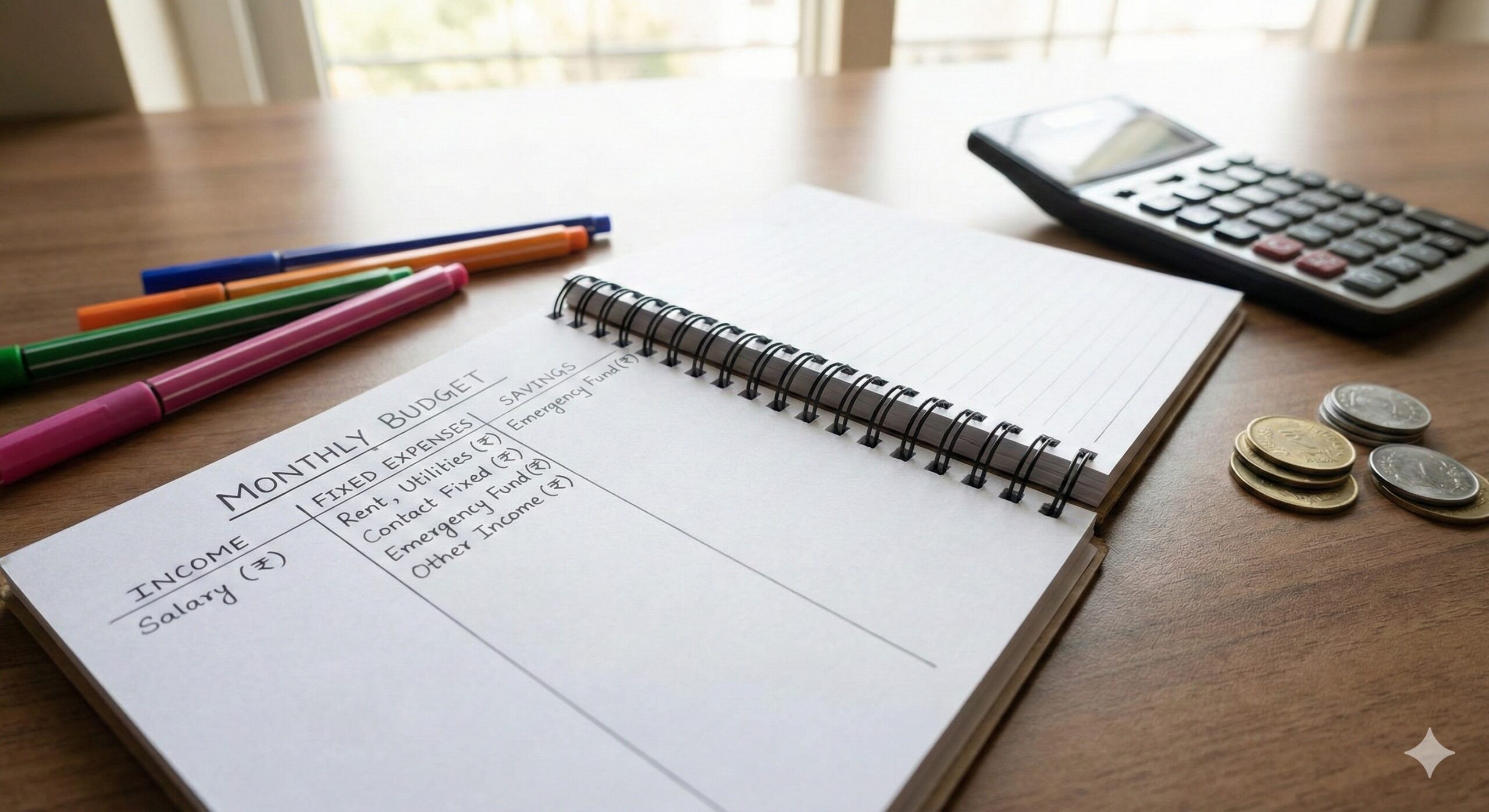
Budgeting is not about restricting your life; it is about giving your money a purposeful direction. A simple, actionable budget can be created using the following practical steps:
1. Income Calculation (Net Income)
Start by calculating your actual take-home pay. This is the amount actually credited to your bank account after TDS, EPF, and other mandatory deductions. If you have irregular income from freelancing or a small business, take the average of the last six months to create a safe baseline.
2. Categorizing Fixed vs. Variable Expenses
List all your monthly expenses down to the last rupee and divide them into two distinct categories:
- Fixed Expenses (Needs): Rent or home loan EMI, children’s school fees, electricity and water bills, grocery staples, and insurance premiums. These are absolute, non-negotiable expenses.
- Variable Expenses (Wants): Dining out, weekend movie tickets, shopping for non-essentials, OTT subscriptions, and weekend trips. These are flexible and can be adjusted, postponed, or reduced when money is tight.
3. The 50/30/20 Rule for Indian Households
A globally recognized and highly effective budgeting framework that works remarkably well in India is the 50/30/20 rule. For an individual earning Rs. 40,000, the breakdown looks like this:
- 50% for Needs (Rs. 20,000): Allocated to rent, utilities, and groceries. This covers your baseline survival.
- 30% for Wants (Rs. 12,000): Allocated to lifestyle choices, entertainment, and shopping.
- 20% for Savings (Rs. 8,000): Must be transferred to a savings or investment account immediately when the salary arrives.
4. Smart Business Budgeting: Funding Your Shop
For small business owners, mixing personal household funds with business capital is a fatal mistake. Separate your household savings from your business finances immediately. If your retail shop needs funds to grow, do not drain your family emergency fund. Instead, explore the market and understand “dukan ke liye loan kaise milta hai”.
Pro Tip: Government schemes like the PM Mudra Yojana or working capital loans from nationalized banks offer legitimate ways to finance inventory or shop expansion without jeopardizing your personal financial stability. By keeping business and personal finances distinct, you protect your family’s future.
Smart Money Saving Tips for Indian Households
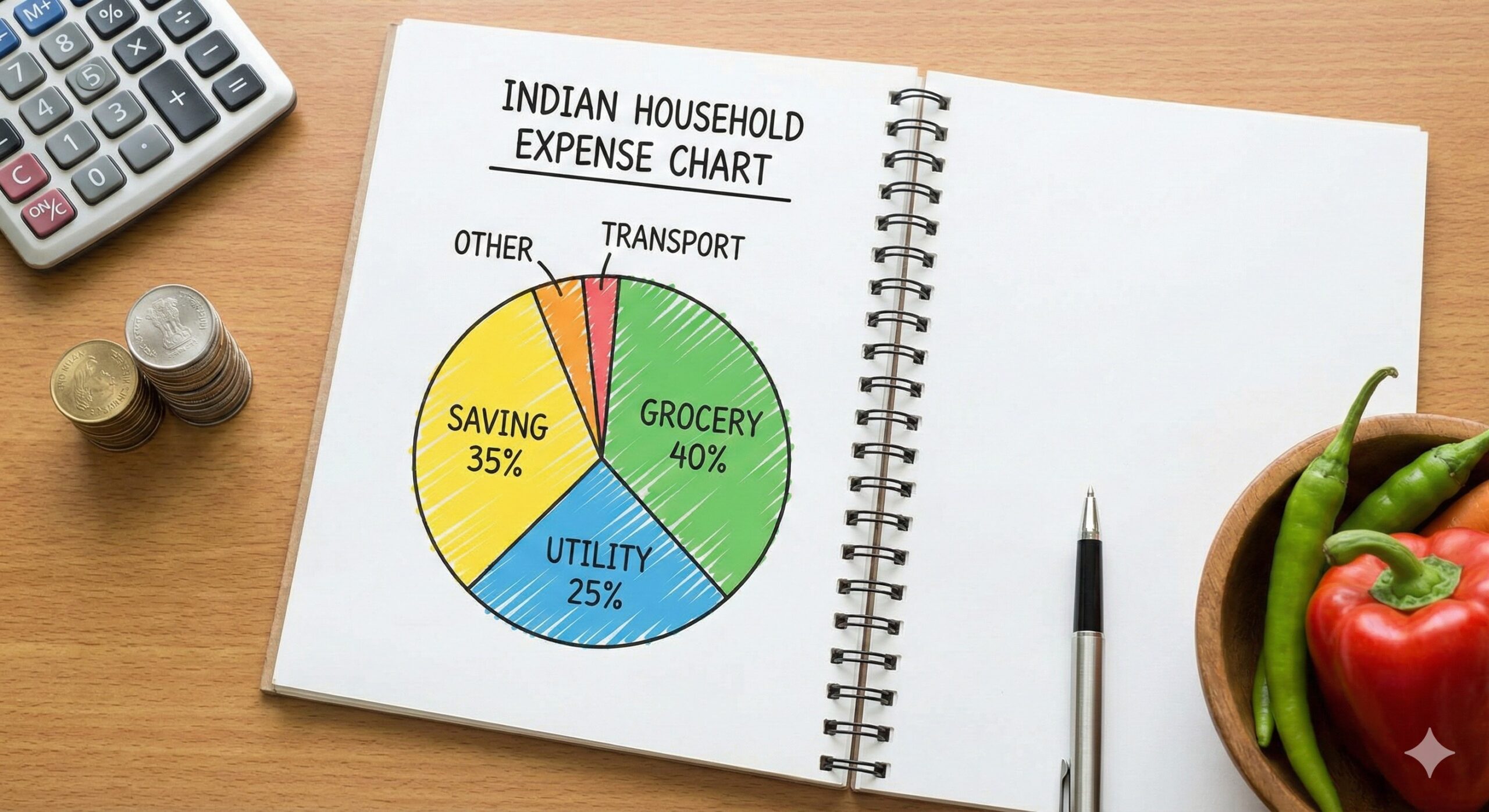
Implementing small, mindful adjustments in daily household operations can result in significant monthly savings without compromising the quality of life.
- Grocery Savings:
- Make a fixed, written shopping list before visiting the supermarket to avoid psychological triggers from sales aisles.
- Resist the urge to use instant 10-minute delivery apps for regular groceries, as they often have high hidden markups. Buy non-perishable staples (rice, dal, wheat, spices) in bulk at wholesale markets (Mandis) or large retail chains.
- Electricity and Gas Savings:
- Switch all regular bulbs to energy-efficient LED lights.
- Keep AC temperatures at an optimal 24°C to 26°C. Regularly service heavy appliances to maintain efficiency.
- Use pressure cookers for cooking pulses and meats. They cook faster and save significantly on expensive LPG consumption.
- Mobile and Internet Bills:
- Instead of individual mobile recharges for each family member, look for family postpaid plans that bundle multiple SIMs and OTT subscriptions together.
- Alternatively, switch to long-term (yearly) prepaid plans which offer much better daily cost averages.
- Daily Spending Habits:
- Carry a water bottle and homemade lunch/snacks when traveling to the office. The money spent on daily roadside tea, bottled water, and outside meals may seem small daily, but it can accumulate to tens of thousands of rupees annually.
Saving Money for Students & Young Earners
Financial habits formed during college and early career stages last a lifetime and set the trajectory for future wealth.
- Pocket Money Management: Students should practice the art of tracking early. If you receive Rs. 5,000 as pocket money, mentally deduct Rs. 500 (10%) immediately and put it in a separate account. Force yourself to operate only on the remaining Rs. 4,500.
- Expense Tracking (Pay Yourself First): Young earners must use the “pay yourself first” method. As soon as the first salary hits the bank account, transfer the savings portion (at least 20%) to a different account. Only then should the remaining money be used for rent, commuting, and leisure.
- Avoiding Debt Traps: Young earners are prime targets for credit card companies. Avoid the intense peer pressure to buy expensive gadgets, luxury sneakers, or fund Instagram-worthy vacations on EMIs just because you qualify for them.
Digital Tools That Help Save Money
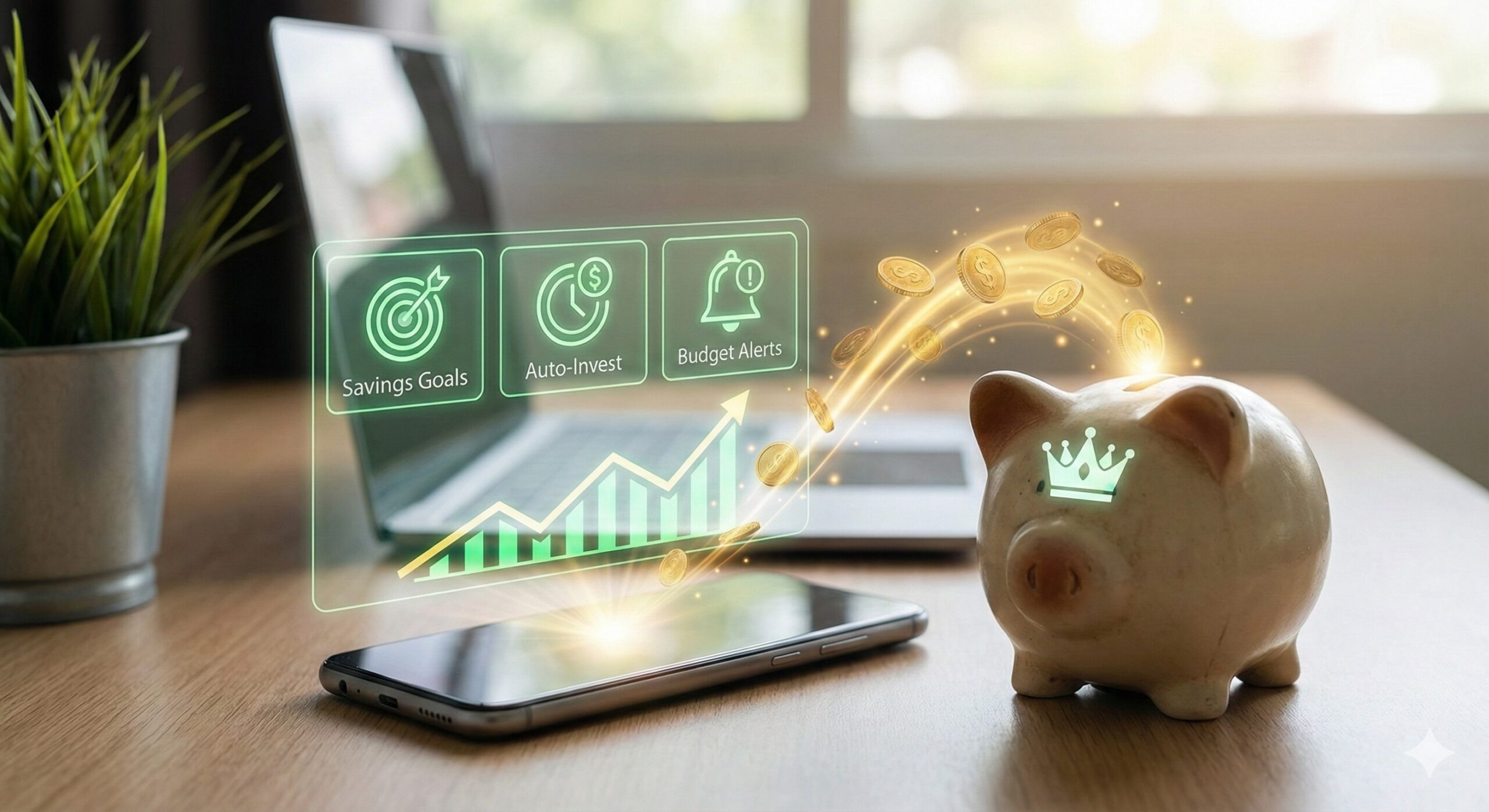
Technology can be a great ally in your personal finance journey if used correctly.
- Expense Tracking Apps: Numerous free apps allow you to log your daily expenses. By categorizing your spending, you can visually see exactly where your money goes through detailed charts and graphs.
- Bank Alerts and Limits: Set up daily and per-transaction limits on your debit and credit cards through your bank’s mobile app. This creates a powerful, automatic psychological barrier against overspending.
- Automated Transfers: Set up a standing instruction (SI) with your bank to automatically transfer a fixed amount to your savings account, Mutual Fund SIP, or Recurring Deposit (RD) on your salary day. Out of sight, out of mind.
Long-Term Saving Habits Indians Should Build
- Discipline Over Motivation: Motivation is fleeting; it helps you start a budget, but discipline is what helps you stick to it. Treat your savings as a non-negotiable monthly bill that you owe to your future self.
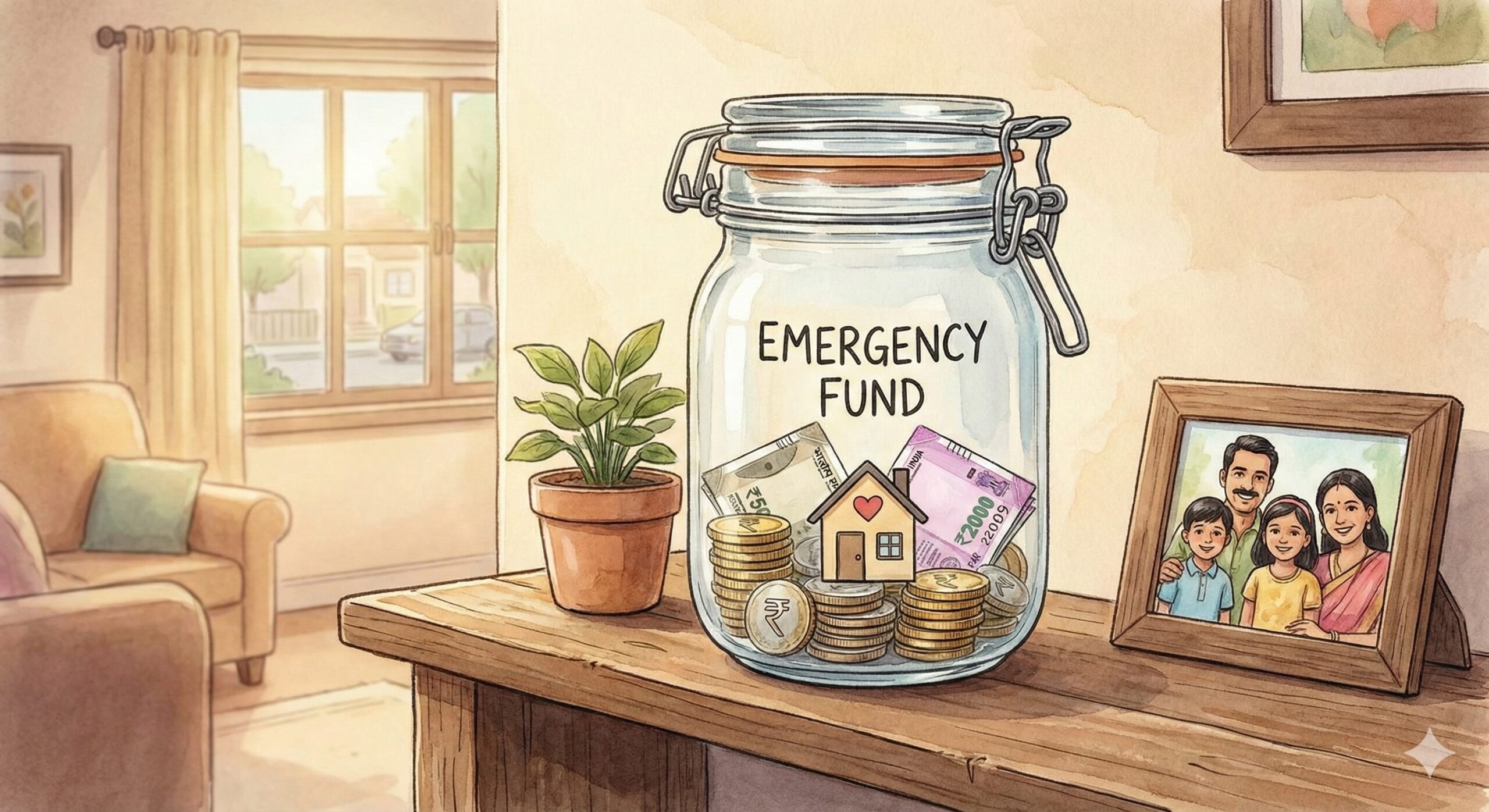
- Goal-Based Saving: Saving money without a clear purpose can lead to the funds being easily spent on random desires. Label your savings. Have a distinct “Bike Fund,” an “Emergency Fund,” and a “Retirement Fund.”
- Regular Expense Review: Sit down on the last Sunday of every month and thoroughly review your bank statements. Identify the leaks. Did you order food too often? Were there unused subscriptions that auto-renewed? Adjust your habits for the next month based on this data.
Frequently Asked Questions (FAQs)
1. How much should I save monthly in India? A general guideline is the 50/30/20 rule, which suggests saving at least 20% of your net monthly income. However, depending on your financial goals, age, and responsibilities, aiming for 30% or more is even better to combat high inflation.
2. Is budgeting necessary for low-income earners? Yes, budgeting is actually more critical for low-income earners. When resources are limited, tracking every single rupee ensures that basic survival needs are met first and helps prevent falling into high-interest debt traps.
3. Dukan ke liye loan kaise milta hai (How to get a shop loan)? Getting a shop loan involves a structured process: preparing a solid business plan, maintaining a good CIBIL score (credit history), and gathering standard documents like ITR, 6-12 months of bank statements, and business registration (Udyam). You can apply through government schemes like PM Mudra Yojana, CGTMSE, or approach private/nationalized banks for working capital or expansion loans.
4. How can families save money easily? Families can save easily by adopting bulk meal planning to reduce food waste, lowering energy consumption through smart appliance usage, consolidating telecom/OTT bills into family packs, and strictly avoiding impulse purchases at supermarkets by using a list.
5. What are common money mistakes Indians make? Common mistakes include keeping all long-term savings in a standard low-interest savings account (which loses value to inflation), borrowing heavily to fund lifestyle inflation like lavish weddings, and ignoring the absolute necessity of a dedicated, liquid emergency fund.
6. Should I use credit cards if I want to save money? Credit cards can be used safely and even save money if the entire bill is paid in full every month before the due date. They offer valuable reward points, airport lounge access, and cashback. However, if you have a habit of overspending or paying only the “minimum due” (which attracts 30-40% annual interest), it is far better to stick to debit cards.
Conclusion
Saving money in India is not just about earning a massive salary; it is about managing the money you already have with wisdom, discipline, and foresight. By understanding the real challenges of inflation and lifestyle creep, any Indian family or individual can build substantial financial security over time.
Focus on building consistent, long-term habits rather than looking for quick, unsustainable fixes. Start today by tracking your expenses, applying the 50/30/20 rule, and making smart financial decisions—whether that means cooking at home more often or understanding financial products rather than fearing them. Remember, financial stability is a marathon, not a sprint. Be patient with your progress, stay disciplined, and avoid the social pressure of matching someone else’s lifestyle.
Disclaimer: This content is for educational and informational purposes only and is not professional financial advice. Always consult with a registered financial advisor or Chartered Accountant (CA) before making major financial decisions or applying for loans. This guide is based on common financial habits and challenges faced by Indian households.