
Introduction
Saving money in India is a journey that requires immense discipline, patience, and sacrifice. Between navigating rising inflation, managing increasing household expenses, and planning for future goals like education or marriage, middle-class families work tirelessly to set aside a portion of their income. You budget carefully at the start of the month, cut down on unnecessary costs, and track every rupee to build a secure future. However, imagine the heartbreak of losing months or even years of those hard-earned savings in a split second, simply by scanning a code on your phone.
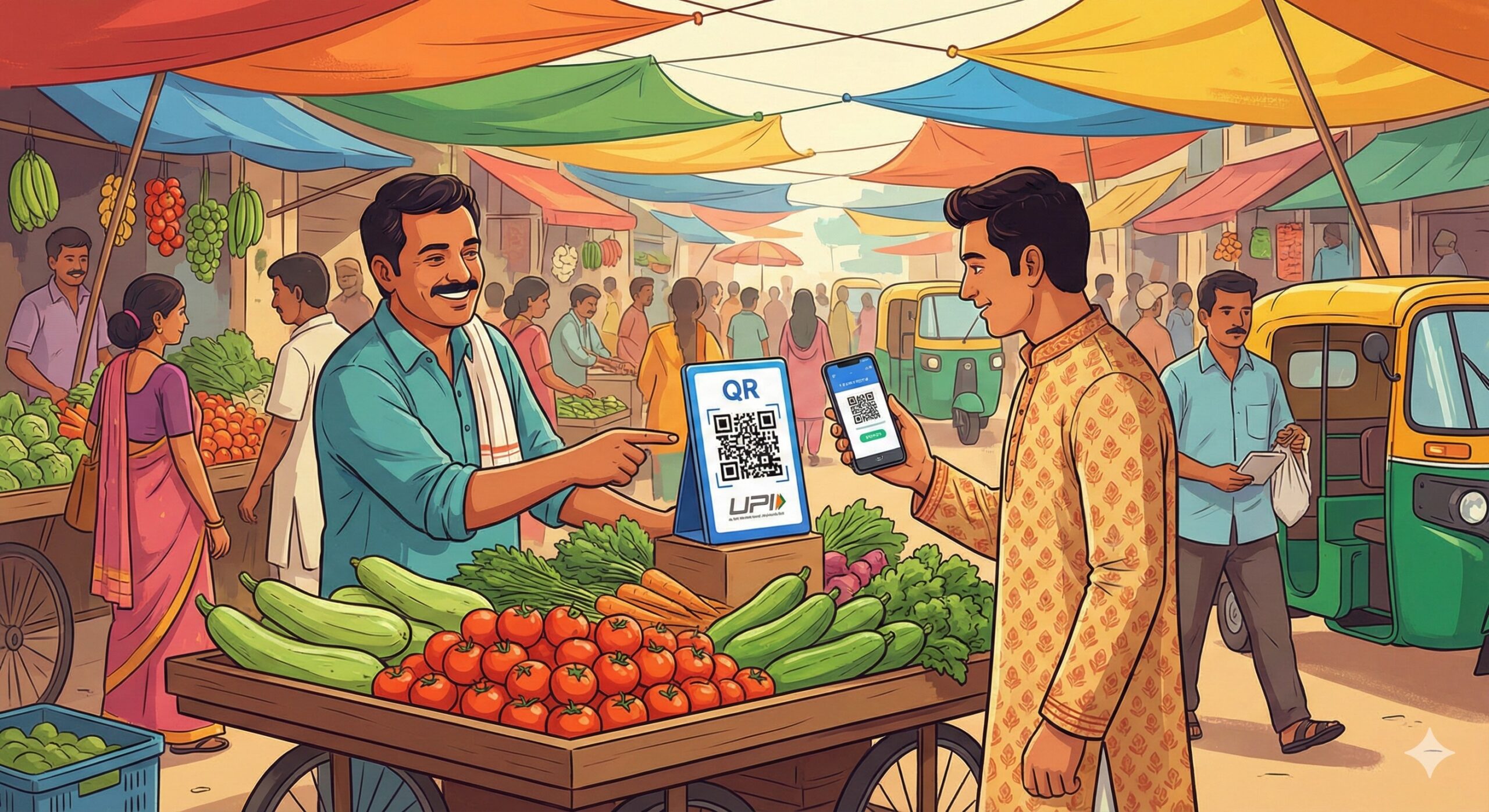
As we settle into 2026, India has solidified its position as a global leader in digital payments. From the local vegetable vendor to high-end shopping malls, UPI (Unified Payments Interface) and QR codes have largely replaced cash. While this convenience is undeniable and has revolutionized how we trade, it has also opened a digital door for sophisticated cybercriminals. Financial literacy today is no longer just about budgeting; it is about digital defense.
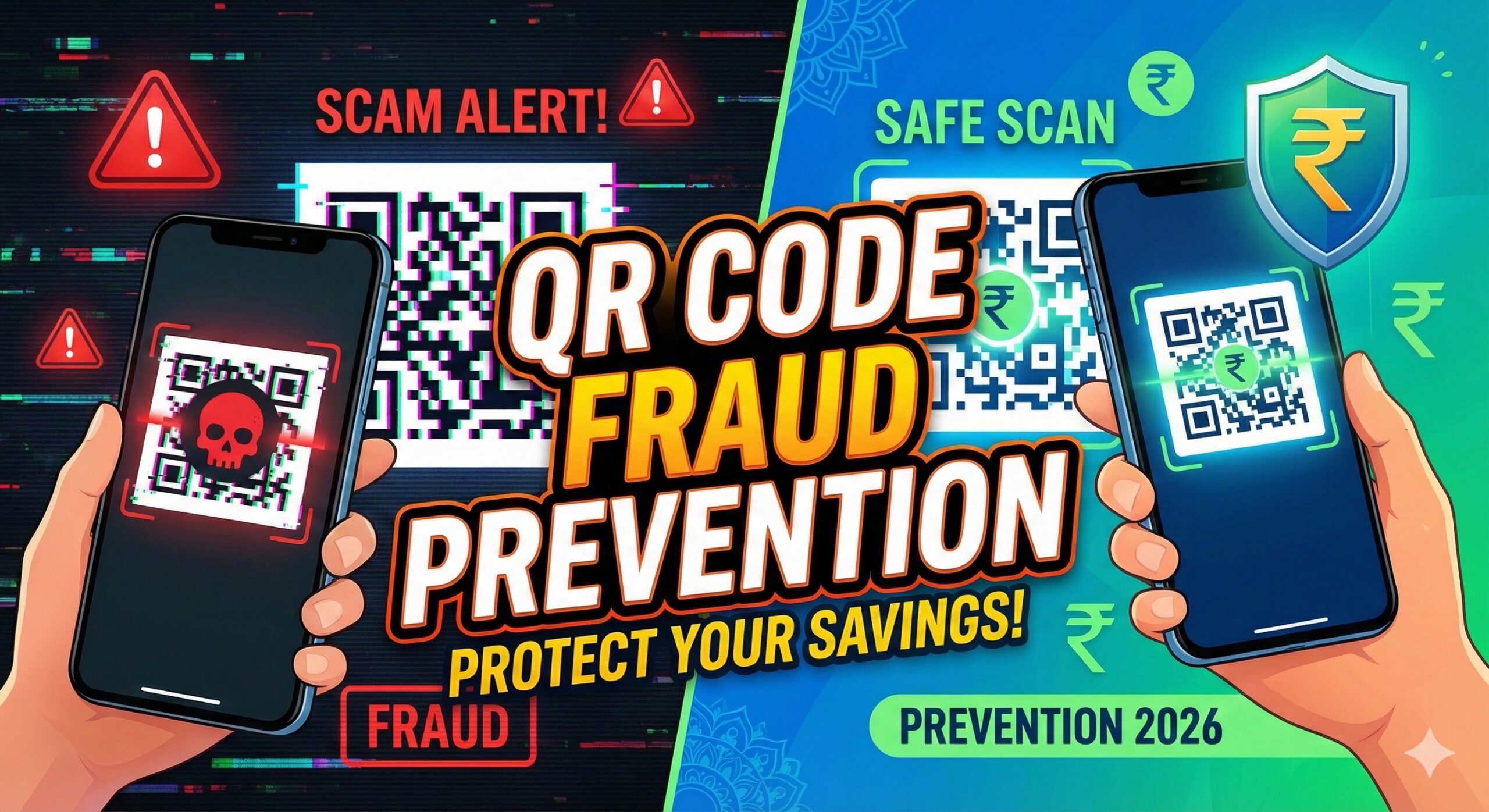
This guide is firmly based on the common financial habits and technological challenges faced by Indian households. We will move beyond basic advice and dive deep into QR code fraud prevention 2026, helping you understand exactly how these scams operate and, more importantly, how to protect your family’s financial future. Remember, a penny saved is only useful if it stays safe in your account.
Table of Contents
The Reality of Digital Payment Risks in India
For the average Indian saver, the threat of digital fraud is now as dangerous to their wealth as market inflation. We often focus intently on saving ₹500 on monthly groceries or negotiating ₹1,000 off an electricity bill, yet we may overlook the massive security vulnerabilities sitting in our pockets—our smartphones.
Why Security is Part of Saving Financial health operates on a two-pillar system: Accumulation (Saving) and Preservation (Security). You can master the art of monthly budgeting and investment, but if your digital hygiene is poor, your emergency fund is constantly at risk. One wrong click or scan can wipe out the “rainy day” fund you have been building for years.
The Current Landscape in 2026 With the rapid and deep adoption of digital payments in Tier-2 and Tier-3 cities, scammers have shifted their focus. They have moved away from complex technical hacking and are now using “social engineering.” They target salaried employees looking for side income, students selling old textbooks online, and homemakers managing daily household expenses. They exploit your trust, your helpful nature, and your lack of technical knowledge rather than trying to break into bank servers directly.
Understanding How QR Code Scams Work
To practice effective QR code fraud prevention 2026, you must first understand the mechanics of the scam. A QR (Quick Response) code is essentially a machine-readable label—like a barcode—that contains information, usually a website URL or payment instructions.
The “Money Mule” Technique A very common tactic involves fraudsters claiming they want to send you money. They might pose as a buyer for an old sofa you listed on OLX or Quikr, or they might pretend to be a customer support agent refunding a wrong transaction. They send a QR code via WhatsApp or email and instruct you to scan it to “receive” the funds instantly.
The Technical Trap Here is the technical reality that scammers hide from you:
- When you scan a legitimate merchant QR code at a shop, your app interprets it as: “Pay X amount to Merchant Y.”
- When you scan a fraudulent QR code sent by a scammer, they have embedded a specific command that says: “Authorize a withdrawal of X amount from your account.”
If you follow their instructions and enter your UPI PIN after scanning, you are digitally signing a check to pay them. The technology is doing exactly what it was designed to do—transfer money. The deception lies entirely in the human interaction, making you believe you are receiving money when you are actually sending it.
The Golden Rule: Scan vs. Receive
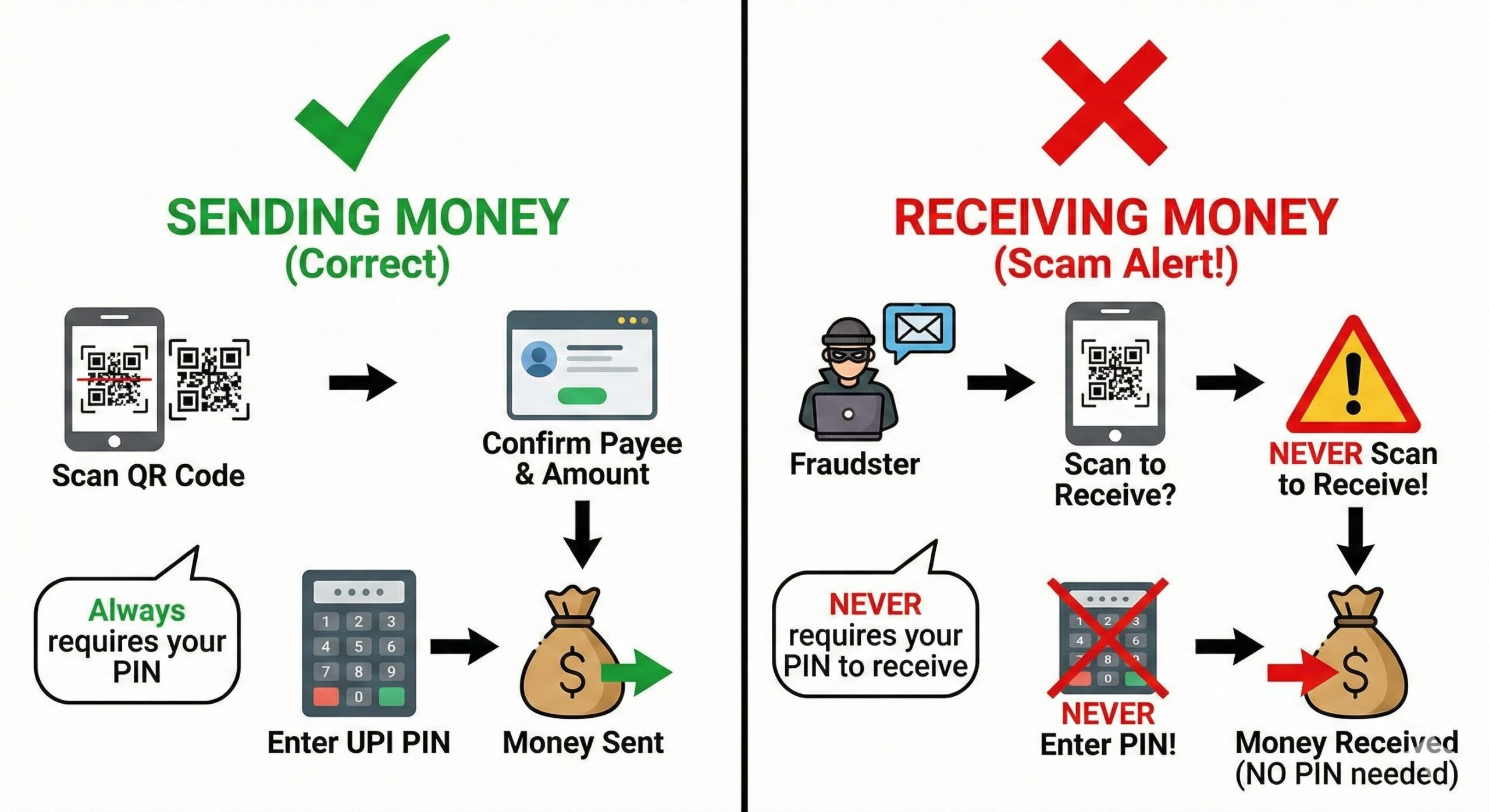
If you take away only one lesson from this entire article, let it be this section. This rule is the cornerstone of QR code fraud prevention 2026 and will stop 99% of frauds immediately.
You Never Scan to Receive There is zero technical reason to scan a QR code to receive money into your bank account. The banking protocol does not work that way.
- To SEND Money: You must scan a code, confirm the name, and enter your UPI PIN.
- To RECEIVE Money: You only need to share your phone number, your UPI ID (VPA), or show your QR code to the payer. You do not need to scan their code, and you certainly do not need to enter your PIN.
The “Cashback” Lure A common variation of this scam involves a message stating you have won a “Cashback Reward” or a “Scratch Card” from a popular payment app like GPay or PhonePe. The message asks you to scan a code to claim the reward. In the excitement of getting “free money,” many students and young earners lower their guard. Please remember: legitimate rewards are credited directly to your wallet or bank account; they never require an outbound authorization via a QR scan.
Common Types of QR Frauds Targeting Indians
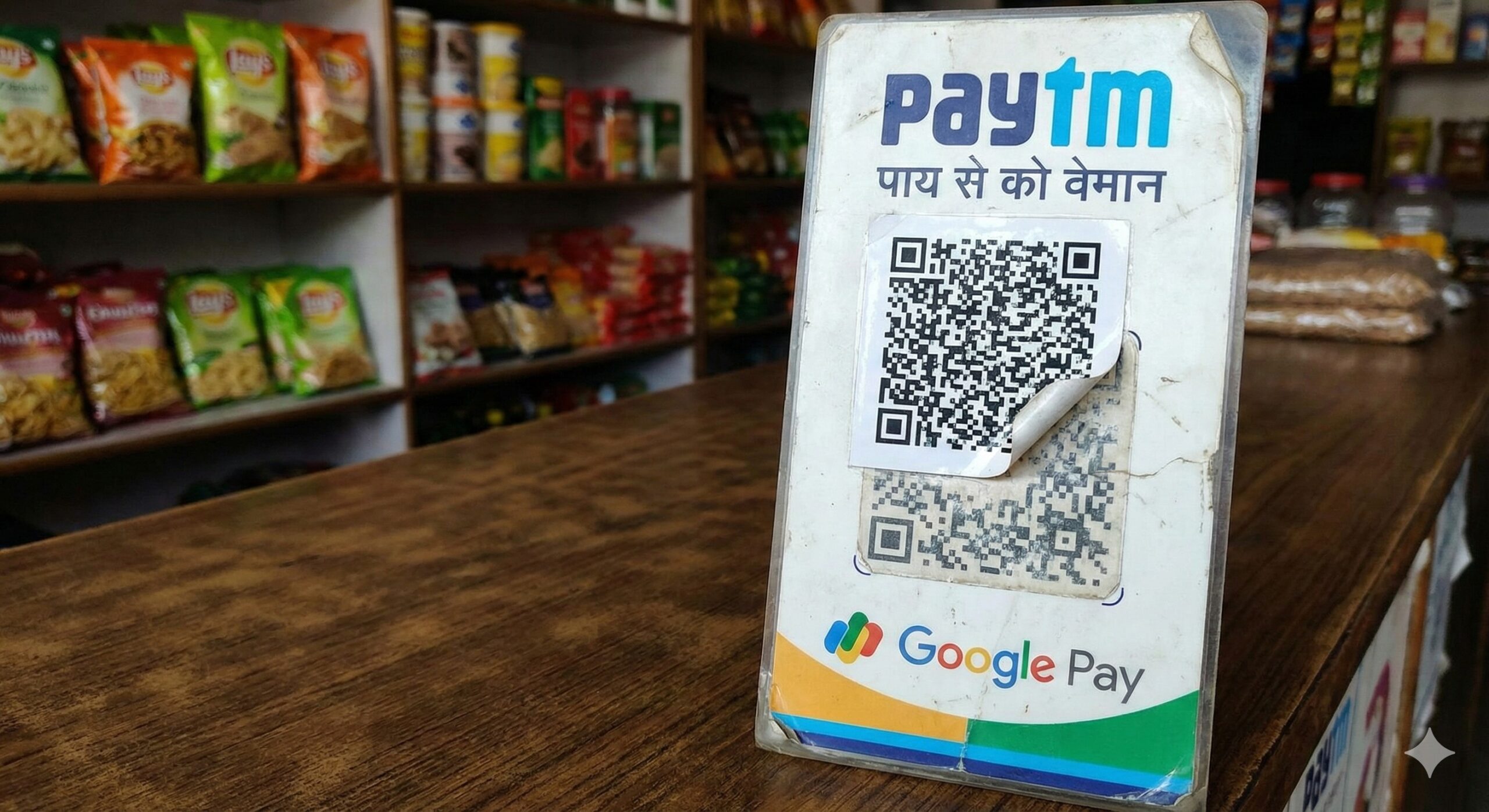
Scammers are constantly evolving their methods to bypass our suspicions. Here are the specific scenarios prevalent in 2026 that you must be aware of:
1. The “Marketplace” Scam You list an old item, like a study table or bicycle, for sale on an online marketplace. A “buyer” calls immediately, agrees to your asking price without any negotiation, and insists on paying via QR code because they are “out of town” or “serving in the army” and cannot pay cash. They send a QR code labeled “Receive Payment: ₹5,000.” This is always a trap.
2. The Fake Parking/Challan Code In metro cities and busy markets, scammers have started physically pasting fake QR stickers over legitimate parking payment codes or traffic challan notices. When you scan to pay a small parking fee of ₹20, you are redirected to a phishing website that steals your banking credentials or tricks you into authorizing a much larger deduction.
3. The Electricity Bill Threat You receive a panic-inducing SMS or WhatsApp message: “Your electricity will be disconnected tonight due to unpaid dues. Pay immediately to avoid blackout.” A QR code is provided for “instant settlement.” Fear drives people to scan and pay without verifying if the message is actually from the electricity board.
4. QRLjacking (Session Hijacking) This is a more advanced technical threat. Attackers create a fake login page that looks exactly like a popular service (e.g., WhatsApp Web or a banking portal) but displays a malicious QR code. Scanning it does not log you in; instead, it grants the attacker access to your account session, allowing them to steal your data or contacts.
Step-by-Step Guide to Verify Authenticity
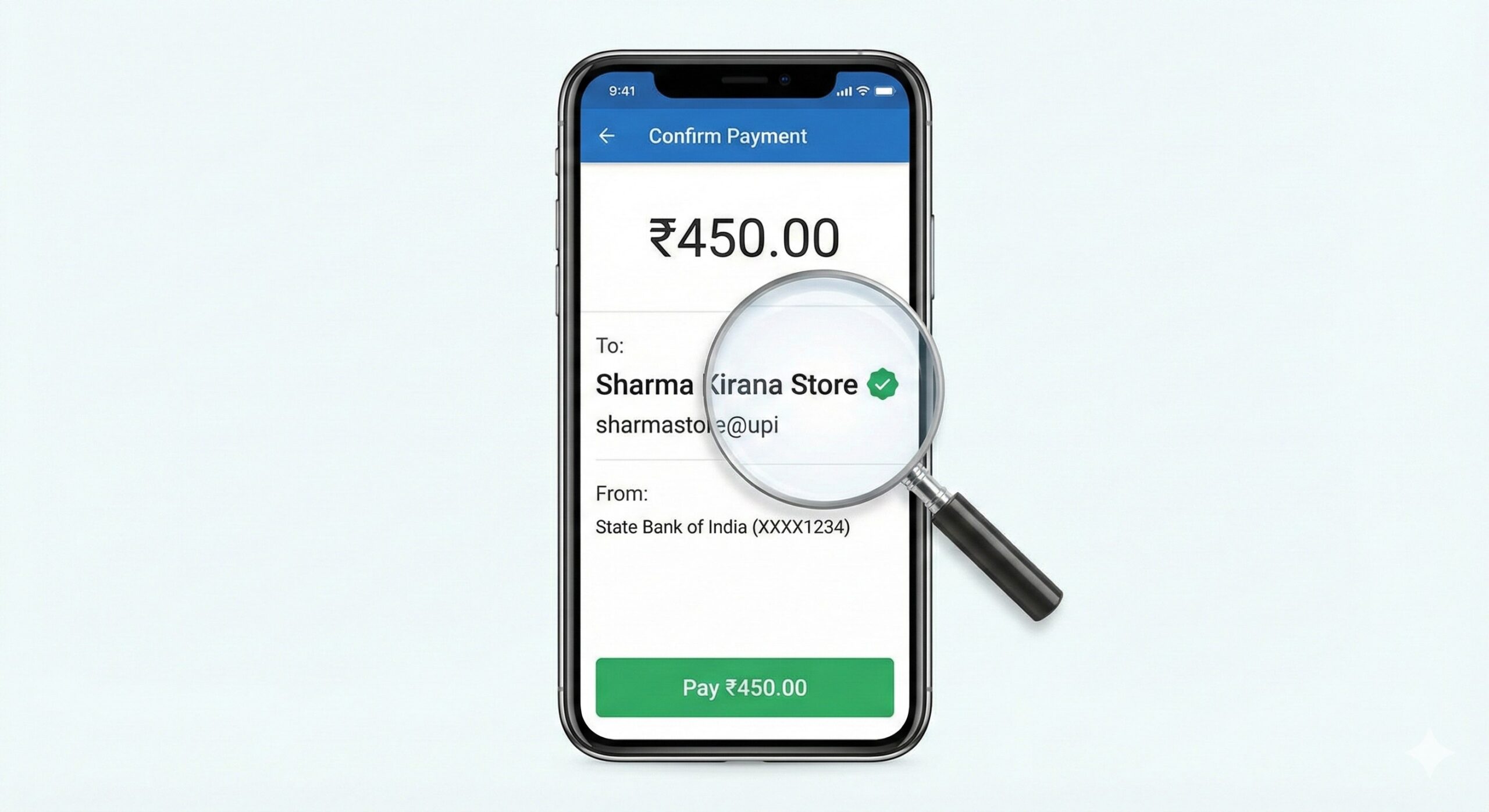
Before you point your camera at any black-and-white square, follow this detailed verification checklist to ensure your savings remain safe.
Step 1: The Physical “Touch Test” If you are at a physical shop, petrol pump, or vegetable stall, reach out and touch the QR code standee. Physically run your finger over the code. If you feel a bump, or if you see that a sticker has been pasted over the original printed code, be very suspicious. This is a common tactic called “overlaying.”
Step 2: Validate the VPA (UPI ID) When you scan a code, your payment app (GPay, PhonePe, Paytm, BHIM) will display the verified name of the receiver on the top of the screen.
- Legitimate: You will see a specific name like “Rohan Kirana Store” or a verified business handle like “xyzagency@sbi”.
- Suspicious: You might see a personal name when you expect a business, or random strings of letters like “user1234@upi”. If the name doesn’t match the shop, ask the shopkeeper before paying.
Step 3: Look for the Secure URL If a QR code opens a website in your browser, check the URL bar carefully.
- Does the address start with
https://(indicating a secure connection)? - Is the domain name spelled correctly? Scammers use look-alike domains (e.g.,
bankofindia-payment.cominstead ofbankofindia.co.in). - Does your browser show a security warning? Never ignore these warnings.
Step 4: The Small Amount Test If you are paying a large amount to a new merchant or an individual you don’t know well, send ₹1 first. Call them or ask them to confirm they received the ₹1 before you send the remaining balance. This minimizes your financial loss if the code turns out to be incorrect or fraudulent.
Smart Habits for Safe UPI Transactions
Prevention is always better than cure. Integrating these habits into your daily financial routine can act as a shield against fraud.
Disable “Auto-Download” in Messaging Apps Fraudsters often send malicious QR codes as image files. If your WhatsApp or Telegram is set to “Auto-Download Media,” these images are saved to your gallery automatically. You might accidentally click on them later. Go to your settings and turn this feature off.
Use a Secondary Bank Account Consider a “firewall” strategy for your money. Keep your primary savings (your life savings) in a bank account that is not linked to any UPI app. Link a secondary account with a limited balance (e.g., ₹5,000) for daily expenses like vegetables and auto fares. If this secondary account is compromised, your main savings remain untouched.
Regularly Change Your UPI PIN Just like your email password, your UPI PIN should be changed every 3 to 6 months. Avoid using obvious PINs like 1234, 0000, or your birth year, which are easy for thieves to guess if they steal your phone.
Enable Transaction Limits Most banking apps allow you to set a daily limit for UPI transactions. Set this to a reasonable amount that fits your lifestyle (e.g., ₹5,000 or ₹10,000). If a fraudster tries to drain your account, this limit will block the transaction.
Digital Tools and Security Features (Neutral)
Technology can be your ally in QR code fraud prevention 2026.
QR Scanner with Safety Checks Many modern antivirus apps for Android and iOS include a “Secure QR Scanner” feature. Instead of using your standard camera, use these tools. They scan the code and check the underlying link against a massive database of known malicious sites before allowing the link to open.
Bank Alerts (SMS and Email) Ensure that SMS and email alerts are active for every transaction, no matter how small. Immediate notification is crucial. If money is deducted without your authorization, that SMS is your first warning sign.
App Locks Lock your payment apps (GPay, Paytm, etc.) with a separate fingerprint or pattern lock that is different from your phone’s main unlock code. This adds a second layer of defense. Even if someone snatches your unlocked phone while you are using it, they cannot open your banking app without the second fingerprint.
What to Do If You Are Scammed (Immediate Steps)
Despite all precautions, mistakes can happen. If you realize you have been defrauded, speed is your best defense. Do not panic; act immediately.
- The Golden Hour: The first hour after the fraud occurs is known as the “Golden Hour.” Reporting within this timeframe gives authorities the best chance to freeze the money.
- Call 1930: This is the National Cyber Crime Reporting Helpline in India. Dial this number immediately to report the transaction. They can often coordinate with banks to freeze the funds in the recipient’s account before they are withdrawn.
- Contact Your Bank: Call your bank’s official customer care number (find this on the back of your debit card, not by searching on Google, as scammers post fake helpline numbers there too). Ask them to block your UPI ID and freeze your account temporarily.
- File a Formal Complaint: Visit
cybercrime.gov.inand file a formal complaint. You will need to provide transaction details and screenshots of the chat or QR code.
Know more : UPI Payment Safety for Shops 2026 & Smart Budgeting Guide for Indian Families
FAQ Section
Q: Can I get a refund if I accidentally scan a fake QR code and lose money? A: It is difficult but possible if you act extremely fast. If you report the incident to 1930 or your bank within the “Golden Hour,” authorities may be able to freeze the money. However, because you technically authorized the transaction by entering your PIN, banks may classify it as user negligence, making a refund harder to claim.
Q: Is it safe to use QR codes for electricity or water bill payments? A: Yes, but you must verify the source. It is much safer to pay bills directly through the “Bill Pay” section inside your trusted banking app (like GPay, PhonePe, or your Bank’s official app) rather than scanning a QR code sent to you via SMS, WhatsApp, or Email.
Q: Why do scammers insist I enter my PIN to receive money? A: This is the core lie of the scam. They rely on your lack of technical knowledge. The UPI protocol never asks for a PIN to receive funds. If a screen asks for a PIN, it means money is leaving your account, not entering it.
Q: How can students avoid QR scams while selling books or notes online? A: Students are common targets. When selling items online, insist on cash or direct bank transfers using only your mobile number. Never agree to scan a code to “verify” your bank account for a buyer.
Q: Are dynamic QR codes safer than the static stickers I see at shops? A: Generally, yes. Dynamic QR codes (which are generated on a POS machine screen for a specific amount) are safer than static paper stickers because they cannot be physically tampered with or pasted over by a fraudster.
Q: What is the one primary keyword I should remember for safety? A: “Verification.” Verify the merchant’s name, verify the amount, and verify the source of the code before you ever touch your PIN.
Conclusion
In the journey of personal finance, protecting your money is just as important as earning it. We often spend hours researching the best mutual funds, calculating our budgets, or looking for discounts, yet we often rush through digital payments without a second thought. QR code fraud prevention 2026 is not about abandoning technology or living in fear; it is about using these powerful tools with awareness and caution.
By understanding the fundamental rule that you never scan to receive money, by verifying merchant details before every transaction, and by keeping your primary life savings delinked from daily UPI apps, you can build a fortress around your finances. Do not let fear dictate your financial life, but let caution be your constant guide.
Consistency in digital hygiene will ensure that your savings remain yours, helping you achieve the financial goals you have dreamed of for your family.
Important Disclaimer: The information provided in this article, including all digital security tips and QR code fraud prevention 2026 strategies, is for educational and informational purposes only. It does not constitute professional financial, legal, or cybersecurity advice. While we strive to provide the most accurate and up-to-date information as of 2026, cyber threats are constantly evolving.