
Introduction
The experience of handling finances in India is an interesting one. We are part of a saving culture, with our grandparents hiding cash in steel almirahs and jars of rice in preparation for a rainy day. We are also part of a rapidly evolving modern Indian middle-class family. Due to quality education becoming increasingly expensive, health care costs continuing to rise, and inflation becoming an everyday occurrence, saving money at the end of the month is often compared to trying to hold water in your hands. Grocery bills, utility bills, and bills that contribute to your lifestyle all contribute to depleting your salary account.
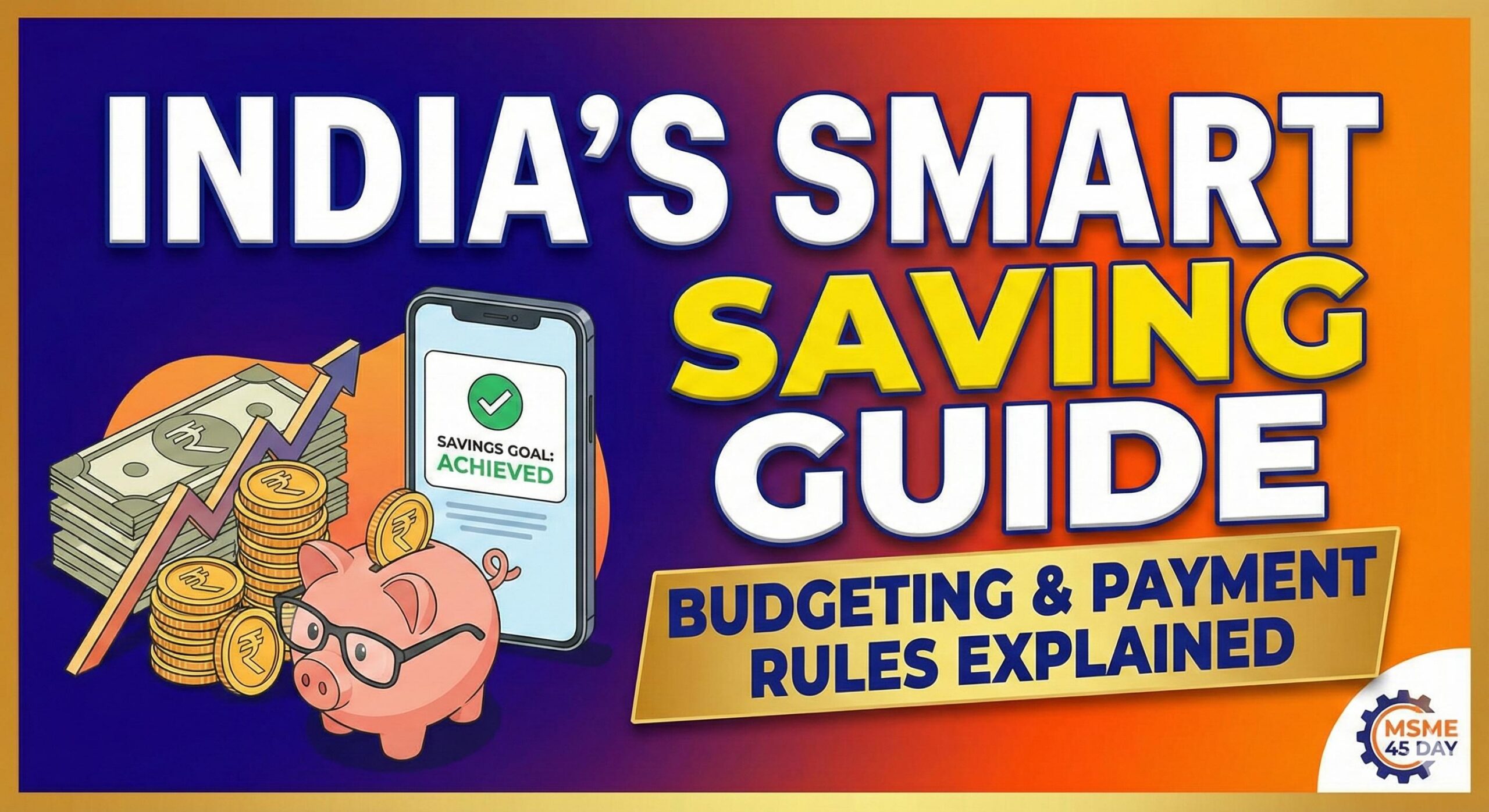
However, rest that your mind does not require a large salary to attain.It is completely dependent on how you manage and control what you earn. Whether you are a salaried employee adjusting to corporate life, or a small business owner managing unpredictable cash cycles influenced by regulations like the MSME payment 45 day rule, financial pressure can be eliminated by creating a strong monthly budget. In a household, when cash flow is unpredictable, the household can still run smoothly when a strong cash flow is present.
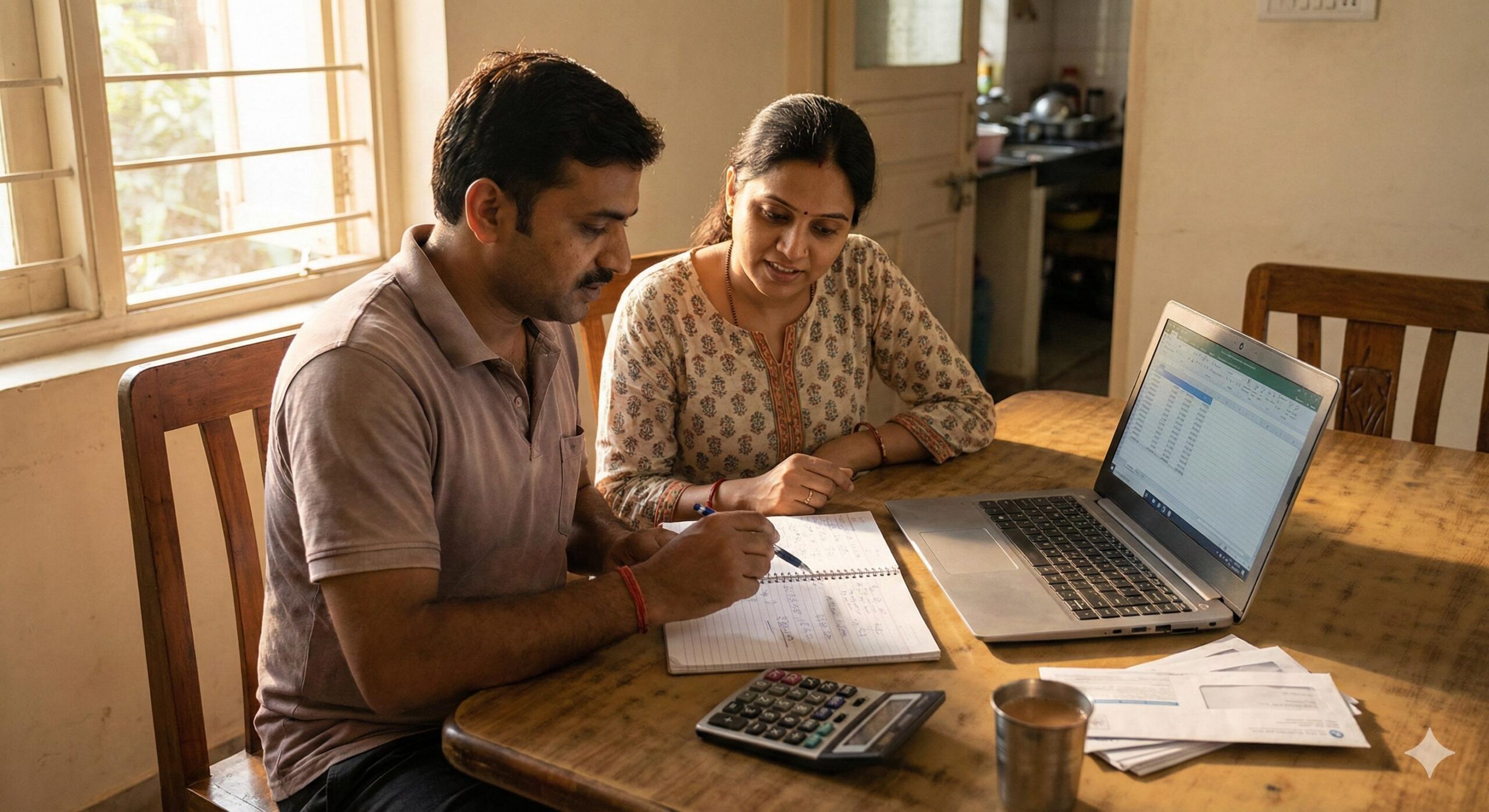
This guide is meant for families from India, salaried professionals, and students. We will explain why savings is important, how money is lost, and how budgeting becomes simple and non stressful and how it will help you to become financially secure.
Table of Contents
Why Saving Money Is Important in India
Building long-term discipline starts with understanding the “why” of your financial behavior. In India, belonging financially also relates to the family, along with social obligations.
Creating a Financial Shock Absorber Life is full of surprises. An unforeseen medical situation could mean years of work gone, especially in India where the middle class is yet to adopt comprehensive health insurance. An emergency fund, i.e. your financial shock absorber, should be easy to access, liquid deposit, or a simple savings account, but ideally should cover six months of compulsory expenses. This way, a medical emergency or a home repair doesn’t mean resorting to expensive personal loans.
Generational Gaps Family systems in India are collaborative. Sharing of financial responsibilities across generations is common, be it funding a child’s education or supporting the grandparents. Saving is the only way to carry these family responsibilities while maintaining your financial integrity.Managing Income Fluctuations and Job Security The job economy is always changing, and layoffs and pay cuts happen suddenly.
Additionally, for owners of micro, small, and medium enterprises (MSMEs) as well as the millions of people that work for them, cash flow is extremely unpredictable. Government initiatives, such as the MSME payment 45 day rule (which states that small businesses are to be paid by their buyers within 45 days), attempt to level out the cash flow of businesses, but there will always be transitional phases. A personal financial cushion guarantees that your household kitchen will keep running and school fees will get paid, whatever the situation is in the economy.
Achieving Independent Future Goals Saving without discipline, the goals of owning a home, buying a family car, or having a comfortable retirement will remain unattainable. Saving with a purpose makes your dreams and goals actionable and it makes it possible to achieve them.
Common Reasons Indians Fail to Save Money
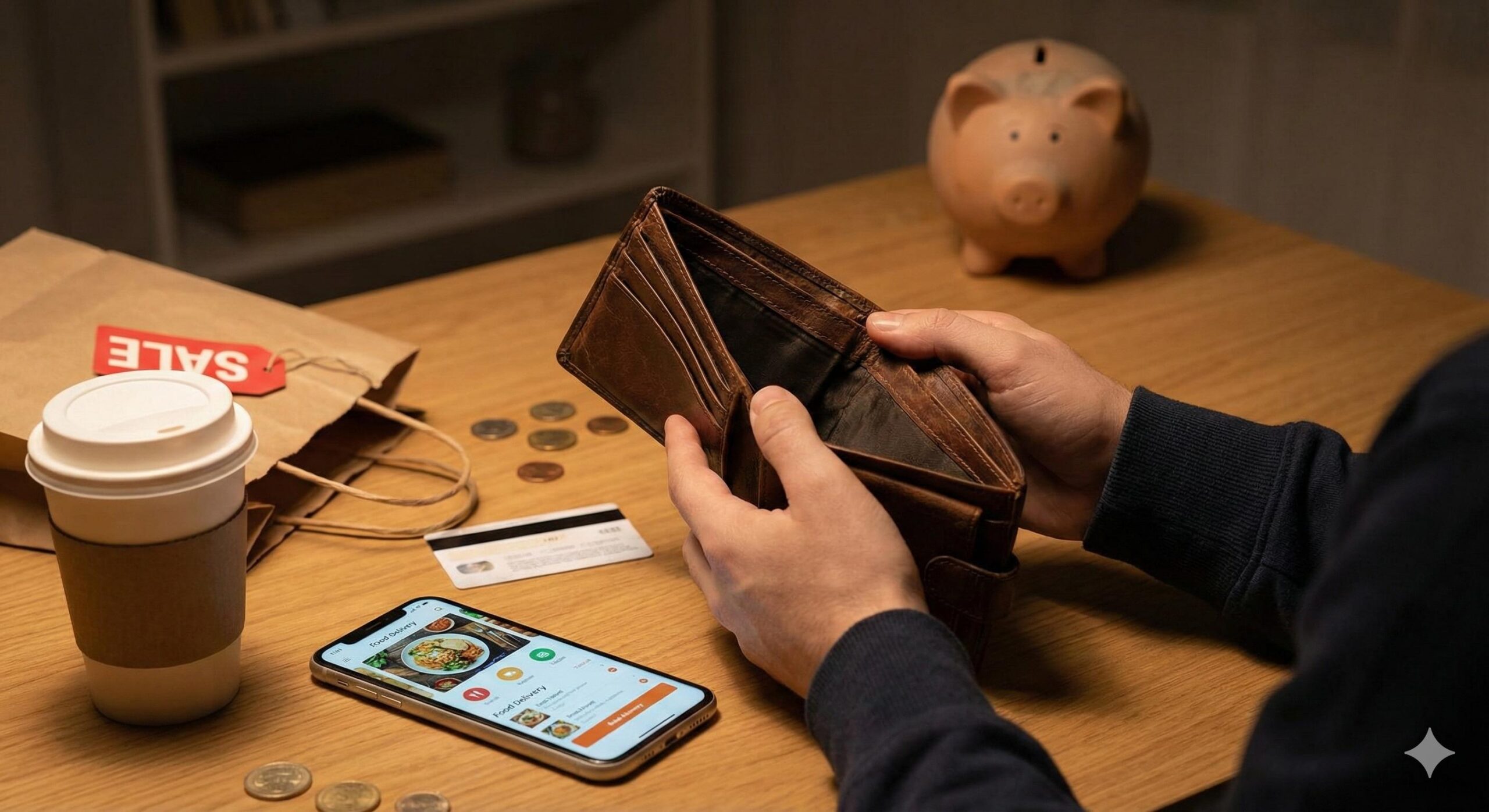
Many well-intentioned earners find their bank accounts completely empty by the 25th of the month. To fix the leak, you first need to know where the holes are.
Not Having A Written Budget Savings are lost due to mental math. When there is no job assigned to every rupee, money will slip away. Untracked expenditures on daily snacks or little conveniences will amount to thousands at the end of the month, and subscription renewals will also fall into the trap.
The Instant Gratification Trap We live in a time of great convenience, and extreme access to goods fuels the impulse buy. With the click of a button, a new meal, shirt and gadget are ordered, and delivery is right at your door. Coupled with emerging ecommerce sales, holiday season discounts and targeted ads, impulse buys are a reality. Gross monthly savings are impacted by the purchase of unneeded items, or by discount buys.
Debt Normalization Deceptively making consumers pay over time is a significant issue facing the contemporary Indian buyer. For example, a flagship smartphone, a high-end gadget, or a trip abroad is made easy by “Buy Now, Pay Later” schemes or financing that offers “No-Cost” EMIs. When a significant part of your future monthly salary is already pledged to pay for previous purchases, your present saving ability is highly compromised. This is the danger of Over EMIs. It is a trap where one is continually living off the monthly salary.
Invisible expenses of lifestyle inflation/psychological lifestyle When salary increments occur or new, higher-paying roles are assumed, spending almost always increases correspondingly. Any additional income is quickly consumed by upgrading to a higher class of car, more expensive restaurants, or renting more costly residences. This creates a scenario where, even though one is earning a lot more than five years ago, the snapshot of a bank account shows a dismal figure.
Step-by-Step Monthly Budgeting Method
Budgeting is simple enough for a household to do without needing high level math skills or complex spreadsheets. For Indian households, a simple and practical approach is the most effective.
Step One: Understand Your Actual, Net Income To start, find out the exact \”in-hand\” monthly income. For employees, the monthly salary is after certain deductions like Provident Fund (EPF), Tax Deducted at Source (TDS), and professional taxes. Do not include expected Diwali bonuses or incentives in your main budget “badges”. Consider them as additional savings when they come.
Step Two: Separate Fixed and Variable Expenses Categorize your monthly outflows to understand what you can control.
- Fixed Expenses: These are expenses that must be paid, and, more often than not, are paid without consideration and cannot be avoided. These expenses include rent and mortgage payments, insurance payments (health and life), school expenses of children, and maintenance fees of societies (housing communities).
- Variable Expenses: These can be optional and can be chosen to be skipped or avoided. These expenses include groceries, utilities, dinning (can include fast food, or be a more formal sit down), fuel, activities for which a ticket must be bought, and these can be deemed a monetary counterbalance (cost) for a more sustainable (or inwardly, personally fulfilling) outgo. These are the types of expenses that can be more easily be reduced/ trimmed/ minimized.
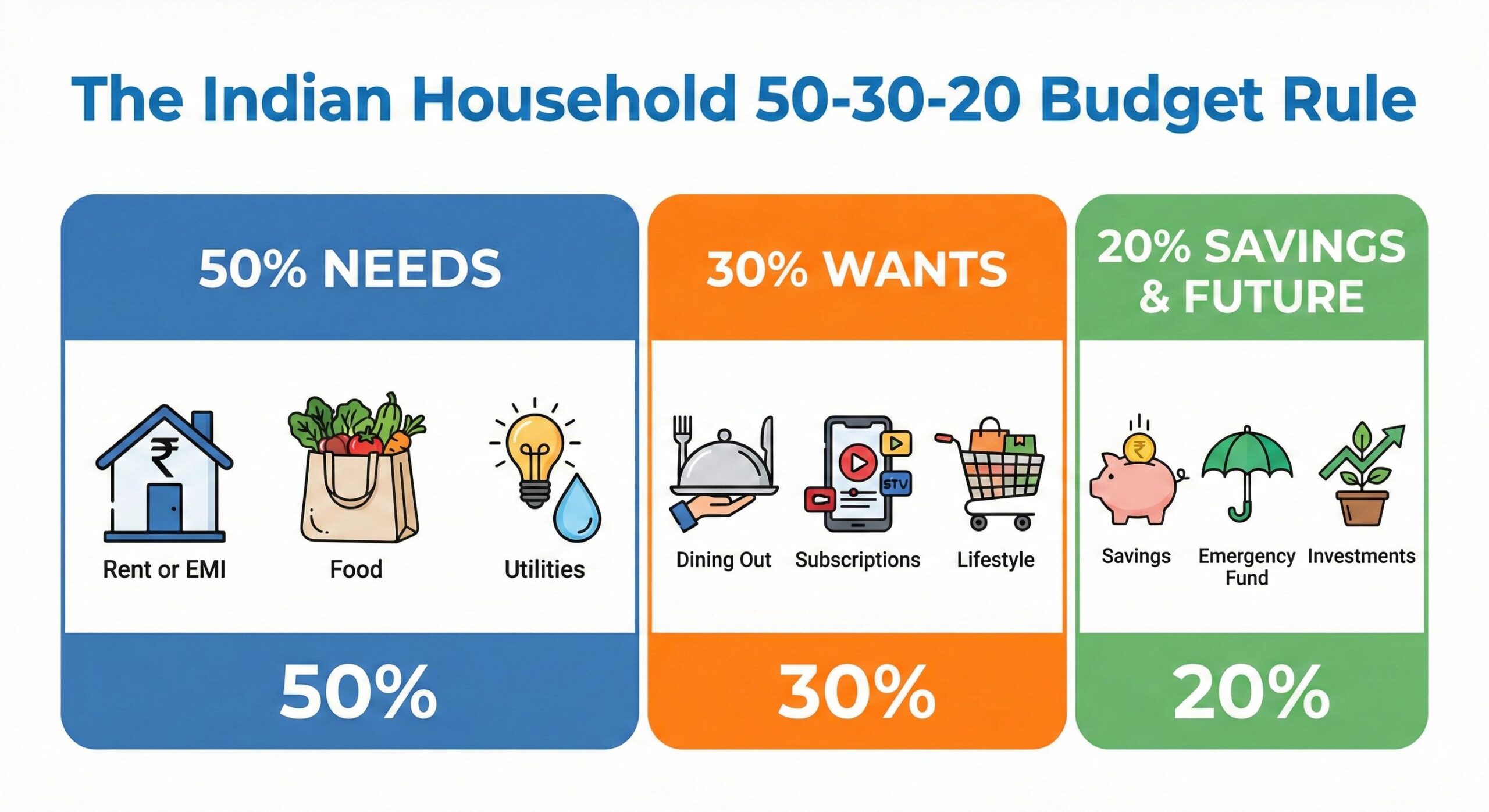
Step Three: Apply the 50-30-20 Rule This is a universally respected framework that is highly effective for Indian earners.
- 50% for Needs: Half of your income should cover your absolute survival necessities—rent, basic groceries, utilities, and crucial EMIs.
- 30% for Wants: This portion is for your lifestyle—dining out, OTT subscriptions, shopping, and hobbies.
- 20% for Savings: This is non-negotiable. Before you pay for your wants, you must pay your future self.
A Practical Indian Example: Consider a salaried professional earning an in-hand salary of ₹60,000 per month.
- Needs (₹30,000): Covers rent (₹15,000), groceries and milk (₹8,000), electricity/internet/transport (₹7,000).
- Wants (₹18,000): Covers weekend outings, ordering food online, minor shopping, and personal grooming.
- Savings (₹12,000): This amount is immediately transferred to a separate bank account or a Recurring Deposit (RD) on salary day.
By strictly following this, the individual secures ₹1,44,000 in savings annually, purely through basic discipline.
Smart Money Saving Tips for Indian Households
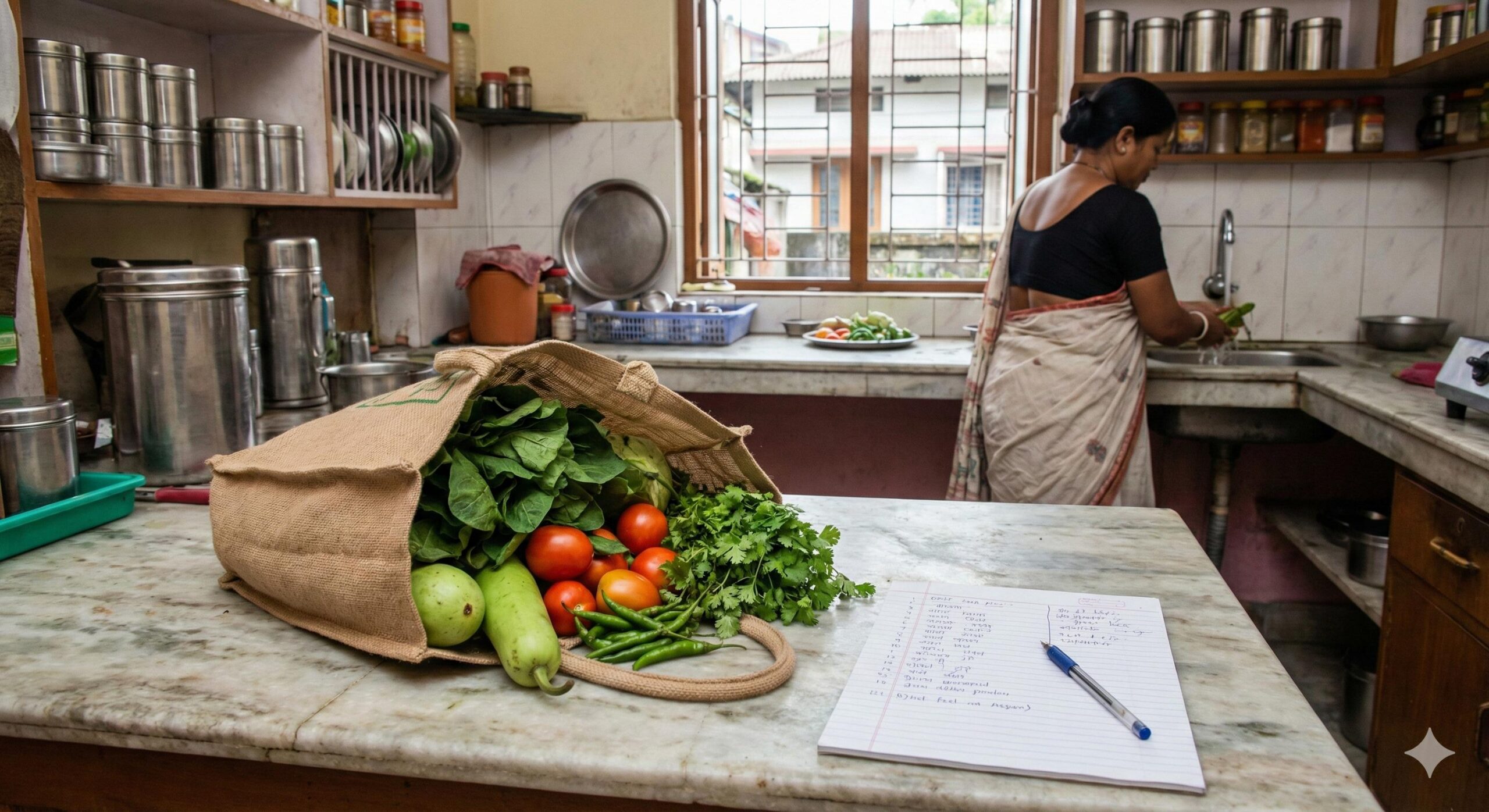
With small changes in your day-to-day life, you can save a decent amount of money by the end of the year.
Save Money on Kitchen and Grocery Bills Meal planning saves money in the Indian family budget because groceries are very expensive, and familes can prepare meals from the ingredients that are purchased. For instance, buy raw ingredients in bulk, including rice, wheat, lentils, dal, and spices from wholesale markets and open your local kirana shops. Quick-commerce apps are expensive, and the packaged products are overpriced. Always shop with a list. It lowers the chance of you spending money at the supermarket.
Save Money on Bill if You Save Energy. Energy savings can be seen as savings in your bank account. Change all your lights, and appliances to 5 star rated, and energy saving ones. In the Indian summer, running your air conditioner at a steady 24 to 26 degrees, is better than running it at 18 degrees, because it uses less electricity. If you are not using a television, or computer, turn off the main switch because that reduces electricity used in standby mode.
Simplifying Digital Subscriptions Look at how your family uses telecommunications and entertainment services. It is usual for a family of 4 to have 4 costly postpaid mobile plans, a fast home internet service, and several streaming services. Consider moving family members to cheaper prepaid plans, especially if they are on home or office Wi-Fi a lot. Rather than purchasing individual streaming subscriptions, share the subscriptions with family members.
Adjusting Commute and Food Patterns Limit the use of food delivery apps to one time every weekend. If you pack your lunch and eat at the corporate cafeteria, you can save between ₹2,000 and ₹4,000 a month. Taking the metro or bus, or doing a colleague carpool can save a lot on fuel and parking.
Saving Money for Students & Young Earners

Getting started early with your money management makes your life a lot easier. It’s all about building the right habits.
Understanding Where Pocket Money Goes “College students” is the category that defines handling pocket money the best. Pocket money is divided up into various categories. It could be transport, food, stationary or even savings. Pocket money savings targets of about 10-15% are good targets. This cultivates the habit of saving, which is a very good habit to have when you get your first proper job.
Spending and saving habits also keep money management easy in the long run. Young professionals are often excited to get their first couple of paychecks. This is often followed by impulse spending that can be seen in the form of spending on high end clothing and tech. It’s good to celebration financial independence, but keeping an eye on spending from the very start is critical. The earlier the budget is established, the easier it is to manage the money. This is why money management in your twenties is immensely easier than it is in your thirties.
Avoiding Debt Traps The most important thing for young earners is to stay away from high-interest debt. Do not get stuck in the trap of paying the “minimum due” on credit cards. If you want a new laptop or a motorbike, wait, save for it over a few months instead of paying for it with costly personal loans. Adjust your standard of living to be well below your income.
Smart Money Saving Tips for Indian Families & Business WhatsApp for Shop Owners Guide (2026)
Digital Tools That Help Save Money
When used appropriately, technology can be a helpful ally in your personal finance journey. If your focus is on tracking the finances you have, rather than tracking the finances you have to spend, then technology can be an ally.
Tracking your daily expenses gives you daily exposure to your cash flow, and many app stores have expense tracker apps that cost you nothing for the exposure. There are even free apps that help expense tracking exposure to daily cash flow and help in the expense tracking. At the end of the month, many of these apps create a pie chart to help visualize cash flow. If you are spending too much on dining or retail, these apps help expose that fact.
Modern apps that track spending separately by category help expose those spending habits. Most Indian banking apps are modern in that they automatically categorize your UPI payments and debit card transactions. You can view those expenses categorized as food, travel, or utilities. These spend analytics are available at the end of the month and are a true reflection of your spending habits.
To streamline your savings and spending, automating your bank alerts and establishing auto-debit transactions is a great strategy. For savings, you should set up an auto-debit service that transfers a portion of your salary to a savings account or a recurring deposit account. Do this for the 2nd and 3rd of every month, right after salary is credited to your account. For spending, set up transaction alerts via SMS and email to help you monitor your spending.
Long-Term Saving Habits Indians Should Build

Your budgeting needs to be more than a weekend job; it needs to be a complete lifestyle change.
You are Paying Yourself First. This is the top rule of personal finance. Most people earn money, then spend it all, and finally save what is left. The successful ones do the opposite. They save first, and spend what is left after. Think of your saving as the most important EMI you have, and make a contribution to your savings first.
Naming Your Savings If your savings goal is to save generally, it will be vague and will never be rewarding. Just like your goals in life are specific, so should your savings goals. Instead of just “savings account”, open a “House Downpayment Fund”, “Child’s Education Fund”, and “Car Replacement Fund”. When money has a name attached to it, you will be much less likely to spend it on a random trip!
Family Money Reviews Money is not a taboo subject, so make it a topic on the dinner table. Monthly budgeting needs to be a family activity. Gather your family once every month for half an hour to review the family budget. What were the wins? Where did the family go overspend? What do you anticipate the family will spend money on coming up? These answer will do a lot to eliminate the “safety net” as the family works together.
Frequently Asked Questions (FAQ)
How much should I realistically save each month? Financial educators generally suggest saving at least 20% of one’s net monthly income. However, if you’re struggling, 5% or 10% is perfectly fine. The habit is more important than the amount. As your salary increases over the years, try to increase that percentage, aiming for 30% in the future.
Is budgeting really important if I earn very little? Yes. Especially for people with low income, budgeting is critical because the opportunity for spending outside the budget is very limited. A budget protects your vital needs like food, rent, and transport, so you do not end up in the trap of loan sharks to satisfy basic survival needs.
How can a joint Indian family save money easily? They can achieve significant savings due to the principle of economies of scale. Grocery purchases in bulk at the wholesalers, sharing internet and streaming services, ordering food collectively instead of individually, and carpooling to work all serve to minimize the cost of living on a per-capita basis.
What does the MSME Payment 45 Day Rule mean and how does it affect me? MSME Payment 45 Day Rule means businesses have 45 days to pay micro and small businesses for the products and services rendered. Legally your business is entitled to this and it provides your business with a stable cash flow. This will impact your personal budget by making the cash flow from the business more stable. This will impact your salary and will make the cash flow more predictable which will help with planning the household expenses and the cash flow more predictable will help with the household expenses and the savings.
What do young earners do wrong with their money? Most young earners do not set aside an emergency fund. When they receive a pay rise, they often upgrade their lifestyle by making expenses on a new phone, moving into a more expensive apartment, etc. Many young earners make the mistake of thinking they need to use credit cards to finance their lifestyle, and purchase things that will lose value, and mistakenly believe they are too young to save for retirement.
What should I do with my budget when I have irregular income? If your income is inconsistent, determine your fixed expenses and your lifestyle spending based on your lowest income month. Establish a solid emergency fund. Avoid lifestyle upgrades during peak income months and instead save the money to offset expenses during low income months.
Conclusion
Learning to save money while living in India does not mean you have to live a miserable existence or not reap the rewards of your labor. Saving money is a discipline that comes from making choices and from the knowledge that one is spending their money on things that bring value and are good for the future of the family and not wasting money on the here and now.
Inflation and school fees are an unavoidable reality. Setting up a budget and monitoring your expenses along with setting up an app to save your money is a good step to seal off your home financially. Saving is more about discipline and not about how big the savings are. You don’t have to save a big amount; with the right mindset, little savings can bring a lot of clarity. The same goes for your savings. Start things like budgeting today and your savings will improve.
Disclaimer: This content is strictly for educational and informational purposes. It is designed to provide general financial guidance, promote budgeting, and encourage healthy saving habits. It does not constitute professional financial advice, investment guarantees, stock tips, or promises of income growth. Please consult a certified financial planner for personalized advice. This guide is based on common financial habits and challenges faced by Indian households.