
Introduction
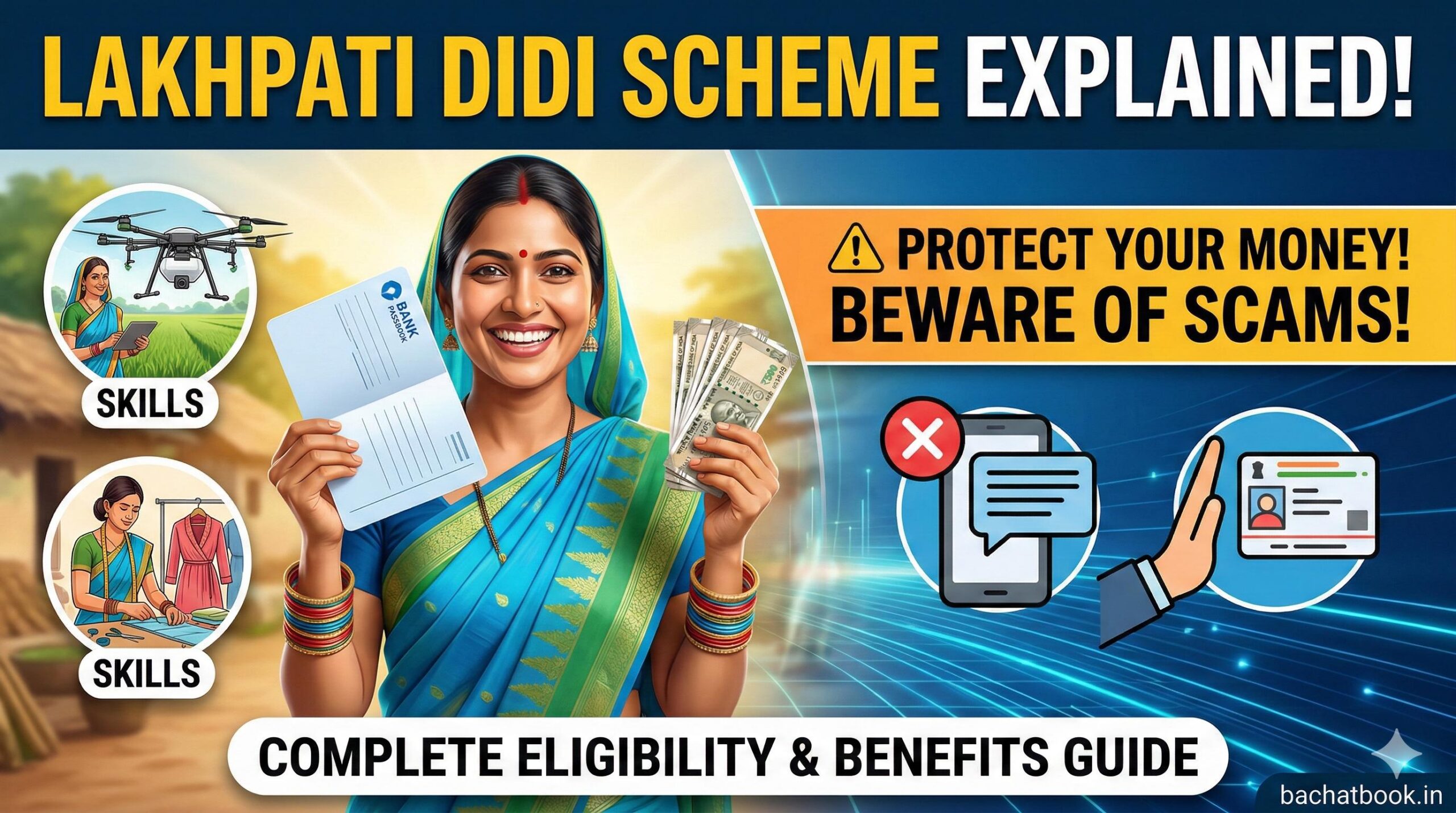
Welcome to bachatbook.in. If you are searching for accurate Lakhpati Didi scheme details, you are exploring a powerful Indian government initiative designed to help women in Self-Help Groups (SHGs) earn an independent income of at least ₹1,00,000 annually. This program empowers rural and semi-urban women through specialized skill training and safe micro-loans.
However, as the popularity of this initiative grows, so do dangerous financial scams. Understanding the official Lakhpati Didi scheme details is not just about securing government benefits—it is your strongest defense against fake application links, processing fee frauds, and identity theft. In this guide, we will break down the real eligibility process while showing you exactly how to protect your family’s hard-earned savings from scammers.
Disclaimer: This article is for educational purposes only and does not constitute professional financial advice. Always verify government scheme information through official local authorities or official government portals.
Table of Contents
What is the Lakhpati Didi Scheme?
Welcome to bachatbook.in. If you are searching for exact Lakhpati Didi scheme details, you are looking for information about a major Indian government initiative aimed at empowering rural and semi-urban women. The Lakhpati Didi scheme is a massive financial and skill development program designed to help women associated with Self-Help Groups (SHGs) earn a sustainable household income of at least ₹1,00,000 (one lakh rupees) per year.
By providing practical, market-relevant skill training in areas like tailoring, LED bulb manufacturing, drone operation, and advanced farming, the government aims to make women financially independent entrepreneurs. Understanding these Lakhpati Didi scheme details is your first critical step toward utilizing government resources effectively. More importantly, knowing the official process helps you protect your hard-earned savings and personal data from fake application scams that frequently target rural beneficiaries looking for financial support.
Core Objectives of the Lakhpati Didi Yojana
To fully grasp the impact of this initiative, it is essential to look at what the government actually intends to achieve. The scheme is not a direct cash transfer where money is simply deposited into a bank account. Instead, it is an empowerment tool.
The primary objective is poverty alleviation through capability building. By focusing on women, the scheme targets the root of household financial stability. When a woman in an Indian household becomes financially independent, the entire family’s standard of living, nutrition, and educational outcomes improve significantly.
The initiative bridges the gap between traditional household roles and modern economic demands. It brings rural women into the formal banking sector, provides them with modern technological training (such as operating agricultural drones), and connects them with local markets to sell their goods and services. By doing so, it shifts the focus from mere survival to active wealth creation and savings.
Eligibility Criteria for the Scheme
Not everyone can simply apply online and receive the benefits of this program. The government has established specific criteria to ensure the resources reach those who are genuinely organized and ready to build micro-enterprises.
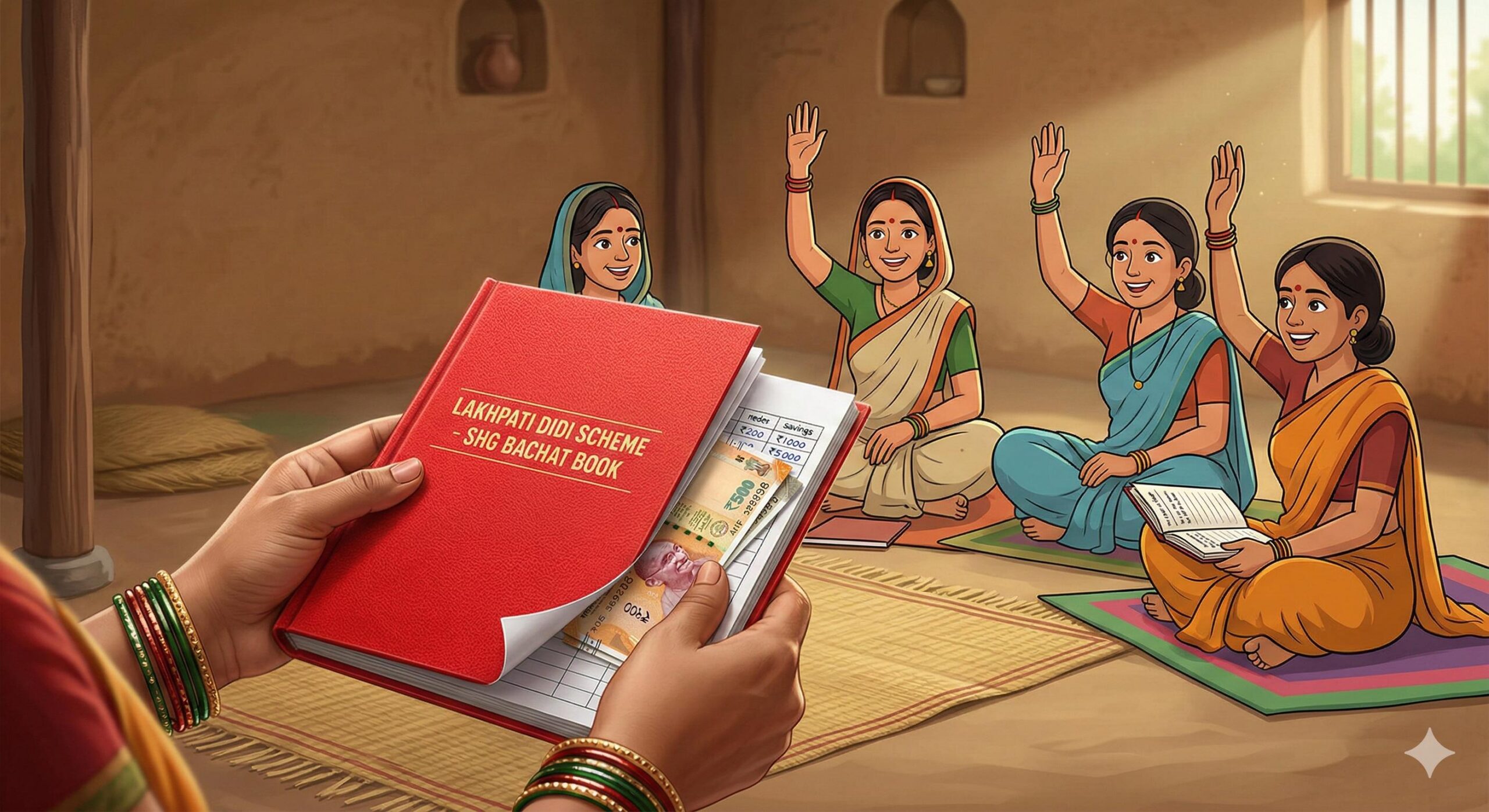
To be eligible for the Lakhpati Didi scheme, a woman must first be a citizen of India. The most crucial requirement, however, is that the applicant must be an active member of a recognized Self-Help Group (SHG) operating under the Deendayal Antyodaya Yojana-National Rural Livelihoods Mission (DAY-NRLM).
Self-Help Groups are small, informal associations of women from similar socio-economic backgrounds who come together to save small amounts of money regularly. If you are not part of an SHG, you cannot directly access the Lakhpati Didi benefits. Furthermore, the applicant should have a clean record of financial discipline within her SHG, meaning she regularly contributes to the group’s savings pool and repays any internal micro-loans on time. This proves to the authorities that the applicant understands basic financial responsibility.
How the Scheme Works: Skill Training and Financial Support

The mechanics of the scheme are designed to be practical and community-driven. Once a woman is identified through her SHG as a potential candidate, the process begins with intensive skill development.
The government assesses the local market demands and the existing skill levels of the women. Based on this, they offer specialized training camps. For example, in an agricultural belt, women might be trained as “Drone Didis” to operate and repair drones for spraying fertilizers, a highly paid technical skill. In other areas, the focus might be on plumbing, tailoring, weaving, or manufacturing local handicrafts and food products.
After the training is complete, the financial support phase begins. Because the woman is part of an SHG, she is eligible to receive micro-credit or seed capital from banks that partner with the NRLM. This loan is used to buy equipment, raw materials, or inventory to start her micro-enterprise. The SHG structure acts as a support system and a mutual guarantee, ensuring that the borrowed money is used for business growth and repaid responsibly.
The Hidden Risks: Fraud and Scams Surrounding Government Schemes
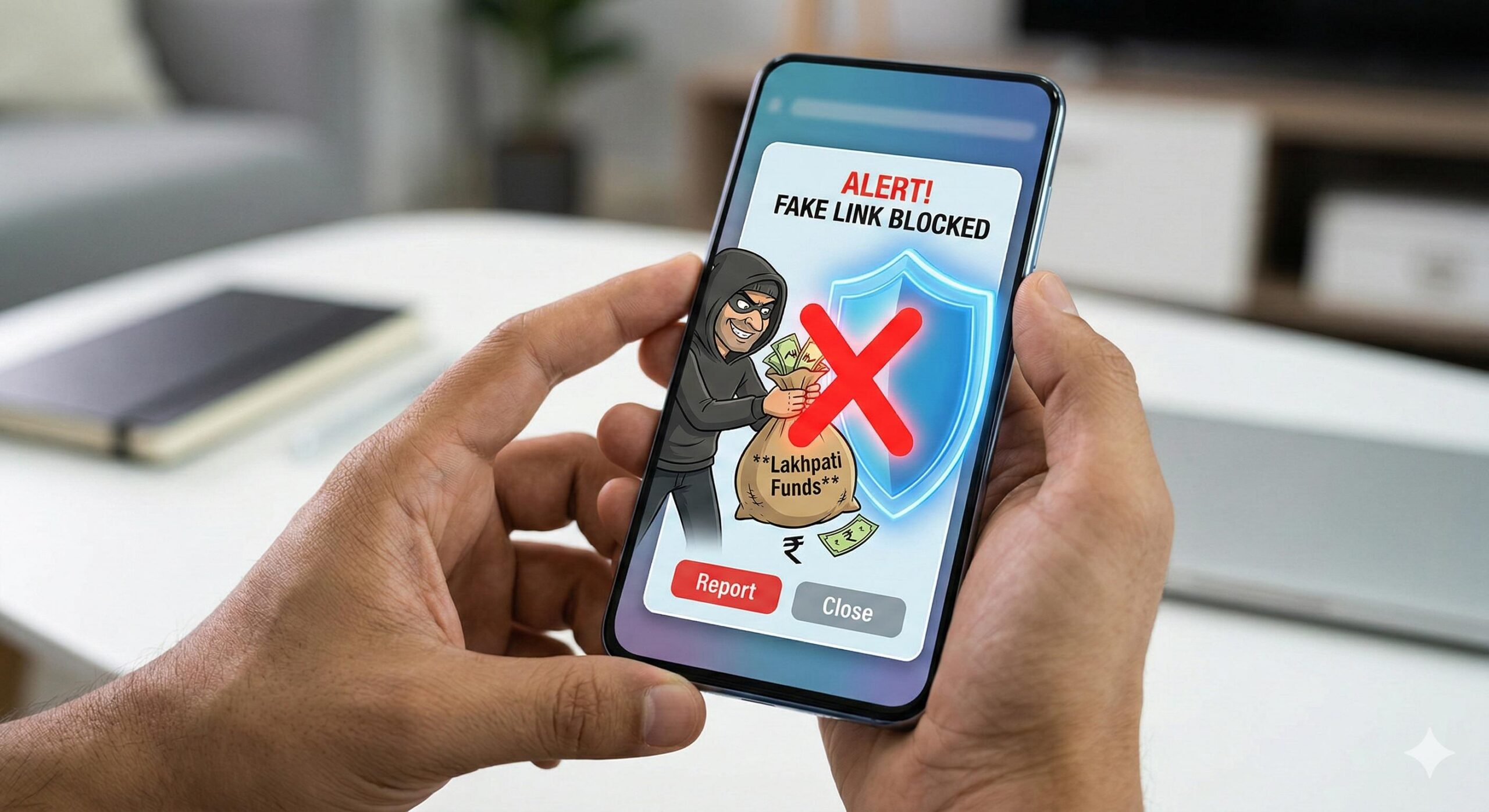
While the Lakhpati Didi scheme offers genuine opportunities, it has unfortunately created a breeding ground for financial scammers. At bachatbook.in, our primary goal is your financial safety, and understanding the risks associated with searching for scheme details is vital.
Fraudsters are well aware that millions of women are looking for ways to access government funds. They exploit this hope through highly organized scams. A common method involves fake WhatsApp messages or SMS alerts claiming, “Congratulations! Your Lakhpati Didi loan of ₹1,00,000 is approved. Click here to claim.”
Another major threat comes in the form of fake mobile applications and fraudulent websites that look exactly like official government portals. These platforms ask innocent applicants to fill out forms with their Aadhaar card numbers, PAN card details, and bank account information. The most dangerous scams will ask the applicant to pay a small “registration fee,” “processing fee,” or “file charge” ranging from ₹500 to ₹2,000 to release the supposed government funds.
The Financial Impact of Falling for Fake Scheme Offers
The consequences of engaging with these scams go far beyond losing a small registration fee. When you fall victim to a scheme-related fraud, the financial and emotional impact can be devastating to a middle-class or low-income household.
Firstly, there is the direct financial loss. Paying a ₹1,000 bribe or processing fee to a scammer means losing money that could have been used for household groceries or children’s education. Scammers often do not stop at one payment; they will invent new “tax fees” or “clearance charges,” draining the victim’s savings completely.
Secondly, and perhaps more dangerously, there is the risk of severe identity theft. When you hand over your Aadhaar details, PAN card, and bank account information to a fake website, criminals can use this data to open illicit loan apps in your name, empty your existing bank accounts, or use your identity for money laundering. You might suddenly find your CIBIL score ruined or receive recovery calls for loans you never actually took, plunging your family into an artificial debt trap.
Prevention Habits: How to Apply Safely and Protect Your Data
Protecting your money and your identity requires strict financial discipline and skepticism. You can navigate government schemes safely by adopting the following preventive habits.
Do not trust random digital links. The Indian government does not process Lakhpati Didi applications through random WhatsApp forwards or unsolicited text messages. If you receive a message urging you to click a link to claim scheme money, delete it immediately.
Never pay upfront fees for government benefits. Official government empowerment schemes, including the Lakhpati Didi initiative, do not require you to pay “processing fees” to private individuals or agents to get your name on a list. If someone asks for money to guarantee your scheme approval, they are defrauding you.
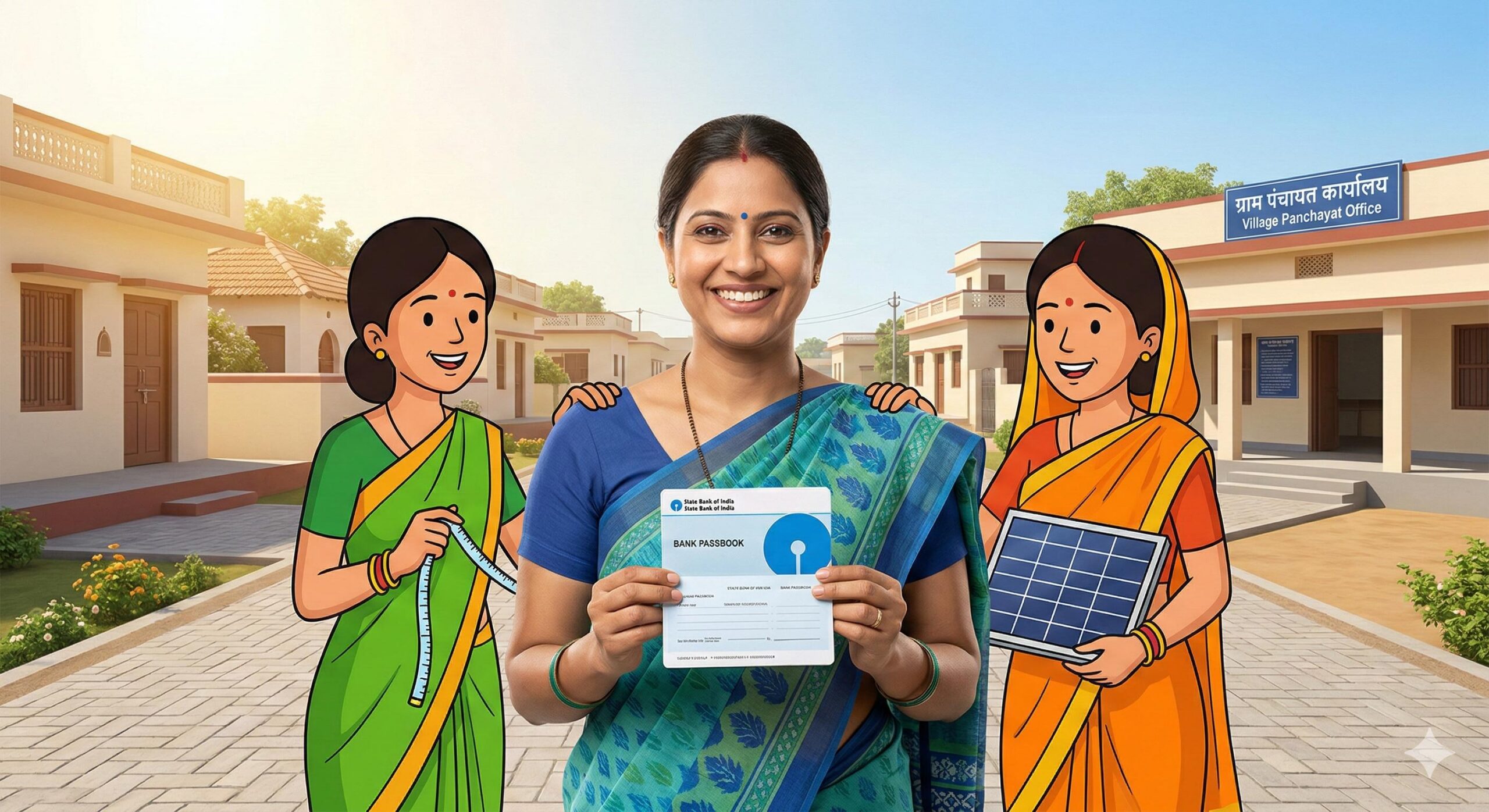
Always use official channels. To get genuine Lakhpati Didi scheme details and enroll, bypass the internet entirely if you are unsure. Visit your local Gram Panchayat office, speak to your Anganwadi worker, or contact the official Block Development Officer (BDO). If you are already in an SHG, your group leader or the assigned NRLM community resource person is the only authorized individual to guide you through the safe, official paperwork.
Smart Money Behavior for Women Entrepreneurs
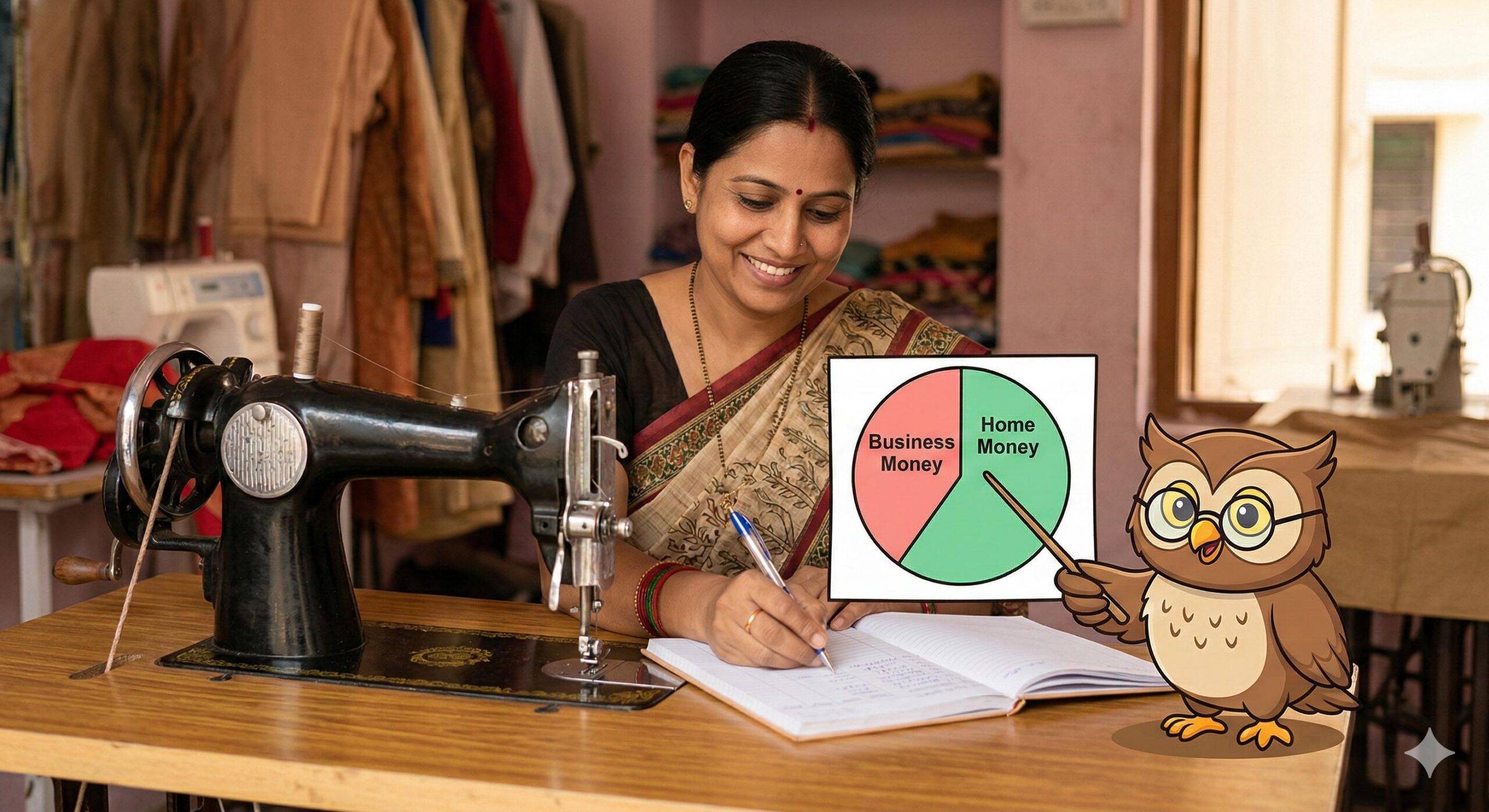
Once you have safely navigated the application process, received your training, and secured your seed capital, the real financial journey begins. Earning money is only the first step; keeping and growing it requires smart money behavior.
The most important rule for any new micro-entrepreneur is separating business money from household money. It is very easy to mix the profits from your tailoring or craft business with the money used to buy daily vegetables. To prevent this, maintain a strict “Bachat Book” or ledger. Write down every single rupee you spend on raw materials and every rupee you earn from sales.
Additionally, focus on building an emergency fund. Business income can be unpredictable. Before upgrading your lifestyle, save a portion of your profits in a secure bank account or a safe Post Office savings scheme. This ensures that if your sewing machine breaks or a crop fails, you do not have to resort to high-interest local moneylenders to survive. Finally, protect your credit history. Repay your SHG micro-loans on time, every time. A strong repayment history within your group builds your official credit score, making it easier to secure larger, safer bank loans as your business expands in the future.
SHG Grading for Bank Loan: A Complete Guide for Self-Help Groups (2026)
Conclusion
The Lakhpati Didi scheme is a transformative initiative with the power to uplift rural and semi-urban Indian women, turning them from dependents into independent breadwinners. By offering targeted skill development and safe micro-credit through Self-Help Groups, the program lays a strong foundation for grassroots economic growth.
However, as you explore these opportunities, your financial safety must remain your top priority. Always seek out Lakhpati Didi scheme details from verified local authorities, never pay bribes or processing fees to unofficial agents, and aggressively protect your personal banking documents from digital scammers. By combining the skills learned through the scheme with strong, preventive financial habits and disciplined budgeting, women can successfully protect their families from fraud while building long-lasting wealth and prosperity.