
Introduction
In 2026, it’s as complicated to manage a household budget in India as it is to run a small company. Now we are in the grip of hyper-inflation where the cost of daily staples, from cooking oil and pulses to petrol and school fees, changes by the minute. The margin of error for the typical middle-class family or salaried person is getting a lot smaller. Just one month of wild spending could thwart your financial stability for the rest of the quarter, creating a never-ending cycle of poor debt.
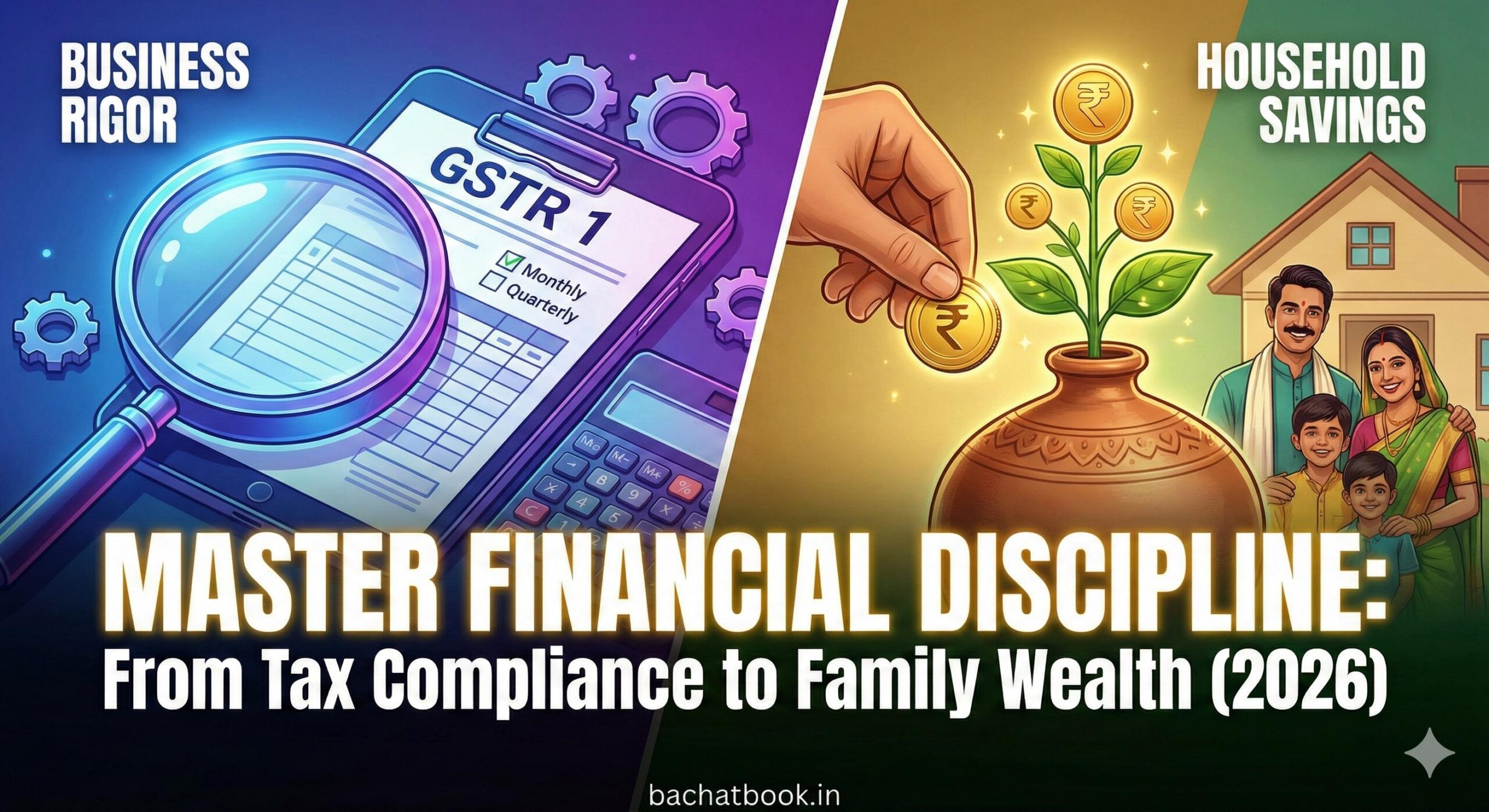
When we see successful companies in India, we find that they are obsessed about compliance and timelines. A businessman is perpetually solving how to go about GSTR 1 monthly vs quarterly filing in order to make the best out of their cash flow and input tax credit, yet keep up with their compliance. They know that procrastinating on their portfolio can mean missing out on something big, or suffering a heavy penalty.

Why don’t we apply this same level of professional rigor to our personal wallets? Saving money is not about being stingy; it is about efficiency. It is about knowing exactly what you have and exactly where it is going. This guide is based on common financial habits and challenges faced by Indian households. It will walk you through a realistic, step-by-step approach to budgeting that helps you build a secure financial future, regardless of your income level.
Disclaimer: This guide is based on common financial habits and challenges faced by Indian households. This content is for educational purposes only and does not constitute professional financial advice.
Table of Contents
The Importance of Saving Money in India
In India’s cultural context, saving is one of the values ingrained in the social fabric, and with good reason given the sheer number of years it has been practiced. Saving has always been about securing the future, but with the advent of a more fast-paced economy, securing the future has been brought down to a more pressing concern relating to one’s livelihood and sustaining one’s way of life. Thus, it is imperative we shift away from merely traditional values and instead, see saving as a tool to survive.
The Buffer of an Emergency Fund
When it comes to life’s adversities, it is always a matter of when, not if. From horrific accidents that may require you to be hospitalized in a fancy private hospital that may set you back a few lakhs, to a sudden breakdown of your car, or even a home repair that is a must during the rains—it is more likely you will need to repair your home than not. These can all derail the budget you set for the month. It is imperative you have an “Emergency Function” that is 3 to 6 months of liquid savings that you can withdraw from your savings account. Otherwise, you are bound to high-interest debt from credit cards or personal loans. Saving acts as a buffer from financial panic during an emergency.
Family Responsibilities
In the Indian context, the family structure tends to be quite inclusive. The ‘Sandwich Generation’ is often a term we hear. As a ‘Sandwich Generation’ member, you would be middle aged and supporting both your parents (considerable healthcare needs) and your children (costs of raising kids, education, etc. is considerable). Expenses of senior healthcare and quality higher education of children are two huge costs that will rise head of general inflation. Moreover, you need to save money on a disciplined and systematic basis for years at a time before you are able to cover the kind of expense you would cover with a single month’s salary.
Job and Income Uncertainty
In today’s economy, both stability and job security are major concerns. The salaried class needs to deal with the constant threat of sudden changes in the marketplace, automation, and layoffs in the entire industry. For income generating activities on the basis of freelancing and microscopically sized businesses, income tends to be intermittent and seasonal. A more sizeable savings buffer will provide you with the means to cover your living expenses for a sustained period to weather the times when income is not available, preserving your standard of living, and preventing you from becoming a debtor.
Future Goals and Aspirations
Everyone has a dream. It can be owning a house in a good locality, owning a better car, or a retirement where you are not financially dependent on your children for your expenses. Goals can only be achieved when you stop spending on temporary and recreational things and start spending on permanent and productive things.
Common Reasons Indians Fail to Save Money
Saving is important and understood by most people. However, many Indian families can’t keep any money at the end of the month. This is often true for families who do not have a low income. This can be caused by a low income, but many times it is caused by psychological issues rather than a behavioral issue.
Not Making A Budget – No Mental Math
People often fall into the trap of Mental Accounting. They think they have a good idea of how and where their money is going every month. However, they may be tracking their large monthly expenses, but they do not consider the many small UPI transactions for spending money on food, transportation, and other minor expenses. If small expenses can sink a budget, then having a budget is very important.
Impulse Buying and Availability
The convenience of having almost any product available to buy with the click of a button on an online store has caused impulse buying to be a big issue in India. Because of how easy and convenient it is to make a buy, most customers make purchases based on impulse.
EMI Excessive Spending
The no cost EMI feature is used as a marketing trick that usually ends up causing consumers to spend more money. It makes a large single payment look like multiple smaller, more manageable payments. Thinking of a phone that costs \u20b950,000, that looks reasonable if you only have to pay \u20b94,000 every month, but if you have to pay 4 or 5 of these EMIs, a large part of your future salary has already been spent even before you have earned it. There is no money left for you to save or invest.
Inflation of Spending
When you make more money, your spending also has to increase. Wealth killers like moving to a bigger house, buying more expensive brands, and eating at nicer restaurants mean that you save the same amount of money regardless of a payrise. You are simply working harder to not make progress in your life.
Step-by-Step Monthly Budgeting Method
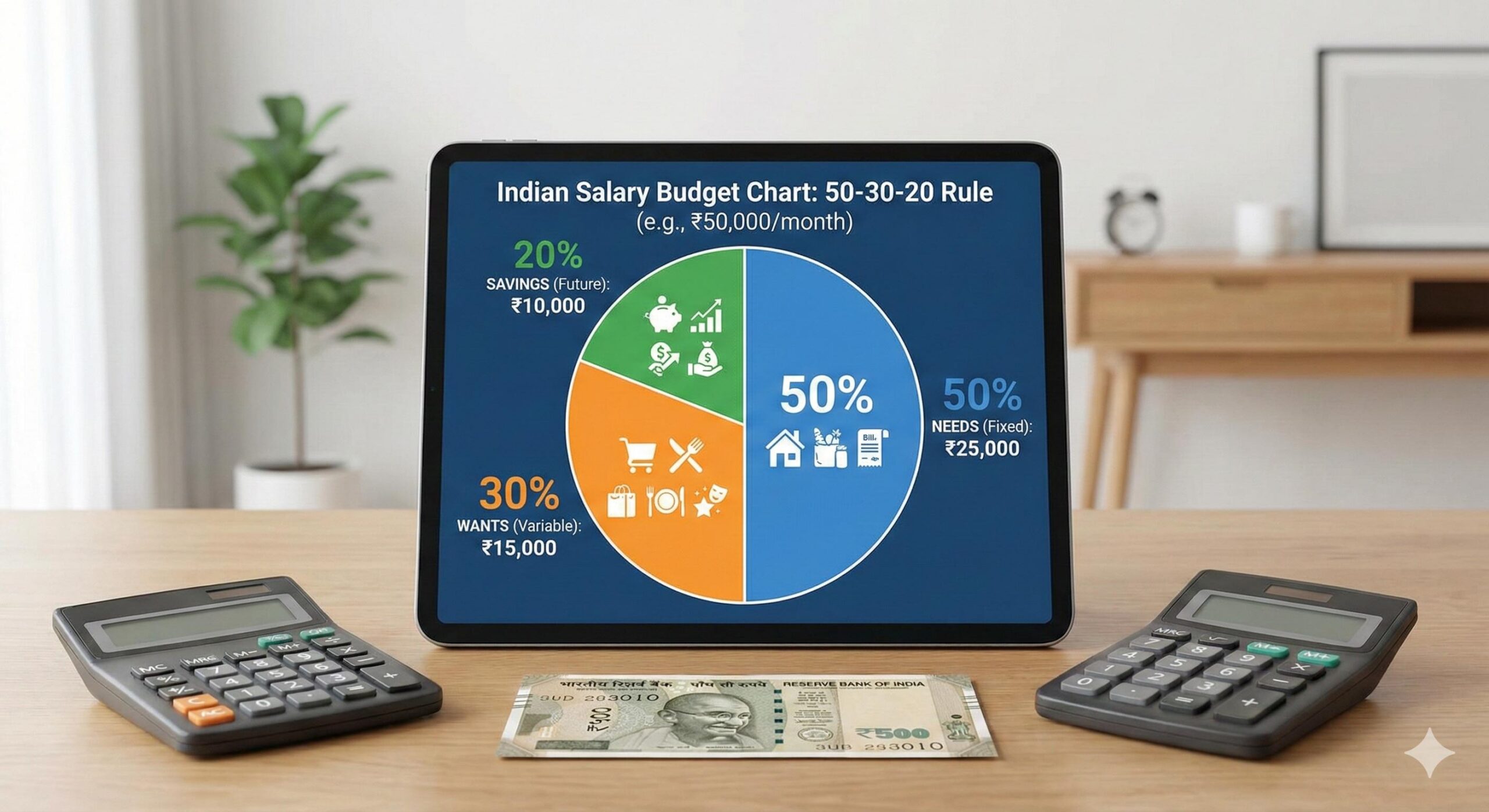
To take control of your money, you need a system that is easy to follow and hard to break. We recommend the 50-30-20 Rule, customized for the Indian context. Let’s break this down using a practical example of a monthly in-hand salary of ₹50,000.
| Category | Percentage | Amount (₹) | What it Includes |
| Needs (Fixed) | 50% | ₹25,000 | Rent, EMI, Groceries, Electricity, School Fees, Transport |
| Wants (Variable) | 30% | ₹15,000 | Dining out, OTT Apps, Shopping, Hobbies, Travel |
| Savings (Future) | 20% | ₹10,000 | SIPs, Emergency Fund, Insurance Premiums |
Calculate Net Income
Start with your “Net Income”—the actual amount that hits your bank account after Provident Fund (PF), Tax (TDS), and other professional deductions. Do not budget based on your “CTC” (Cost to Company); budget based on your “Cash in Hand.”
Fixed Expenses (Needs) – 50%
These are your non-negotiable survival expenses.
- Housing: Your monthly rent or your Home Loan EMI.
- Utilities: Electricity, Water, Gas cylinders, Mobile recharges, and Broadband.
- Groceries: Monthly ration, milk, fruits, and vegetables.
- Education: School fees, van fees, and tuition.
- Transport: Fuel for your vehicle or public transport passes.
Guidance: If your needs exceed 50% of your income, you are in the “danger zone.” You may need to look for cheaper accommodation or drastically reduce utility usage immediately to avoid a debt spiral.
Variable Expenses (Wants) – 30%
These are lifestyle choices. They make life enjoyable but are not essential for survival. This is the first place to cut when you are short on cash. Treat your household “wants” with strict scrutiny—if it’s not adding long-term value, cut it out. This includes weekend dinners, multiple OTT subscriptions, and buying new clothes every month.
Savings & Investments – 20%
This category is for your future self. It should be treated as a “bill” you must pay to yourself. Automate this. Just as a business owner ensures their GSTR 1 monthly vs quarterly filing is on schedule to avoid trouble, you must ensure your savings are moved out of your spending account on the day your salary arrives.
Smart Money Saving Tips for Indian Households
Every Indian household has “hidden money” lying in wastage. Here is how to find it and save it through better resource management.
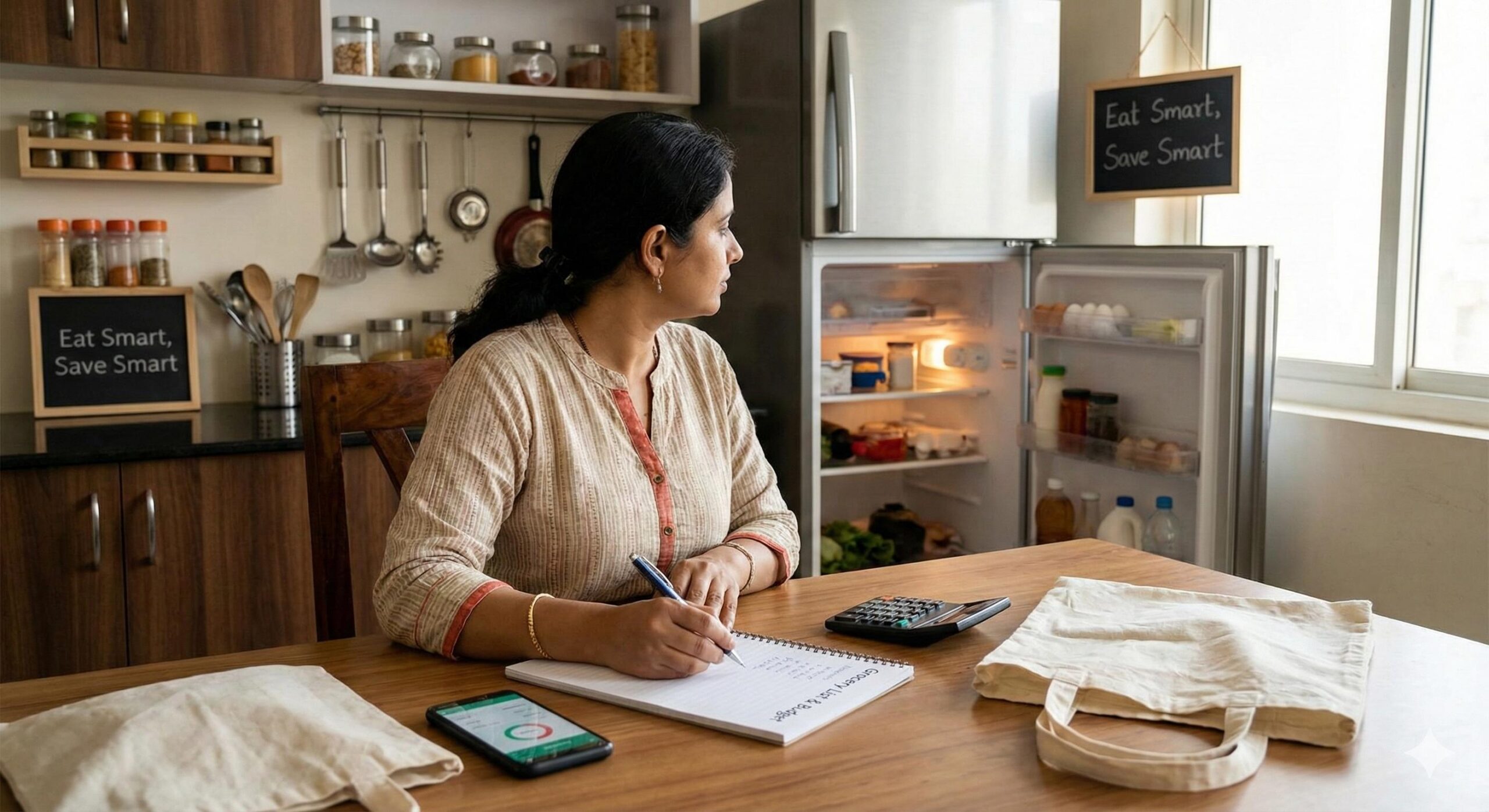
Grocery Savings: The “Home Inventory” Concept
Just as a business owner manages stock to prevent spoilage, you should manage your kitchen inventory.
- Check Your Stock: Before going to the market, check your pantry. Do you already have two packets of Dal? Don’t buy a third. Use what you have before buying more.
- The List Rule: Never shop without a list. Supermarkets are designed to make you impulse buy. A list is your defense against marketing tricks.
- Buy Seasonal: In India, vegetables and fruits have distinct seasons. Buying cauliflower (Gobi) in summer or mangoes in winter will cost you double. Stick to seasonal produce to save significantly.
Electricity & Gas Optimization
Small changes lead to big savings over a year. Switch off the main plug for TVs, Microwaves, and Computers when not in use. Even in standby mode, they consume “Phantom Power.” Running an AC at 24 degrees is healthy and consumes much less power than running it at 18 degrees. Ensure your gas burner flame is blue; a yellow flame indicates carbon buildup and fuel wastage. Always soak dals and rice before cooking; this reduces cooking time and saves LPG.
Mobile & Internet Bills
In a family of four, individual recharges can be expensive. Instead, opt for a family postpaid plan or a shared broadband connection which is often more value-for-money. Review your digital subscriptions regularly: Do you really need three different OTT platforms? Rotate your subscriptions. Subscribe to one for a month, watch what you want, cancel it, and switch to another the next month.
Saving Money for Students & Young Earners
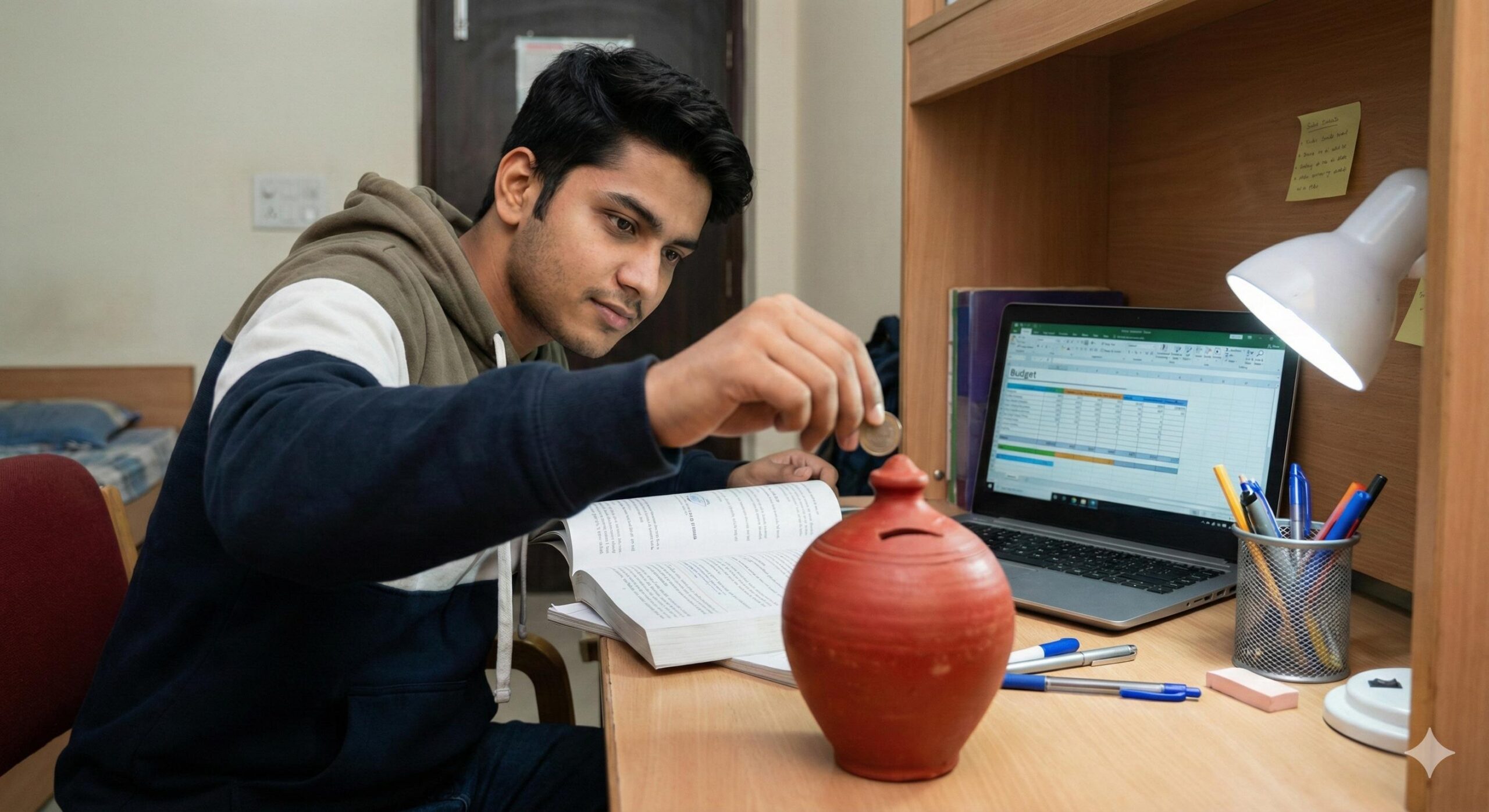
If you are a student or in your first job, you have the greatest asset of all: Time. Compound interest works best when you start early, even with tiny amounts.
Pocket Money Management
Treat your pocket money like a professional salary. If you receive ₹2,000 a month, try to save ₹500 immediately. Open a zero-balance savings account and deposit this amount. Do not touch it. By the end of the year, you will have ₹6,000 plus interest—enough to buy a professional certification course or plan a small trip with friends without asking for more money.
The “Latte Factor” (Chai/Sutta Cost)
Small daily habits are the biggest drain on a young person’s wallet. A ₹20 chai and a ₹15 snack twice a day equals ₹70 daily. That is ₹2,100 a month and roughly ₹25,000 a year! We aren’t saying don’t enjoy your tea, but be aware of how much “small” spending costs you annually.
Avoid Debt Traps
Banks love to offer “Lifetime Free Credit Cards” to young earners. Be very careful. If you miss even one payment, the interest rate can be as high as 40% per annum. Using credit responsibly is good for your credit history, but using it to buy things you can’t afford is the path to financial ruin.
Digital Tools That Help Save Money
In the digital age, you should use technology to stay disciplined. It takes the “guesswork” out of your finances.
- Expense Tracking Apps: Use apps that read your transaction SMS and automatically categorize your spending into “Food,” “Travel,” and “Shopping.” This gives you a clear, objective view of your expenses at the end of the month.
- Price History Trackers: Before buying anything on Amazon or Flipkart, use a price tracker extension to see if the “discount” is real or if the price was inflated just before the sale.
- UPI Limits: Many UPI apps allow you to set a daily transaction limit. Set a limit for yourself (e.g., ₹500 per day for casual spending). If you cross it, the app will block the transaction, forcing you to rethink the purchase.
Long-Term Saving Habits Indians Should Build
Building wealth is not a sprint; it is a marathon that requires specific, repeatable habits.
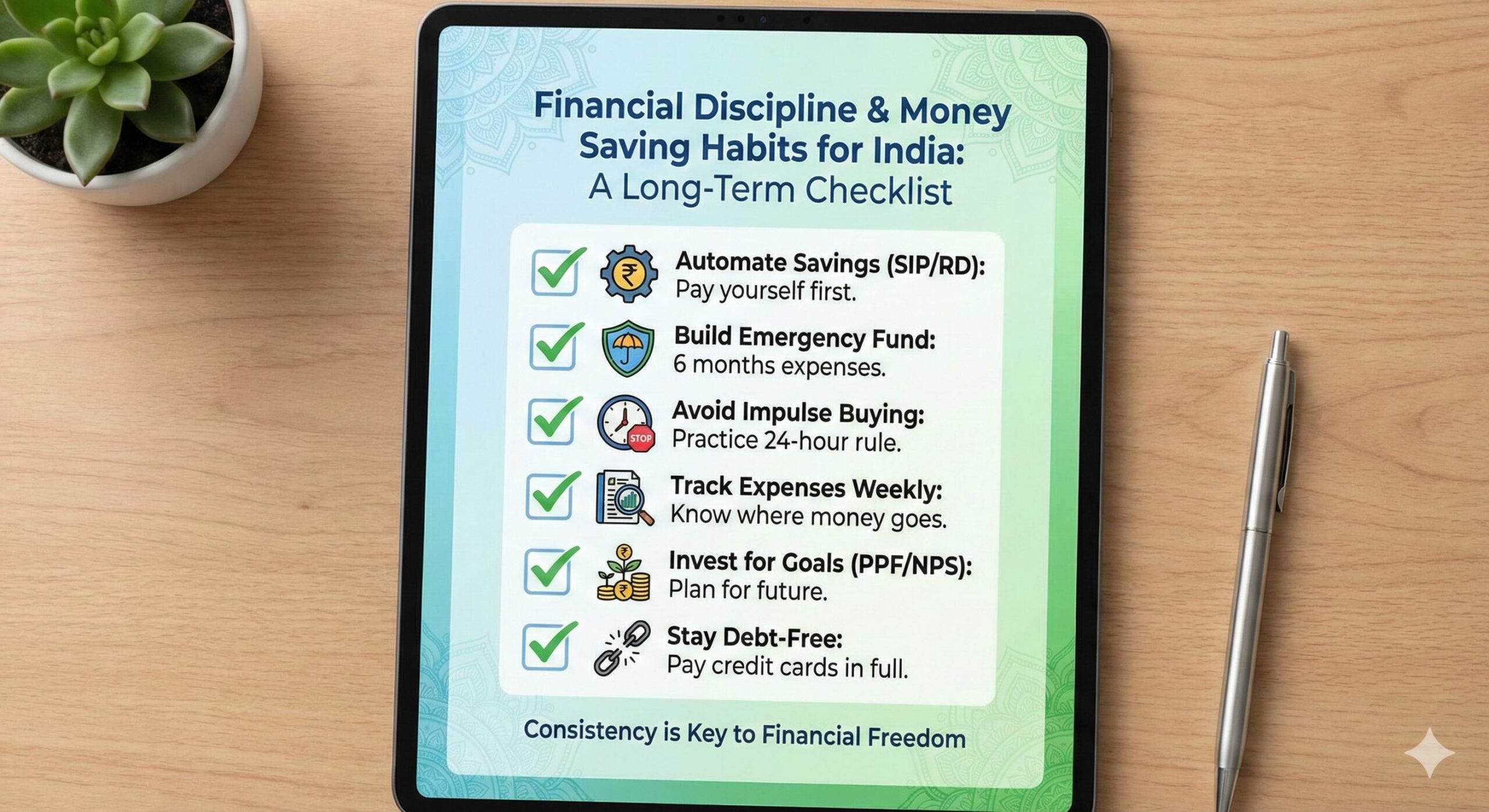
Discipline Over Motivation
Motivation gets you started; discipline keeps you going. Whether it is a business filing their GSTR 1 monthly vs quarterly returns on time to avoid penalties or a family paying their SIP on the 5th of every month, consistency is what builds wealth over time.
Goal-Based Saving
Don’t just save for “saving’s sake.” Give your money a name.
- Open a Recurring Deposit (RD) named “Diwali Gift Fund.”
- Open a Liquid Fund named “Emergency Medical Fund.”When you see the name of the goal, you are much less likely to withdraw that money for a trivial reason like buying a pizza.
The 24-Hour Rule
Whenever you feel the urge to buy something expensive (over ₹2,000), wait for exactly 24 hours. Do not buy it immediately. In 80% of cases, the urge to buy will fade away by the next morning, proving it was an impulse want, not a real need.
Periodic Review
Every Sunday night, spend 15 minutes reviewing your bank statement or UPI history. Identify one expense from the last week that was completely unnecessary and promise to avoid it next week.
Saving Money in India: Practical Monthly Budgeting Guide & GST Composition Scheme 2026 Insights
FAQ Section
How much should I save monthly in India?
Ideally, aim for 20% of your monthly income. However, if you are on a very tight budget, start with 5% or 10%. The habit of saving is more important than the amount when you are just starting out. As your income grows, increase the percentage.
Is budgeting necessary for low income?
Yes, budgeting is actually more critical for those with low income. It ensures your basic needs are met without falling into debt traps. When resources are limited, every single rupee must be assigned a specific, important job.
How can families save money easily?
Focus on the “Big Three”: Rent, Food, and Transport. Reducing costs even slightly in these areas yields the highest savings. Also, cutting “invisible waste”—like electricity wastage and food wastage—helps significantly over time.
What are common money mistakes?
Overspending on lifestyle (cafes, expensive phones) to impress peers and ignoring health insurance are major mistakes. Delaying investments because you feel “I don’t have enough money” is also a common error; you can start with as little as ₹500.
How do I track expenses if I use cash?
Keep a small pocket diary or use the “Notes” app on your phone. Record every cash expense immediately, no matter how small. At the end of the week, total it up. This simple act brings a huge amount of awareness to your spending.
What is the best way to build an emergency fund?
Start by setting aside a small amount daily or weekly in a separate savings account. Aim to accumulate an amount equal to at least 3 months of your essential household expenses, and keep this money in a place where it is easily accessible.
Conclusion
Saving money is not about living a miserable or restricted life; it is about spending money on things that truly matter to you and cutting back on things that don’t. It is about prioritizing your peace of mind over temporary pleasures. When you have money in the bank, you walk with confidence. You don’t fear the end of the month, and you certainly don’t need to panic when a small crisis hits.
Just as a disciplined business owner analyzes their GSTR 1 monthly vs quarterly options to stay efficient and legally compliant, you must analyze your spending habits to keep your household financially efficient. Start small. You do not need to overhaul your entire life overnight. Start by tracking your expenses today, make one small cut in your spending tomorrow, and watch your bachat (savings) grow over time. Your future self will thank you for the discipline you show today.