
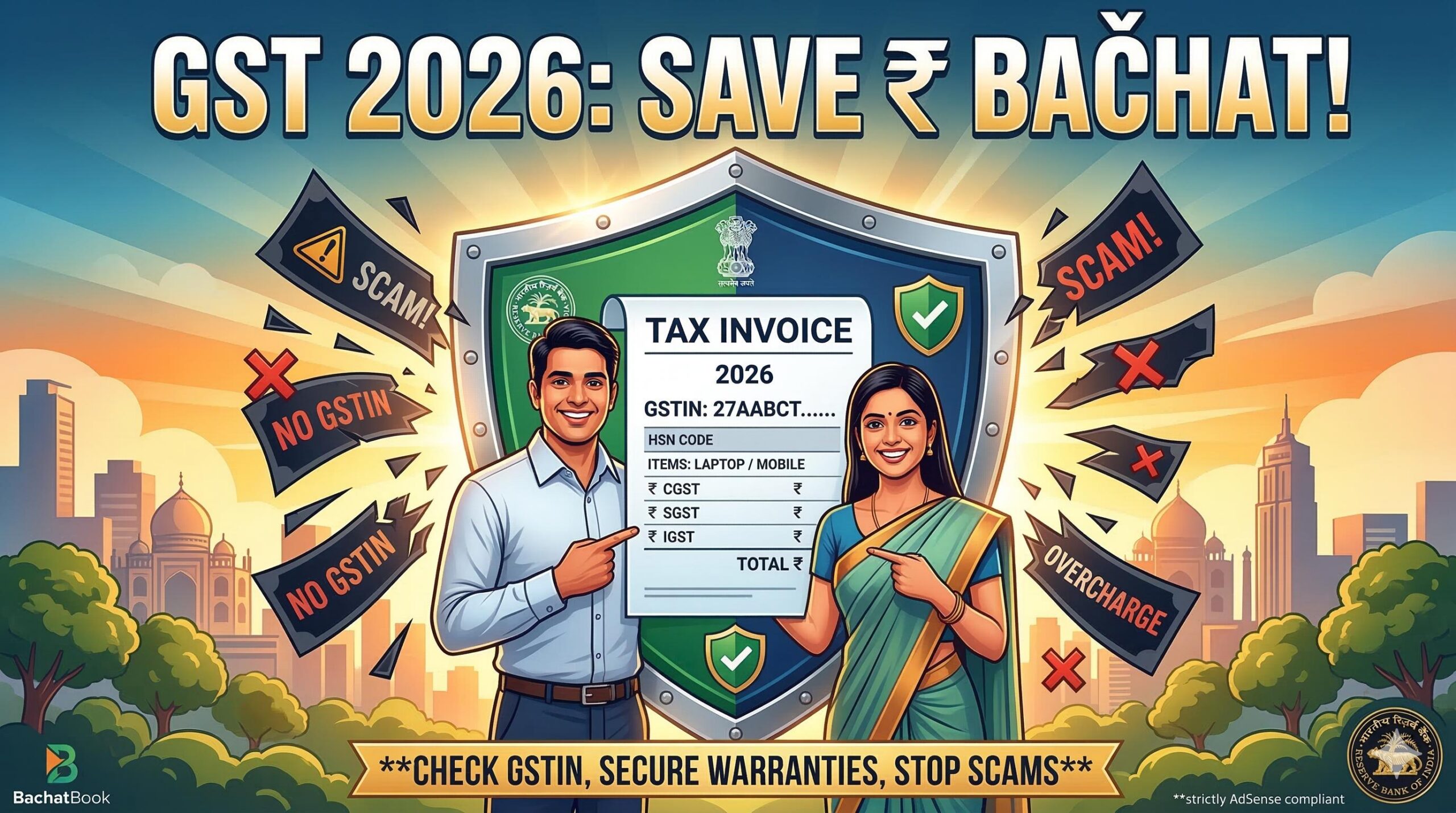
Introduction: Decoding the Real Cost of Your Shopping Bill
Whether you are buying a new smartphone, purchasing household appliances, or dining out with your family, the final step is always the same: paying the bill. But how often do you actually check what is printed on that piece of paper? For most Indian middle-class families, as long as the total amount matches the price tag, the bill is simply shoved into a wallet and forgotten. Unfortunately, this simple oversight is exactly how millions of rupees are lost to everyday retail fraud.
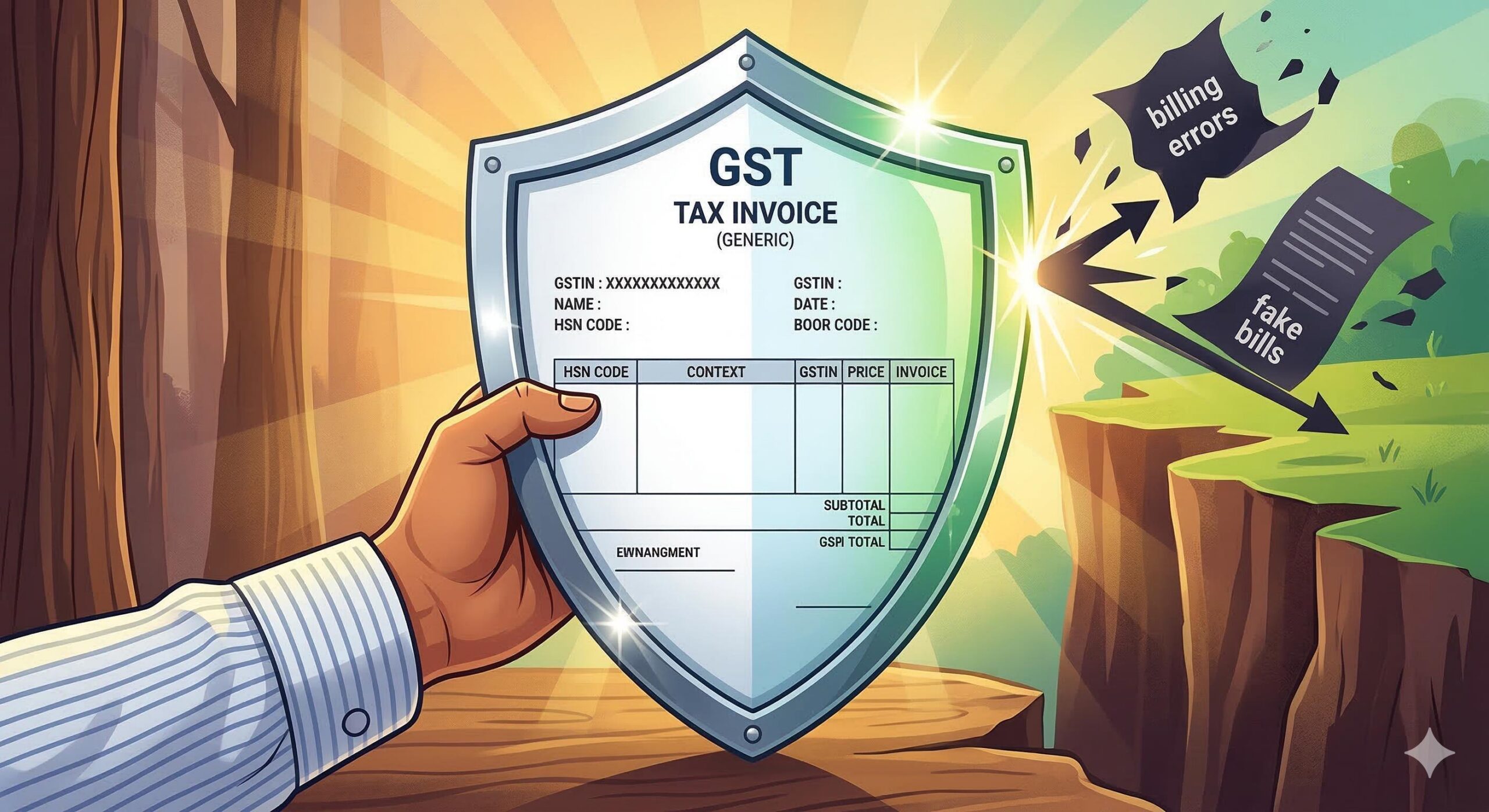
Understanding the official GST invoice format 2026 is not just a task for business owners or accountants; it is a crucial financial survival skill for every consumer. A genuine, legally formatted tax invoice is your only valid proof of purchase, your ticket to claiming expensive warranties, and your primary shield against paying fake taxes to dishonest shopkeepers. In this guide, we will break down exactly what a valid GST bill must look like, how to spot digital billing scams, and the smart money habits you need to protect your hard-earned salary from being quietly stolen at the checkout counter.
Table of Contents
The Hidden Risks of Fake Billing
When salaried employees or middle-class families go shopping for electronics, jewelry, or even dine out at a restaurant, they often pay whatever final amount is shown on the paper slip. This lack of awareness creates a massive opportunity for retail fraud. The biggest hidden risk here is the manipulation of the standard GST invoice format 2026 by unregistered or dishonest sellers.
The Fake Tax Scam
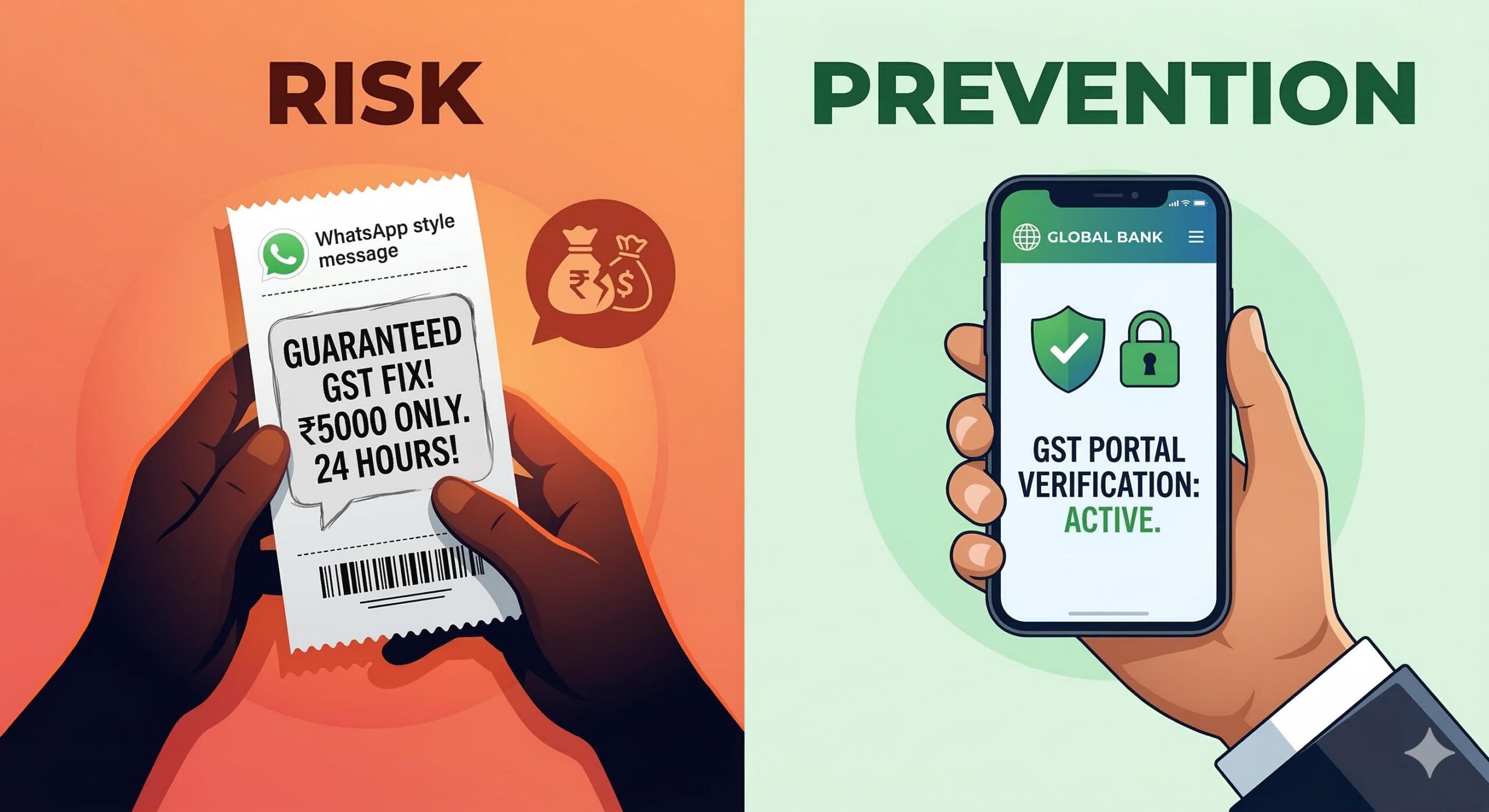
Many unverified shops hand over a piece of paper that looks like a computer-generated bill, complete with an added 12% or 18% “GST charge” at the bottom. However, if this document does not follow the official format—specifically lacking a valid GSTIN—it is not a legal tax invoice. The risk here is that the shopkeeper is illegally collecting this extra money from you, the consumer, and pocketing it entirely instead of depositing it with the Indian government.
Data Privacy Risks on Digital Bills
With the rise of e-invoicing in 2026, many physical stores now insist on sending your bill via WhatsApp or SMS. While digital bills are convenient, a major risk arises when unregistered vendors use unauthorized billing software that demands excessive personal data (like your full home address or alternative phone numbers) just to generate a basic retail receipt. Legally, for standard over-the-counter retail purchases by an end-consumer, your deep personal data is not required to generate a compliant B2C (Business to Consumer) GST invoice. Giving this data away to unverified shops often leads to spam, targeted phishing links, and compromised digital privacy.
Financial Impact: The Heavy Cost of Ignoring the Format
Failing to recognize the correct GST invoice format 2026 has severe, direct financial consequences that impact your family’s budget and long-term financial security.
Direct Loss of Hard-Earned Money
The most immediate financial impact is theft by overcharging. If you buy a smartphone worth ₹20,000 and the seller adds an 18% tax (₹3,600) on a fake “estimate slip” or a non-compliant bill, you have just lost ₹3,600 of your hard-earned salary. Because the bill is invalid, that money is effectively stolen from your household budget under the disguise of a government tax.
Voided Warranties and Denied Services
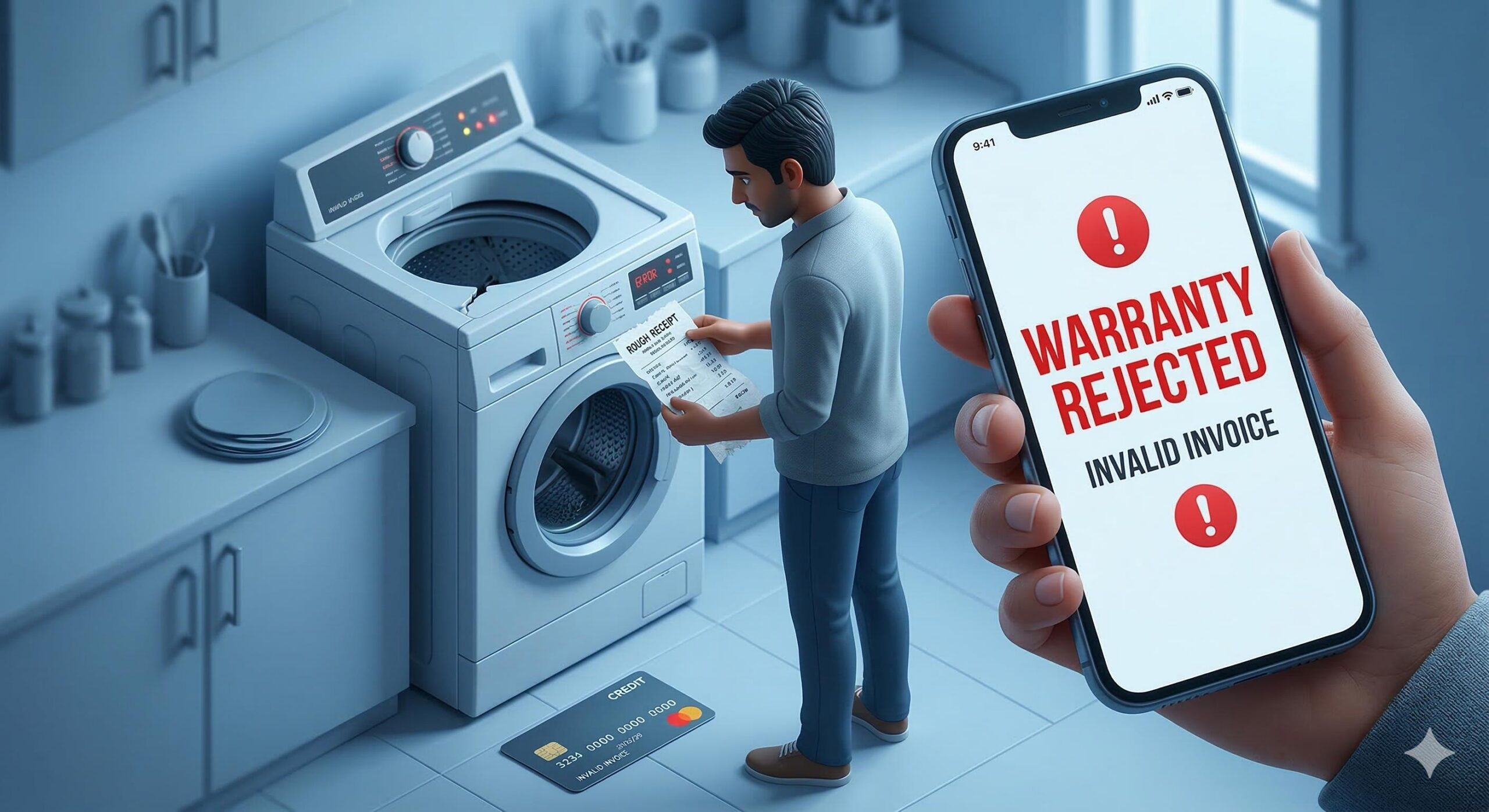
For middle-class families, appliances like refrigerators, laptops, and washing machines are major investments. Authorized service centers for top brands are extremely strict about documentation. If your appliance breaks down and you present a “kacha bill” (rough receipt) that does not adhere to the official GST invoice rules, the brand will immediately reject your warranty claim. This forces you to pay thousands of rupees out of pocket for repairs that should have been completely free.
Loss of Input Tax Credit (ITC) for Freelancers
If you are a freelancer, independent consultant, or small business owner, the financial impact is even heavier. To claim your business expenses and reduce your own tax liability through Input Tax Credit (ITC), every purchase you make for your business must be backed by a flawless B2B (Business to Business) invoice that perfectly matches the 2026 format. A single missing HSN code or incorrect GSTIN on the bill means you lose that credit, directly increasing the income tax you have to pay at the end of the financial year.
Prevention Habits: How to Protect Your Money and Data
To ensure your money is safe and your purchases are legally protected, you must adopt strict, non-negotiable verification habits every time you stand at a billing counter.
- Always Verify the 15-Digit GSTIN: This is the most crucial habit. The GSTIN is a 15-character code. The first two digits represent the state code (e.g., 27 for Maharashtra, 07 for Delhi), followed by the shop owner’s 10-digit PAN card number. If a bill charges you GST but lacks this 15-digit number, refuse to pay the tax portion immediately.
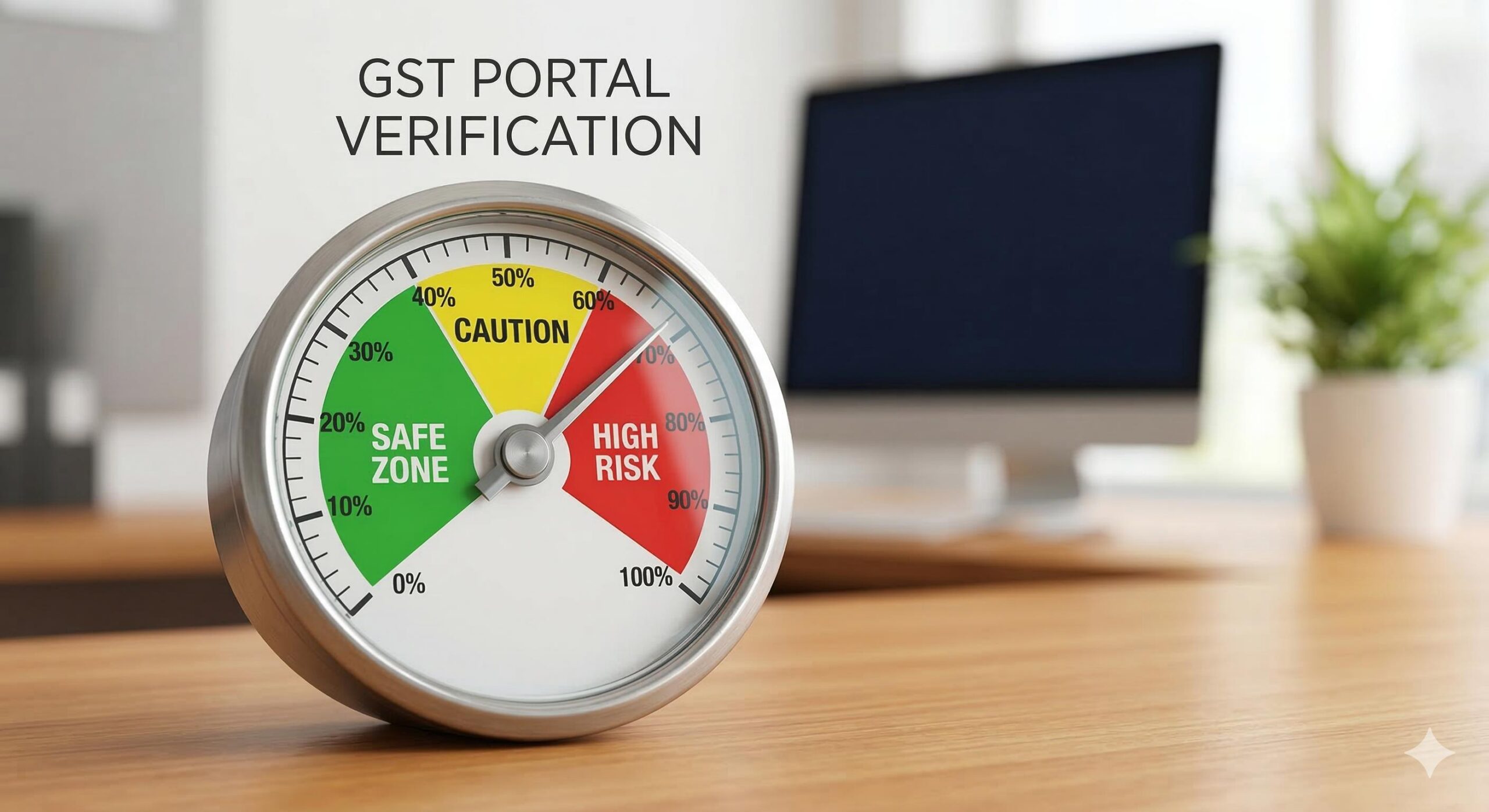
- Use the Official Verification App: Do not blindly trust the printed GSTIN. Download the official government “GST Rate Finder” app or use the official GST portal on your smartphone. While waiting at the counter, type in the printed GSTIN. If the portal says “Invalid” or shows a completely different shop name, you are being scammed.
- Check for HSN or SAC Codes: The GST invoice format 2026 mandates that the bill must specify what exactly you bought using a standardized code system. Goods have an HSN (Harmonized System of Nomenclature) code, and services have an SAC (Services Accounting Code). If the bill just says “Electronics” without a code, it is not a fully compliant tax invoice.
- Ensure Proper Tax Segregation: A genuine bill will never just say “Total Tax: 18%.” It must clearly split the tax. If you are buying within your own state, it must show CGST (Central) and SGST (State) divided equally (e.g., 9% CGST + 9% SGST). If the shop is billing you from another state, it must show IGST (Integrated).
- Never Accept “Estimate” Slips: If a shopkeeper hands you a slip of paper that says “Estimate,” “Quotation,” or “Proforma” at the top instead of “Tax Invoice,” it is not a legal bill. You cannot claim warranties or insurance on an estimate slip.
Smart Money Behavior: Moving Beyond the Counter
Understanding invoice formats is a core part of broader financial literacy. Smart money behavior means moving away from the temptation of “saving a little money” by doing cash deals without bills.
Demand a “Pucca Bill” Every Time
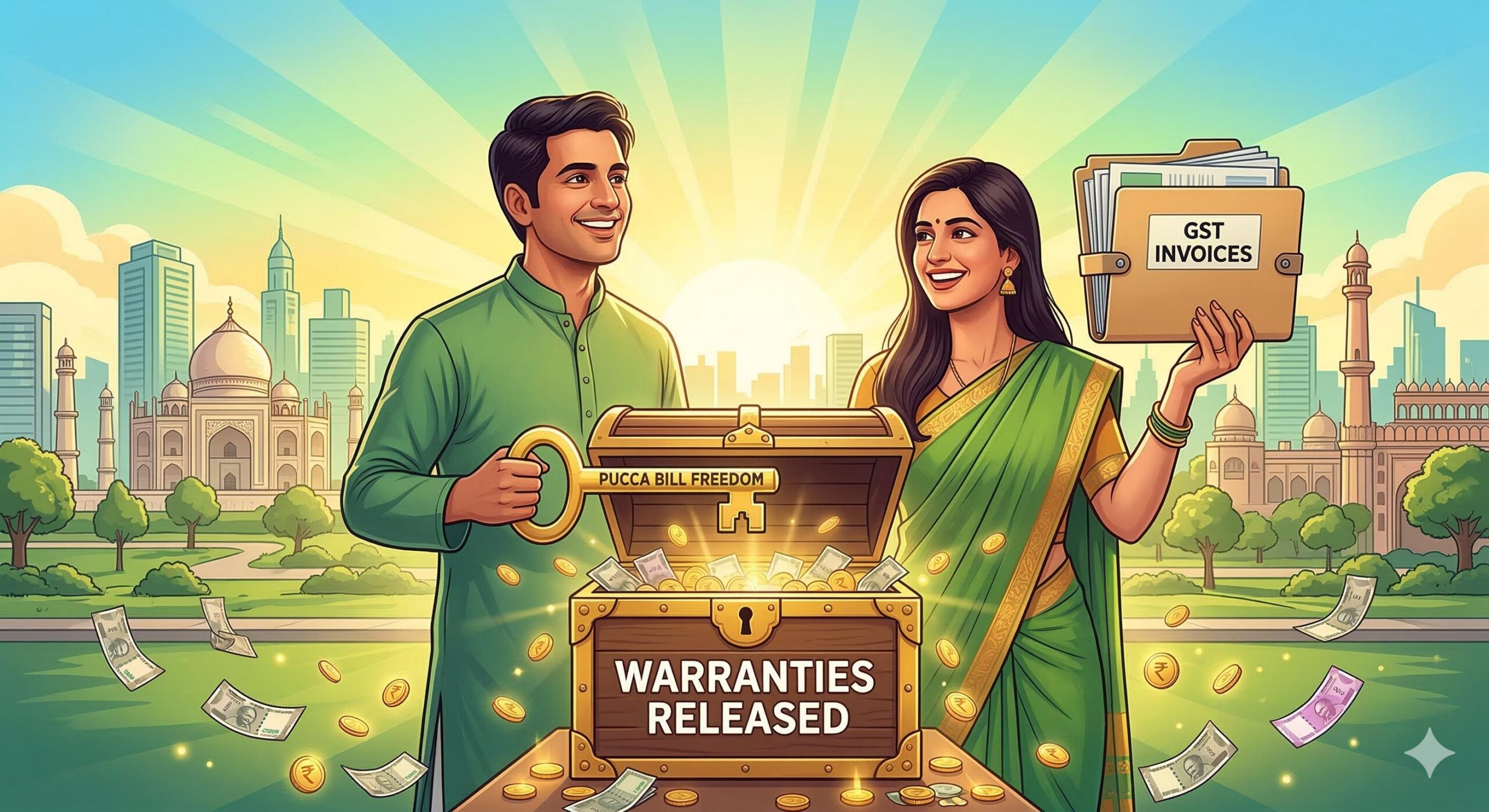
A pucca bill (a legally compliant tax invoice) is your strongest weapon as a consumer. It is documented proof of your purchase, proving ownership and legally binding the seller to consumer protection laws. If a shopkeeper offers to waive the tax if you pay in cash without a bill, you are taking a massive financial risk. Without that valid invoice, if the product turns out to be defective or fake, you have zero legal rights to demand a refund or approach a consumer court.
Organize for Insurance and Resale
Smart financial families keep their documents organized. Always store high-value GST invoices digitally (in a secure cloud folder or DigiLocker) or safely in a physical file. If your home is ever burglarized or damaged by a natural disaster, your home insurance company will demand these exact GST invoices to process your claim and reimburse your losses. Furthermore, when you decide to resell a high-value item like a laptop or a car, having the original, correctly formatted GST bill drastically increases the resale value, putting more money back into your pocket.
Conclusion: A Tool for Consumer Empowerment
The GST invoice format 2026 is much more than a compliance headache for shopkeepers; it is a vital shield for consumers. By taking just thirty seconds to verify the GSTIN, check the tax split, and ensure the document says “Tax Invoice,” you actively protect yourself from billing fraud.
True bachat (saving) is not just about cutting down expenses or finding discounts; it is about ensuring that every single rupee you spend goes exactly where it is supposed to go. By demanding legally compliant bills, you protect your warranties, secure your consumer rights, and contribute to a transparent, scam-free economy.
Understanding Digital Signature for GST: A Complete Guide to Secure Filing
Frequently Asked Questions (FAQ)
What is the difference between a Tax Invoice and a Bill of Supply?
A “Tax Invoice” is issued by a registered dealer who is authorized to collect GST from you. A “Bill of Supply” is issued by a dealer who has opted for the Composition Scheme; they are legally registered but are not allowed to charge you any GST. If you receive a Bill of Supply, ensure no tax amount is added to the final total.
Can a handwritten bill be a valid GST invoice?
Yes. While digital and printed bills are more common, a handwritten bill is completely legal and valid in India, provided it strictly follows the GST invoice format 2026. It must still contain the shop’s printed/stamped GSTIN, a serial number, the date, HSN codes, and the correct CGST/SGST breakdown.
What should I do if a shopkeeper charges GST but refuses to give a valid invoice?
This is an illegal practice. You should refuse to pay the tax amount. If they insist, you can file a formal complaint against the business on the official government consumer helpline (NCH) or report the fraudulent tax collection directly through the CBIC (Central Board of Indirect Taxes and Customs) portal using the shop’s details.
Disclaimer: Educational purposes only. The content of this article is designed to provide general awareness regarding consumer rights and billing formats in India. It is not professional financial, tax, or legal advice. Always consult with a certified Chartered Accountant (CA) or tax professional for specific business taxation or legal queries.