

Introduction
Starting a small business, taking up freelance projects, or working as an independent consultant in India is an exciting step toward financial independence. However, as your income grows, so do your financial responsibilities—especially when it comes to taxation. One of the most common surprises that catch new entrepreneurs and freelancers off guard is TDS on business payments.
Imagine completing a month of hard work, sending an invoice for ₹50,000, and only receiving ₹45,000 in your bank account. Where did the rest of the money go? It hasn’t vanished; it has been deducted at the source. If you are not financially prepared for these deductions, it can easily disrupt your household budget, delay your EMI payments, and cause unnecessary stress.

In this guide, we will break down exactly how TDS works, the risks of ignoring it, and the smart money habits you must adopt to protect your cash flow and ensure your financial safety.
Disclaimer: The information provided in this article is for educational purposes only. It is intended to build financial awareness and does not constitute professional financial, tax, or legal advice. Always consult a certified Chartered Accountant (CA) or registered financial advisor before making any tax-related or business decisions.
Table of Contents
How Does TDS on Business Payments Actually Work?
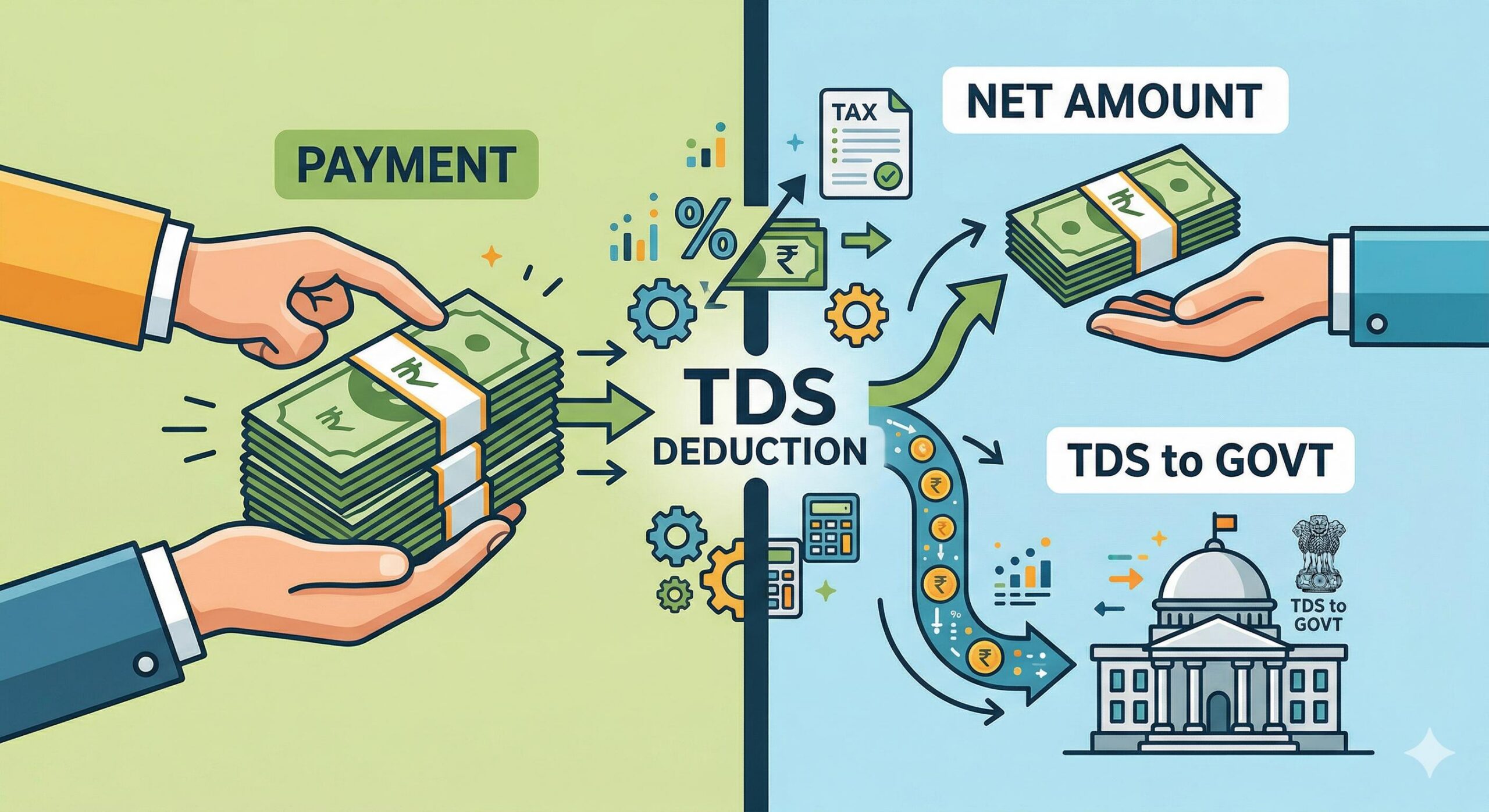
To make sure taxes are paid on time and tax evasion is minimized, the government shifts the responsibility of tax collection to the person making the payment.
For example, imagine you are a freelance graphic designer or an IT consultant, and you bill a company ₹1,00,000 for your services. Instead of paying you the full ₹1,00,000, the company might deduct 10% as TDS (under Section 194J for professional services). They will pay you ₹90,000 and deposit the remaining ₹10,000 to the government on your behalf.
Common scenarios where you will encounter TDS on business payments include:
- Professional and Technical Services (Section 194J): Payments made to lawyers, doctors, engineers, IT professionals, and freelance consultants.
- Contractual Work (Section 194C): Payments made to contractors and sub-contractors for carrying out any physical work, including catering, advertising, or transport.
- Commission and Brokerage (Section 194H): Payments made to agents who help facilitate business transactions.
- Rent for Business Properties (Section 194I): Deductions made when paying rent for office spaces, machinery, or equipment above a certain threshold.
While the government holds this money, it still belongs to you. It acts as an advance tax payment. However, if you are not financially aware, this system can quietly drain your working capital and household budget.
The Risks: What Happens When You Ignore TDS?
Many new entrepreneurs, salaried employees doing side hustles, and middle-class freelancers make the critical mistake of ignoring their TDS deductions. They look at their bank account, see the credited amount, and assume that is their total income. This lack of financial awareness introduces several major risks.
1. Loss of Hard-Earned Money
If you do not track the TDS on business payments deducted from your invoices, you might forget to claim it when filing your Income Tax Return (ITR). If your total annual income falls below the taxable limit, or if your final tax liability is less than the TDS deducted, the government owes you a refund. If you fail to file your ITR and claim this refund, you are permanently losing your own money.
2. Fraud and Non-Deposit Risks
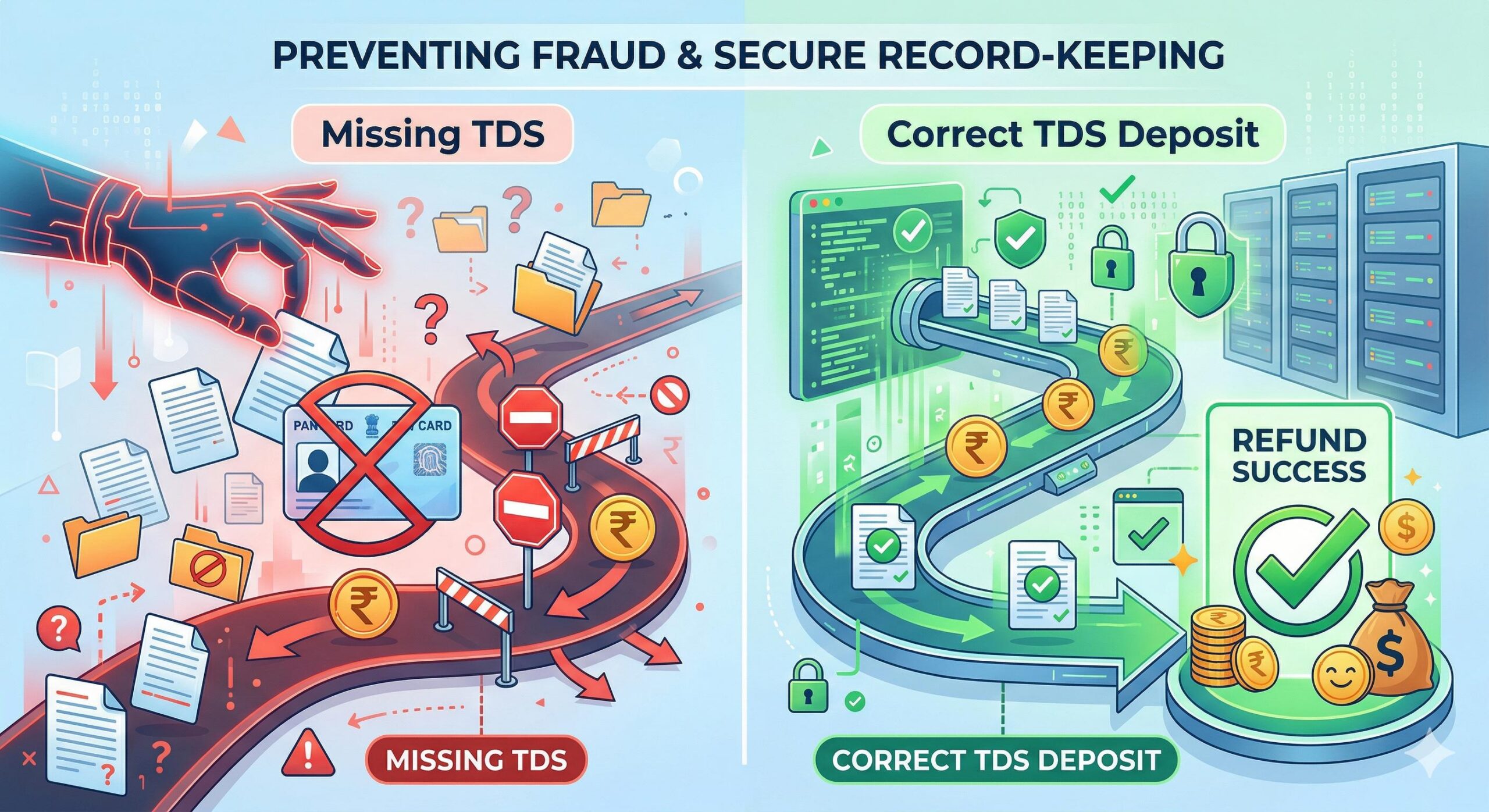
Sometimes, an unethical client might deduct the TDS from your payment but fail to deposit it with the government. If they do not deposit the money and link it to your Permanent Account Number (PAN), the Income Tax Department will not recognize that you have paid those taxes. If you do not cross-check your tax credit statements, you could end up having to pay the tax a second time out of your own pocket.
3. Compliance Penalties
If you are on the other side of the transaction—meaning you are the one making business payments—failing to deduct TDS or failing to deposit it on time attracts heavy penalties, late fees, and interest from the tax department. This can severely damage your business’s financial stability.
The Financial Impact: How TDS Affects Your Cash Flow
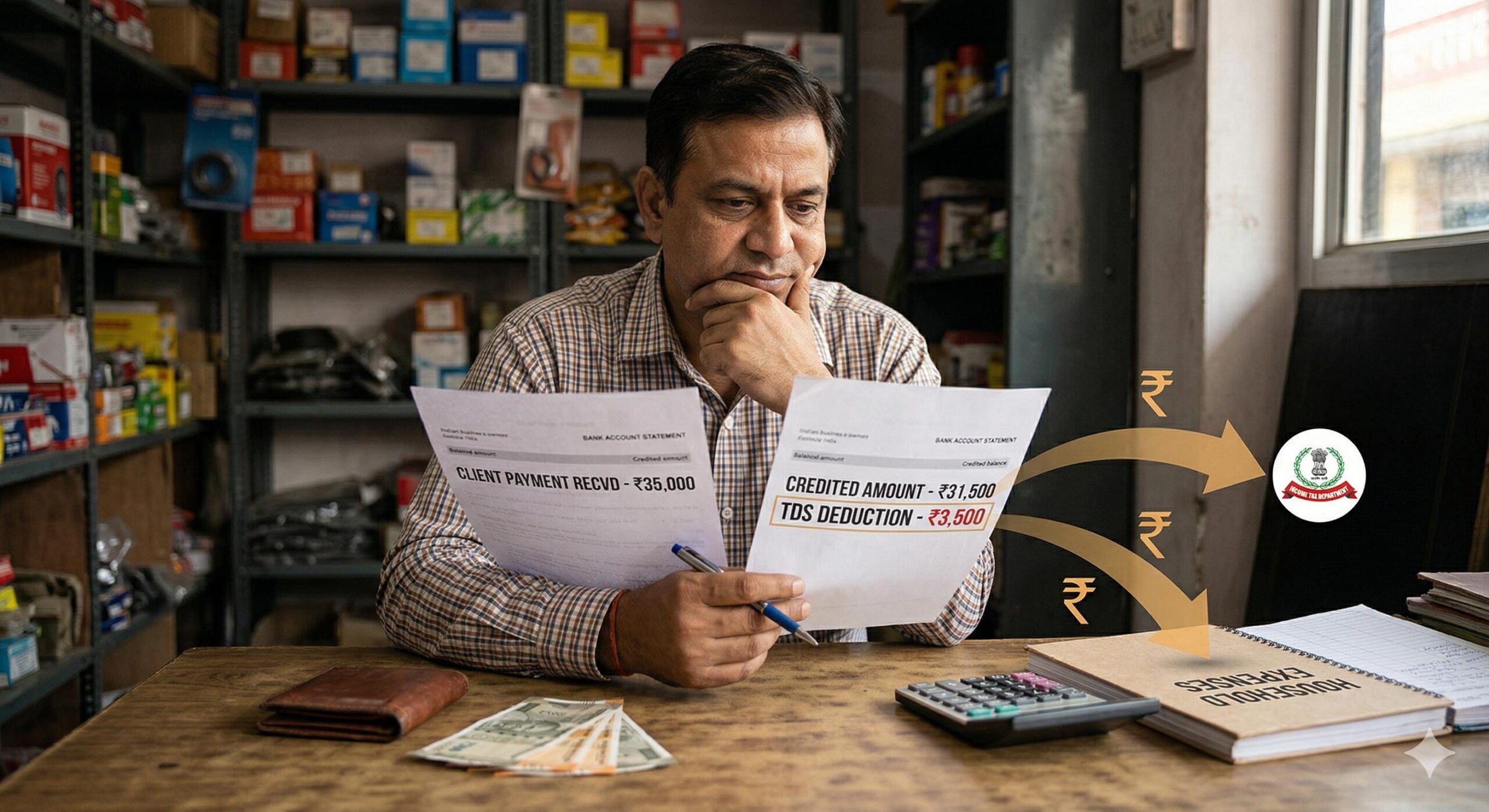
To build strong financial awareness, you must understand how TDS on business payments impacts your daily life and monthly budget.
When 2%, 5%, or 10% of your invoice is deducted before it even reaches your bank account, your immediate cash flow is reduced. For an Indian middle-class family relying on a small business or freelance income to pay for groceries, school fees, and EMIs, this reduced cash flow can cause severe budget shortfalls.
Let’s say you expect a payment of ₹50,000 to cover your monthly household expenses, but after a 10% TDS deduction, you only receive ₹45,000. If you did not factor this deduction into your monthly household budgeting, you will suddenly find yourself short of ₹5,000. You might be forced to use a credit card or dip into your emergency savings to cover the gap. This is why connecting your tax knowledge to your daily money management is a vital life skill.
Preventive Habits: Protecting Your Money and Data
To ensure your financial safety and avoid the traps of poor tax management, you need to develop preventive money habits. Managing TDS on business payments is not just an annual activity; it requires year-round vigilance.
1. Always Check Your Form 26AS and AIS
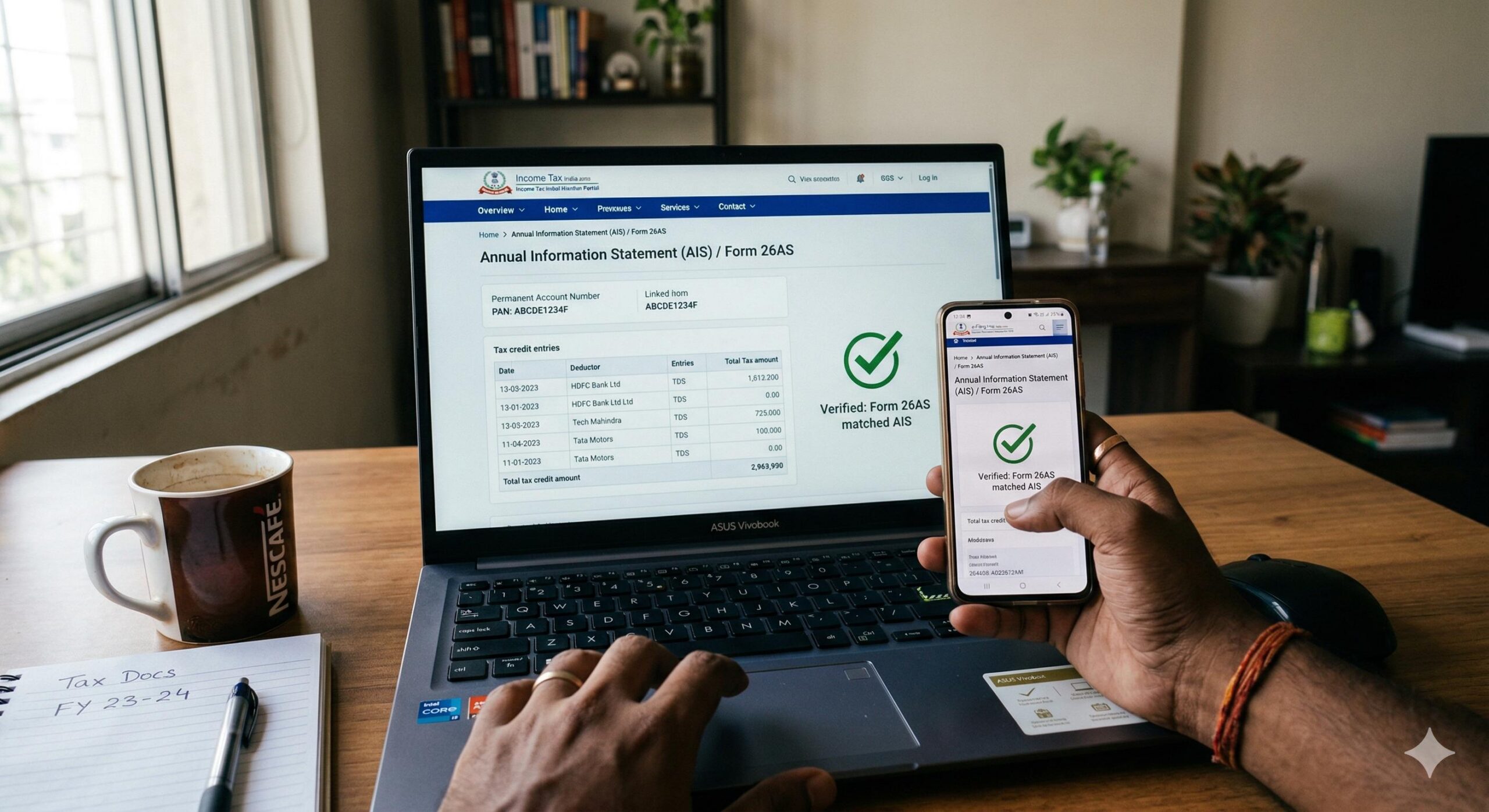
Your Form 26AS and Annual Information Statement (AIS) are your financial report cards. These documents are available on the official Income Tax portal and show every single rupee of TDS that has been deposited against your PAN. Make it a monthly or quarterly habit to log in and verify that your clients are actually depositing the tax they deducted. This is the ultimate fraud prevention tool against dishonest deductors.
2. Collect Your TDS Certificates (Form 16A)
Whenever a business deducts tax from your payment, they are legally obligated to provide you with a TDS certificate known as Form 16A. This certificate is official proof of the tax deduction. Always follow up with your clients at the end of every quarter to collect these certificates and store them safely in a dedicated digital folder.
3. Factor Taxes into Your Pricing
If you are an independent worker or business owner, smart budgeting starts before you even send an invoice. When quoting a price to a client, always keep the upcoming TDS deduction in mind. Ensure that the net amount you receive after the deduction is enough to cover your business expenses, household budget, and savings goals.
4. Never Share OTPs or Passwords
When navigating tax portals, remember basic digital hygiene. Never share your Income Tax portal password, PAN details, or Aadhaar OTPs with unverified third parties claiming to “help you get a faster TDS refund.” Tax refund frauds are common, and the safest way to file is by doing it yourself or hiring a verified, trustworthy CA.
Smart Money Behavior: Building Long-Term Financial Health
Mastering the concept of TDS on business payments is a stepping stone to broader financial literacy. Smart money behavior means looking at your income holistically.

When you file your ITR correctly and receive a TDS refund, do not treat it as “free money” or a bonus to be spent on luxury items. This was your money all along. The smartest way to handle a tax refund is to channel it directly back into your financial goals. You can use this lump sum to:
- Clear expensive, high-interest debt (like credit card bills or personal loans).
- Add a solid boost to your family’s emergency fund.
- Invest in secure, long-term savings instruments like Public Provident Fund (PPF) or fixed deposits.
By understanding the rules of taxation, actively monitoring your tax credits, and budgeting for delayed cash flows, you take total control of your financial destiny. Financial awareness is your strongest shield against both tax penalties and unexpected cash crunches. Stay vigilant, keep your records clean, and make every rupee count.
GST Invoice Format 2026: A Safe Guide to Protecting Your Purchases
Frequently Asked Questions (FAQs)
1. What is the minimum limit for TDS on business payments? The threshold limit depends on the nature of the service. For example, under Section 194J (professional and technical services), TDS is usually deducted if the total payment exceeds ₹30,000 in a financial year. For single contracts under Section 194C, the limit is ₹30,000, or ₹1,00,000 in aggregate for the year.
2. How can I claim a refund for the TDS deducted from my payments? The only legal and proper way to claim your deducted money back is by filing your annual Income Tax Return (ITR). If your total tax liability for the year is less than the TDS already deducted, the Income Tax Department will issue a refund directly to your linked bank account.
3. Do freelancers and gig workers have to worry about TDS? Yes, absolutely. If you provide professional services (like writing, web development, consulting, or design) to a registered company, they are legally required to deduct 10% TDS under Section 194J before paying your invoice. You must track this to ensure you do not lose your earnings.
4. What happens if I just ignore my TDS deductions and don’t file my ITR? If you ignore the TDS on business payments and skip filing your ITR, you are essentially leaving your own hard-earned money with the government. You lose the chance to claim any eligible refunds, which is a direct loss to your savings and household budget.
5. How do I know if my client actually deposited my TDS with the government? You can easily verify this by logging into the official Income Tax e-filing portal and downloading your Form 26AS or checking your Annual Information Statement (AIS). These documents act as your tax passbook and will show every rupee of TDS deposited under your PAN.
Conclusion
Handling TDS on business payments does not have to be intimidating. At its core, it is simply an advance tax system designed to keep the economy transparent. However, from a personal finance perspective, tracking this deducted money is non-negotiable. Every rupee deducted is a rupee you have earned through hard work.
By staying financially aware—regularly checking your Form 26AS, collecting your TDS certificates, and filing your Income Tax Returns on time—you ensure that your money stays yours. Remember, true financial security is not just about earning more; it is about managing what you earn efficiently, preventing leaks in your cash flow, and avoiding unnecessary penalties. Stay vigilant, plan your budgets with tax deductions in mind, and take charge of your financial well-being today.