
Introduction
In India, managing household finances is a superpower, and often, it is the women of the house who hold this power. But what happens when you want to start a small business from home, or face a sudden family emergency, but lack the heavy documentation required by traditional banks? This is where microfinance for women steps in.
Simply put, microfinance for women is a specialized financial service that provides small, collateral-free loans, basic savings accounts, and micro-insurance to women who do not have easy access to regular banking. It is a powerful tool designed to help middle-class and rural families generate independent income. However, as digital lending grows in India, so do financial scams. Taking a loan from the wrong source can quickly drain your household savings. At bachatbook.in, our goal is to help you navigate these services safely. In this guide, we will explain how to use microloans effectively while protecting your personal data and hard-earned money from hidden traps.
Disclaimer: This article is strictly for educational purposes only and does not constitute professional financial advice. Always verify a lender’s credentials and consult with a qualified advisor before making financial decisions.
Table of Contents
Understanding How Microfinance Works in India
To safely navigate the world of microloans, you first need to understand how they function. Traditional banks often require extensive paperwork, income tax returns, and property to pledge against a loan. Most homemakers or women running small informal businesses do not have these documents.
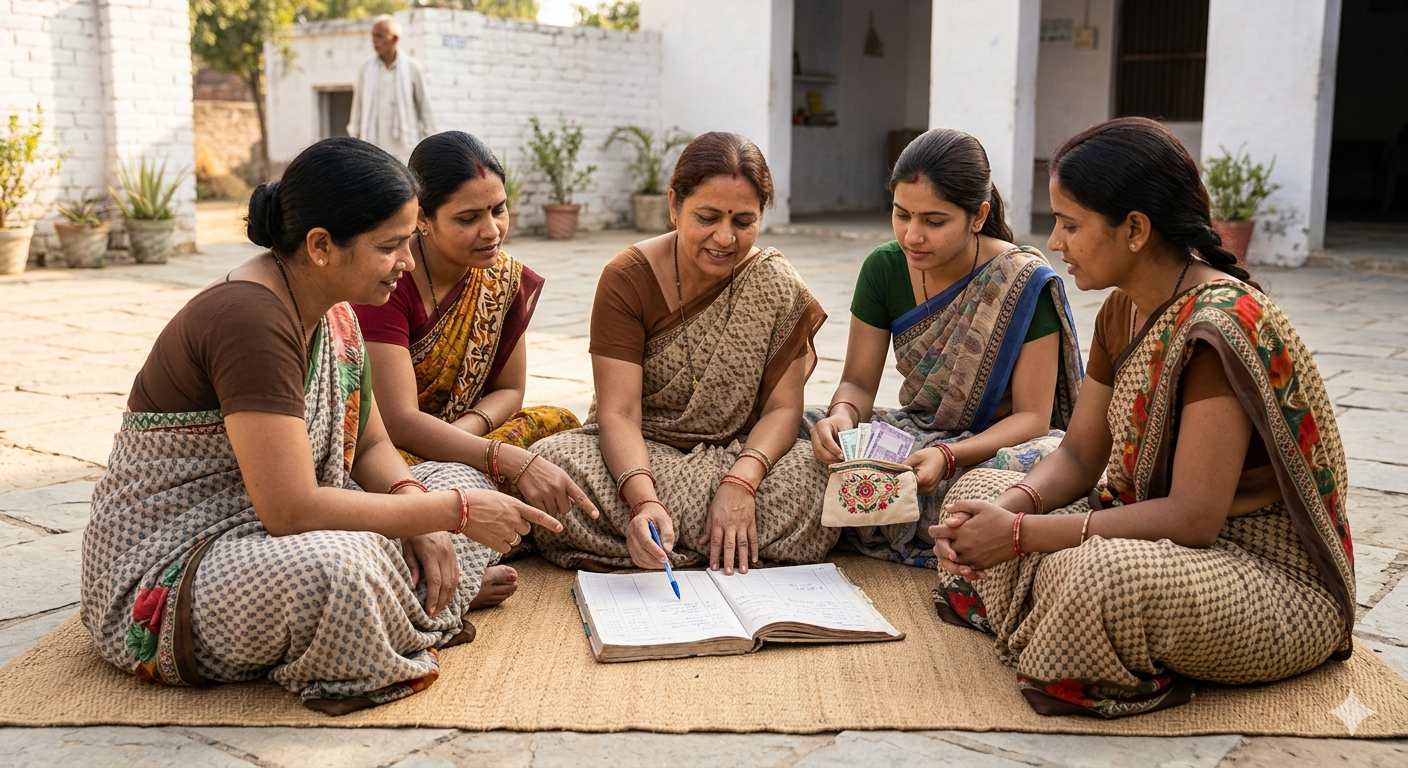
Microfinance institutions (MFIs) bridge this gap. They often lend to women through two main models:
- Self-Help Groups (SHGs): A group of 10 to 20 women from the same community who pool their savings and lend to each other, often linked to a larger bank.
- Joint Liability Groups (JLGs): A smaller group of 4 to 10 women who come together to take individual loans from an MFI, but act as a guarantee for each other. If one defaults, the others share the responsibility.
Because these loans rely on community trust rather than physical property, microfinance for women has become extremely popular. But wherever money flows, risks follow.
The Hidden Risks in Microfinance
While the primary goal of microfinance is to help, the system is not without danger. The rapid growth of digital lending in India has brought both convenience and risk.
1. Unregistered and Fraudulent Lenders
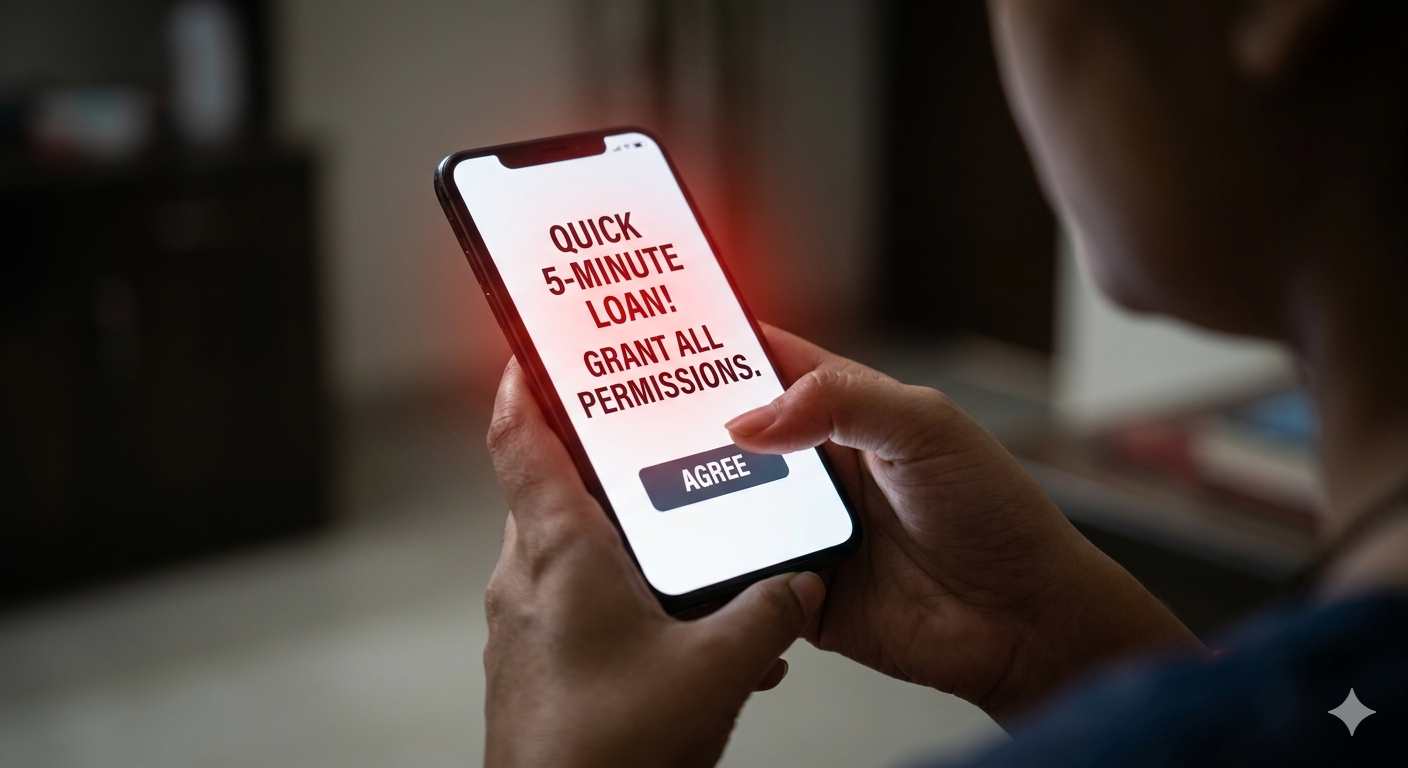
Many unauthorized digital lending apps disguise themselves as legitimate microfinance providers. They target women looking for quick, small loans, often demanding access to their phone’s contacts, photos, and messages before releasing funds.
2. The Danger of Over-Borrowing
Because getting a microloan can seem easy, there is a temptation to borrow from multiple lenders at the same time. This is known as “overlapping.” A borrower might take a second loan just to pay off the Equated Monthly Installment (EMI) of the first loan.
3. Hidden Charges and High Interest Rates
Some unregulated lenders advertise “low weekly payments” while hiding the actual annual interest rate, processing fees, and late payment penalties. What seems like a small fee can multiply rapidly if a payment is missed.
4. Coercive Recovery Practices
If you borrow from an unregulated source or an illegal loan app, they may resort to public shaming, calling your family members, or sending abusive messages to recover their money.
The Financial Impact of Untrusted Microloans
Taking a loan without fully understanding the terms does not just affect the borrower; it impacts the entire household budget.
The biggest financial impact of unsafe microfinance is the Debt Trap. A debt trap occurs when a borrower spends so much of their monthly household income on paying loan interest that they cannot afford basic necessities like food, school fees, or medical bills.
When women fall into a debt trap through fake or predatory microfinance schemes, the consequences are severe:
- Loss of Household Savings: Families are forced to break their fixed deposits or sell small gold jewelry to clear the aggressive loans.
- Compromised Data Security: Fraudulent loan apps often steal Aadhaar and PAN card details to open fake accounts or take out larger loans in the victim’s name, destroying their credit score (CIBIL).
- Mental Stress: The aggressive collection tactics of fake lenders cause immense anxiety, disrupting the peace of the family.
Prevention Habits: How to Protect Your Money and Data
Financial safety is about being proactive. If you or a family member are considering microfinance for women, you must build strict habits to protect your finances and personal data.
1. Always Verify the Lender with the RBI
Legitimate microfinance companies in India are registered with the Reserve Bank of India (RBI) as NBFC-MFIs (Non-Banking Financial Company – Micro Finance Institutions). Before applying, search the company’s name on the official RBI website. If they are not listed, do not borrow from them.
2. Never Give Phone Permissions to Loan Apps
A safe and legal MFI will never ask for access to your personal photo gallery or your contact list. If a loan application on your smartphone asks for these permissions, uninstall the app immediately. They are trying to steal your data for blackmail.
3. Read the Fact Statement Carefully
The RBI mandates that all registered lenders must provide a simple “Key Fact Statement” (KFS) before you sign the loan. This document clearly lists the total loan amount, the exact interest rate per year, the processing fees, and the final amount you will pay back. If a lender refuses to give you this in writing, walk away.
4. Protect Your KYC Documents
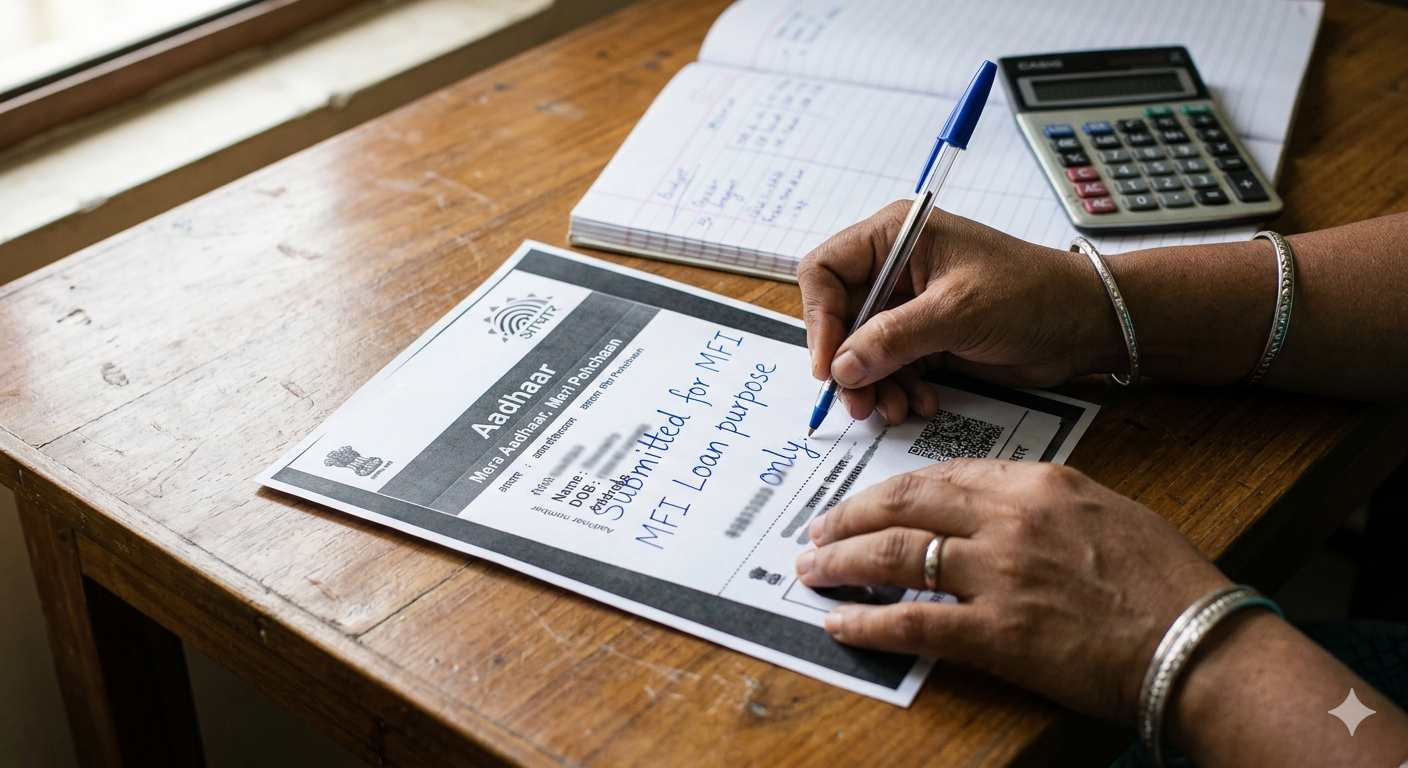
Never share photocopies of your Aadhaar card, PAN card, or bank passbook with unknown agents on WhatsApp. Always write “Submitted for MFI Loan purpose only on [Date]” across the photocopy before handing it over to a verified agent. This prevents scammers from misusing your identity.
Smart Money Behavior for Borrowers
Microfinance for women is a stepping stone to financial stability, but only if paired with smart money habits. Cultivating financial awareness ensures that a loan remains a helpful tool rather than a burden.
- Borrow Only What Generates Income: The golden rule of microfinance is to borrow for income-generating activities (like buying raw materials for a business) rather than for daily consumption or paying off older debts.
- Budget Your EMI First: Before you spend a single rupee of your monthly income, set aside the EMI amount for your loan. Treat this as your most important household expense. At bachatbook.in, we always recommend tracking every rupee using a simple notebook or a budgeting app.
- Start an Emergency Fund: The best way to avoid expensive loans is to have your own savings. Try to save at least 5% to 10% of your monthly income in a recurring deposit (RD) or a separate savings account. Over time, this small habit creates an emergency fund, meaning you won’t need to rely on sudden microloans when unexpected expenses arise.
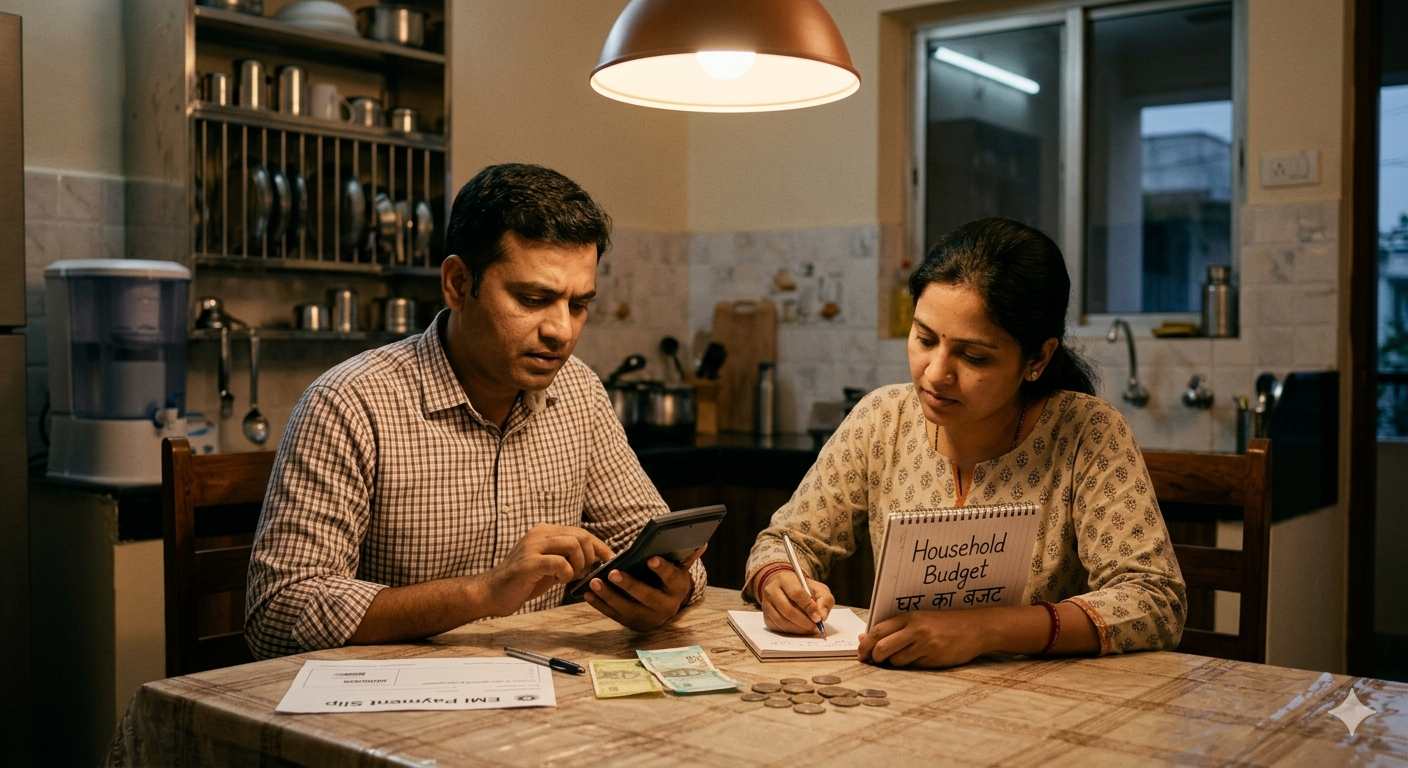
- Communicate Openly: If you run into a genuine financial hardship (like a medical emergency) and cannot pay your EMI, talk to your MFI manager immediately. Legitimate institutions often have policies to restructure your loan if you communicate honestly, rather than hiding from the agents.
Frequently Asked Questions (FAQs)
Q1: What is the main purpose of microfinance for women? A: The primary purpose is to provide small, accessible loans to women who do not have traditional bank security (like property). These loans are meant to be used for income-generating activities—such as starting a small shop, buying a sewing machine, or expanding a home business—helping families increase their overall household income.
Q2: Do I need to pledge gold or property to get a microloan? A: No. One of the biggest advantages of microfinance for women is that it is usually “collateral-free.” Lenders rely on community trust, often lending to Joint Liability Groups (JLGs) or Self-Help Groups (SHGs) where women guarantee the loan for each other, rather than asking for physical property.
Q3: How can I check if a microfinance loan app is genuine or fake? A: A genuine microfinance institution will be registered as an NBFC-MFI with the Reserve Bank of India (RBI). You can check their registration status on the official RBI website. Additionally, a safe app will never ask for access to your personal photo gallery or your contact list. If an app demands these permissions, it is likely a scam.
Q4: Can a homemaker apply for microfinance? A: Yes, homemakers can apply, provided the loan is intended to start or support a small business or skill that generates income. Lenders usually require basic KYC documents like an Aadhaar card, a PAN card, and a bank account in your name.
Q5: What should I do if a loan app is harassing my family for repayment? A: If you are being harassed, abused, or blackmailed by illegal digital lenders, do not pay them out of fear. File a complaint immediately on the Government of India’s National Cyber Crime Reporting Portal (cybercrime.gov.in) and report the app to the Google Play Store or Apple App Store.
Lakhpati Didi Scheme Details: Complete Guide to Eligibility, Benefits, and Financial Safety
The Conclusion
Final Thoughts on Financial Safety
Microfinance for women is more than just a loan; it is an opportunity to build a financially secure future for your family. Whether you are funding a home boutique, a tailoring business, or supporting your family’s education, these small loans can create a massive positive impact. However, true financial empowerment comes from awareness.
Always remember that protecting your money is just as important as borrowing it. By verifying your lender with the RBI, refusing to share sensitive phone data with digital apps, and practicing strict monthly budgeting, you can easily avoid the painful debt traps that catch so many unaware borrowers. At bachatbook.in, we encourage you to build your emergency savings alongside your loan repayments so that one day, you become your own financial backup. Stay alert, borrow only what you can comfortably repay, and keep growing your financial knowledge!